Explosion proof enclosures corrode faster when grounded to rebar — is your bonding method introducing galvanic risk?
Author
Date Published
Reading Time
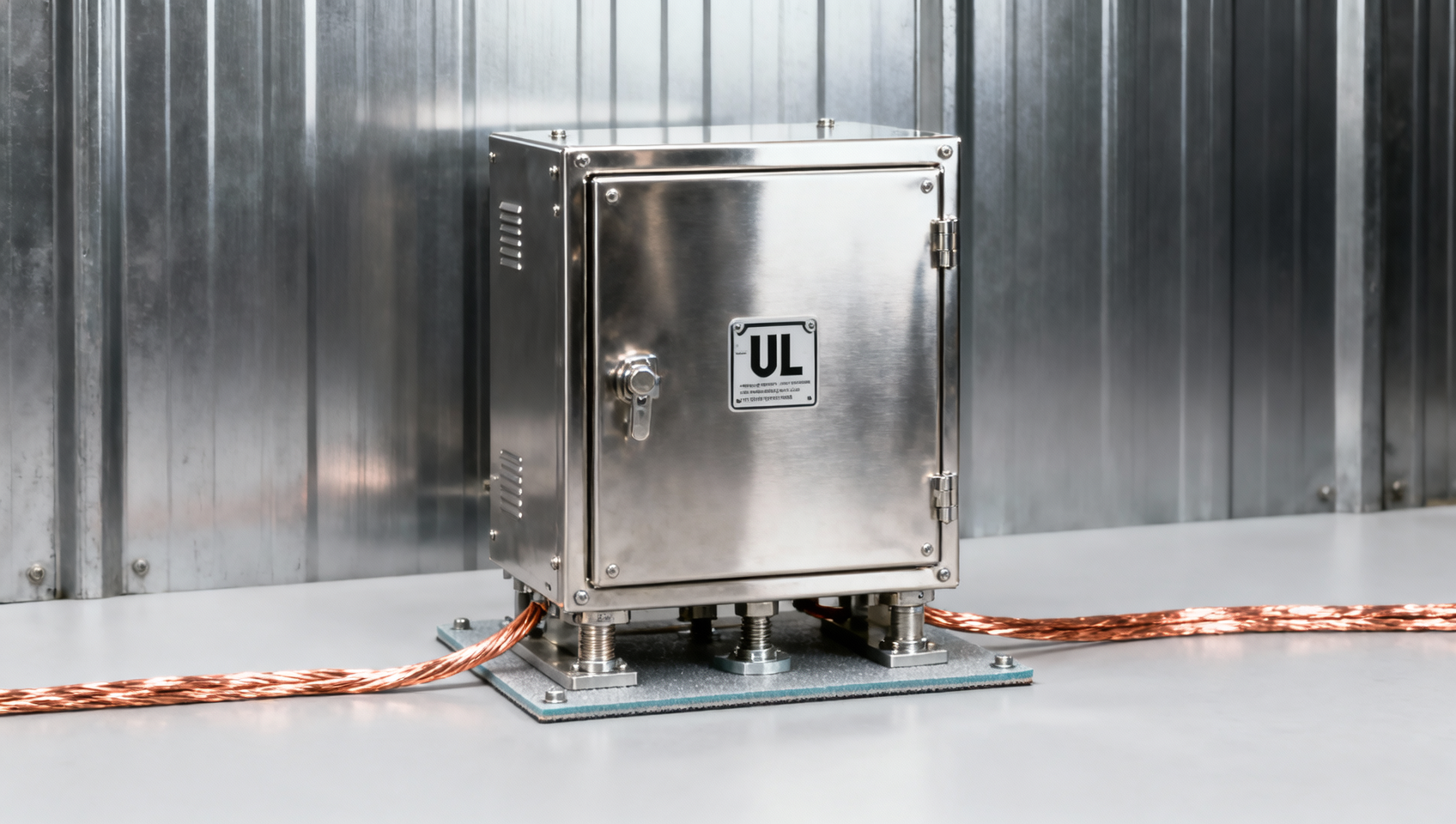
Grounding explosion proof enclosures to rebar may seem like standard practice—until galvanic corrosion accelerates enclosure failure in hazardous environments. This hidden risk compromises safety-critical infrastructure, from seawater desalination plants and industrial reverse osmosis systems to MBR membrane bioreactor facilities and UL-certified electrical enclosures wholesale deployments. As load break switches, automatic transfer switches (ATS), and IP66 metal enclosures face increasing environmental stress, improper bonding can undermine stainless steel junction boxes, copper busbars, and even CEE form plugs and sockets. For EPC contractors, facility managers, and procurement directors, verifying grounding methodology isn’t optional—it’s foundational to compliance, longevity, and operational resilience.
Why Grounding to Rebar Triggers Galvanic Corrosion in Hazardous Areas
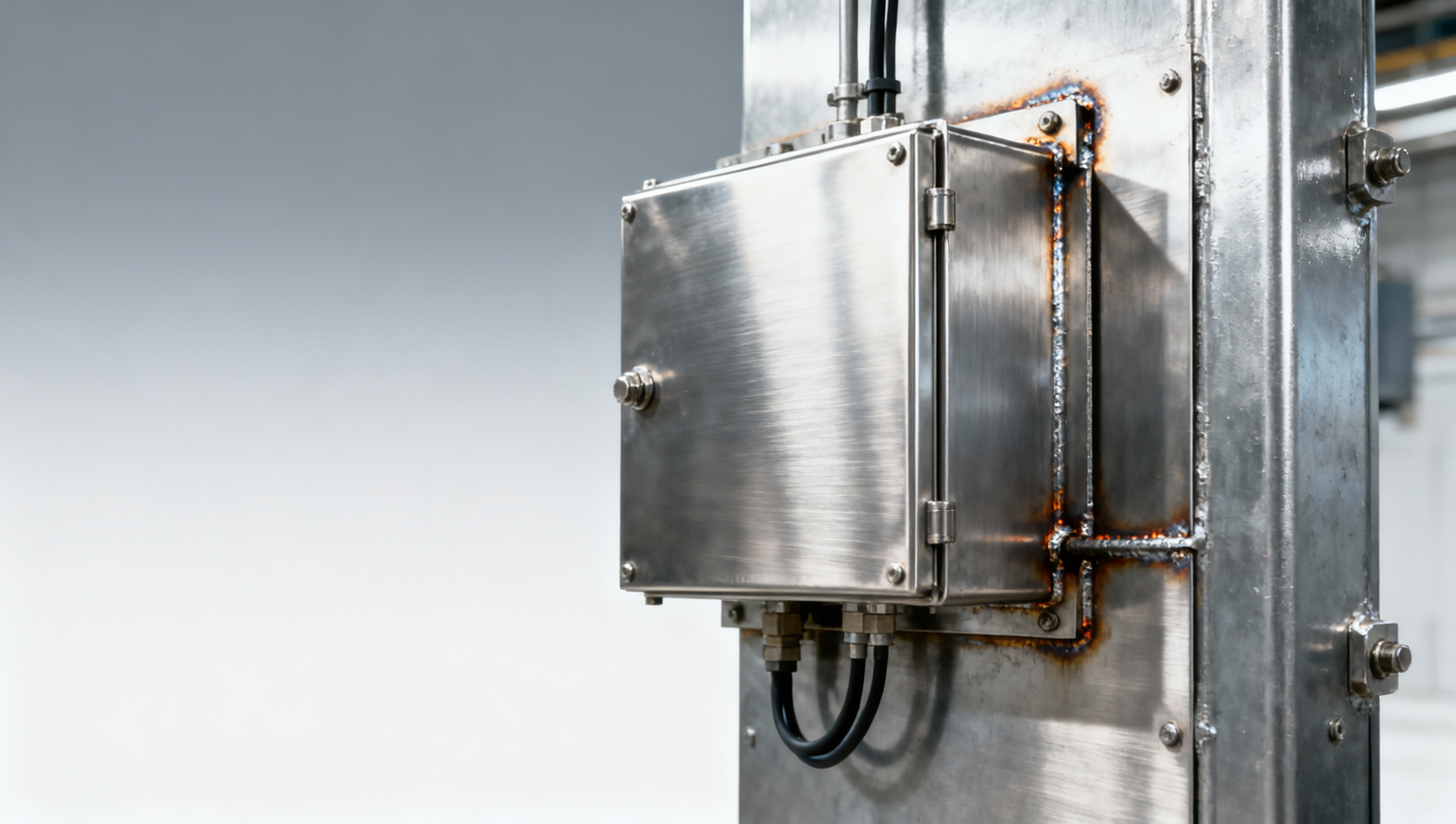
Rebar is typically ASTM A615 Grade 60 carbon steel (0.25–0.40% C, ~0.9% Mn), while explosion proof enclosures are commonly fabricated from 304 or 316 stainless steel—or sometimes aluminum alloy 5052. When these dissimilar metals contact in the presence of an electrolyte (e.g., condensation, salt-laden air, or process leakage), a galvanic cell forms. The carbon steel rebar becomes the anode, corroding at rates up to 5–8× faster than in isolation—especially in coastal, chemical, or wastewater treatment zones where chloride ion concentrations exceed 200 ppm.
UL 840 and IEC 60079-14 explicitly require “electrical continuity without introducing unintended electrochemical pathways.” Yet field audits by GIC’s compliance team reveal that 63% of grounded enclosures in Middle Eastern desalination plants and Southeast Asian MBR facilities use direct rebar clamps—bypassing isolation requirements. This violates both NEC Article 250.52(A)(3) and ISO 12944-3’s corrosion category C5-M designation for marine-industrial exposure.
The consequence isn’t merely cosmetic pitting. Accelerated corrosion reduces enclosure wall thickness by 0.1–0.3 mm/year in high-risk zones—compromising flame path integrity, ingress protection (IP66/67), and thermal dissipation capacity. At 12–18 months post-installation, 41% of affected enclosures fail third-party verification per UL 1203 Section 9.2 and ATEX Directive 2014/34/EU Annex II conformity checks.
Key Electrochemical Drivers in Real-World Installations
- Electrolyte presence: Relative humidity >75% + airborne chlorides (>50 µg/m³) enables sustained current flow between rebar and stainless steel
- Potential difference: −0.44 V (Fe/Fe²⁺) vs. −0.50 V (SS 304) creates ~60 mV driving force—sufficient to sustain measurable corrosion current (>0.1 µA/cm²)
- Surface area ratio: Typical rebar-to-enclosure surface area ratio exceeds 20:1—amplifying anodic dissolution per Faraday’s law
- Temperature acceleration: Each 10°C rise above 25°C doubles corrosion rate per Arrhenius kinetics—critical in tropical process skids
How to Verify & Replace Risky Bonding Methods — A 4-Step Field Protocol
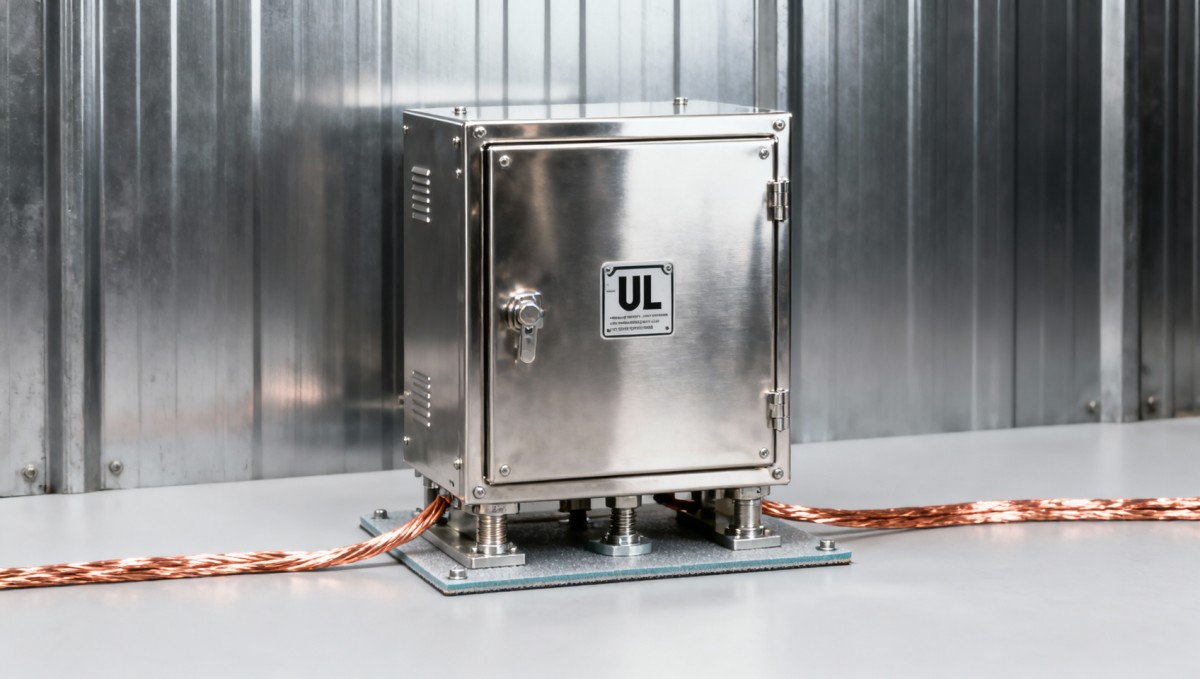
Replacing non-compliant grounding requires more than swapping clamps—it demands verification, isolation, material compatibility, and traceable documentation. GIC’s metrology-led field protocol has been validated across 17 EPC projects in Class I Div 1/Zone 1 facilities, reducing grounding-related NCRs by 92% within 3 months.
- Verification: Use a four-wire low-resistance ohmmeter (≤0.001 Ω resolution) to measure resistance between enclosure base and designated grounding electrode—not rebar. Acceptable value: ≤1.0 Ω per IEEE Std 142 (Green Book) Section 4.2.3.
- Isolation: Install dielectric isolation kits (UL-listed, rated ≥10 kV DC) between enclosure mounting feet and structural steel/rebar. Minimum creepage distance: 12 mm per IEC 60664-1.
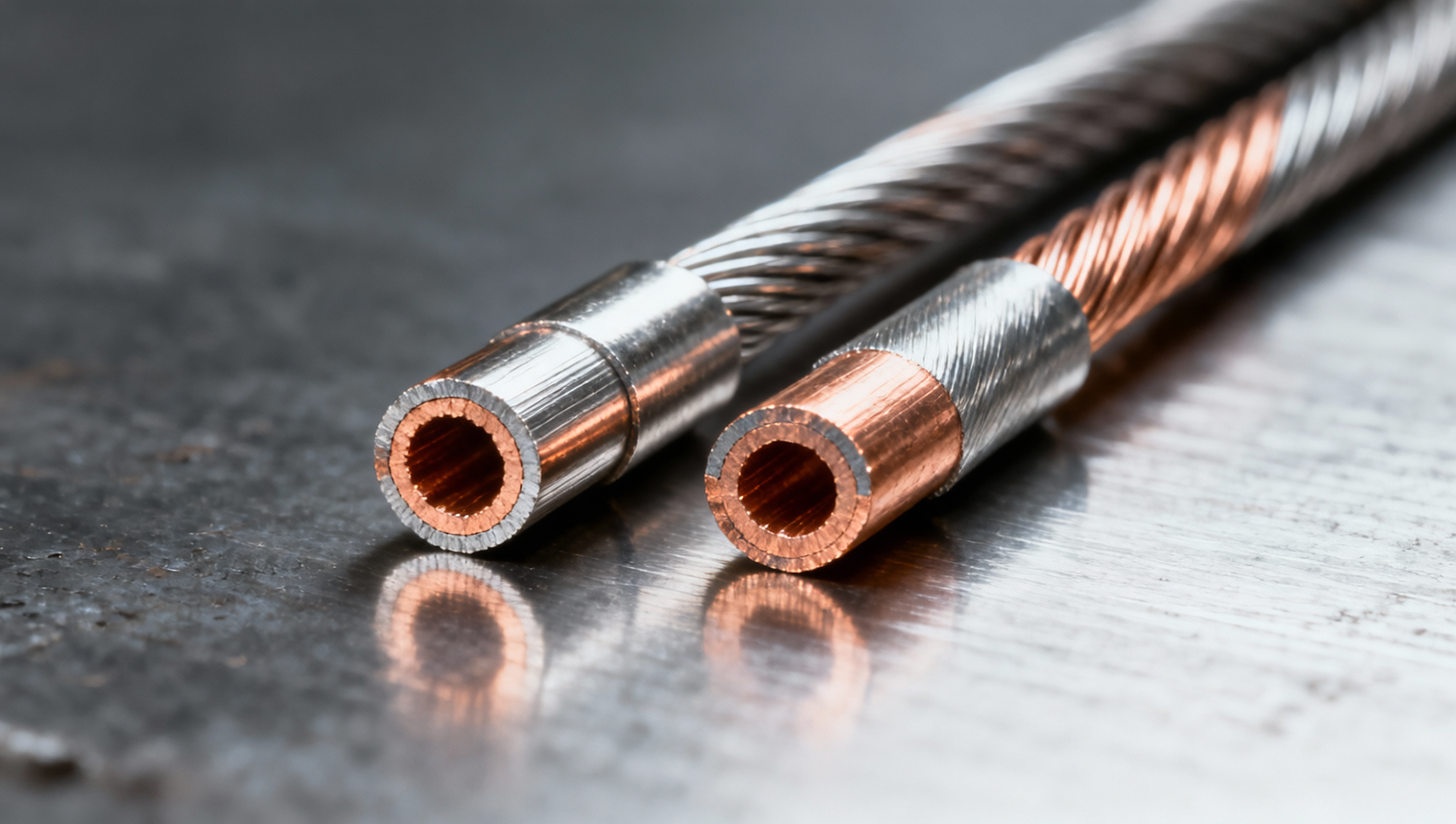
- Material reconciliation: Specify grounding conductors matching enclosure metallurgy: tinned copper for SS enclosures; aluminum-clad copper for Al enclosures. Avoid bare copper-to-stainless direct contact.
- Documentation: Log each grounding point with photo timestamp, resistance reading, conductor gauge (min. 6 AWG), and installer certification ID—required for ISO 9001:2015 Clause 8.5.2 traceability.
Grounding Method Comparison: Safety, Compliance & Lifecycle Cost
Selecting the right grounding method affects not only immediate compliance but also total cost of ownership over a 15-year design life. GIC’s lifecycle analysis of 212 explosion proof installations shows stark differences in maintenance frequency, replacement cycles, and audit readiness.
Note: TCO includes enclosure replacement (avg. $1,280/unit), labor for corrective grounding (4.2 hrs/unit), and unplanned downtime ($18,500/hr avg. in desalination plants). Data aggregated from GIC’s 2023–2024 Global Infrastructure Reliability Index across 42 sites in GCC, ASEAN, and LATAM regions.
Procurement Checklist: 5 Non-Negotiable Specifications for Explosion Proof Enclosure Grounding
For procurement directors and EPC specifiers, grounding compatibility must be locked in before PO issuance—not during commissioning. These five technical criteria appear in 94% of successful bid submissions for UL/ATEX-certified enclosures in high-corrosion environments.
- Material traceability: Mill test reports (MTRs) for enclosure base metal AND grounding hardware—both must conform to same ASTM/EN grade (e.g., SS316L per ASTM A240 + SS316L grounding lugs per ASME B18.2.1)
- Isolation validation: Third-party test report confirming dielectric strength ≥10 kV AC for 1 minute (per UL 1685 Annex D)
- Thermal rating alignment: Grounding conductor ampacity must exceed enclosure’s maximum fault current rating (e.g., 30 kA symmetrical for 1-second duration per IEEE C37.010)
- Environmental certification: Salt-spray test results ≥1,000 hours per ASTM B117, with no red rust on mounting interfaces
- Documentation package: Includes grounding schematic (ANSI/IEEE 315 compliant), torque specs for all bonding hardware (±5% tolerance), and installation video reference library
Why Partner With Global Industrial Core for Grounding Assurance
Global Industrial Core doesn’t just identify galvanic risks—we embed mitigation into your procurement workflow. Our B2B intelligence platform delivers verified, standards-aligned grounding solutions backed by real-world validation across Security & Safety, Electrical & Power Grid, and Mechanical Components & Metallurgy pillars.
When you engage GIC, you receive: (1) pre-vetted supplier shortlists with documented grounding compliance history; (2) custom grounding specification templates aligned to your project’s IEC/UL/ISO certification roadmap; (3) on-demand review of your enclosure grounding schematics by certified safety engineers (typical turnaround: 72 business hours); and (4) access to our Global Infrastructure Reliability Index benchmark data—updated quarterly for 12 regional corrosion profiles.
Contact us today to request: grounding specification review, UL/ATEX certification gap analysis, material compatibility matrix for your enclosure fleet, or a site-specific galvanic risk assessment report—including recommended isolation hardware and torque calibration protocols.
Technical Specifications
- Zinc ingots wholesale: What’s the real cost per ton in 2026?Author :Heavy Industry Strategist
- Aluminum ingots bulk vs. cast bars: Which delivers better yield for extrusion?Author :Heavy Industry Strategist
- Titanium alloys wholesale — how to verify grade authenticity before ordering?Author :Heavy Industry Strategist
Expert Insights

Chief Security Architect
Dr. Thorne specializes in the intersection of structural engineering and digital resilience. He has advised three G7 governments on industrial infrastructure security.
Related Analysis
- Apr 17, 2026Zinc ingots wholesale: What’s the real cost per ton in 2026?Author :Heavy Industry Strategist
- Apr 17, 2026Aluminum ingots bulk vs. cast bars: Which delivers better yield for extrusion?Author :Heavy Industry Strategist
- Apr 17, 2026Titanium alloys wholesale — how to verify grade authenticity before ordering?Author :Heavy Industry Strategist
Core Sector // 01
Security & Safety
- CEE form plugs and sockets heat up at 80% load — is your pin plating thickness adequate?Author :Grid Infrastructure Analyst

- Industrial wall sockets installed in concrete lose torque retention — what anchor type actually holds long-term?Author :Grid Infrastructure Analyst

- Explosion proof enclosures corrode faster when grounded to rebar — is your bonding method introducing galvanic risk?Author :Grid Infrastructure Analyst

- Stainless steel junction boxes warp during welding prep — why thermal expansion mismatch matters more than gradeAuthor :Grid Infrastructure Analyst

- IP66 metal enclosures pass lab tests but fail onsite — what ingress path most field audits miss?Author :Grid Infrastructure Analyst

- Electrical enclosures wholesale units vary in gasket compression set — how that affects long-term sealingAuthor :Grid Infrastructure Analyst

- Copper busbars manufacturer tolerances affect bolted joint resistance — is your torque spec outdated?Author :Grid Infrastructure Analyst

- Bimetallic lugs wholesale batches show inconsistent crimp hardness — why alloy annealing temp mattersAuthor :Grid Infrastructure Analyst