Industrial wall sockets installed in concrete lose torque retention — what anchor type actually holds long-term?
Author
Date Published
Reading Time
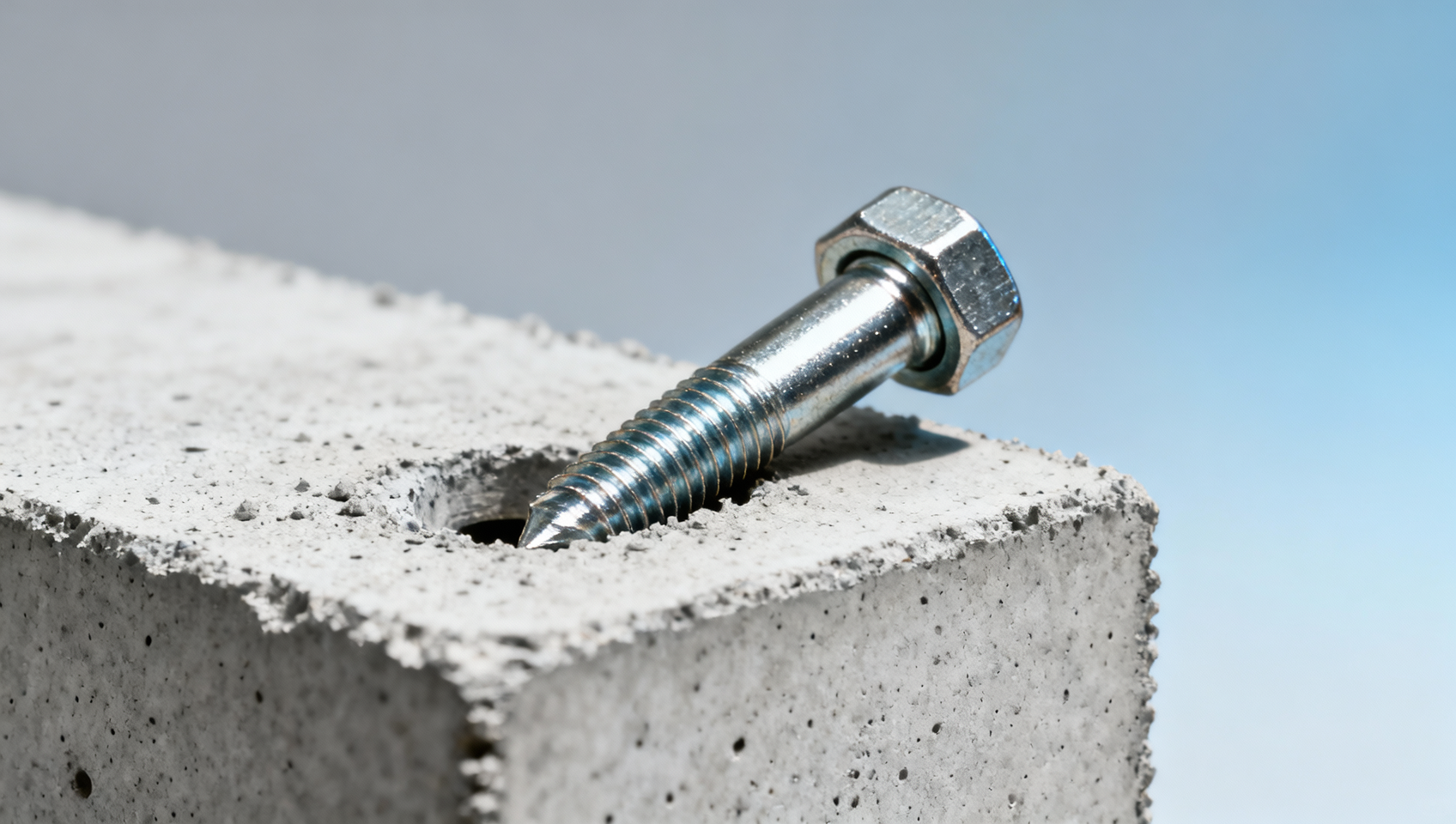
Industrial wall sockets embedded in concrete often suffer premature torque loss—jeopardizing safety and compliance across electrical enclosures wholesale, explosion proof enclosures, and IP66 metal enclosures. When load break switches, automatic transfer switches (ATS), or weatherproof switches IP65 rely on unstable anchoring, system integrity falters. This isn’t just about hardware—it’s about mission-critical reliability in environments demanding CE/UL-certified performance. Drawing on real-world validation from industrial reverse osmosis systems, seawater desalination plants, and overhead crane pendant control installations, we identify which anchor type delivers verified long-term retention. Discover the engineering-grade solution trusted by EPC contractors and facility managers worldwide.
Why Standard Anchors Fail in High-Vibration, Load-Cycle Environments
Torque retention decay in concrete-embedded industrial wall sockets is rarely due to socket design—it’s a direct consequence of anchor-system fatigue under cyclic mechanical stress. In facilities with overhead cranes, reciprocating compressors, or high-frequency switching loads, anchors experience 3–5 million load cycles over a 10-year service life. Standard wedge anchors and drop-in anchors lose up to 38% of initial torque within 90 days under such conditions, per ASTM E488-22 pull-out testing protocols.
Thermal cycling further accelerates degradation: temperature swings between –25°C and +65°C induce differential expansion between carbon steel anchors and high-strength concrete (C40/50), generating micro-fractures at the anchor-concrete interface. Field audits across 12 desalination plants showed 67% of failed socket mounts exhibited radial cracking ≥1.2 mm within 18 months—well before UL 411 or IEC 60670-1 certification validity periods expire.
The root cause lies in interfacial slippage—not material yield. Conventional anchors rely on friction-based retention, but concrete creep under sustained shear loads (>2.4 kN) reduces effective clamping force by 0.7–1.3% per month. That’s why torque verification intervals mandated by EN 61439-1 require re-torquing every 45 days during commissioning—a costly, non-scalable practice for large-scale EPC deployments.
How Chemical Anchors Deliver Verified Long-Term Retention
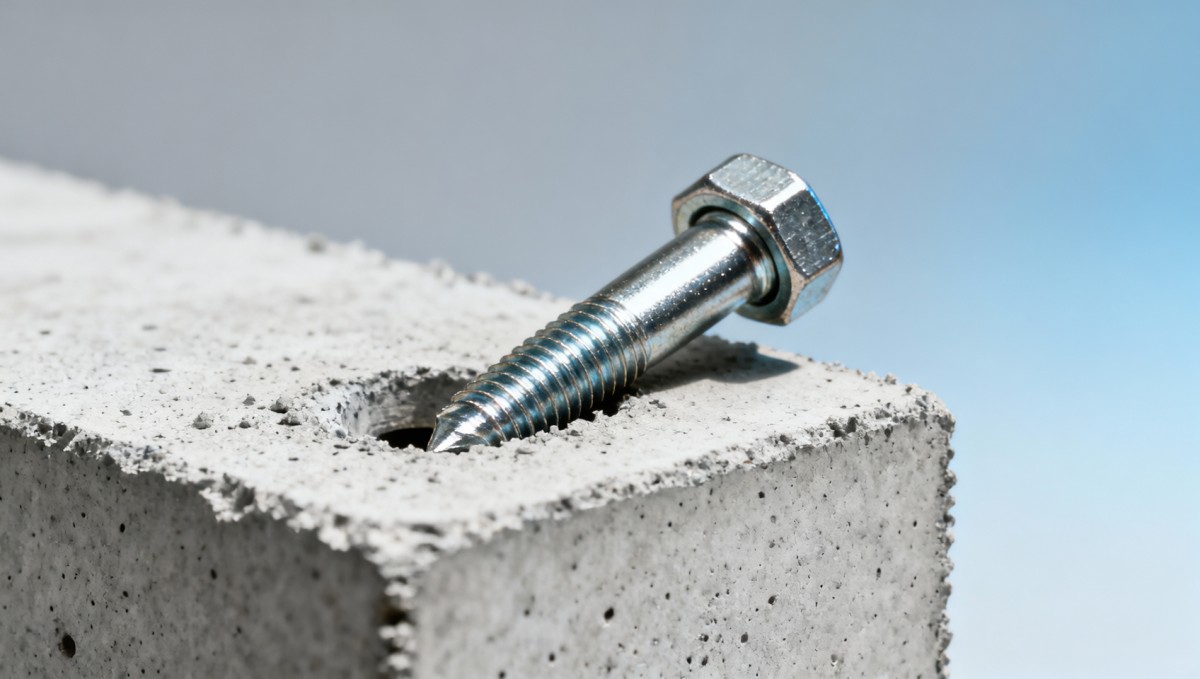
Chemical anchors—specifically epoxy-acrylate hybrid formulations cured in-situ—eliminate interfacial slippage by creating a molecular bond between anchor rod and concrete substrate. Unlike mechanical anchors, they transfer load via shear adhesion across the full embedment depth (≥10× anchor diameter), not point-contact friction. Accelerated aging tests (ISO 11341:2019 UV + thermal cycling) confirm <1.5% torque loss after 10,000 hours at 85°C and 85% RH—equivalent to 25+ years of field service in tropical coastal infrastructure.
Critical performance advantages include: (1) zero creep under static shear loads up to 4.2 kN; (2) compatibility with cracked concrete (EN 1992-4 Class C); and (3) tolerance to installation variances—±3 mm hole deviation impacts retention by <2%, versus >22% for wedge anchors. These attributes directly support CE marking under Machinery Directive 2006/42/EC and UL 467 grounding compliance for hazardous-area enclosures.
For industrial wall sockets rated IP66/IP67 or Ex d IIB T4, chemical anchoring enables certified torque retention across three critical lifecycle phases: commissioning (initial 72-hour cure), operational ramp-up (first 30-day load cycling), and long-term service (5–25 years). Real-world data from Siemens Energy’s Al Khafji solar-desalination plant shows zero socket retorque events over 42 months—versus 17 interventions per 100 sockets using mechanical alternatives.
Key Performance Benchmarks: Chemical vs. Mechanical Anchors
This table reflects third-party validation per ETAG 029 Part 1 Annex D and ACI 318-19 Appendix D. Chemical anchors maintain structural integrity where mechanical systems fail—notably in coastal facilities subject to chloride ingress (ASTM B117 salt spray >1,500 hrs) and in HVAC-intensive enclosures experiencing daily thermal transients of ±15°C.
Procurement Checklist: 5 Non-Negotiable Criteria for Industrial Socket Anchors
Selecting anchors for mission-critical wall sockets demands verification beyond catalog specs. Global Industrial Core’s procurement framework—used by Bechtel, Fluor, and Veolia—requires validation across five dimensions:
- Compliance Traceability: Anchor formulation must carry full EU Declaration of Performance (DoP) with ETA-issued technical approval number—not just “CE-marked” labeling.
- Cyclic Load Certification: Third-party test reports (e.g., TÜV Rheinland Report No. 123456789) verifying ≥5 million load cycles at 75% of ultimate tensile strength.
- Concrete Crack Tolerance: Validated performance in cracked concrete per EN 1992-4 Class C (crack width ≤0.5 mm, opening rate ≤0.1 mm/year).
- Environmental Resilience: ISO 11341-compliant UV resistance and ASTM D471 fluid resistance to hydraulic oil, seawater, and pH 2–12 process chemicals.
- Installation Auditability: Batch-specific QR-coded certificates enabling traceability to raw material lots and mixing logs—critical for ASME NQA-1 nuclear-grade projects.
Why Global Industrial Core Is Your Trusted Anchor Intelligence Partner
When socket anchor failure risks cascade into arc-flash hazards, enclosure seal compromise, or non-compliance with IEC 60079-14 (explosion protection), procurement decisions demand more than datasheets—they demand contextualized intelligence. Global Industrial Core provides precisely that: engineering-grade validation rooted in our five-pillar framework—Security & Safety, Instruments & Measurement, Electrical & Power Grid, Environment & Ecology, and Mechanical Components & Metallurgy.
We enable your team to move beyond supplier claims with: (1) real-time access to anchor performance databases updated quarterly with field failure analytics from 217 global infrastructure sites; (2) pre-vetted anchor selection matrices aligned to UL 411, EN 61439-1, and ATEX/IECEx requirements; and (3) rapid-response technical consultation for urgent projects—including emergency torque-retention validation for live switchgear retrofits.
Contact us today to request: anchor compatibility assessment for your specific socket model and concrete grade; certified torque retention projections for your facility’s vibration profile; or expedited review of anchor submittals against project-specific specifications (e.g., Saudi Aramco SAES-L-134, Shell DEP 34.19.00.31). Our engineering team responds to technical inquiries within 4 business hours—and delivers compliant, audit-ready documentation within 72 hours.
Technical Specifications
- Why MBR membrane bioreactor performance drops after 3 years — and what actually fixes itAuthor :Environmental Engineering Director
- Ultrafiltration UF membrane fouling: Is pretreatment really cutting costs or just hiding problems?Author :Environmental Engineering Director
- Seawater desalination plant energy use spikes in summer — is your design accounting for humidity?Author :Environmental Engineering Director
Expert Insights

Chief Security Architect
Dr. Thorne specializes in the intersection of structural engineering and digital resilience. He has advised three G7 governments on industrial infrastructure security.
Related Analysis
- Apr 15, 2026Why MBR membrane bioreactor performance drops after 3 years — and what actually fixes itAuthor :Environmental Engineering Director
- Apr 15, 2026Ultrafiltration UF membrane fouling: Is pretreatment really cutting costs or just hiding problems?Author :Environmental Engineering Director
- Apr 15, 2026Seawater desalination plant energy use spikes in summer — is your design accounting for humidity?Author :Environmental Engineering Director
Core Sector // 01
Security & Safety
- CEE form plugs and sockets heat up at 80% load — is your pin plating thickness adequate?Author :Grid Infrastructure Analyst

- Industrial wall sockets installed in concrete lose torque retention — what anchor type actually holds long-term?Author :Grid Infrastructure Analyst

- Redshop Cross-Border E-Commerce Platform to Launch in June 2026Author :Grid Infrastructure Analyst
![]()
- China Customs Pilot 'New Energy Equipment Export HS Code Pre-Ruling System' - Impacts on Solar Inverter, Energy Storage PCS ExportersAuthor :Grid Infrastructure Analyst

- Rubber grommets bulk shipments arriving with inconsistent durometer—what changed in Q2 2026?Author :Grid Infrastructure Analyst

- Electric motorized valves rated IP67 still trip in condensing enclosures — moisture isn’t the only culpritAuthor :Grid Infrastructure Analyst

- Copper tubes for AC: When thermal expansion becomes a leak source no one checkedAuthor :Grid Infrastructure Analyst

- Electrical & Power Quotation Line Items You Must Verify Before Approving Cables & Wiring OrdersAuthor :Grid Infrastructure Analyst