How to Vet an OPGW Cable Manufacturer
Author
Date Published
Reading Time
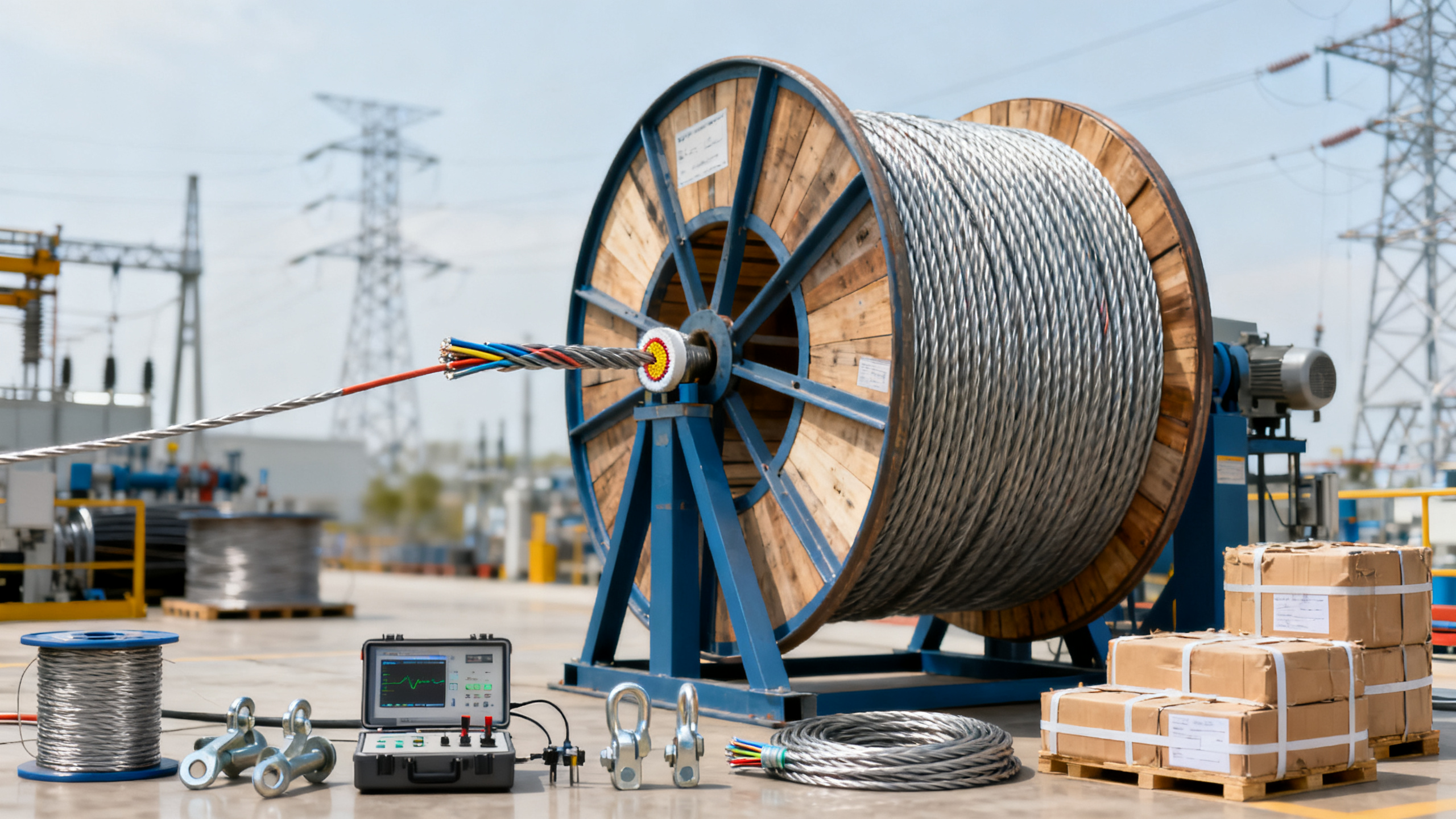
Choosing the right OPGW cable manufacturer is more than comparing prices—it means verifying quality systems, fiber performance, power grid expertise, and long-term supply reliability. Whether you also source ADSS fiber cable, XLPE power cables, overhead line fittings, or fiber optic cables wholesale, this guide explains how buyers can assess technical capability, certifications, and production consistency before making a critical procurement decision.
For EPC contractors, utility operators, procurement teams, and industrial decision-makers, OPGW cable is a strategic line item rather than a routine commodity. It sits at the intersection of transmission infrastructure and communications reliability, so a weak supplier can create risks that surface only after installation, commissioning, or several seasonal load cycles.
A disciplined vetting process should examine not only manufacturing scale, but also conductor design capability, optical unit protection, standards familiarity, test discipline, and after-sales responsiveness. The strongest OPGW cable manufacturer is usually the one that can document performance across the full supply chain, from raw wire selection to drum packing and field support.
Why Manufacturer Vetting Matters in OPGW Procurement
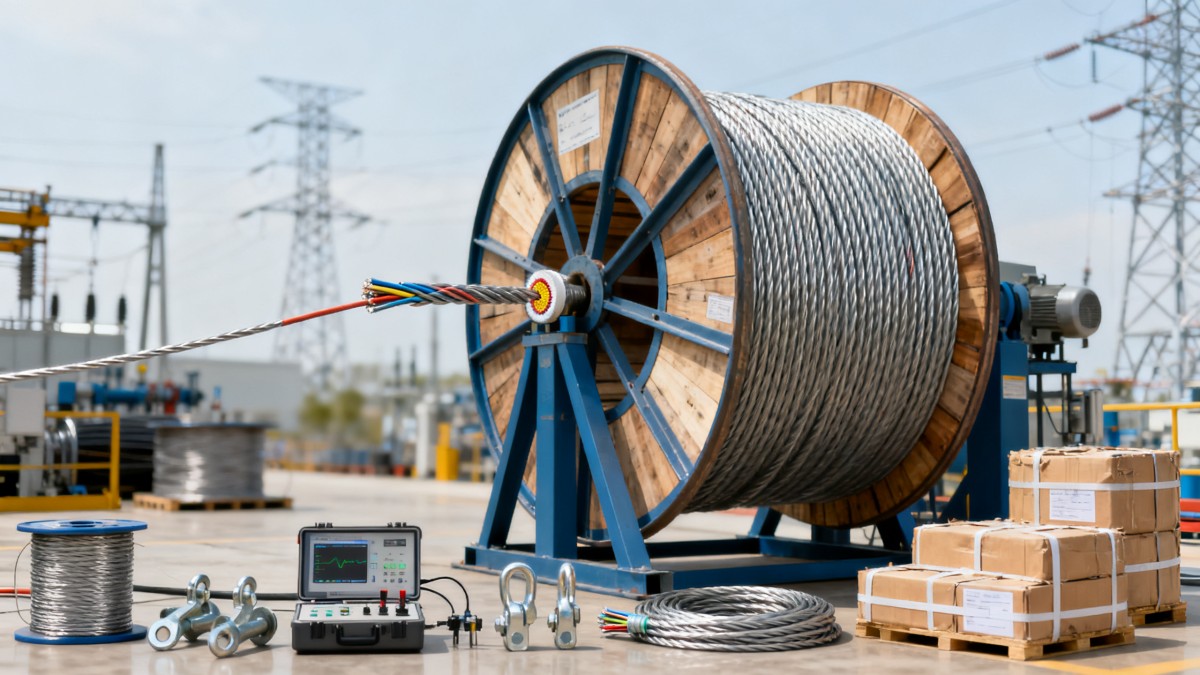
OPGW, or Optical Ground Wire, combines two functions in one product: grounding and lightning shielding for overhead transmission lines, plus optical fiber communication for monitoring and network control. That dual role makes supplier assessment more demanding than it is for standard fiber optic cables wholesale or general metallic conductors.
In most utility and substation projects, replacement costs are far higher than the original purchase price. A cable that underperforms in tensile strength, short-circuit current capacity, or fiber attenuation can trigger tower access work, outages, and coordination costs that are 3 to 10 times the initial material savings achieved by choosing the lowest bid.
The operating environment is also severe. OPGW may face wind vibration, ice loading, UV exposure, pollution, and temperature swings from below -20°C to above 70°C, depending on the region. Manufacturers that cannot demonstrate stable design performance under these conditions should not be shortlisted for critical grid projects.
Buyers should also remember that OPGW sourcing often overlaps with adjacent categories such as ADSS fiber cable, overhead line fittings, joint boxes, tension hardware, and XLPE power cables. A manufacturer with broad power grid familiarity is better positioned to coordinate system compatibility, packaging logic, and project documentation.
Common Risks of Inadequate Supplier Screening
- Fiber attenuation drift after installation due to poor optical unit protection or process inconsistency.
- Mechanical mismatch between cable design and actual span conditions, especially on 110 kV, 220 kV, or higher-voltage routes.
- Delays caused by incomplete type test reports, export documentation gaps, or noncompliant drum marking.
- High field handling losses because the supplier does not provide practical installation guidance or accessories coordination.
A Quick Comparison of Buying Approaches
The table below shows why structured evaluation outperforms price-only comparison when selecting an OPGW cable manufacturer for transmission and telecom-integrated power projects.
The key takeaway is clear: a reliable OPGW cable manufacturer should be measured across design, testing, supply continuity, and service responsiveness. Procurement teams that adopt this broader lens usually reduce requalification work and supplier turnover over a 12- to 36-month project cycle.
Core Technical Criteria to Review Before Approval
When buyers evaluate technical capability, they should separate marketing language from measurable performance. At minimum, request detailed data on fiber count, cable diameter, rated tensile strength, short-circuit current capacity, attenuation values, unit weight, and minimum bending radius. If these values are missing or only presented in general terms, the supplier is not yet procurement-ready.
The optical side matters as much as the metallic side. Ask whether the manufacturer can supply common single-mode fiber configurations such as 12, 24, 48, or 96 fibers, and whether attenuation is controlled within typical operating ranges such as ≤0.35 dB/km at 1310 nm and ≤0.22 dB/km at 1550 nm. Stable values across production lots are more important than a single attractive sample result.
On the mechanical side, the cable design must match route loading conditions. For long spans or harsh weather zones, buyers should verify everyday tension, maximum allowable tension, and the relationship between aluminum-clad steel wires, stainless steel tube design, and installation sag performance. A manufacturer experienced only in light-duty telecom cable may not be suitable for transmission line applications.
For integrated utility procurement, it is useful to compare OPGW capability against the supplier’s adjacent product familiarity. Manufacturers that also understand ADSS fiber cable, overhead line fittings, and related power accessories can better support dead-end hardware selection, suspension assemblies, and field compatibility checks.
Technical Checklist for Buyers
- Confirm the fiber type, fiber count, and attenuation values at 1310 nm and 1550 nm.
- Verify rated tensile strength and suitability for target span lengths, such as 200 m, 400 m, or more.
- Review short-circuit current performance and duration assumptions, often expressed over 0.5 to 1 second windows.
- Check installation limits such as minimum bending radius, drum length, and recommended stringing conditions.
- Ask for production tolerance data, not just nominal dimensions.
Questions That Reveal Real Engineering Depth
Instead of asking whether the cable is “high quality,” ask how the manufacturer controls excess fiber length, how often attenuation is sampled during production, what process protects the optical unit during stranding, and how design is adjusted for high-corrosion or coastal regions. Serious suppliers answer with process details, inspection frequency, and test criteria rather than broad claims.
You should also ask whether prototype design review is available before mass production. For utility tenders, a 2-step approval path is common: technical document review first, then pre-shipment or witness inspection. Manufacturers used to this sequence tend to manage project risk more effectively.
How to Verify Manufacturing Systems, Testing, and Traceability
A capable OPGW cable manufacturer should be able to show how product quality is built into the production system, not inspected in only at the end. That means documented incoming material checks, in-process monitoring, finished cable testing, and traceability from batch to drum. If traceability stops at the shipment level, root cause analysis becomes slow and expensive when field issues arise.
Buyers should request a concise quality document package. This usually includes the quality management certificate, routine test list, type test references, raw material inspection procedures, nonconformance handling flow, and sample labeling format. For larger projects, it is reasonable to ask how long production and test records are retained, such as 12 months, 24 months, or longer according to internal policy.
Factory audits remain one of the most effective tools. A 1-day remote audit may be enough for low-risk replenishment orders, but a first-time strategic supplier often justifies a 1- to 2-day on-site review. During the visit, buyers should inspect wire storage, stranding lines, optical unit handling areas, test instruments, packaging controls, and calibration records.
Do not overlook export execution. Many good products fail at the logistics stage because drum protection, moisture sealing, drum marking, and documentation are inconsistent. For cross-border deliveries, the supplier should be able to explain standard lead times, loading methods, and packaging controls for sea transit that may last 20 to 45 days.
What a Good Factory Review Should Cover
The following table can be used as a practical audit framework when screening an OPGW cable manufacturer before vendor registration or bid award.
In practice, the strongest suppliers are not always the ones with the largest factory footprint. The better indicator is process discipline: repeatable documentation, clear inspection points, and the ability to connect every delivered drum to specific material and test records within a short response window.
Standards and Documentation to Ask For
- Applicable product standards and test references used for OPGW design and verification.
- Routine test reports for each shipment lot or manufacturing batch.
- Type test evidence relevant to mechanical, optical, and environmental performance.
- Calibration records for critical inspection instruments.
- Packing list format, drum identification system, and field handling instructions.
Commercial Evaluation, Delivery Planning, and Supply Reliability
A technically qualified supplier can still be a weak commercial partner if capacity planning, communication, or delivery control is unstable. For this reason, procurement teams should evaluate lead time credibility, MOQ flexibility, engineering response speed, and spare length planning. In many projects, reliable delivery within 4 to 8 weeks is more valuable than a nominally lower offer that slips twice.
Ask the manufacturer to explain how production slots are allocated during peak demand. If the factory also produces ADSS fiber cable, power conductors, or XLPE power cables, determine whether OPGW lines are dedicated or shared. Shared resources are not necessarily a problem, but they require transparent scheduling and order confirmation discipline.
Commercial evaluation should also consider the supplier’s willingness to support project-specific documentation. Grid and EPC projects frequently need drum schedules, route-based cut lengths, inspection and test plans, pre-shipment photos, and accessory coordination. A manufacturer that can align these items early usually prevents delays at port, warehouse, or installation stage.
Finally, review after-sales structure. Even if actual defects are rare, buyers benefit from clear contacts for technical issues, claims handling, replacement lead times, and field troubleshooting. A practical support target for industrial procurement is a first technical response within 24 to 48 hours, especially during active construction windows.
Commercial Factors That Influence Total Project Cost
The table below helps buyers compare offers beyond headline pricing when selecting an OPGW cable manufacturer for infrastructure programs.
This comparison shows why total delivered value is broader than cost per kilometer. In many industrial buying decisions, schedule security, documentation quality, and support responsiveness are decisive factors, particularly when the OPGW package is tied to penalties, crane bookings, or shutdown windows.
Practical Vetting Workflow, Red Flags, and Buyer FAQ
A structured approval path helps teams compare suppliers fairly and avoid subjective decisions. In most cases, a 5-step workflow is effective: define technical scope, request documentation, review test and quality evidence, validate commercial capacity, and run a pilot or first-order control plan. This sequence works for both new supplier onboarding and benchmark reviews of existing vendors.
During screening, several red flags should trigger caution. These include inconsistent datasheets across quotations, reluctance to share routine test formats, unclear fiber source information, vague answers about traceability, and unrealistic lead times such as immediate dispatch for clearly customized cable designs. These signs do not always mean poor quality, but they do justify deeper verification.
It is also wise to align engineering, procurement, and field installation teams before final approval. Operators often catch practical issues that procurement documents miss, such as drum lifting details, pulling recommendations, marking visibility, or accessory compatibility. A 30-minute cross-functional review before purchase order release can prevent weeks of correction later.
For enterprises managing multiple grid or industrial sites, supplier approval should not end with the first shipment. Create a scorecard that reviews on-time delivery, documentation accuracy, field feedback, and claim rate every 6 or 12 months. This turns vendor qualification into an active performance tool rather than a one-time paperwork exercise.
Recommended 5-Step Vetting Workflow
- Define application conditions: voltage class, span profile, climate, fiber count, and installation method.
- Collect supplier documents: drawings, datasheets, test lists, certificates, and packaging standards.
- Verify production and traceability: audit records, calibration, in-process controls, and shipment identification.
- Compare commercial readiness: lead time, MOQ, support commitment, and export handling.
- Approve with controls: pilot order, witness inspection, or first-article review before full release.
How do I know whether an OPGW cable manufacturer really understands grid applications?
Look for evidence that the supplier can discuss transmission line conditions in practical terms: span length, tension, short-circuit performance, vibration exposure, and hardware matching. If the conversation stays limited to generic optical cable specifications, the supplier may not have enough power grid depth for utility-grade projects.
What delivery lead time is realistic for customized OPGW cable?
For standard configurations, many suppliers quote around 4 to 8 weeks, while complex documentation packages, special drum schedules, or peak-season bookings can extend timelines. Overseas shipments may add another 20 to 45 days depending on route and port conditions. Always ask whether quoted lead time includes testing and final packing.
Should buyers request a sample or small pilot order first?
Yes, especially for new vendors or multi-country sourcing programs. A pilot order helps validate document control, drum labeling, packaging quality, and communication speed in addition to product performance. Even a limited pilot can reveal gaps that are hard to detect in a quotation review alone.
Can one supplier handle OPGW, ADSS fiber cable, and related line accessories?
In some sourcing models, yes. This can simplify interface management, especially when overhead line fittings and cable accessories must align with route conditions. However, buyers should still verify competence by product category, because strength in fiber optic cables wholesale does not automatically mean strength in OPGW for transmission infrastructure.
Vetting an OPGW cable manufacturer is ultimately about reducing operational uncertainty. The best supplier fit will combine sound engineering, transparent testing, disciplined manufacturing, dependable delivery, and practical support for the realities of power grid construction and maintenance. If your team is evaluating OPGW cable, ADSS fiber cable, XLPE power cables, or associated overhead line products, a structured review process will protect both technical performance and commercial outcomes.
Global Industrial Core supports industrial buyers with decision-focused sourcing intelligence across electrical and power grid systems. To discuss supplier screening criteria, compare sourcing options, or explore a more tailored procurement framework, contact us to get a customized solution and deeper product guidance for your next infrastructure project.
Expert Insights

Chief Security Architect
Dr. Thorne specializes in the intersection of structural engineering and digital resilience. He has advised three G7 governments on industrial infrastructure security.
Related Analysis
Core Sector // 01
Security & Safety
- How to Choose Welding Cables WholesaleAuthor :Grid Infrastructure Analyst

- THHN Building Wire vs XHHW: What ChangesAuthor :Grid Infrastructure Analyst

- Are Solar PV Cables Worth the Higher CostAuthor :Grid Infrastructure Analyst

- How to Vet an OPGW Cable ManufacturerAuthor :Grid Infrastructure Analyst

- When Does ADSS Fiber Cable Make More SenseAuthor :Grid Infrastructure Analyst

- What to Check Before Buying Fiber Optic Cables WholesaleAuthor :Grid Infrastructure Analyst

- Where Unshielded Control Cables Work BestAuthor :Grid Infrastructure Analyst

- Armored Cables Wholesale: Common Buying MistakesAuthor :Grid Infrastructure Analyst