PVC Insulated Copper Wire Buying Guide
Author
Date Published
Reading Time
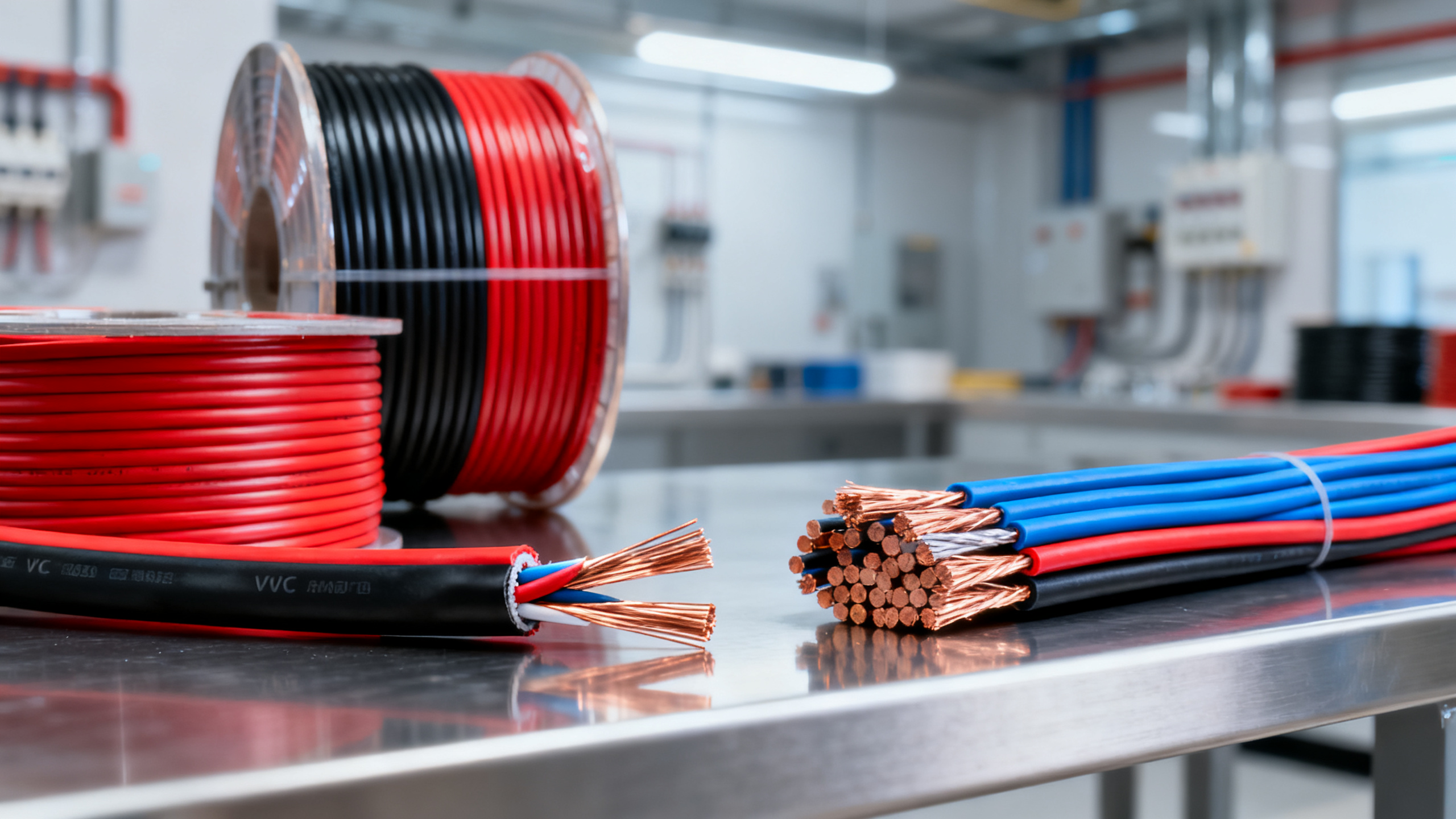
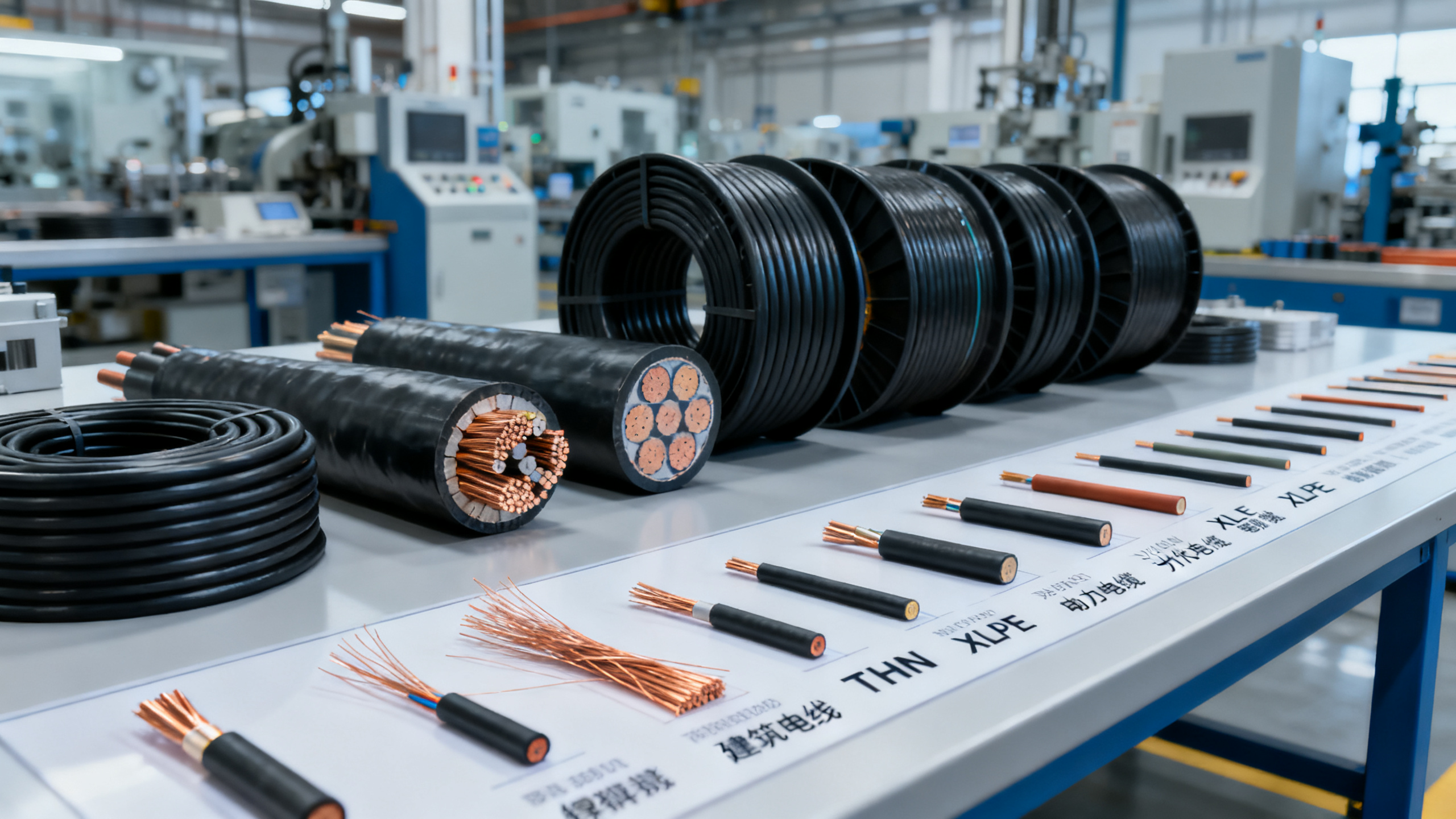
Choosing the right PVC insulated copper wire is not just about price or availability. For most buyers and technical users, the real questions are simpler and more important: Is it safe for the intended installation? Does it meet the required standards? Will it perform reliably under real operating conditions? And is standard PVC insulated copper wire the right choice, or would alternatives such as THHN building wire or XLPE power cables be a better fit?
The short answer is this: PVC insulated copper wire remains a practical and widely used option for many industrial, commercial, and building applications because it balances conductivity, flexibility, insulation performance, and cost. But it is only the right choice when the voltage rating, temperature class, conductor construction, compliance certifications, and installation environment match the actual project requirements. A poor match can lead to overheating, premature insulation failure, non-compliance, or unnecessary overspending.
This buying guide is designed for researchers, operators, procurement teams, and decision-makers who need to evaluate PVC insulated copper wire with confidence. It focuses on the buying criteria that matter most in real projects: conductor quality, insulation grade, standards, application fit, and supplier evaluation.
What should you check first before buying PVC insulated copper wire?
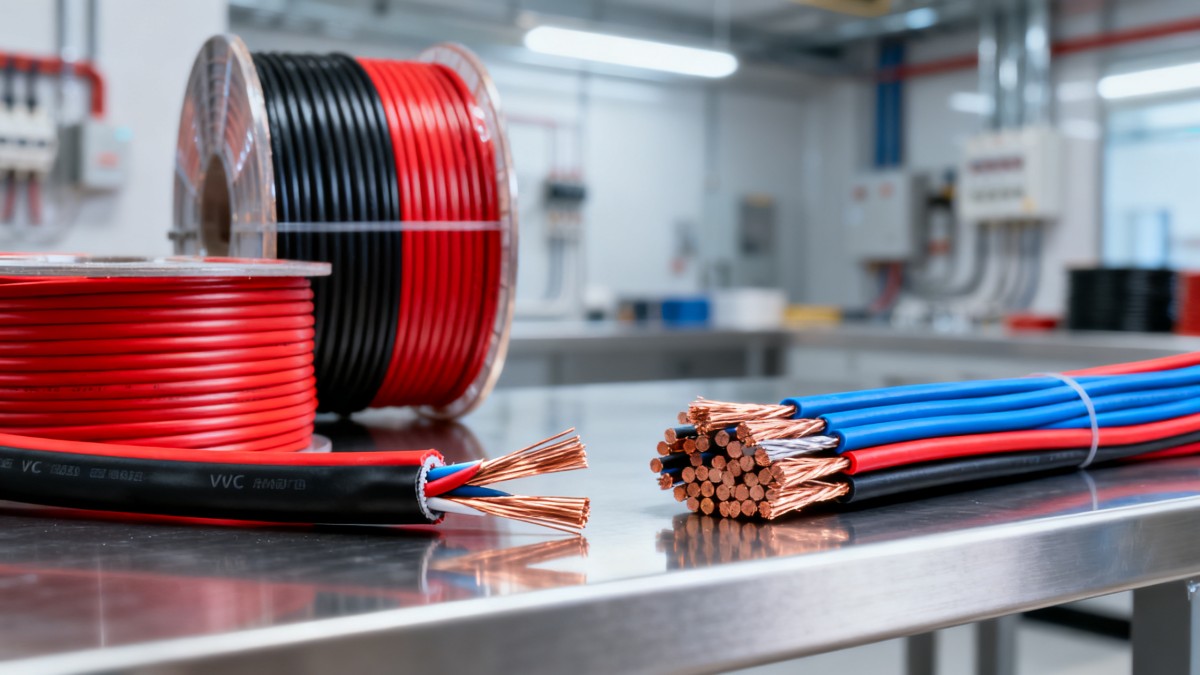
Before comparing brands, prices, or delivery terms, start with five core checks. These are the factors that most directly affect safety, compliance, and lifecycle value.
- Application type: Is the wire intended for building wiring, control panels, machinery, lighting circuits, low-voltage distribution, or industrial equipment?
- Voltage rating: The wire must be suitable for the system voltage and installation category.
- Temperature rating: PVC insulation has operating limits. Higher ambient temperatures may require a different insulation system.
- Installation environment: Dry, damp, oily, outdoor, UV-exposed, or chemically aggressive environments can change the selection decision.
- Compliance requirements: Local code, UL, IEC, CE, RoHS, flame-retardant, and project-specific specifications may all apply.
If a buyer skips these first checks, the risk is high: the purchased wire may be technically acceptable on paper but unsuitable in practice. For industrial procurement, that can lead to rework, inspection issues, or delayed commissioning.
Why PVC insulated copper wire is still widely used
PVC insulated copper wire remains popular because it solves many common installation needs efficiently.
Copper offers excellent electrical conductivity, dependable mechanical strength, and good termination performance. It is also easier to work with than many alternatives in applications where stable connections and compact conductor sizing matter.
PVC insulation provides a practical mix of electrical insulation, abrasion resistance, moisture resistance, and affordability. For many building and industrial circuits, this makes it a cost-effective and proven choice.
Key advantages include:
- Good conductivity and relatively low resistance
- Reliable insulation for standard low-voltage applications
- Broad market availability and specification familiarity
- Compatibility with many standard installation methods
- Lower cost compared with some higher-performance insulation systems
That said, “widely used” does not mean “universally suitable.” PVC insulated copper wire is often ideal for general wiring, but not always the best choice for high-heat, heavy-duty outdoor, or chemically harsh environments.
How to judge conductor quality when comparing wires
Many purchasing mistakes happen because the wire is evaluated mainly by nominal size and price. In reality, conductor quality can vary significantly between suppliers.
Look at these points:
1. Conductor material purity
High-quality copper conductors should have high conductivity and stable metallurgical consistency. Poor-quality copper may increase resistance, heat generation, and long-term reliability risks.
2. Actual cross-sectional area
The stated size must match the real conductor area. Undersized conductors can cause voltage drop, overheating, and failure to meet current-carrying expectations.
3. Stranded vs. solid construction
Solid conductors are common in fixed installations, while stranded conductors are generally preferred where flexibility, vibration resistance, or easier routing is needed. Operators and installers should align conductor construction with installation conditions.
4. Surface condition and manufacturing consistency
The conductor should be clean, uniform, and free from obvious defects. Inconsistent construction may signal weak process control.
5. Test documentation
For serious procurement, request supporting data such as conductor resistance, dimensional tolerances, and routine quality test records.
For buyers managing large tenders or industrial supply chains, these checks are not optional. They help separate a compliant cable product from one that only appears competitive on cost.
What insulation characteristics matter most in real installations?
PVC is not a single universal material. Different PVC insulation grades can perform differently depending on formulation and intended use.
When reviewing insulation performance, focus on:
- Temperature class: Verify the maximum conductor operating temperature allowed by the specification.
- Dielectric strength: This affects the insulation’s ability to withstand electrical stress.
- Flame behavior: Some applications require flame-retardant or low-smoke characteristics.
- Mechanical durability: Resistance to abrasion, bending, and installation stress matters in field conditions.
- Chemical and moisture resistance: Industrial sites may expose wire to oils, cleaning agents, humidity, or occasional splash.
In practical terms, PVC insulated copper wire is usually a strong fit for standard internal wiring and protected installations. If the project demands superior thermal endurance or tougher environmental resistance, an XLPE-insulated product may deliver better long-term performance.
Which standards and certifications should buyers verify?
For procurement teams and decision-makers, compliance is one of the highest-value checkpoints. A low purchase price means little if the wire fails inspection or cannot legally be installed.
Common standards and approvals may include:
- UL for North American product compliance
- IEC for international cable construction and performance standards
- CE where relevant to regional market requirements
- RoHS for restricted hazardous substances compliance
- ISO-based manufacturing systems as a sign of process control
- Local building and electrical code compliance for the destination market
Ask suppliers for:
- Datasheets
- Test reports
- Third-party certifications
- Declaration of conformity
- Traceability information by batch or production lot
If the project is for EPC delivery, utilities, factories, or mission-critical infrastructure, documentation quality is almost as important as product quality. Strong documentation reduces technical ambiguity during inspection, installation, and future maintenance.
When is PVC insulated copper wire the right choice, and when is it not?
Many buyers search for PVC insulated copper wire when they actually need help choosing between multiple cable categories.
PVC insulated copper wire is usually the right choice when:
- The installation is low-voltage and within standard temperature limits
- The wire will be used indoors or in protected routing conditions
- Cost efficiency is important but basic performance must remain reliable
- The project involves general power, control, or building wiring
It may not be the best choice when:
- High ambient or conductor temperatures are expected
- The wire will face prolonged UV exposure or severe weather
- The installation requires enhanced chemical resistance
- Mechanical stress is unusually high
- The specification calls for low-smoke, halogen-free, or special fire-performance properties
In those cases, another wire or cable type may provide better technical and commercial value over the full lifecycle.
How does PVC insulated copper wire compare with THHN building wire?
This is a common comparison, especially in commercial construction and electrical contracting.
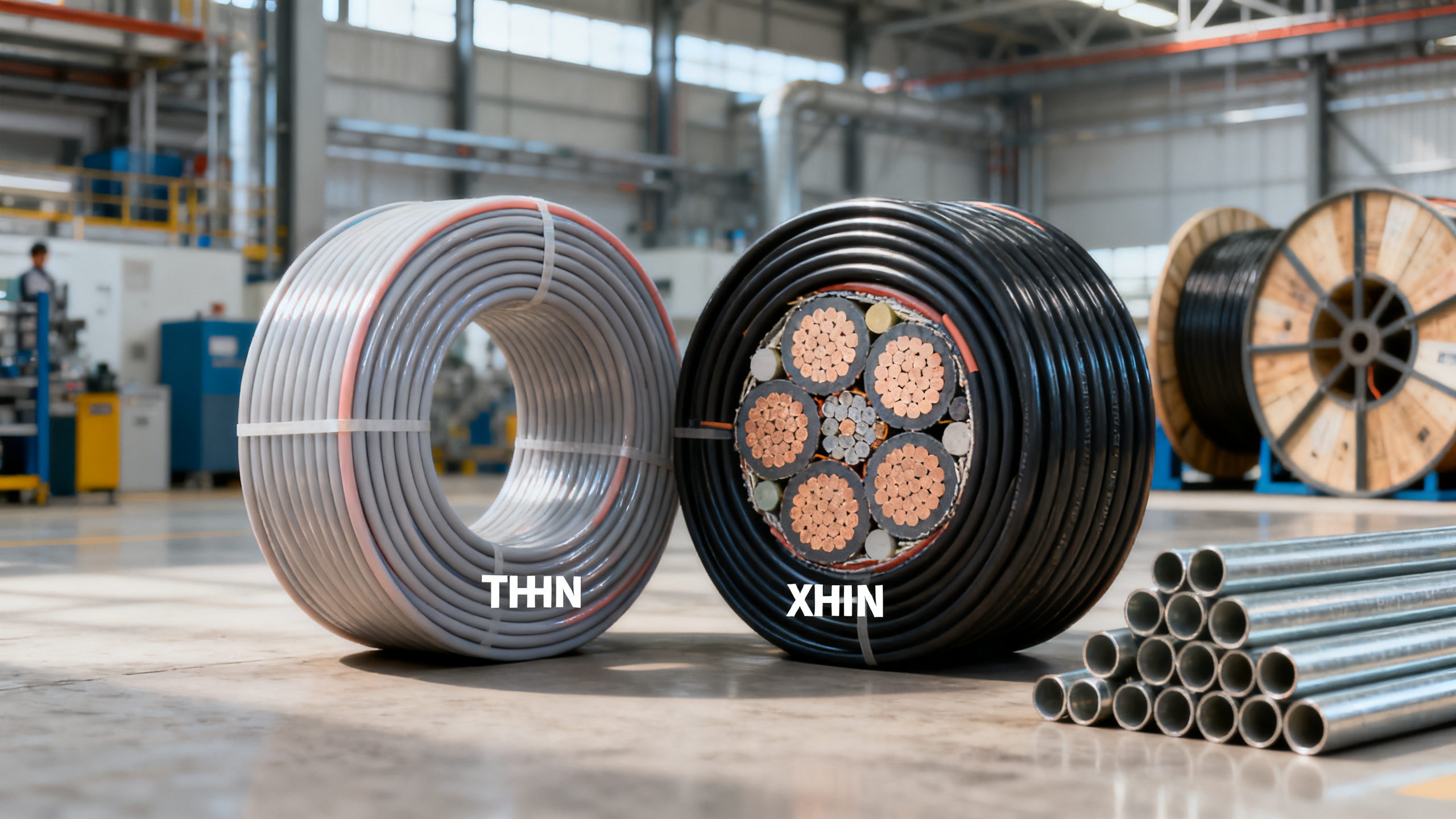
THHN building wire typically refers to thermoplastic-insulated wire with a nylon jacket, often used in conduit-based building wiring systems. Compared with basic PVC insulated copper wire, THHN products often provide higher temperature ratings and a tougher outer surface for pulling and installation.
Choose THHN building wire when:
- The local code specifically recognizes or requires it
- Higher temperature performance is needed
- The installation is inside conduit systems common in commercial buildings
- Pulling resistance and dry-location performance are priorities
Choose PVC insulated copper wire when:
- The application specification is broader or based on IEC-style wire types
- The installation does not require THHN-specific construction
- You need a practical general-purpose insulated copper conductor for compatible installations
The key point is that these are not always direct substitutes. Procurement should align the buying decision with project standards and installation practice, not just the nearest equivalent description.
How does PVC insulated copper wire compare with XLPE power cables?
For industrial and infrastructure buyers, this is often the more important comparison.
XLPE power cables generally offer higher temperature resistance, better electrical performance under load, and stronger suitability for demanding power distribution environments. They are commonly selected for more robust industrial, utility, and outdoor applications.
Compared with PVC insulated copper wire, XLPE power cables often provide:
- Higher thermal endurance
- Improved insulation stability
- Better suitability for heavier-duty service conditions
- Stronger long-term performance in demanding power applications
However, XLPE power cables may also come with higher cost and may be unnecessary for standard internal wiring tasks.
A useful buying principle is this:
- Use PVC insulated copper wire for standard, code-compliant, lower-stress wiring applications where economy and practicality matter.
- Use XLPE power cables where heat, load, environment, or service life expectations justify the upgrade.
What procurement teams should ask suppliers before placing an order
For wholesale electrical cables and wire procurement, the supplier evaluation process can have as much impact as product selection itself.
Ask these questions before issuing a purchase order:
- What exact standard does the wire conform to?
- What are the conductor class, nominal size, voltage rating, and temperature rating?
- Can the supplier provide recent third-party or factory test reports?
- Is the copper conductor pure copper, tinned copper, solid, or stranded?
- What insulation compound is used, and what is its performance class?
- Is the product suitable for the intended environment?
- What are the packaging, labeling, and traceability arrangements?
- What is the lead time for repeat orders?
- How consistent is supply across batches and production runs?
- What after-sales technical support is available if installation questions arise?
For larger sourcing programs, also assess whether the supplier can support documentation packages, private labeling, regional compliance needs, and stable long-term volume delivery.
How to evaluate total value instead of just unit price
Buyers often compare PVC insulated copper wire on price per meter or per coil. That is understandable, but incomplete.
A lower unit price may become more expensive if it leads to:
- Higher installation difficulty
- More waste due to inconsistent quality
- Failed inspections or compliance gaps
- Shorter service life
- Increased maintenance risk
- Project delays from poor documentation or late delivery
To judge true value, compare:
- Technical fitness for the application
- Certification strength
- Quality consistency
- Supplier reliability
- Lifecycle risk
- Total installed cost
This matters especially for enterprise decision-makers. In industrial environments, wire is a relatively small line item compared with the cost of downtime, rework, or electrical failure.
Common buying mistakes to avoid
Several mistakes appear repeatedly across commercial and industrial wire purchasing:
- Choosing by price without checking standards
- Assuming all PVC insulated copper wire performs the same
- Ignoring installation temperature and ambient conditions
- Using general-purpose wire where XLPE power cables are more appropriate
- Substituting THHN building wire without confirming code and specification compatibility
- Failing to verify conductor cross-section and test reports
- Overlooking flame-retardant or safety requirements
- Buying wholesale electrical cables from suppliers with weak traceability
A disciplined specification review can prevent most of these problems before they affect the project.
Final buying checklist for PVC insulated copper wire
Use this practical checklist before final selection:
- Confirm the exact application and installation method
- Verify voltage and temperature rating
- Check conductor material, class, and actual size
- Review insulation grade and environmental suitability
- Confirm relevant UL, IEC, CE, or local code compliance
- Compare against THHN building wire or XLPE power cables where necessary
- Request datasheets, test reports, and certification documents
- Evaluate supplier consistency, lead time, and support capability
- Assess total lifecycle value, not just purchase cost
PVC insulated copper wire is a dependable and economical solution for many installations, but only when it is correctly specified. The best buying decision comes from matching wire construction and compliance level to the actual operational environment. For researchers, operators, purchasers, and business leaders alike, that is the difference between a routine purchase and a resilient infrastructure decision.
Expert Insights

Chief Security Architect
Dr. Thorne specializes in the intersection of structural engineering and digital resilience. He has advised three G7 governments on industrial infrastructure security.
Related Analysis
Core Sector // 01
Security & Safety
- How to Choose Welding Cables WholesaleAuthor :Grid Infrastructure Analyst

- THHN Building Wire vs XHHW: What ChangesAuthor :Grid Infrastructure Analyst

- Are Solar PV Cables Worth the Higher CostAuthor :Grid Infrastructure Analyst

- How to Vet an OPGW Cable ManufacturerAuthor :Grid Infrastructure Analyst

- When Does ADSS Fiber Cable Make More SenseAuthor :Grid Infrastructure Analyst

- What to Check Before Buying Fiber Optic Cables WholesaleAuthor :Grid Infrastructure Analyst

- Where Unshielded Control Cables Work BestAuthor :Grid Infrastructure Analyst

- Armored Cables Wholesale: Common Buying MistakesAuthor :Grid Infrastructure Analyst