Where Unshielded Control Cables Work Best
Author
Date Published
Reading Time
Where do control cables unshielded deliver the best value in industrial systems? In low-noise environments, short runs, and cost-sensitive installations, they offer reliable signal transmission without the added expense of shielding. For engineers, operators, and procurement teams comparing wholesale electrical cables, understanding when unshielded designs outperform more complex alternatives is essential for safer, more efficient infrastructure decisions.
In heavy industry, cable selection affects more than signal continuity. It influences installation speed, panel density, maintenance workload, spare-parts strategy, and long-term procurement cost. Unshielded control cables are often overlooked because shielding is assumed to be the safer default, yet that assumption can lead to unnecessary cost and complexity in many practical installations.
For EPC contractors, facility managers, operators, and industrial buyers, the real question is not whether shielding is good, but whether a given environment actually requires it. This article explains where unshielded control cables work best, which operating conditions support reliable performance, what technical limits matter most, and how to make a more defensible sourcing decision across industrial infrastructure projects.
Understanding the Role of Unshielded Control Cables in Industrial Systems
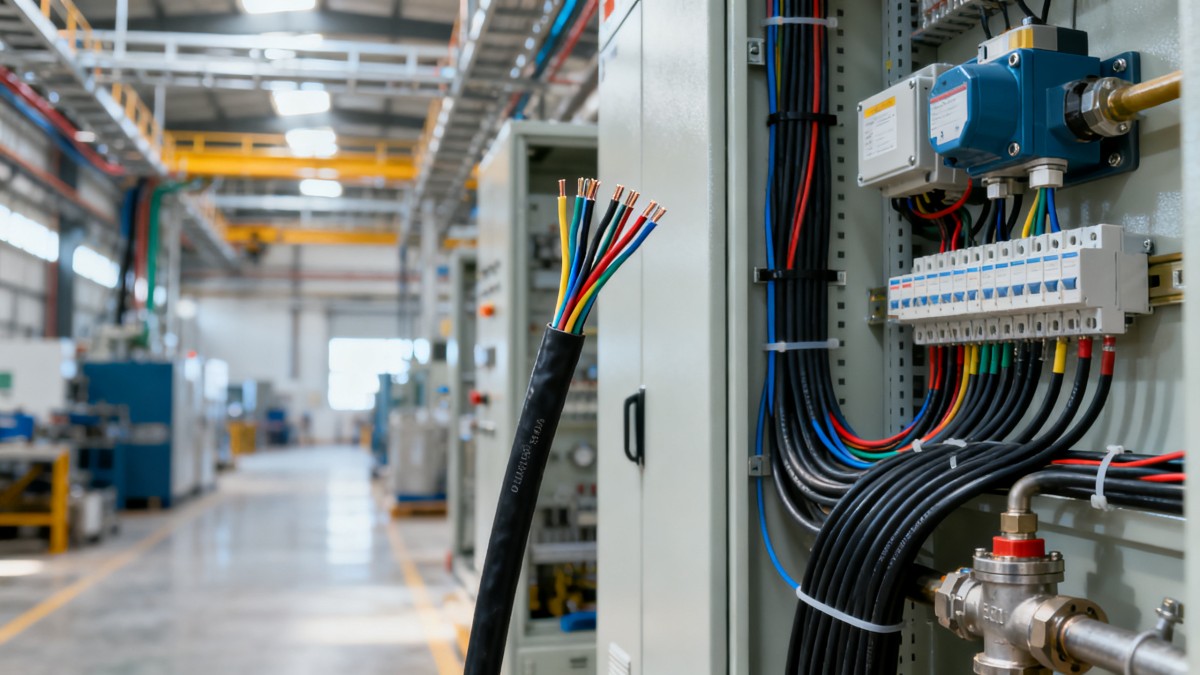
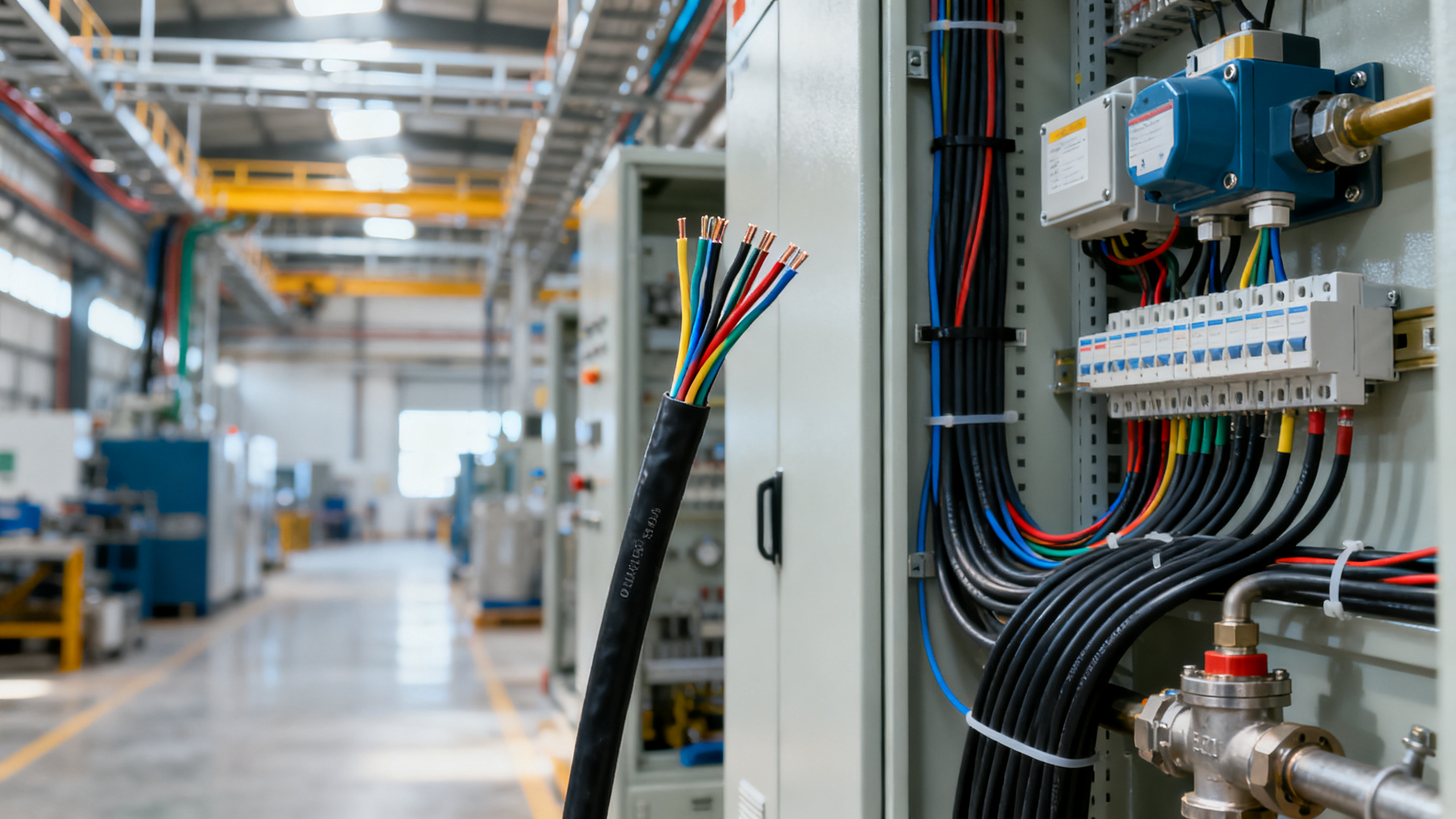
Unshielded control cables are multi-core cables designed to carry low-voltage control, monitoring, switching, and signaling functions between equipment, panels, sensors, actuators, and automation components. Unlike shielded constructions, they do not include a metallic braid, foil, or combined screen layer around the conductors or core assembly. This reduces material cost, cable diameter, and termination effort.
In many plants, these cables operate at 300/500 V or 450/750 V ratings, depending on design and local standards. They are commonly used in dry or moderately demanding environments where electromagnetic interference is limited, routing distances are manageable, and the signal type is relatively robust. Examples include contact closure signals, relay circuits, solenoid control, motor starter commands, and general machine interlocks.
The main value proposition is straightforward: if the installation does not face a high EMI burden, an unshielded control cable can deliver the required electrical performance with fewer materials and simpler handling. On projects with 500 m to 5,000 m of total cable demand, even a modest per-meter difference can materially affect the cable package budget.
This does not mean unshielded control cables are basic or low-grade by definition. Good industrial-grade versions can still feature flame-retardant compounds, oil-resistant jackets, temperature ratings such as -15°C to 70°C or -40°C to 90°C depending on insulation, and compliance with common industrial expectations for mechanical durability and identification.
Why they remain relevant in modern facilities
Industrial facilities are not uniform EMI zones. A water treatment skid, a packaging line junction box, and a remote valve island do not face the same interference profile as a VFD-heavy motor control room. In quieter zones, paying for shielding on every control loop can add cost without improving operational outcomes. That is why experienced designers segment cable selection by application instead of using one specification everywhere.
Typical advantages
- Lower cable acquisition cost, often meaningful across medium and large-volume tenders.
- Smaller outside diameter, which can improve conduit fill ratio and panel entry management.
- Faster termination, because there is no drain wire, foil fold-back, or shield bonding step.
- Lighter weight per drum, which can simplify handling during installation.
The table below summarizes the functional difference between unshielded and shielded control cable constructions in a way that is useful for early-stage specification and procurement screening.
The practical takeaway is that unshielded control cables are not a compromise in the wrong places; they are a fit-for-purpose choice in the right places. The decision should be based on interference exposure, signal criticality, route design, and maintenance philosophy rather than habit alone.
Where Unshielded Control Cables Perform Best
The strongest applications for unshielded control cables are installations where the cable route is physically separated from major noise sources and where the control signal itself has reasonable tolerance to minor electrical disturbance. In many industrial plants, this includes internal panel wiring extensions, machine control loops, building services control, utility skids, and discrete I/O links over short distances.
A common rule of thumb is that unshielded control cables are more comfortable when routed over short to moderate distances, such as 10 m to 80 m, especially when they do not share trays with variable frequency drive output cables, large motor feeders, welders, or switching equipment with repeated transient activity. The shorter the exposure path, the lower the risk of meaningful induced noise.
They also work well in systems using robust binary signals. Start/stop commands, limit switch returns, valve open/close status, and relay logic are often more tolerant than low-level analog measurement loops. In sectors such as water treatment, HVAC infrastructure, bulk handling, and general manufacturing auxiliaries, that difference matters because not every signal path needs the same level of protection.
Cost-sensitive projects benefit most when cable quantity is high and the environment is electrically disciplined. If a project includes 1,200 m of control cable across secondary systems, a 10% to 20% cable cost reduction combined with quicker terminations can free budget for higher-priority items such as protective devices, network diagnostics, or spare inventory.
High-fit application scenarios
- Remote pushbutton stations and local control boxes installed away from high-power feeders.
- Packaging and conveyor support circuits using discrete I/O over predictable routing paths.
- Utility modules such as pumps, fans, dampers, and valve actuators in segregated cable trays.
- Building and facility control systems where signal density is high but EMI exposure is moderate.
- Retrofit projects where conduit space is limited and a smaller cable diameter improves pullability.
The following comparison helps identify where unshielded designs usually make sense and where they should be questioned before specification approval.
In procurement terms, the best value appears when technical adequacy and commercial efficiency align. If the environment is low noise, the route is controlled, and the signal type is not especially delicate, unshielded control cables can be the more rational choice rather than the cheaper-looking choice.
Selection Criteria: Technical Factors Engineers and Buyers Should Check
Selecting unshielded control cable requires a practical review of at least 6 core factors: voltage rating, conductor size, core count, insulation and jacket material, installation environment, and route exposure to electrical noise. Buyers should not focus only on unit price per meter. The right construction reduces rework, avoids premature aging, and supports smoother installation.
Conductor size is often determined by control current, voltage drop, and mechanical robustness. Common sizes include 0.5 mm², 0.75 mm², 1.0 mm², and 1.5 mm². For many control applications, 0.75 mm² to 1.5 mm² covers the majority of needs, but longer runs may justify a larger cross-section to improve signal integrity and installation durability.
Material choice matters as much as electrical rating. PVC remains common for general industrial use due to cost efficiency and flexibility. XLPE or specialized compounds may be preferred where higher temperature tolerance, improved chemical resistance, or tougher mechanical performance is required. Facilities operating in oil mist, UV exposure, or intermittent washdown conditions should evaluate jacket compatibility carefully.
Another key check is routing discipline. Even without shielding, cable performance can remain stable if tray separation, crossing angle, and bundling practices are controlled. For example, crossing a power cable at 90 degrees generally reduces coupling compared with long parallel runs. In many specifications, physical separation can be as important as cable construction itself.
A practical evaluation checklist
- Confirm signal type: discrete control, analog, communication, or mixed function.
- Measure route length: under 30 m, 30–80 m, or above 80 m often changes risk level.
- Map nearby noise sources: VFDs, large motors, transformers, contactors, welders.
- Check environmental stress: temperature, oil, abrasion, moisture, and flexing frequency.
- Verify compliance needs: CE, UL-recognized constructions, flame class, or local code alignment.
- Review termination conditions: gland size, panel space, and installer skill level.
The table below gives a compact specification framework that can support both technical review and RFQ preparation for wholesale electrical cable purchasing.
A disciplined specification shortens bid clarification cycles and reduces mismatches between engineering intent and delivered cable stock. In large projects, that can save days during submittal review and prevent avoidable change orders later in the installation phase.
Risks, Limitations, and Common Mistakes to Avoid
The most common mistake is assuming that unshielded control cables can be applied universally if the nominal voltage and conductor count look correct. In reality, the weakest point is not the datasheet headline. It is the interaction between cable route and surrounding electrical activity. A technically acceptable cable can still behave poorly if it is laid in the wrong tray beside the wrong circuits for 50 m or more.
Another frequent error is mixing signal categories without route segregation. Discrete control signals may tolerate a noisy environment that a 4–20 mA analog loop cannot. If these circuits are bundled together, the designer may unintentionally apply the selection logic of one signal type to another. This is especially risky in brownfield upgrades where available tray space is limited and routing compromises are common.
Mechanical and environmental factors are also underestimated. A cable chosen only for low purchase cost may struggle in repeated flexing, oil exposure, or cold starts below -10°C. Procurement teams should ask not only whether the cable is unshielded, but whether the jacket compound, conductor class, and installation method align with real operating conditions over 3 to 10 years of service.
Finally, some teams install shielded cable but ground it poorly, while others choose unshielded cable where shielding was clearly needed. Both errors come from treating cable choice as a catalog decision rather than a system decision. The better practice is to review noise source proximity, cable separation, grounding concept, and signal sensitivity together before purchase release.
Warning signs that unshielded may be the wrong choice
- Long parallel routing next to motor feeders or VFD output conductors for more than 20–30 m.
- Use with low-level analog measurement or high-resolution sensor circuits.
- Frequent switching transients from heavy contactor banks or welding equipment nearby.
- Mixed trays where separation cannot be maintained during installation or later expansions.
- Mission-critical process loops where nuisance signals could trigger downtime or safety concerns.
Risk reduction practices
If unshielded control cables are still preferred for cost or logistics reasons, risk can be reduced through route planning and installation discipline. Separate control and power pathways where possible, use metallic conduit for exposed sections in noisier zones, avoid extended parallel runs, and maintain clean terminations. In many cases, a better route can solve what a more expensive cable would only partially address.
For operators and maintenance teams, early symptoms of an unsuitable unshielded installation include intermittent false status signals, inconsistent actuator response, unstable analog readings, or nuisance trips that appear only when nearby drives ramp up. These patterns should trigger a routing and interference review before replacing field devices unnecessarily.
Procurement Strategy, Installation Planning, and Lifecycle Value
For buyers and decision-makers, the goal is to purchase the lowest-risk cable package that still respects budget targets. That means comparing total installed cost, not just quoted cable price. Unshielded control cables often reduce total cost through 3 channels: lower material cost, faster installation, and simpler termination. On repetitive projects with hundreds of cores, these savings can be operationally relevant.
Lead time is another practical consideration. Standard unshielded constructions are often easier to source in larger meterage than specialized shielded variants, especially in common core counts such as 2C, 4C, 7C, 12C, and 19C. While actual delivery varies by market and specification complexity, standard industrial cable orders may move in 7–21 days, whereas customized constructions can require 3–6 weeks or longer.
Installation planning should start before the purchase order is issued. The engineering team should define route grouping, minimum separation practices, gland and ferrule requirements, identification method, and test expectations. This prevents a low-cost purchase from becoming a high-cost installation problem. In industrial cable projects, unclear installation criteria can erase upfront savings quickly.
Lifecycle value improves when the selected cable family is standardized across multiple systems with similar duty. Standardization can simplify spare holding, technician familiarity, and future expansion work. However, standardization should be done by application band, not by forcing one construction into every environment. A two-tier strategy is often effective: unshielded for low-noise control circuits, shielded for sensitive or exposed loops.
What procurement teams should request from suppliers
- Clear conductor, insulation, and jacket specifications with voltage and temperature rating.
- Confirmation of applicable compliance or testing alignment relevant to the project market.
- Outside diameter and drum length information to support routing and installation planning.
- Recommended installation conditions, including bending guidance and environmental limits.
- Availability by core count and realistic production or dispatch lead times.
The table below can be used as a simple procurement decision matrix when evaluating wholesale electrical cable offers for industrial control applications.
When buyers evaluate cable offers through both technical and lifecycle criteria, unshielded control cables often emerge as the best-value option for a large share of industrial control tasks. The key is disciplined application, not broad generalization.
Frequently Asked Questions About Unshielded Control Cable Use
How do I know if my installation is low-noise enough for unshielded control cable?
Start by reviewing the route, not just the equipment endpoints. If the cable can be kept away from VFD output cables, large power feeders, transformers, and repetitive switching sources, and the run is relatively short, the environment may be suitable. A practical site review should include at least 4 checks: route length, parallel exposure, signal type, and nearby transient sources.
Are unshielded control cables suitable for analog signals?
Sometimes, but with caution. For stable, short analog runs in clean environments, they may perform adequately. However, analog loops are generally more sensitive than discrete control signals. If measurement stability is important or the route passes noisy equipment, shielded cable is usually the safer choice. The cost premium can be justified by reduced troubleshooting later.
What installation practices improve performance without adding shielding?
Use separated trays where possible, cross power conductors at 90 degrees, avoid long parallel runs, maintain proper bend handling, and keep termination points clean and clearly identified. In retrofit work, even 100 mm to 300 mm of physical separation from noisy conductors can improve performance compared with tightly bundled mixed services, although exact spacing depends on local design practice.
When does buying unshielded cable create the strongest cost advantage?
The advantage is strongest in medium to high-volume projects, especially when the cable is standard in construction, the route is predictable, and installation labor is a major cost component. Savings often come not only from the cable itself but from shorter termination time, reduced tray congestion, and simpler spare management across repeated installations.
Unshielded control cables work best where industrial systems are electrically quiet, route lengths are controlled, and the signals involved are practical rather than highly sensitive. For engineers, operators, procurement teams, and business decision-makers, the best result comes from matching cable construction to real operating conditions instead of over-specifying every circuit.
If you are comparing wholesale electrical cables for plant expansion, retrofit work, or EPC delivery, a structured review of noise exposure, material suitability, compliance needs, and installation efficiency will lead to a more reliable specification. To evaluate the right cable strategy for your application mix, contact us to get a tailored recommendation, discuss product details, or explore broader industrial sourcing solutions.
Expert Insights

Chief Security Architect
Dr. Thorne specializes in the intersection of structural engineering and digital resilience. He has advised three G7 governments on industrial infrastructure security.
Related Analysis
Core Sector // 01
Security & Safety
- How to Choose Welding Cables WholesaleAuthor :Grid Infrastructure Analyst

- THHN Building Wire vs XHHW: What ChangesAuthor :Grid Infrastructure Analyst

- Are Solar PV Cables Worth the Higher CostAuthor :Grid Infrastructure Analyst

- How to Vet an OPGW Cable ManufacturerAuthor :Grid Infrastructure Analyst

- When Does ADSS Fiber Cable Make More SenseAuthor :Grid Infrastructure Analyst

- What to Check Before Buying Fiber Optic Cables WholesaleAuthor :Grid Infrastructure Analyst

- Where Unshielded Control Cables Work BestAuthor :Grid Infrastructure Analyst

- Armored Cables Wholesale: Common Buying MistakesAuthor :Grid Infrastructure Analyst