Electrical Safety Solutions That Address Repeat Workplace Incidents
Author
Date Published
Reading Time
Repeat electrical incidents rarely stem from a single mistake—they signal gaps in systems, training, or compliance control. For quality control teams and safety managers, choosing the right electrical safety solutions is essential to reduce recurring risks, protect personnel, and strengthen operational reliability. This article explores practical strategies that help industrial workplaces move from reactive incident response to long-term prevention.
Why do repeat electrical incidents keep happening even after corrective action?
Many facilities respond to an electric shock, arc flash event, nuisance trip, or equipment overheating case by fixing the visible failure and reopening operations. That may restore production, but it often does not address the deeper pattern. Repeat incidents usually emerge when the organization treats electrical safety as a maintenance task rather than a controlled management system. In practice, strong electrical safety solutions must close the loop between incident reporting, root-cause analysis, training, inspection, and procurement standards.
For quality control personnel, this matters because repeat failures often reveal variation: inconsistent component quality, undocumented installation changes, poor testing discipline, or weak verification after repair. For safety managers, the warning is equally clear: if the same type of event returns, the risk controls are either incomplete, poorly enforced, or misaligned with actual operating conditions. High humidity, dust, vibration, fluctuating loads, temporary wiring, and rushed shutdowns can all undermine controls that looked acceptable on paper.
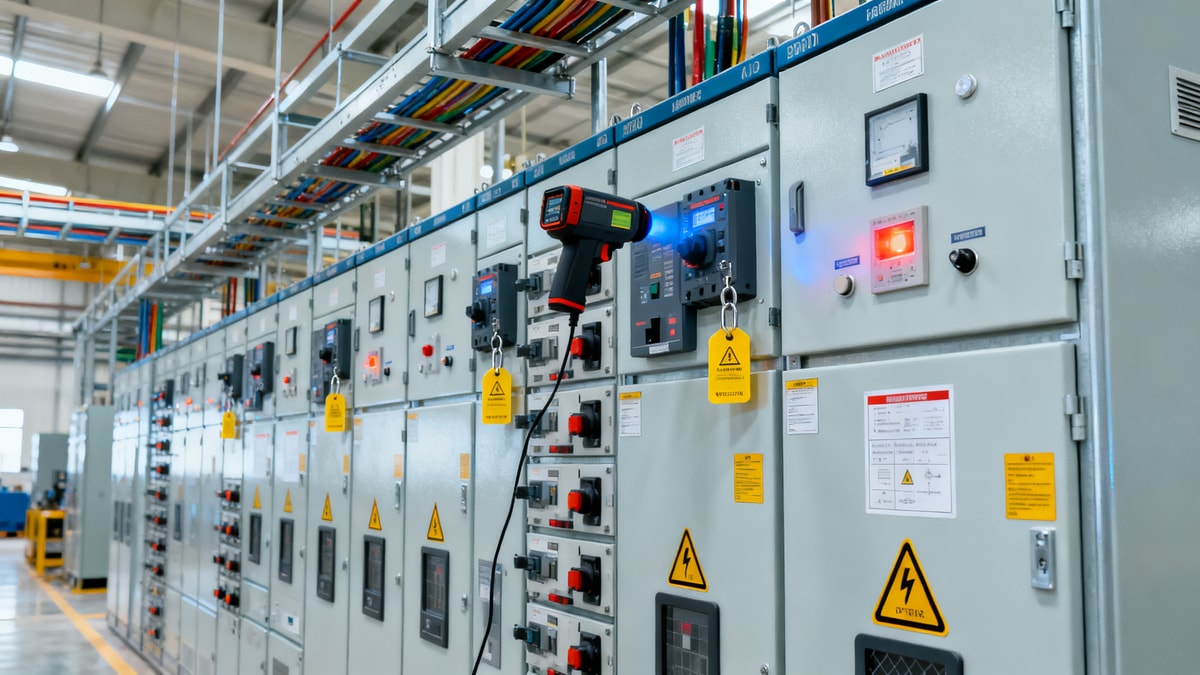
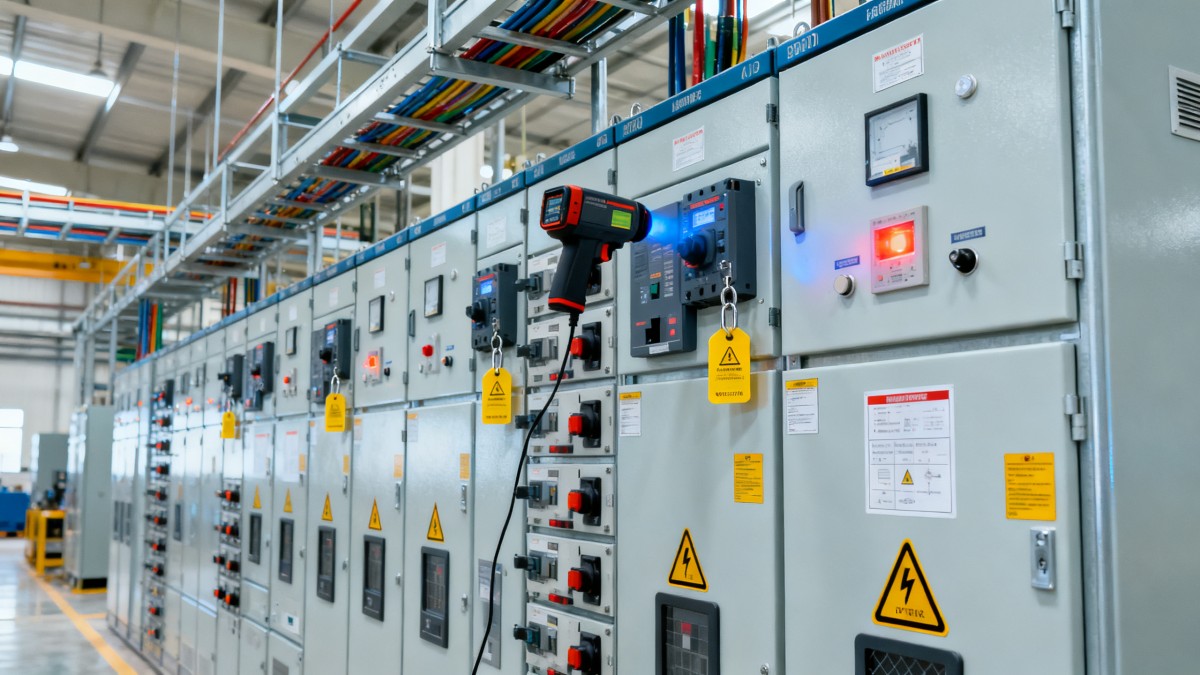
This is why effective electrical safety solutions go beyond PPE or signage. They combine design safeguards, isolation procedures, equipment condition monitoring, lockout/tagout discipline, labeling accuracy, worker competency, and compliance verification against standards such as UL, CE, ISO, NFPA 70E, and IEC requirements where applicable. The goal is not simply to avoid the next event, but to remove the conditions that make recurrence likely.
What should quality control teams and safety managers include in electrical safety solutions?
The most dependable electrical safety solutions are layered. A single device, checklist, or policy rarely stops recurring incidents by itself. Instead, industrial workplaces should build controls across the full asset lifecycle, from specification and sourcing to operation, maintenance, and audit.
Core elements usually include:
- Hazard identification based on real site conditions, not generic assumptions
- Verified isolation procedures and lockout/tagout enforcement
- Routine infrared inspection, insulation testing, and connection torque checks
- Arc flash labeling, boundary review, and updated one-line diagrams
- Use of compliant components with traceable certifications
- Competency-based training for electricians, operators, and contractors
- Incident trend analysis that identifies recurrence patterns by area, asset type, or task
- Management review to ensure corrective actions are verified, not just assigned
In many industrial settings, electrical safety solutions fail because the organization focuses only on worker behavior. Behavior matters, but repeated incidents also point to hardware selection, panel layout, environmental sealing, cable routing, overload conditions, or poor maintenance windows. A fused disconnect in the wrong location, a mislabeled breaker, or a replacement component that does not match original specifications can recreate the same hazard despite repeated toolbox talks.
How can you tell whether recurring incidents come from people, equipment, or process gaps?
This is one of the most important questions in selecting electrical safety solutions. If a facility misdiagnoses the source of repeat incidents, it will continue investing in the wrong controls. A practical way to improve decision-making is to compare recurring events through three lenses: people, equipment, and process.
For both QC and EHS teams, the table highlights a key principle: repeated electrical events are often multi-causal. An overloaded circuit may reflect a design issue, but the recurrence could also involve missed inspection data, undocumented production changes, or pressure to keep old assets running beyond intended service conditions. Good electrical safety solutions therefore depend on cross-functional review rather than isolated troubleshooting.
Which workplace scenarios benefit most from upgraded electrical safety solutions?
Some sites need stronger controls more urgently than others. Facilities with aging switchgear, frequent maintenance interventions, heavy motor loads, temporary expansions, or mixed contractor activity are especially vulnerable to repeat incidents. The same is true for operations where downtime is costly and workers feel pressure to restore power quickly, sometimes before full verification is complete.
Typical high-priority scenarios include manufacturing lines with repeated breaker trips, utilities rooms with heat buildup, warehouses using temporary distribution equipment, process plants with washdown exposure, and infrastructure sites where drawings no longer match field modifications. In these settings, electrical safety solutions should not be treated as optional upgrades. They are operational stability tools that protect continuity as much as they protect people.
Safety managers should also watch for organizational signals: near misses are rising, audit findings repeat, contractor deviations are common, or incident investigations always recommend retraining without changing the physical system. Those are signs that the current control framework is not mature enough. Quality teams can contribute by tracing whether repeat failures correlate with incoming component quality, substitution decisions, calibration drift in test instruments, or weak documentation control.
How do you choose electrical safety solutions without overbuying or missing critical controls?
A common mistake is to buy visible safety products first and define the problem later. A more effective approach is to rank hazards by severity, frequency, exposure, and detectability. This helps teams distinguish between items that are genuinely risk-reducing and items that simply create the appearance of action. For example, premium PPE is necessary, but it should not be used to compensate for outdated coordination studies, inaccessible disconnects, or absent preventive testing.
When evaluating electrical safety solutions, decision-makers should confirm at least five points:
- Does the solution address a verified root cause or only a symptom?
- Is it compatible with site voltage levels, load profiles, and environmental conditions?
- Does it support required standards, certifications, and documentation traceability?
- Can frontline staff implement it consistently during real production pressure?
- How will effectiveness be measured after installation or rollout?
This is where strategic sourcing becomes essential. In industrial procurement, the lowest unit cost can become the highest lifecycle cost if poor durability, weak certification, or limited technical support leads to repeat failures. Reliable electrical safety solutions should be judged on service life, verification records, maintainability, and integration with existing safety management systems. For many organizations, that means involving procurement, engineering, QC, and safety in the same review process instead of approving replacements in separate silos.
What are the most common mistakes that allow electrical incidents to repeat?
Several patterns appear again and again across industrial environments. One is closing an investigation once the failed part has been replaced. Another is assuming the original design still fits current operating demand. Facilities also underestimate the risk of undocumented modifications, especially where temporary fixes gradually become permanent. In many cases, labels, drawings, and actual field conditions drift apart until isolation and troubleshooting become unreliable.
Another major error is treating training as a one-time response rather than an ongoing control. If workers are taught procedures but never observed under realistic job conditions, organizations can gain a false sense of security. Repeating audit findings, skipped pre-task checks, and informal workarounds usually mean the system is not practical enough for real use. Effective electrical safety solutions must be usable under production stress, low-light conditions, maintenance windows, and contractor turnover.
A final mistake is separating safety data from asset data. If incident reports, thermography results, breaker history, and maintenance records are not reviewed together, teams miss recurrence signals. A hotspot found during inspection may be directly linked to a later fault event, but only if someone connects the records. Stronger electrical safety solutions often come from better information flow, not only better equipment.
How long does it take to reduce repeat incidents, and what should you measure?
Reducing recurrence is rarely immediate. Some improvements, such as correcting labels, tightening isolation control, replacing damaged components, or adjusting inspection intervals, can lower exposure quickly. More structural gains—like redesigning panels, standardizing procurement specifications, or rebuilding competency programs—take longer. A realistic implementation horizon may range from a few weeks for urgent controls to several months for system-wide electrical safety solutions.
What matters is how progress is measured. Useful indicators include repeat incident rate by asset class, number of overdue corrective actions, lockout/tagout verification findings, thermographic hotspot recurrence, nonconforming electrical components found during inspection, and contractor rework cases after energization. These indicators help safety managers move from anecdotal improvement claims to measurable reliability and compliance outcomes.
For quality teams, another strong metric is closure effectiveness: did the corrective action actually remove recurrence over a defined period? If not, the action may have been administrative when engineering control was needed, or local when the problem was systemic. This is often the difference between basic compliance activity and mature electrical safety solutions that produce durable risk reduction.
What questions should you ask before implementing or sourcing electrical safety solutions?
Before moving forward with a vendor, internal project, or sitewide upgrade, teams should clarify a short list of practical questions. Which incident types are recurring most often, and where? Are current components fully certified for the operating environment? Do drawings, labels, and isolation points match field reality? Which failures are linked to maintenance quality, and which indicate design limitations? How will success be verified after rollout—through audits, incident reduction, thermal trends, or uptime improvement?
These questions help organizations avoid fragmented purchasing and instead build electrical safety solutions that align with real operational risk. For quality control personnel and safety managers, the strongest path is collaborative: combine compliance expectations, technical specifications, failure history, and inspection evidence before selecting a solution. If you need to confirm a more specific direction, parameters, implementation timeline, budget range, or cooperation model, start by discussing site conditions, incident patterns, certification requirements, maintenance constraints, and verification methods. That conversation will usually reveal which electrical safety solutions are truly preventive—and which are only temporary fixes.
Technical Specifications
- US DOE Level 3 Transformer Efficiency Rule Takes Effect July 1, 2026Author :Grid Infrastructure Analyst
- INMETRO Proposes EMP Immunity Requirement for Industrial Laser Distance Meters in BrazilAuthor :Precision Metrology Expert
- Indonesia BPOM Fast-Tracks Chinese Industrial Air PurifiersAuthor :Environmental Engineering Director
Expert Insights

Chief Security Architect
Dr. Thorne specializes in the intersection of structural engineering and digital resilience. He has advised three G7 governments on industrial infrastructure security.
Related Analysis
- May 05, 2026US DOE Level 3 Transformer Efficiency Rule Takes Effect July 1, 2026Author :Grid Infrastructure Analyst
- May 05, 2026INMETRO Proposes EMP Immunity Requirement for Industrial Laser Distance Meters in BrazilAuthor :Precision Metrology Expert
- May 05, 2026Indonesia BPOM Fast-Tracks Chinese Industrial Air PurifiersAuthor :Environmental Engineering Director
Core Sector // 01
Security & Safety
- UL 62841-2-11:2026 Effective: AI Overload Prediction Required for Industrial MCBsAuthor :Grid Infrastructure Analyst

- Electrical Safety Solutions That Address Repeat Workplace IncidentsAuthor :Grid Infrastructure Analyst

- Electrical & Power Solutions That Help Prevent Hidden DowntimeAuthor :Grid Infrastructure Analyst

- SASO AI Diagnostic备案要求:Saudi Arabia Industrial Circuit BreakersAuthor :Grid Infrastructure Analyst

- Automatic Voltage Regulator AVR Issues Linked to Load SwingsAuthor :Grid Infrastructure Analyst

- IEC 62271-100:2026 Ed.4.0 Adds Digital Twin Interface RequirementAuthor :Grid Infrastructure Analyst

- EU CE新规: Industrial Circuit Breakers Must Pass IEC 60947-2 Annex Q Test from May 1, 2026Author :Grid Infrastructure Analyst

- INMETRO Mandates IEC 60947-2 Annex Q Waveform for Circuit BreakersAuthor :Grid Infrastructure Analyst