EU CE新规: Industrial Circuit Breakers Must Pass IEC 60947-2 Annex Q Test from May 1, 2026
Author
Date Published
Reading Time
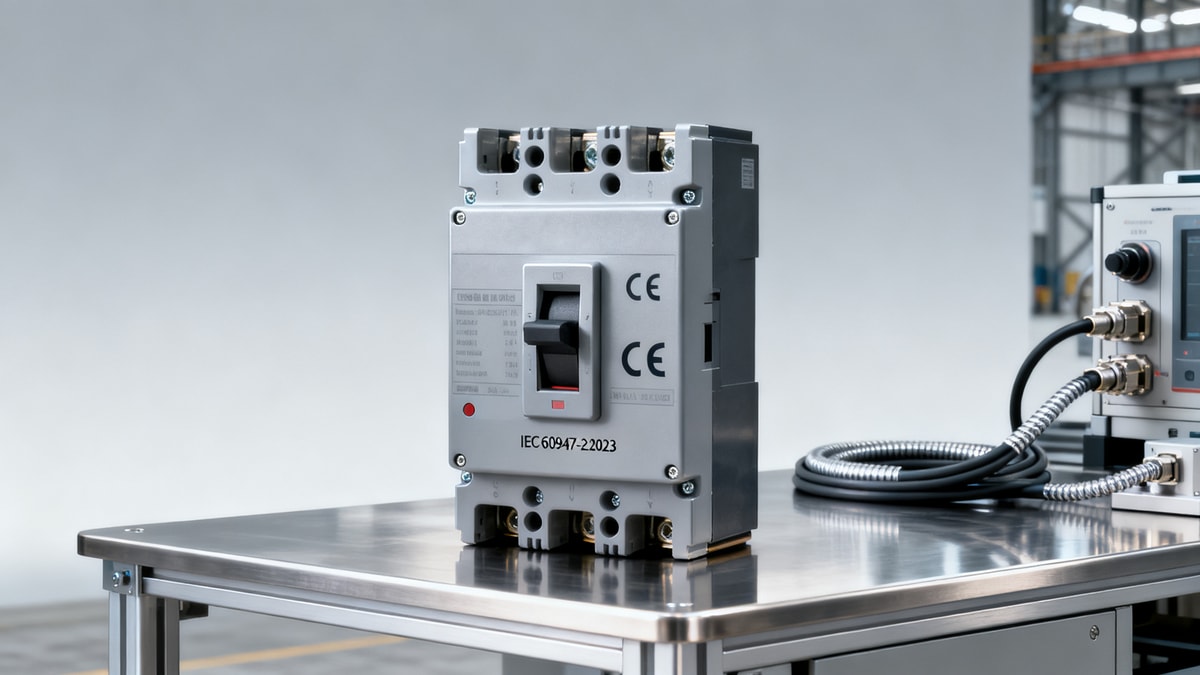
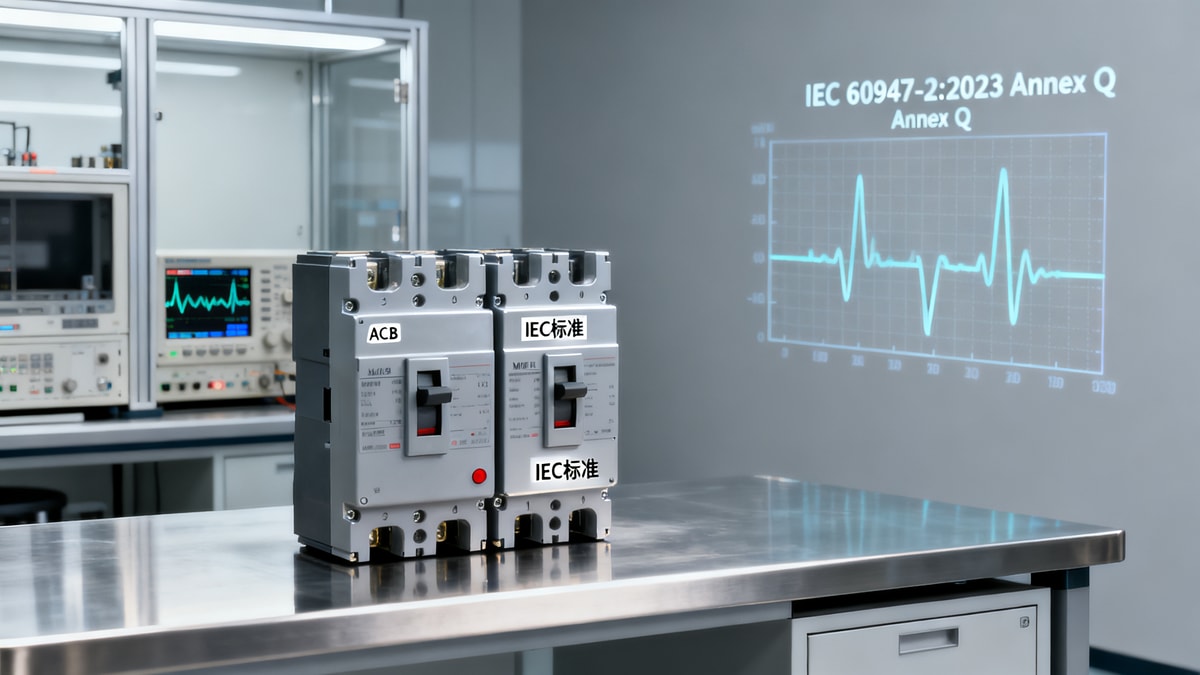
As of May 1, 2026, industrial circuit breakers placed on the EU market — including those exported from China — must comply with the new short-circuit test requirement specified in IEC 60947-2 Annex Q. This update directly affects manufacturers, importers, and certification bodies engaged in low-voltage power distribution equipment, particularly those handling UL/CCC-to-CE technical documentation conversion and customs clearance for electrical safety products.
Event Overview
The Official Journal of the European Union (OJEU) published a mandatory enforcement notice on April 29, 2026, confirming that the revised conformity requirement enters into force on May 1, 2026. Under this rule, all industrial circuit breakers supplied to the EU must pass the new impulse current waveform short-circuit test defined in IEC 60947-2 Annex Q. The test imposes significantly higher transient immunity requirements compared to prior versions. Compliance is mandatory for CE marking; non-compliant products risk customs delays or market withdrawal.
Industries Affected by Segment
Direct Trading Enterprises (EU Importers & Distributors)
These entities are responsible for verifying CE conformity before placing products on the EU market. The Annex Q test affects their ability to accept shipments — especially those relying on legacy test reports or UL/CCC-certified units without updated Annex Q validation. Impact includes potential customs hold-ups, increased technical documentation review time, and liability exposure if non-compliant units enter circulation.
Manufacturing Enterprises (OEMs & ODMs)
Producers of industrial circuit breakers — particularly those exporting from Asia — must now integrate Annex Q testing into type approval and production verification processes. The change affects product design validation timelines, test lab coordination, and CE technical file updates. Manufacturers previously relying on older editions of IEC 60947-2 may face retesting costs and certification delays.
Supply Chain & Certification Support Providers
Third-party testing labs, notified bodies, and CE documentation consultants must confirm their test capabilities cover the Annex Q waveform (including peak current, rise time, and time constant parameters). Their service offerings — especially for UL/CCC-to-CE conversion packages — now require explicit Annex Q coverage. Clients may request updated test reports or gap analyses against the new clause.
What Relevant Enterprises Should Monitor and Do Now
Verify current test reports against Annex Q scope
Importers and manufacturers should immediately review existing short-circuit test reports to confirm whether they explicitly reference IEC 60947-2:2023 Annex Q (or later edition), including waveform parameters and test conditions. Reports citing only ‘IEC 60947-2’ without Annex Q designation are insufficient post-May 1, 2026.
Confirm notified body readiness and timeline alignment
Enterprises preparing CE files should contact their notified body to confirm whether Annex Q testing is included in current certification scopes, and whether pending applications will be assessed under the new requirement. Lead times for Annex Q testing may extend due to lab capacity constraints.
Update procurement and delivery planning for high-risk SKUs
Procurement teams should identify circuit breaker models scheduled for EU shipment between May and August 2026, and prioritize Annex Q compliance verification. Where gaps exist, consider buffer stock or adjusted shipping windows to avoid port-side rejection.
Distinguish policy effective date from transitional arrangements
While the OJEU notice confirms May 1, 2026 as the mandatory date, no transitional period or grace period has been published. There is currently no indication of phased enforcement or grandfathering of pre-May test reports — meaning all new consignments must meet the requirement upon entry.
Editorial Perspective / Industry Observation
Observably, this update signals a tightening of electromagnetic robustness expectations for low-voltage switching devices in the EU — not merely a procedural revision. Analysis shows the Annex Q waveform introduces more severe stress profiles than traditional 45° or 120° current waveforms, reflecting real-world fault scenarios with faster rise times. From an industry perspective, it is less a standalone regulatory shift and more a convergence point: aligning IEC standards more closely with actual grid disturbance behavior, while also raising the bar for equivalence assessments during UL/CCC-to-CE conversions. Current attention should focus on implementation fidelity — not just whether tests are performed, but whether labs apply the correct waveform definition, measurement uncertainty controls, and repeatability protocols per Annex Q.
Conclusion
This regulation marks a definitive step toward harmonized, physics-based short-circuit performance evaluation for industrial circuit breakers in the EU. It is neither a temporary signal nor a soft guideline — it is an enforceable conformity requirement with immediate operational consequences. Enterprises are better advised to treat it as a hard deadline requiring verified test evidence, rather than a technical footnote awaiting further clarification.
Information Source
Official Journal of the European Union (OJEU), Notice published April 29, 2026; IEC 60947-2:2023 Edition 5.0, Annex Q.
Note: No official transitional provisions or enforcement guidance beyond the OJEU notice have been confirmed as of publication date. Continued monitoring of EU Commission and NANDO updates is recommended.
Technical Specifications
Expert Insights

Chief Security Architect
Dr. Thorne specializes in the intersection of structural engineering and digital resilience. He has advised three G7 governments on industrial infrastructure security.
Related Analysis
- Apr 30, 2026Egypt SMIIC Mandates Arabic Energy Labels for Industrial PumpsAuthor :Heavy Industry Strategist
- Apr 30, 2026TÜV SÜD Launches China Industrial Optics Fast TrackAuthor :Precision Metrology Expert
- Apr 30, 2026LME Nickel Surges 5.2% on April 29, 2026: Impact on Stainless Bearings & SealsAuthor :Heavy Industry Strategist
Core Sector // 01
Security & Safety
- IEC 62271-100:2026 Ed.4.0 Adds Digital Twin Interface RequirementAuthor :Grid Infrastructure Analyst

- EU CE新规: Industrial Circuit Breakers Must Pass IEC 60947-2 Annex Q Test from May 1, 2026Author :Grid Infrastructure Analyst

- INMETRO Mandates IEC 60947-2 Annex Q Waveform for Circuit BreakersAuthor :Grid Infrastructure Analyst

- When to Use Vacuum Circuit Breakers VCBAuthor :Grid Infrastructure Analyst

- Wholesale Lightning Arresters: What Matters MostAuthor :Grid Infrastructure Analyst

- How to Size a Surge Protective Device SPDAuthor :Grid Infrastructure Analyst

- Solid State Relays SSR: Best Use CasesAuthor :Grid Infrastructure Analyst

- INMETRO Mandates New IEC 60947-2 Annex Q Short-Circuit Test for Industrial Circuit BreakersAuthor :Grid Infrastructure Analyst
![]()