Automatic Voltage Regulator AVR Issues Linked to Load Swings
Author
Date Published
Reading Time
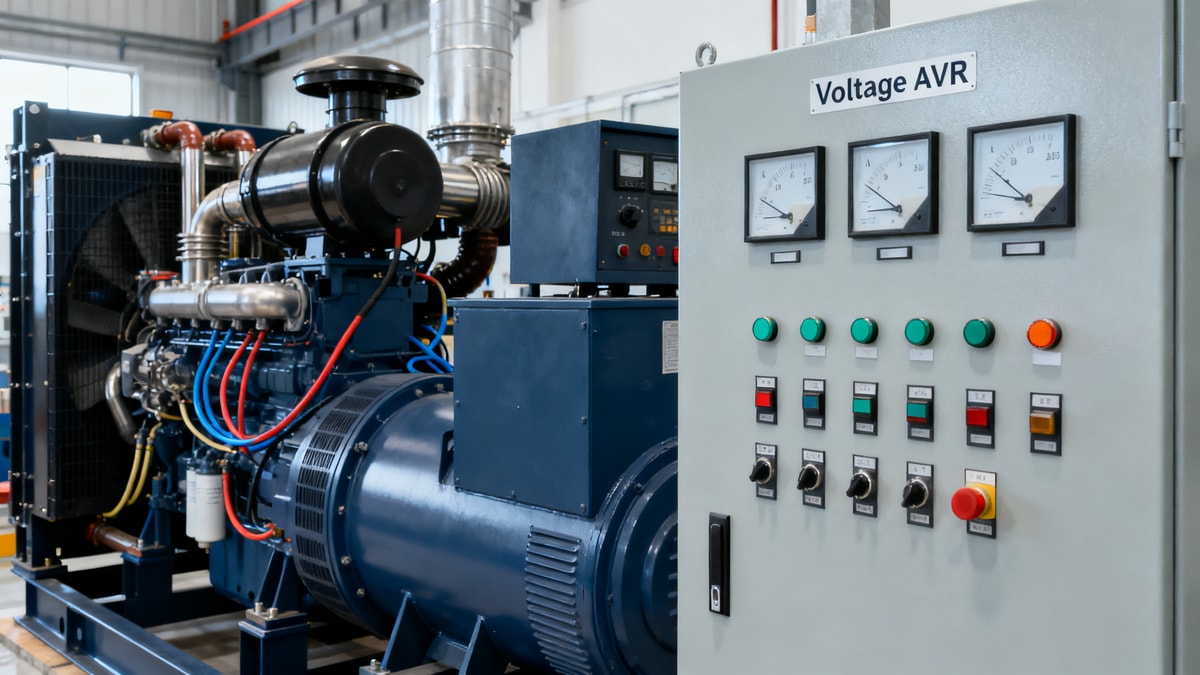
When load swings cause unstable output, an automatic voltage regulator AVR can quickly become the weak link in generator and power control performance. For operators, understanding the early signs of AVR-related voltage fluctuation is essential to preventing equipment stress, nuisance trips, and costly downtime. This article explains the root causes, practical warning signals, and field-focused solutions for managing AVR issues under changing load conditions.
Why a checklist approach works better than trial-and-error
In real operating environments, automatic voltage regulator AVR problems rarely appear as a single clear fault. Voltage hunting, delayed recovery, unstable excitation, and alarm events often come from several small issues acting together: sudden motor starts, poor sensing connections, incorrect tuning, weak generator response, or overloaded circuits. For operators, a checklist is more useful than a theory-heavy explanation because it helps isolate what to verify first, what to measure next, and what to escalate before a minor fluctuation becomes a shutdown event.
This is especially important in industrial sites where load patterns are dynamic. Pumps, compressors, conveyors, welders, HVAC systems, and process equipment can create step changes or cyclical demand. Under those conditions, the automatic voltage regulator AVR is expected to hold output within acceptable limits while responding fast enough to avoid dips and slow enough to avoid overshoot. A structured inspection method reduces guesswork and supports safer decisions.
First checks: what to confirm before blaming the AVR
Before replacing parts or changing settings, operators should confirm whether the automatic voltage regulator AVR is truly the source of the problem. Many field complaints described as “bad AVR” are actually caused by load behavior, sensing errors, or generator-side mechanical instability.
- Verify whether the voltage fluctuation appears only during load swings or also at steady load. If instability exists at constant demand, the issue may involve sensing, excitation, wiring, or governor interaction.
- Check if engine speed or prime mover frequency is stable. AVR output regulation cannot fully compensate for major frequency variation.
- Confirm the size and type of the load step. Large motor starting current, nonlinear loads, or repetitive switching may exceed the practical response window of the regulator.
- Inspect terminals, CT/PT connections, sensing leads, and grounding points for looseness, corrosion, overheating, or vibration damage.
- Review recent maintenance or modifications. New cable runs, changed setpoints, replaced breakers, or different load priorities often explain sudden AVR instability.
- Look for environmental stress such as heat, dust, moisture, or enclosure ventilation issues that may affect electronic regulator performance.
If these points are not checked first, operators may misdiagnose the automatic voltage regulator AVR and lose time replacing a healthy unit while the real cause remains active.
Core warning signs linked to load swings
When loads change rapidly, several patterns suggest the automatic voltage regulator AVR is struggling or operating outside a stable range. Operators should learn to separate brief normal recovery from abnormal behavior.
1. Repeated voltage hunting
A small dip followed by smooth correction is normal. Repeated oscillation above and below the target voltage is not. Hunting often points to improper AVR gain or stability settings, noisy sensing signals, or interaction with a poorly tuned governor.
2. Slow recovery after a load step
If voltage sags for too long after a motor start or process load transfer, the regulator may be under-responding, the excitation system may be weak, or the generator may be undersized for the load profile. Persistent slow recovery increases stress on contactors, drives, and control circuits.
3. Overshoot after unloading
A sudden rise in voltage after a large load is removed may indicate aggressive AVR tuning, poor damping, or unstable sensing feedback. This is risky for sensitive instruments and can trigger protective devices.
4. Flicker complaints from downstream equipment
Lighting flicker, relay chatter, PLC reset events, and erratic drive behavior often appear before a full regulator fault alarm. These are operator-level clues that the automatic voltage regulator AVR response should be evaluated under actual load cycling conditions.
5. Excitation current running near limits
If excitation demand remains consistently high during routine load changes, the AVR may be compensating for deeper generator or system issues such as winding weakness, diode problems, or poor power factor conditions.
Practical fault-isolation checklist for operators
Use the following checklist in order. It is designed for field teams who need fast judgment without skipping critical details.
- Record the event pattern. Note what load changed, how much it changed, and whether the voltage dip, surge, or oscillation was repeatable.
- Compare voltage and frequency together. If both move significantly, the problem is not only the AVR. Frequency instability may point to engine or governor issues.
- Inspect sensing circuits. A damaged sensing wire, loose fuse holder, or noisy terminal can make the regulator react to false values.
- Check AVR settings against the manufacturer baseline. Gain, droop, under-frequency roll-off, and stability adjustments should match the application.
- Review load composition. Large VFD groups, rectifiers, welders, and impact loads change how the automatic voltage regulator AVR behaves under transients.
- Test at different load levels. A regulator that appears stable at 30% load may become unstable at 70% load or during repetitive switching.
- Inspect excitation system components. Brushes, slip rings, rotating diodes, connectors, and associated protection devices can all affect voltage response.
- Trend thermal conditions. Some AVR issues only appear after cabinet temperatures rise or after long operating periods.
Quick judgment table: symptom, likely cause, operator priority
Different operating scenarios require different attention
Not every site should assess an automatic voltage regulator AVR the same way. The load pattern matters as much as the regulator model.
Motor-heavy facilities
In pump stations, water systems, mining circuits, and compressor applications, the first concern is inrush current and restart frequency. Operators should confirm whether staggered starting, soft starters, or VFD ramps are being used effectively. A healthy AVR may still show stress if too many motors start together.
Mixed sensitive and heavy loads
Sites with PLCs, instrumentation, analyzers, and communication systems need tighter tolerance. Here, even short voltage instability can become a production issue. Separate monitoring of critical control feeders is recommended so operators can see whether the automatic voltage regulator AVR event is affecting only bulk equipment or the control layer as well.
Standby and emergency power systems
Load acceptance after transfer is the key metric. Emergency systems often face a sharp demand increase within seconds. Operators should prioritize load sequence review, frequency-voltage interaction checks, and post-transfer data capture.
Commonly overlooked factors that worsen AVR instability
- Assuming all voltage problems are electrical, while prime mover speed droop is actually the trigger.
- Ignoring cable routing and electromagnetic noise near sensing circuits.
- Leaving old AVR settings in place after a generator rewind, alternator repair, or load expansion project.
- Failing to compare measured events with acceptable response time from the equipment manual.
- Treating occasional flicker as harmless, even though it may be the first sign of unstable regulation under load swings.
- Neglecting cooling airflow inside the regulator enclosure, especially in dusty or high-ambient industrial rooms.
Execution advice: what operators should do next
If the automatic voltage regulator AVR shows instability linked to changing load, the best next step is controlled verification rather than immediate adjustment in live production. Build a simple action sequence:
- Capture baseline voltage, frequency, excitation behavior, and load level during normal operation.
- Repeat the observation during known load transitions such as motor starts, transfer events, or batch process changes.
- Separate regulator issues from governor or load issues by comparing the timing of voltage and frequency movement.
- Escalate with documented values, not only operator impressions. Trend data, alarm logs, and event timestamps make troubleshooting faster and safer.
- Before replacing the AVR, confirm compatibility, sensing method, droop function, excitation limits, and site load profile.
FAQ: operator questions about automatic voltage regulator AVR performance
Can load swings damage an AVR directly?
Frequent and severe load swings may not damage the unit immediately, but they can push the automatic voltage regulator AVR and excitation system into repeated high-stress operation. Heat, vibration, and sustained correction demand shorten component life.
Should operators retune the AVR themselves?
Only if site procedures, competency, and manufacturer guidance clearly allow it. Incorrect tuning can worsen instability. In many industrial settings, operators should document the symptom and involve qualified electrical or generator specialists.
What information should be prepared before asking for support?
Prepare generator rating, regulator model, current settings, load type, event timing, voltage and frequency readings, ambient conditions, and any recent changes to the system. This is the fastest way to move from complaint to solution.
Final operator checklist and next-step discussion points
For most sites, the most effective way to manage automatic voltage regulator AVR issues linked to load swings is to verify the basics first, identify repeatable event patterns, and distinguish regulator response from broader generator or load problems. Operators should focus on sensing integrity, frequency stability, load-step size, excitation condition, and tuning history before making replacement decisions.
If deeper support is needed, the priority discussion should cover operating parameters, load transition details, protection events, required voltage tolerance, spare part compatibility, maintenance history, and response expectations during peak load changes. With those points prepared, teams can assess fit, corrective action, service timing, budget impact, and long-term reliability with much greater confidence.
Technical Specifications
Expert Insights

Chief Security Architect
Dr. Thorne specializes in the intersection of structural engineering and digital resilience. He has advised three G7 governments on industrial infrastructure security.
Related Analysis
- May 02, 2026Chemical Metering Pumps: Which Dosing Errors Cost the Most?Author :Environmental Engineering Director
- May 02, 2026What Sets One Belt Filter Press Manufacturer Apart?Author :Environmental Engineering Director
- May 02, 2026Moving Bed Biofilm Reactor MBBR Retrofit Benefits and LimitsAuthor :Environmental Engineering Director
Core Sector // 01
Security & Safety
- Automatic Voltage Regulator AVR Issues Linked to Load SwingsAuthor :Grid Infrastructure Analyst

- IEC 62271-100:2026 Ed.4.0 Adds Digital Twin Interface RequirementAuthor :Grid Infrastructure Analyst

- EU CE新规: Industrial Circuit Breakers Must Pass IEC 60947-2 Annex Q Test from May 1, 2026Author :Grid Infrastructure Analyst

- INMETRO Mandates IEC 60947-2 Annex Q Waveform for Circuit BreakersAuthor :Grid Infrastructure Analyst

- When to Use Vacuum Circuit Breakers VCBAuthor :Grid Infrastructure Analyst

- Wholesale Lightning Arresters: What Matters MostAuthor :Grid Infrastructure Analyst

- How to Size a Surge Protective Device SPDAuthor :Grid Infrastructure Analyst

- Solid State Relays SSR: Best Use CasesAuthor :Grid Infrastructure Analyst