SASO AI Diagnostic备案要求:Saudi Arabia Industrial Circuit Breakers
Author
Date Published
Reading Time
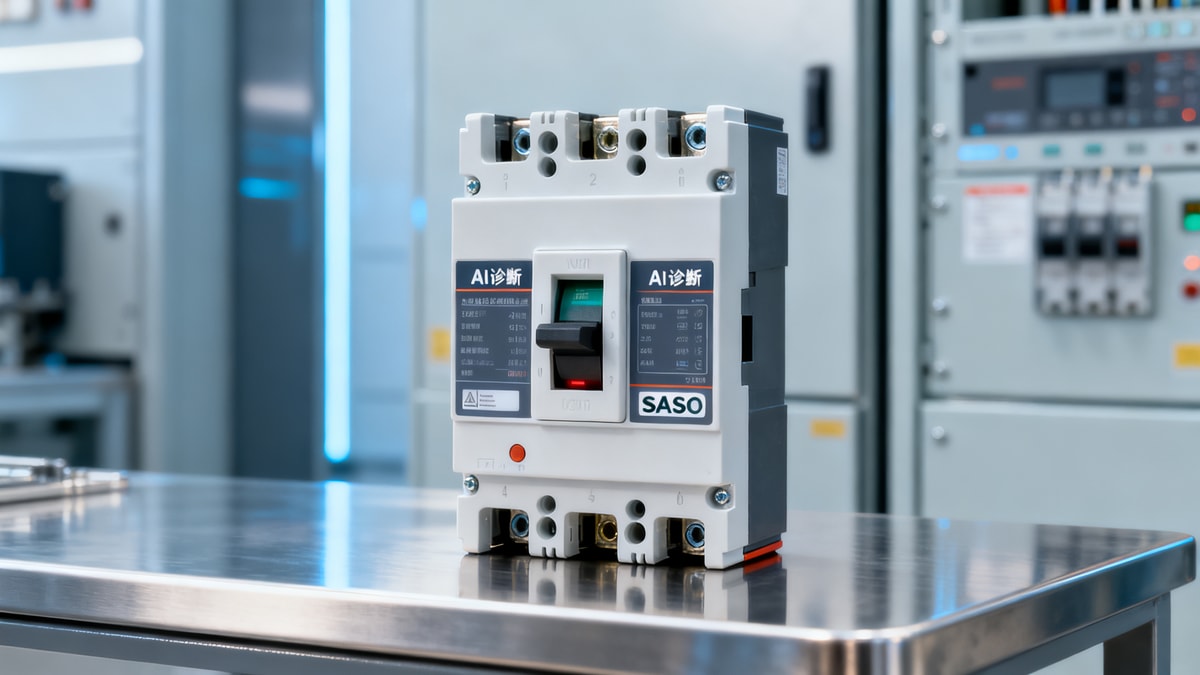
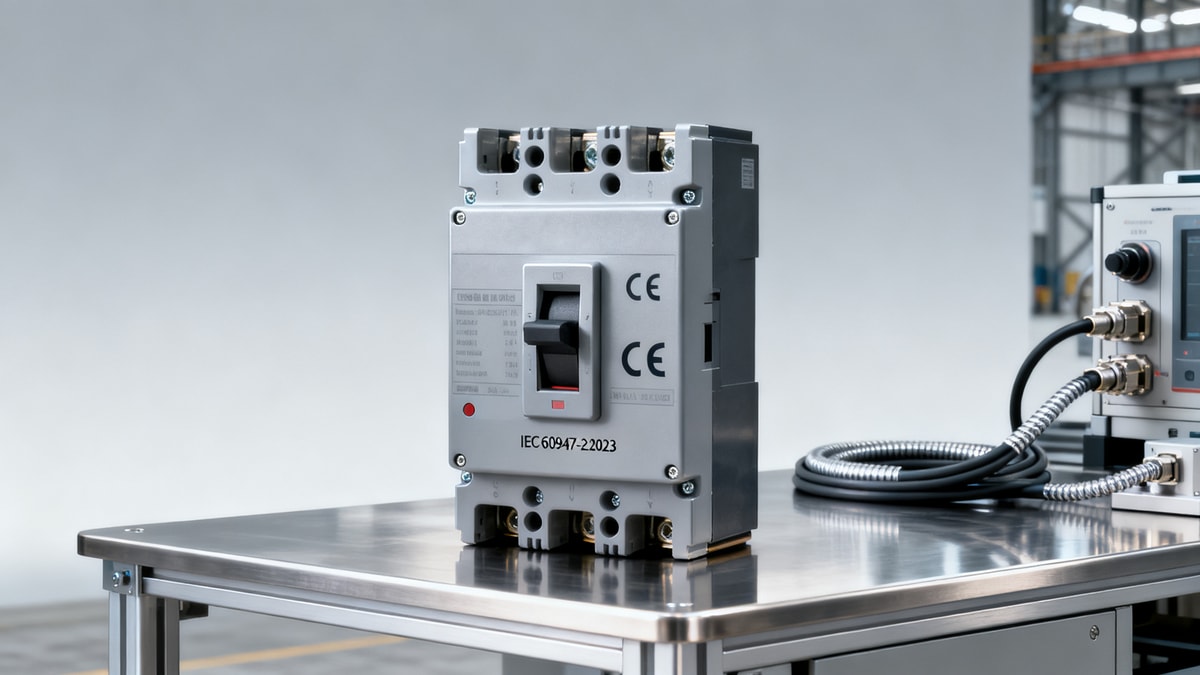
Saudi Arabia’s Standards, Metrology and Quality Organization (SASO) announced new AI diagnostic algorithm registration requirements for industrial circuit breakers effective 1 July 2026 — with the technical notice issued on 3 May 2026. Exporters of smart, IoT-enabled, or AI-powered industrial circuit breakers — particularly those based in China — must now complete model-specific AI algorithm备案 (filing) in SASO’s registration system and submit third-party functional verification reports prior to customs clearance. This development directly affects supply chain compliance pathways for manufacturers and traders serving the Saudi market.
Event Overview
On 3 May 2026, SASO issued a technical notice mandating that, starting 1 July 2026, all industrial circuit breakers imported into Saudi Arabia — including smart models, devices with IoT interfaces, or those embedding AI-based fault prediction modules — must undergo AI diagnostic algorithm model filing via SASO’s official registration system. Submission of a third-party functional verification report is required as part of the filing process. Products failing to meet this requirement will be denied entry at Saudi ports.
Industries Affected by Segment
Direct Exporters & Trading Companies
These entities face immediate customs compliance risk: unfiled products will be rejected upon arrival. Impact manifests in delayed shipments, potential storage fees, re-export costs, and contractual penalties under Incoterms such as DAP or DDP.
Manufacturers of Smart/IoT-Enabled Circuit Breakers
Manufacturers — especially those integrating proprietary AI algorithms for predictive diagnostics — must now document, version-control, and validate their embedded AI logic per SASO’s filing scope. This introduces new internal documentation, testing, and audit readiness requirements not previously mandated for standard electrical safety certification (e.g., SASO IEC 60947-2).
Third-Party Testing & Certification Service Providers
Testing labs and certification bodies accredited for SASO conformity assessment must now develop or adapt procedures for verifying AI diagnostic functionality — including test protocols for accuracy, repeatability, and failure-scenario coverage. Their service scope may need formal expansion to cover AI model validation beyond traditional performance or EMC testing.
Supply Chain & Logistics Operators
Freight forwarders and customs brokers handling industrial electrical goods bound for Saudi Arabia must update pre-clearance checklists to include AI algorithm filing status and third-party report validity. Absence of verified filing data may halt documentation processing — adding lead time and requiring real-time coordination with exporters.
What Relevant Enterprises Should Monitor & Do Now
Track official SASO guidance updates
Monitor SASO’s official portal and authorized notification channels for clarifications on filing format, acceptable third-party lab accreditation criteria, definition of ‘AI diagnostic module’, and transitional arrangements — especially for orders placed before 1 July 2026 but shipped after.
Identify affected product lines and assess AI functionality scope
Map current export SKUs against the notice’s scope: determine which models contain AI-driven diagnostics (e.g., thermal anomaly prediction, contact wear estimation, arc-fault classification). Avoid assumptions — firmware versions, cloud-connected analytics, or edge inference capabilities may trigger the requirement even if not marketed as ‘AI’.
Distinguish policy signal from operational implementation
This notice is a regulatory mandate, not a pilot or recommendation. However, its enforcement rigor — including audit frequency, evidence depth expected in verification reports, and acceptance of non-Saudi-accredited labs — remains subject to further operational guidance. Treat the requirement as binding, but treat procedural details as pending confirmation.
Initiate internal alignment and external vendor coordination
Assign cross-functional ownership (R&D, QA, Regulatory Affairs, Logistics) to manage filing preparation. Engage third-party labs early to confirm capacity and timeline for AI functionality verification. Update commercial contracts to reflect new compliance responsibilities — especially where OEMs supply white-label units to trading partners.
Editorial Observation / Industry Perspective
Observably, this requirement signals SASO’s strategic shift toward regulating embedded software intelligence — not just hardware safety — in critical industrial equipment. Analysis shows it reflects broader Gulf Cooperation Council (GCC) trends in digital product governance, though no parallel mandates have yet been issued by other GCC members. It is more than a procedural update: it establishes a precedent for algorithmic transparency in regulated electromechanical systems. From an industry perspective, this is less about immediate disruption and more about long-term adaptation — requiring manufacturers to treat AI models as auditable, versioned, and certifiable components alongside physical parts.
Conclusion: This SASO notice represents a targeted regulatory evolution — not a broad market barrier — focused specifically on AI-integrated industrial circuit breakers entering Saudi Arabia. Its significance lies in formalizing algorithm accountability within existing electrical equipment conformity frameworks. Current interpretation should emphasize preparedness over panic: firms should verify applicability, prioritize high-volume SKUs, and treat AI model documentation as a new core compliance deliverable — aligned with, but distinct from, traditional safety certification.
Information Source: Saudi Standards, Metrology and Quality Organization (SASO), Technical Notice dated 3 May 2026. Note: Implementation details — including accepted verification standards, lab accreditation pathways, and transitional provisions — remain subject to official clarification and are under ongoing observation.
Technical Specifications
- US DOE Industrial Transformer Efficiency Rule Effective Oct 2026Author :Grid Infrastructure Analyst
- Indonesia BPOM Launches AI Filter Life Algorithm ReviewAuthor :Environmental Engineering Director
- Global Industrial Waste Shredder Lead Times Extend to 22 WeeksAuthor :Environmental Engineering Director
Expert Insights

Chief Security Architect
Dr. Thorne specializes in the intersection of structural engineering and digital resilience. He has advised three G7 governments on industrial infrastructure security.
Related Analysis
- May 04, 2026US DOE Industrial Transformer Efficiency Rule Effective Oct 2026Author :Grid Infrastructure Analyst
- May 04, 2026Indonesia BPOM Launches AI Filter Life Algorithm ReviewAuthor :Environmental Engineering Director
- May 04, 2026Global Industrial Waste Shredder Lead Times Extend to 22 WeeksAuthor :Environmental Engineering Director
Core Sector // 01
Security & Safety
- SASO AI Diagnostic备案要求:Saudi Arabia Industrial Circuit BreakersAuthor :Grid Infrastructure Analyst

- Automatic Voltage Regulator AVR Issues Linked to Load SwingsAuthor :Grid Infrastructure Analyst

- IEC 62271-100:2026 Ed.4.0 Adds Digital Twin Interface RequirementAuthor :Grid Infrastructure Analyst

- EU CE新规: Industrial Circuit Breakers Must Pass IEC 60947-2 Annex Q Test from May 1, 2026Author :Grid Infrastructure Analyst

- INMETRO Mandates IEC 60947-2 Annex Q Waveform for Circuit BreakersAuthor :Grid Infrastructure Analyst

- When to Use Vacuum Circuit Breakers VCBAuthor :Grid Infrastructure Analyst

- Wholesale Lightning Arresters: What Matters MostAuthor :Grid Infrastructure Analyst

- How to Size a Surge Protective Device SPDAuthor :Grid Infrastructure Analyst