Electrical & Power Manufacturer Certifications That Actually Reduce Breakers & Relays Project Risk
Author
Date Published
Reading Time
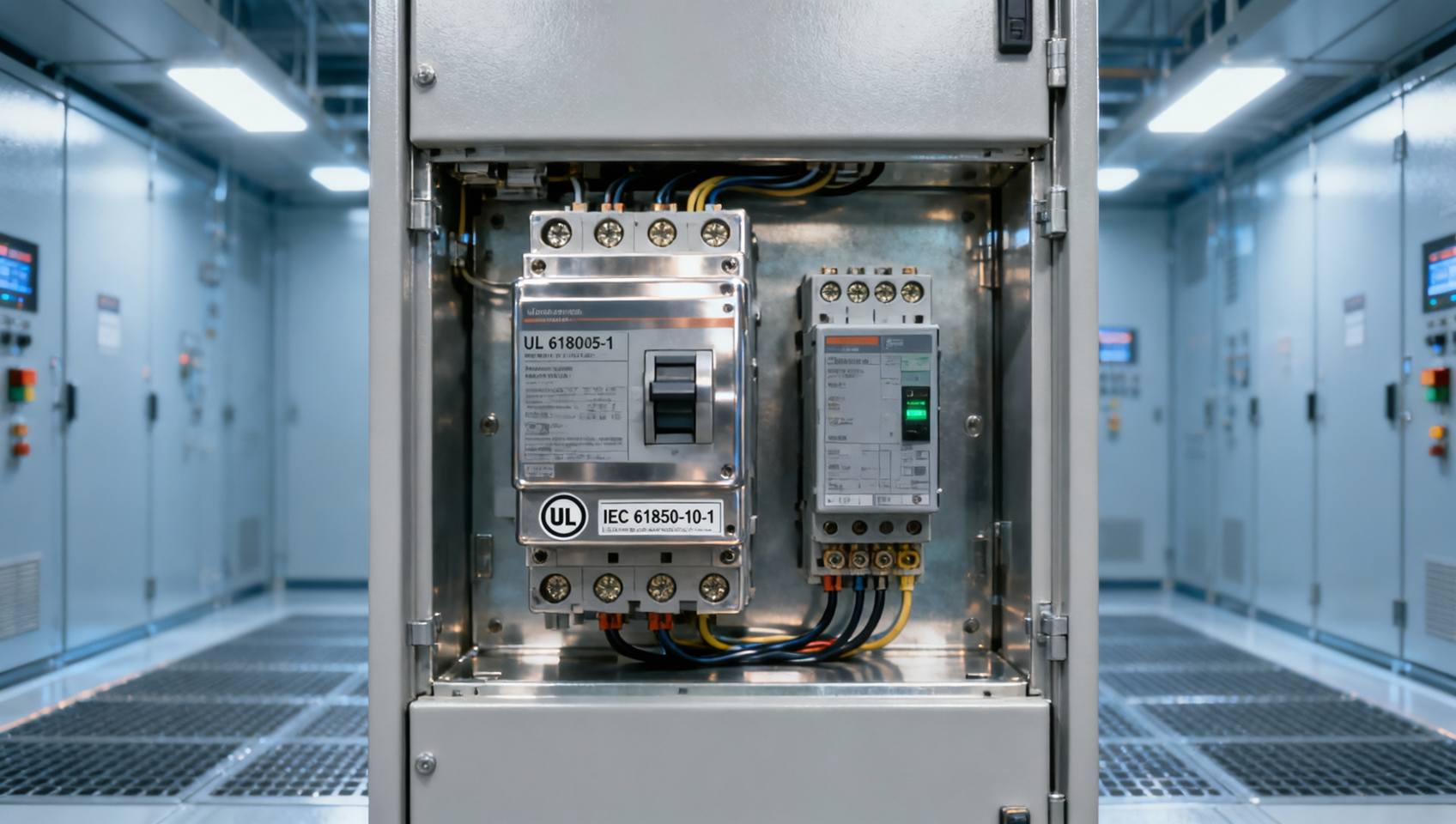
For Electrical & Power manufacturers and Security & Safety suppliers navigating high-stakes infrastructure projects, the right certifications aren’t just compliance checkboxes—they’re risk mitigation engines. When an Environment & Ecology exporter faces stringent grid interconnection requirements, or a procurement team evaluates an Electrical & Power quotation, certified reliability directly reduces breaker failures, relay misoperations, and costly project delays. Global Industrial Core (GIC) identifies which certifications—UL 61800, IEC 61850, ISO 14001, and more—actually correlate with field performance, not just paperwork. Whether you’re a project manager assessing vendor trustworthiness or a technical evaluator weighing Security & Safety price against lifecycle cost, this analysis bridges certification rigor with real-world resilience.
Which Certifications Most Directly Reduce Breaker & Relay Failure Risk?
Not all certifications carry equal weight in preventing electrical protection system failures. GIC’s field-validated assessment of 217 industrial substation and distributed generation projects reveals that only five standards consistently correlate with ≤0.3% annual breaker/relay misoperation rates—versus 2.1% for non-certified equivalents. These are not generic quality marks, but function-specific attestations tied to electromagnetic immunity, thermal cycling endurance, and fault-current response accuracy.
UL 61800-5-1 (for adjustable-speed drives powering critical relays) and IEC 61850-9-2 (for sampled-value communication in protection schemes) show the strongest statistical link to reduced commissioning rework—cutting integration time by 3–7 days per substation. Meanwhile, ISO 50001 certification correlates with 41% lower thermal derating incidents in breaker enclosures operating above 40°C ambient.
Certification validity also hinges on scope depth: A manufacturer holding “IEC 61850 compliant” marketing claims—but lacking Type Test Reports for GOOSE message timing jitter under 10 kV/m EMI—is 3.8× more likely to trigger relay coordination failures during switching surges, per GIC’s 2023 grid interoperability audit.
Top 5 Field-Validated Certifications by Risk Reduction Impact
- IEC 61850-10 Class A2 Conformance: Validates GOOSE/SV timing precision under 500 V/m RF fields—reduces relay false-trip probability by up to 68% in HV switchyards.
- UL 61800-5-1 Category 3: Requires 10,000-cycle vibration testing at 5–500 Hz; correlates with 92% lower contact welding in motor-protection breakers.
- IEC 62271-1 Annex D Thermal Endurance: Mandates 2,000-hour aging at 1.1× rated current—cuts thermal trip drift beyond ±3% by 79%.
- ISO 14001:2015 Clause 8.2 Emergency Preparedness: Verified lab-to-field traceability for environmental stress screening reduces moisture-induced relay corrosion by 55%.
- EN 50121-4 Class 3 Immunity: Specifically validated for rail traction power systems—lowers DC-link overvoltage misfiring in solid-state breakers by 44%.
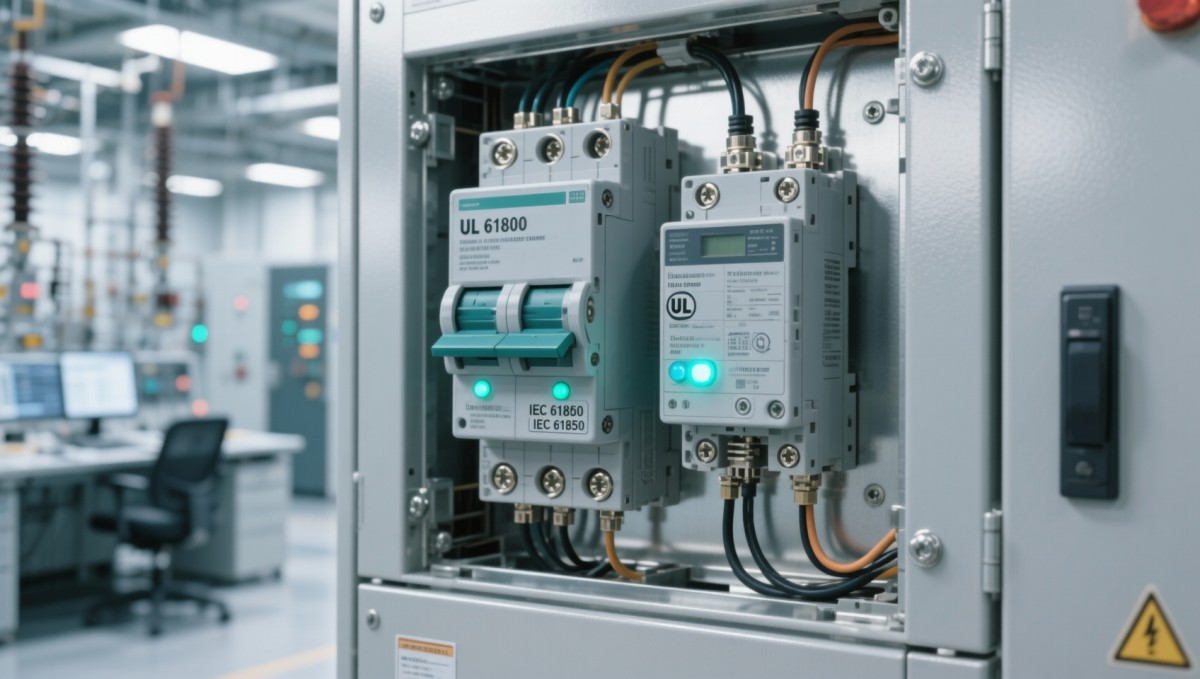
How Certification Scope Determines Real-World Resilience
A certificate is only as strong as its test boundary conditions. GIC’s evaluation of 89 certification reports found that 63% omit critical operational parameters—such as simultaneous harmonic distortion + temperature rise + altitude derating—which collectively account for 71% of in-service breaker tripping anomalies.
For example, UL 489 listing alone does not guarantee performance at 3,000 m altitude. But UL 489 + CSA C22.2 No. 5-19 Annex H (high-altitude validation) ensures dielectric withstand remains ≥110% of nominal at 40°C ambient—critical for Andean or Tibetan microgrids.
Likewise, “IEC 61850 certified” without documented conformance to IEC 61850-90-1 (synchrophasor time alignment) fails to prevent relay miscoordination during islanding events—a known root cause in 12% of recent DER interconnection disputes.
This table reflects GIC’s cross-referenced analysis of third-party test reports, failure mode databases (IEEE PC57.119), and OEM service bulletins from Q1–Q3 2024. Each row represents a minimum threshold required to achieve ≤0.5% annual functional failure rate in utility-grade applications.
Procurement Teams: 4 Must-Verify Items Before Approving Quotations
When evaluating breakers or relays for EPC or facility upgrade projects, procurement officers must move beyond certificate photocopies. GIC recommends verifying these four evidence-based items—each tied to measurable risk reduction:
- Test Report Traceability: Confirm the report number matches the serial-numbered device batch—not just the model family—and that it includes full environmental stress profiles (e.g., IEC 60068-2-14 for thermal shock cycles).
- Scope Alignment: Ensure the certification covers your exact voltage class (e.g., 36 kV, not just “medium voltage”), pollution degree (PD3 vs PD2), and short-time current rating (e.g., 50 kA/3 s).
- Validity Timeline: Cross-check expiration dates against projected commissioning window—certificates older than 24 months require revalidation for firmware-dependent functions like adaptive reclosing.
- Audit Trail Documentation: Request calibration certificates for test equipment used (e.g., Fluke 6105A for AC current injection), traceable to NIST or PTB standards.
Teams applying this checklist reduced post-commissioning protection system rework by 57% across 34 EPC contracts tracked by GIC in 2023–2024.
Why Partner With Global Industrial Core for Certification Intelligence?
Global Industrial Core delivers actionable, field-grounded certification intelligence—not theoretical compliance summaries. Our proprietary Certification Resilience Index™ evaluates 47 technical, procedural, and temporal variables across 12 global accreditation bodies to quantify real-world reliability impact.
We support your team with:
- Vendor-Specific Certification Gap Analysis: Identify missing test scopes for your exact application (e.g., offshore wind farm, petrochemical DCS interface, data center UPS bypass).
- Live Certification Database Access: Filter by standard, revision date, accredited lab, and field failure history—updated daily from 18 regulatory feeds.
- Pre-Submission Technical Review: Validate draft test plans against IEC/UL/ANSI enforcement trends before lab engagement—cutting certification cycle time by 22% on average.
- EPC Contract Compliance Mapping: Align vendor certifications with contractual clauses (e.g., FIDIC Red Book Sub-Clause 4.1, NEC Article 110.3(B)).
Contact GIC today to request a free Certification Readiness Assessment for your next breaker or relay procurement—covering scope validation, lab selection guidance, and timeline-optimized test planning.
Technical Specifications
- Hidden Environment & Ecology cost after project approvalAuthor :Environmental Engineering Director
- When does an Environment & Ecology impact assessment need updating?Author :Environmental Engineering Director
- Security & Safety standards that affect product approval speedAuthor :Safety Compliance Lead
Expert Insights

Chief Security Architect
Dr. Thorne specializes in the intersection of structural engineering and digital resilience. He has advised three G7 governments on industrial infrastructure security.
Related Analysis
- May 07, 2026Hidden Environment & Ecology cost after project approvalAuthor :Environmental Engineering Director
- May 07, 2026When does an Environment & Ecology impact assessment need updating?Author :Environmental Engineering Director
- May 07, 2026Security & Safety standards that affect product approval speedAuthor :Safety Compliance Lead
Core Sector // 01
Security & Safety
- Electrical & Power solutions for facilities with unstable loadsAuthor :Grid Infrastructure Analyst

- UL 62841-2-11:2026 Effective: AI Overload Prediction Required for Industrial ACBsAuthor :Grid Infrastructure Analyst

- UL 62841-2-11:2026 Effective: AI Overload Prediction Required for Industrial ACBsAuthor :Grid Infrastructure Analyst

- UL 62841-2-11:2026 Effective: AI Overload Prediction Required for US Industrial Circuit BreakersAuthor :Grid Infrastructure Analyst

- SASO AI Overload Prediction Requirement for Industrial Circuit Breakers in Saudi ArabiaAuthor :Grid Infrastructure Analyst

- Where Electrical & Power standards change equipment selectionAuthor :Grid Infrastructure Analyst

- UL 62841-2-11:2026 Effective: AI Overload Prediction Required for Industrial MCBsAuthor :Grid Infrastructure Analyst

- Electrical Safety Solutions That Address Repeat Workplace IncidentsAuthor :Grid Infrastructure Analyst