Electrical & Power solutions for facilities with unstable loads
Author
Date Published
Reading Time
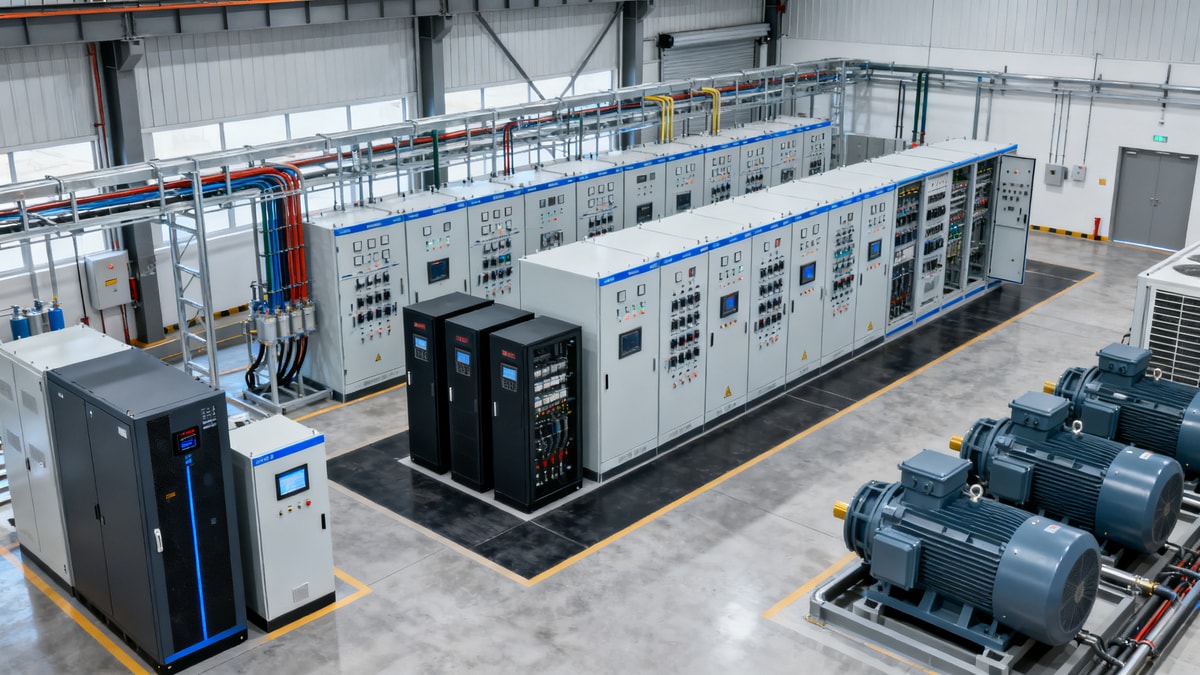
Facilities with unstable loads face voltage swings, equipment stress, and costly downtime. Electrical & Power solutions are essential for maintaining safe, efficient, and resilient operations in these demanding environments. This article explores practical strategies, key system components, and selection insights to help operators improve power stability, protect critical assets, and support consistent facility performance.
Why unstable loads create serious operating risk
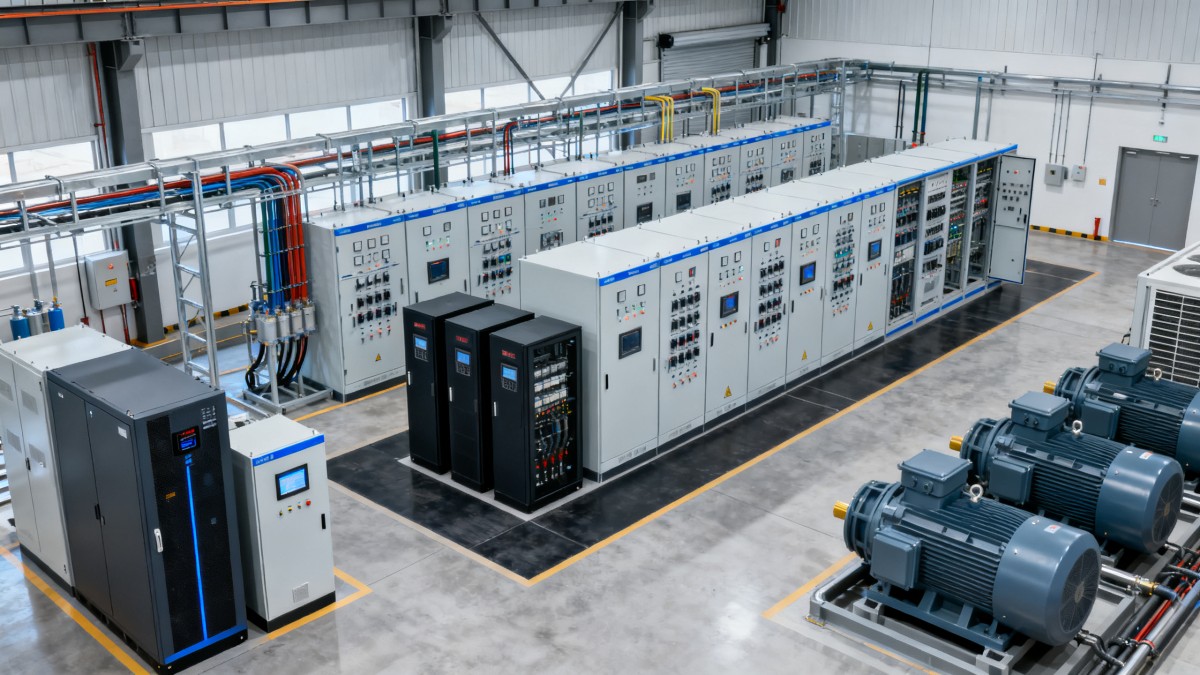
In industrial and mixed-use facilities, unstable loads are rarely a minor electrical nuisance. They can trigger repeated breaker trips, overheating in conductors, nuisance shutdowns in drives, poor motor performance, erratic sensor readings, and shortened service life for sensitive assets. For operators, the problem is practical: production stops, maintenance calls increase, and troubleshooting becomes reactive instead of planned.
Typical sources of load instability include frequent motor starts, welding equipment, elevators, large HVAC cycling, variable speed drives, compressors, batching systems, and temporary mobile equipment. In some facilities, utility-side issues also contribute, especially where grid quality varies or where remote sites rely on weak distribution infrastructure.
Effective Electrical & Power solutions address both power quality and system resilience. The goal is not only to keep electricity flowing, but to keep voltage, frequency, harmonics, and protection coordination within safe limits for real operating conditions.
- Voltage dips can cause contactors to drop out and PLCs to reset, even when the outage lasts only a short time.
- Load spikes increase thermal stress on transformers, switchgear, and cable systems.
- Harmonic distortion from non-linear loads can overheat neutral conductors and reduce the efficiency of the entire electrical network.
- Poor coordination between backup systems and main supply can make recovery after disturbances slower than expected.
Which Electrical & Power solutions are most relevant for unstable loads?
Operators often ask one simple question: which Electrical & Power solutions actually solve unstable load problems instead of just masking symptoms? The answer depends on the load profile, criticality of operations, and how often disturbances occur. In many facilities, the best result comes from combining conditioning, protection, monitoring, and backup support rather than relying on one device.
Core solution categories
- Voltage stabilizers and regulators: Useful where incoming supply fluctuates and critical equipment needs tighter voltage tolerance.
- UPS systems: Suitable for control panels, IT-linked industrial systems, instrumentation, and process continuity during short interruptions.
- Power factor correction and harmonic filtering: Important where non-linear loads and reactive power penalties are affecting efficiency and equipment life.
- Soft starters and VFD optimization: Reduce inrush current and mechanical stress when motors cycle frequently.
- Automatic transfer systems and backup integration: Help maintain continuity where utility instability or process risk justifies redundancy.
- Advanced metering and monitoring: Essential for diagnosing root causes instead of replacing parts based on guesswork.
Global Industrial Core approaches these systems from an infrastructure perspective. That means looking beyond product brochures and focusing on operating stress, compliance fit, replacement cycles, and compatibility across electrical distribution, measurement, and protection layers.
Application scenarios: where operators need targeted power stability measures
Not every site needs the same Electrical & Power solutions. Facilities with unstable loads should separate critical circuits from general-purpose loads and then assign the right protection strategy to each area. The table below shows common scenarios and the type of response that usually makes operational sense.
The operational lesson is clear: unstable loads should be mapped by impact, not only by equipment type. A non-critical pump and a process-critical PLC may sit in the same building, but they should not be protected in the same way.
How to compare solution paths before procurement
For many users and operators, procurement becomes difficult when vendors present different technologies with similar claims. A structured comparison helps filter options according to response time, maintenance burden, and fit for unstable loads. This is where Electrical & Power solutions should be judged on operating value, not just purchase price.
This comparison shows why no single technology covers every unstable-load condition. In many facilities, the most durable solution is layered: monitor first, isolate critical loads second, then condition or back up the circuits that carry the highest downtime cost.
What technical parameters should operators check first?
Before approving any Electrical & Power solutions, operators should insist on a small set of measurable parameters. These values shape whether the system will perform reliably under real load swings instead of ideal test conditions.
Priority parameters for evaluation
- Input voltage range: The wider the expected utility variation, the more important this parameter becomes for stabilizers and UPS front ends.
- Output voltage accuracy: Sensitive control loads may require tighter tolerance than general-purpose mechanical loads.
- Response time: Fast correction matters where brief dips cause immediate process faults.
- Overload capacity: Short-duration overload handling is critical in facilities with motor starts or clustered demand peaks.
- Total harmonic distortion compatibility: Equipment should tolerate or mitigate distortion created by non-linear loads.
- Environmental rating: Dust, temperature, humidity, and vibration can reduce service life if enclosure and component design are not matched to the site.
Global Industrial Core emphasizes parameter verification because unstable-load environments punish under-specified components quickly. A solution that appears adequate on paper may fail early if ambient heat, transient events, or load imbalance were ignored during selection.
Procurement guide: how to select Electrical & Power solutions without overbuying
One of the biggest pain points for operators is buying too much in the wrong place and too little where risk is highest. A disciplined procurement approach reduces this problem. Instead of asking for “maximum protection everywhere,” facilities should identify the circuits where failure is expensive, unsafe, or hard to recover from.
A practical selection workflow
- Record the actual load profile, including peak demand, start-up behavior, duty cycle, and downtime history.
- Separate mission-critical loads from non-critical loads. Control systems, protection circuits, metering, and process automation usually rank first.
- Check upstream and downstream compatibility, including switchgear ratings, cable sizing, grounding practice, and protection coordination.
- Review certification and installation requirements relevant to the market, such as CE, UL, or ISO-linked quality documentation where applicable.
- Confirm service factors: spare parts availability, commissioning support, maintenance intervals, and expected lead time.
This is also where a strategic sourcing partner adds value. GIC helps buyers and operators translate operating pain into specification logic, making it easier to compare suppliers on technical fit, compliance readiness, and lifecycle practicality.
Cost, lifecycle trade-offs, and alternatives
The cheapest option for unstable loads often becomes the most expensive after six to eighteen months of operation. Repeated resets, nuisance failures, emergency service, and damaged electronic components can quietly exceed the initial cost difference between a basic and a properly engineered solution.
Still, not every facility needs premium architecture. A targeted upgrade may be enough when problems are localized. For example, isolating only the PLC and instrumentation circuits with a UPS may offer better return than installing full-facility backup. Likewise, adding monitoring before replacing major equipment can prevent unnecessary capital spending.
- If voltage instability is external, regulation and transfer strategy may deliver more value than replacing downstream loads.
- If the issue is internal harmonics, filtering and load balancing may outperform larger transformer upgrades.
- If only one process area is affected, a zoned Electrical & Power solutions package is often more economical than a site-wide redesign.
Standards, compliance, and installation checks that should not be skipped
In the industrial supply chain, compliance is not a paperwork exercise. It affects procurement approval, installation acceptance, and long-term insurability. Depending on the market and application, operators should verify whether the selected Electrical & Power solutions align with relevant CE, UL, ISO-related quality processes, local electrical codes, and equipment safety expectations.
Key checkpoints before commissioning
- Protection settings should be reviewed after installation, especially where new conditioning or backup devices alter fault behavior.
- Grounding and bonding quality should be verified because poor earthing can undermine surge protection and instrumentation stability.
- Thermal ventilation around UPS units, filters, and power electronics should be confirmed under expected ambient conditions.
- Load testing should reflect realistic operating sequences rather than only no-load or partial-load conditions.
These checks matter because many unstable-load failures occur after installation, when hidden interactions appear between legacy infrastructure and new power equipment.
Common mistakes and operator FAQ
Is a UPS always the best answer for unstable loads?
No. A UPS is effective for continuity and sensitive electronics, but it does not automatically solve harmonics, repeated motor inrush, low power factor, or feeder imbalance. If the root cause lies in upstream instability or non-linear load distortion, other Electrical & Power solutions may be more appropriate or may need to be combined with the UPS.
How do operators know whether the problem is utility-side or facility-side?
Power quality monitoring is the most reliable starting point. Trend data should capture voltage events, harmonics, current imbalance, and disturbance timing. If events correlate with internal motor starts, welding cycles, or process sequences, the issue is likely facility-side. If disturbances occur independently of internal operations, the supply source may be contributing.
What is the most common procurement mistake?
Selecting by nominal kVA alone. Capacity matters, but response time, overload behavior, harmonic environment, transfer logic, enclosure rating, and serviceability often determine whether the equipment performs well in daily operation.
Can facilities improve stability without a full electrical redesign?
In many cases, yes. Segregating critical loads, tuning motor starting methods, improving grounding, adding localized UPS support, or installing targeted filtering can produce measurable improvement without major reconstruction.
Why work with Global Industrial Core on Electrical & Power solutions?
Facilities dealing with unstable loads need more than a catalog list. They need decision support that connects operating conditions, compliance expectations, sourcing risk, and long-term maintainability. Global Industrial Core focuses on the foundational systems that power and protect industrial environments, helping EPC teams, facility managers, procurement leaders, and on-site operators evaluate Electrical & Power solutions with stronger technical clarity.
You can contact GIC for support with parameter confirmation, solution selection, supplier comparison, lead-time evaluation, documentation review, application matching, and discussions around certification expectations for international projects. If your facility is facing voltage fluctuation, process resets, harmonic issues, or repeated downtime linked to unstable loads, a structured consultation can help define the right scope before budget is committed.
The most effective next step is to prepare your load profile, operating pain points, site constraints, and target delivery timeline. With that information, GIC can help narrow the most suitable Electrical & Power solutions, identify critical specification gaps, and support more confident quotation and implementation discussions.
Technical Specifications
- Hidden Environment & Ecology cost after project approvalAuthor :Environmental Engineering Director
- When does an Environment & Ecology impact assessment need updating?Author :Environmental Engineering Director
- Security & Safety standards that affect product approval speedAuthor :Safety Compliance Lead
Expert Insights

Chief Security Architect
Dr. Thorne specializes in the intersection of structural engineering and digital resilience. He has advised three G7 governments on industrial infrastructure security.
Related Analysis
- May 07, 2026Hidden Environment & Ecology cost after project approvalAuthor :Environmental Engineering Director
- May 07, 2026When does an Environment & Ecology impact assessment need updating?Author :Environmental Engineering Director
- May 07, 2026Security & Safety standards that affect product approval speedAuthor :Safety Compliance Lead
Core Sector // 01
Security & Safety
- Electrical & Power solutions for facilities with unstable loadsAuthor :Grid Infrastructure Analyst

- UL 62841-2-11:2026 Effective: AI Overload Prediction Required for Industrial ACBsAuthor :Grid Infrastructure Analyst

- UL 62841-2-11:2026 Effective: AI Overload Prediction Required for Industrial ACBsAuthor :Grid Infrastructure Analyst

- UL 62841-2-11:2026 Effective: AI Overload Prediction Required for US Industrial Circuit BreakersAuthor :Grid Infrastructure Analyst

- SASO AI Overload Prediction Requirement for Industrial Circuit Breakers in Saudi ArabiaAuthor :Grid Infrastructure Analyst

- Where Electrical & Power standards change equipment selectionAuthor :Grid Infrastructure Analyst

- UL 62841-2-11:2026 Effective: AI Overload Prediction Required for Industrial MCBsAuthor :Grid Infrastructure Analyst

- Electrical Safety Solutions That Address Repeat Workplace IncidentsAuthor :Grid Infrastructure Analyst