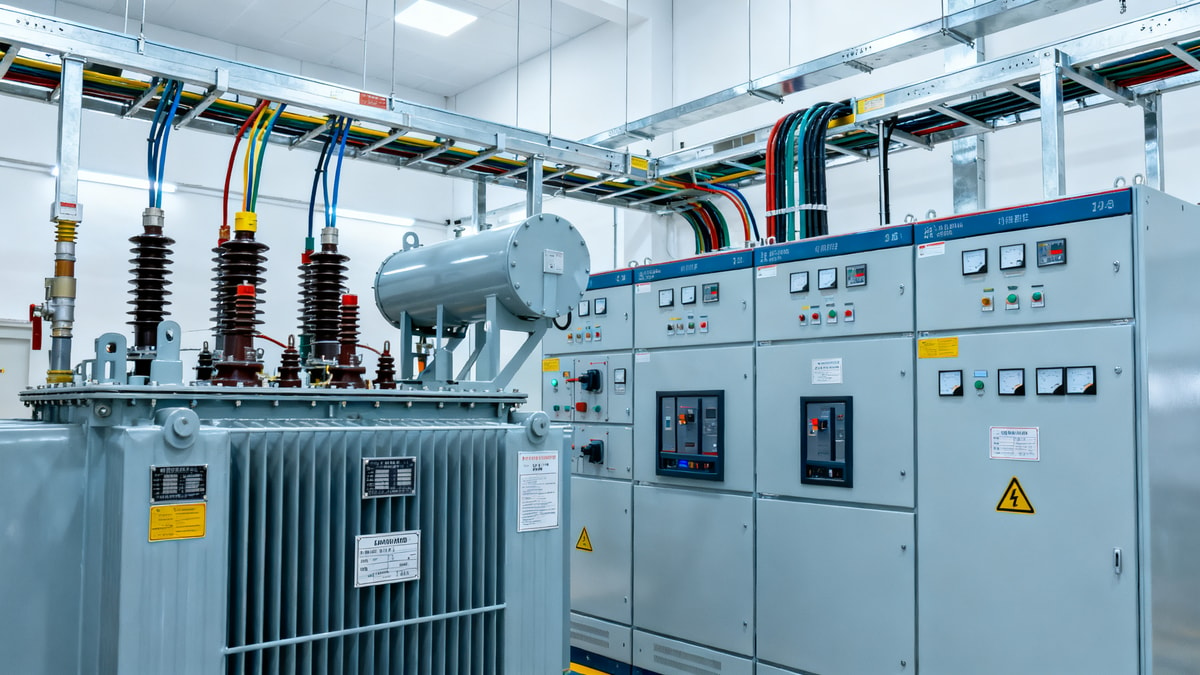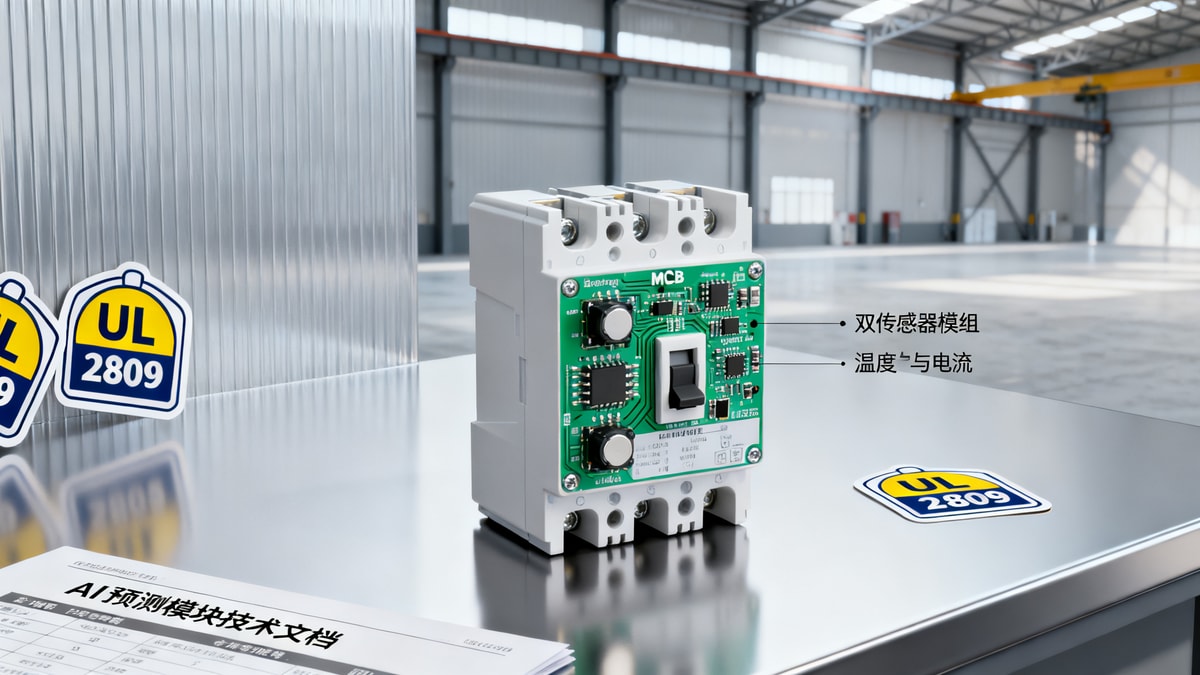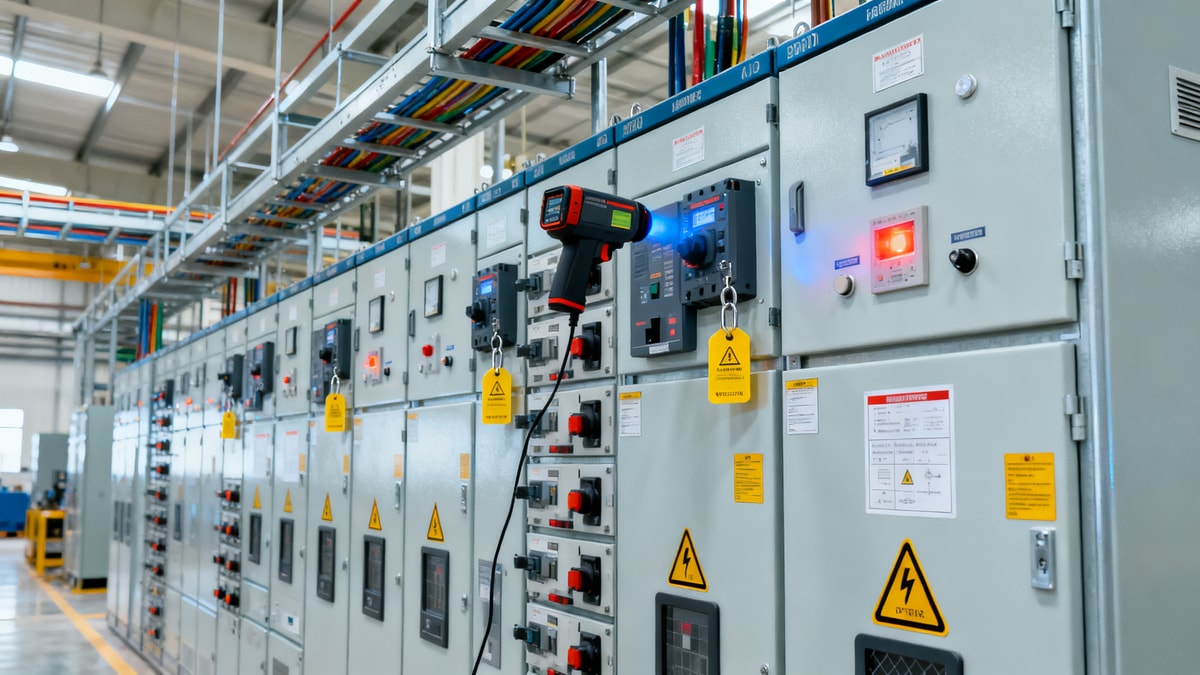
UL 62841-2-11:2026 Effective: AI Overload Prediction Required for Industrial ACBs
Author
Date Published
Reading Time
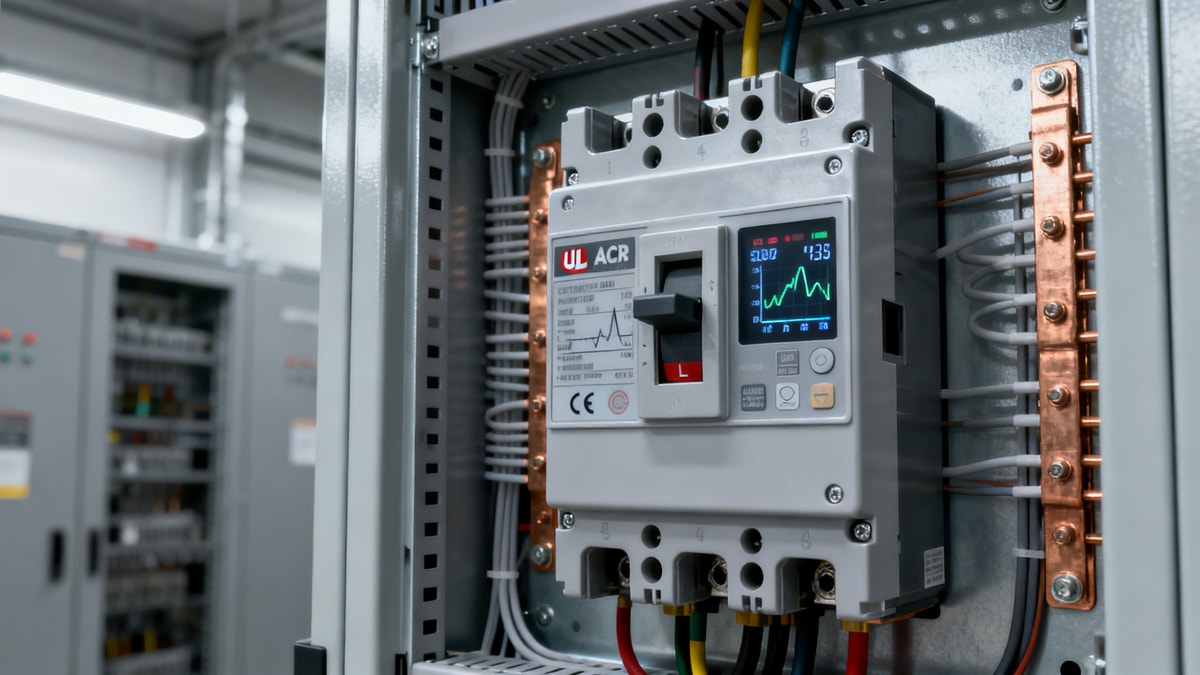
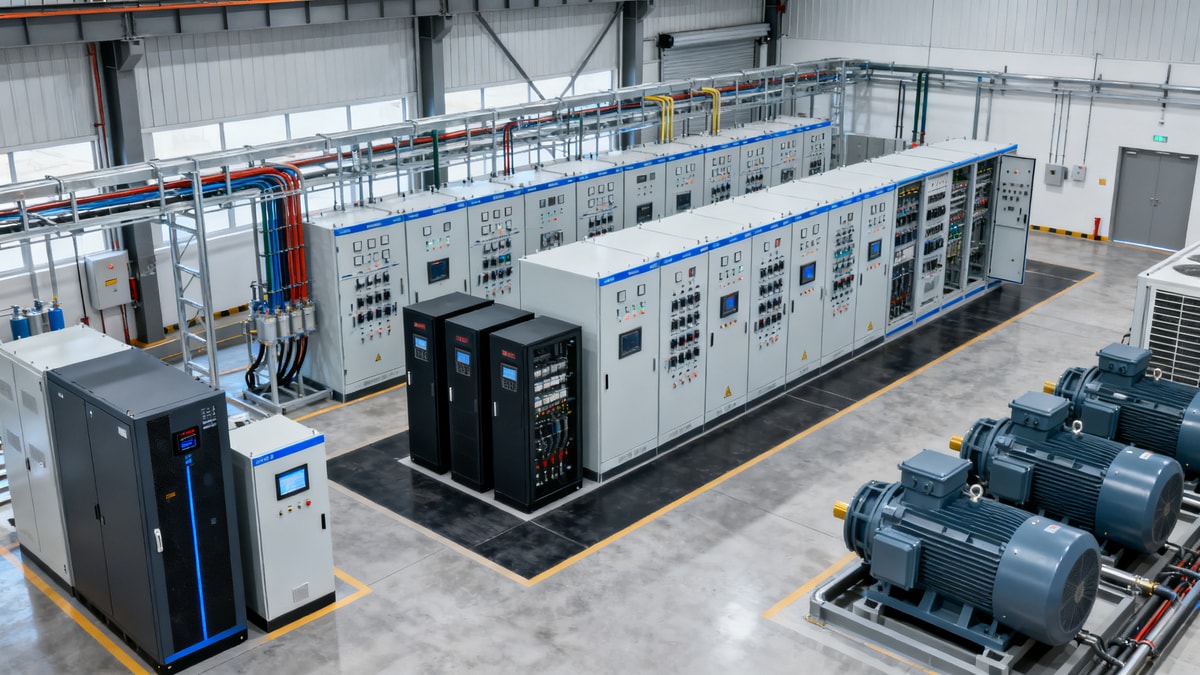
On May 1, 2026, UL Solutions formally implemented the revised UL 62841-2-11:2026 standard, mandating AI-driven overload prediction capability for all industrial air circuit breakers (ACBs) placed on the North American market. This update directly affects manufacturers, EPC contractors, grid infrastructure suppliers, and industrial automation integrators — particularly those engaged in power distribution systems for data centers, manufacturing plants, and utility-scale facilities.
Event Overview
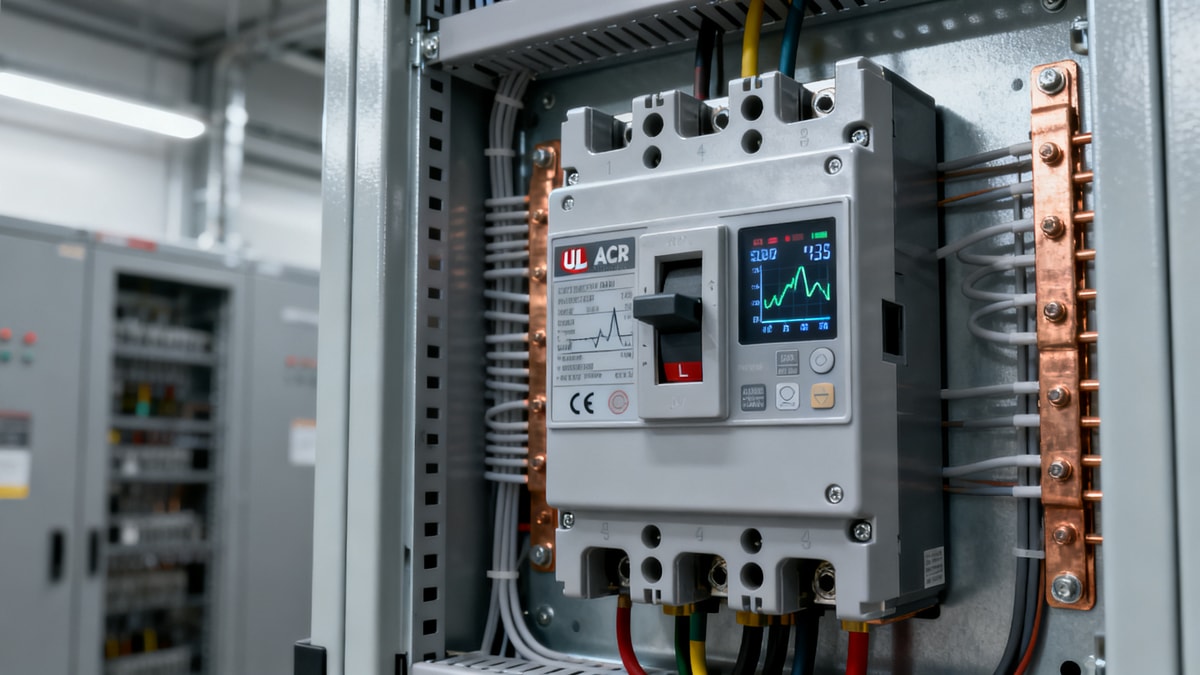
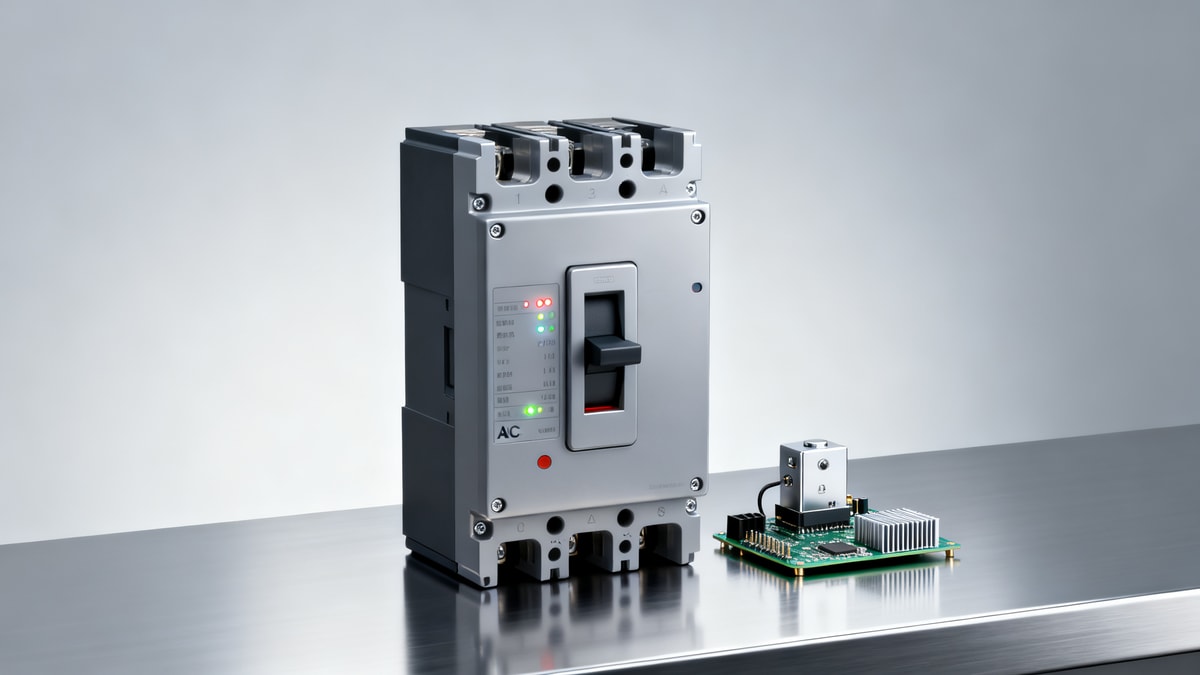
UL Solutions announced on May 1, 2026, that UL 62841-2-11:2026 — the revised edition of the safety standard for motor-operated circuit breakers — entered into force. The revision requires industrial automatic circuit breakers (ACBs) to integrate AI-based overload prediction functionality. Specifically, certified devices must analyze real-time current harmonics, temperature rise profiles, and historical load data to issue graded warning signals at least 30 seconds prior to tripping. As confirmed, the first batch of certified products has been added to the procurement specification list for North American grid EPC projects.
Industries Affected by Segment
Manufacturers of Industrial Circuit Breakers
These companies are directly subject to the new certification requirement. Compliance is mandatory for continued market access in North America. Impact includes redesign of firmware architecture, integration of edge AI inference modules, validation of predictive accuracy across load scenarios, and extended time-to-market for product recertification.
EPC Contractors & Grid Infrastructure Integrators
Contractors bidding on or executing North American utility or industrial power projects must now specify only UL 62841-2-11:2026-compliant ACBs. Non-compliant legacy equipment may no longer qualify for project approval or insurance coverage under updated grid interconnection policies.
Industrial Automation System Integrators
Integrators deploying motor control centers (MCCs) or switchgear assemblies must verify compatibility between AI-enabled ACBs and existing SCADA/EMS platforms. Data interface requirements (e.g., Modbus TCP or IEC 61850 GOOSE messaging for warning signal transmission) become critical design parameters.
Importers and Distributors of Electrical Protection Equipment
Entities handling cross-border supply of ACBs into the U.S. and Canada must confirm UL certification status against the 2026 edition — not earlier versions. Documentation audits, customs clearance, and warranty liability exposure are now tied to version-specific compliance evidence.
What Relevant Enterprises or Practitioners Should Focus On Now
Verify UL’s official scope clarification for ‘AI-driven prediction’
UL Solutions has not yet published detailed technical guidance on acceptable AI model types, training data provenance requirements, or validation protocols. Enterprises should monitor UL’s Technical Updates portal and subscribe to UL 62841-related bulletins for formal definitions of ‘graded warning signals’ and minimum prediction horizon verification methods.
Prioritize certification readiness for high-volume ACB models
Manufacturers should identify top-selling industrial ACB SKUs deployed in North America and initiate conformity assessment with UL-accredited labs. Attention should focus on embedded software traceability, real-time data acquisition latency, and thermal sensor calibration alignment — as these are likely focal points during lab testing.
Distinguish between procurement policy adoption and enforcement timelines
While the standard took effect May 1, 2026, EPC project specifications may phase in compliance requirements over 6–12 months. Stakeholders should review active RFPs and contract addenda rather than assume immediate blanket enforcement; however, pilot deployments in Tier-1 utility projects have already begun specifying the 2026 edition.
Update procurement and inventory planning for replacement cycles
Distributors and end-user facilities should assess installed base lifecycles. ACBs nearing mid-life (8–12 years) may require early replacement if retrofits cannot satisfy the AI prediction requirement. Spare parts logistics and firmware update pathways should be mapped before Q3 2026, when initial field deployment data becomes available.
Editorial Perspective / Industry Observation
Observably, this revision marks a structural shift — not merely an incremental update — in how electrical safety standards address system-level intelligence. It reflects growing regulatory acceptance of AI as a deterministic component of functional safety, provided it meets verifiable performance thresholds. Analysis shows the 30-second minimum warning window is calibrated to align with typical human response + relay coordination timing in industrial settings, suggesting the requirement targets operational resilience rather than theoretical AI capability. From an industry perspective, UL 62841-2-11:2026 functions less as a standalone certification hurdle and more as an early signal of broader AI-integration expectations across IEC/UL standards for protective relays, reclosers, and medium-voltage switchgear.
Current interpretation favors treating this as a policy signal with near-term operational consequences — especially for firms engaged in North American grid modernization. It is not yet a fully matured ecosystem (e.g., standardized AI model formats or interoperable prediction APIs remain absent), but its implementation pathway is concrete and enforceable via existing UL certification infrastructure.
Conclusion: UL 62841-2-11:2026 introduces a binding, testable requirement for AI-augmented protection logic in industrial circuit breakers — one that redefines baseline compliance for North American power infrastructure. Its significance lies not in novelty alone, but in its enforceability through established certification channels and direct linkage to EPC procurement mandates. For stakeholders, it is best understood today as a defined technical obligation with phased rollout implications — not a speculative future trend.
Source: UL Solutions official announcement, effective May 1, 2026. Note: UL’s supplementary guidance documents (e.g., Interpretation Letters, Test Method Addenda) remain under observation and are expected to be published in Q2 2026.
Technical Specifications
- Hidden Environment & Ecology cost after project approvalAuthor :Environmental Engineering Director
- When does an Environment & Ecology impact assessment need updating?Author :Environmental Engineering Director
- Security & Safety standards that affect product approval speedAuthor :Safety Compliance Lead
Expert Insights

Chief Security Architect
Dr. Thorne specializes in the intersection of structural engineering and digital resilience. He has advised three G7 governments on industrial infrastructure security.
Related Analysis
- May 07, 2026Hidden Environment & Ecology cost after project approvalAuthor :Environmental Engineering Director
- May 07, 2026When does an Environment & Ecology impact assessment need updating?Author :Environmental Engineering Director
- May 07, 2026Security & Safety standards that affect product approval speedAuthor :Safety Compliance Lead
Core Sector // 01
Security & Safety
- Electrical & Power solutions for facilities with unstable loadsAuthor :Grid Infrastructure Analyst

- UL 62841-2-11:2026 Effective: AI Overload Prediction Required for Industrial ACBsAuthor :Grid Infrastructure Analyst

- UL 62841-2-11:2026 Effective: AI Overload Prediction Required for Industrial ACBsAuthor :Grid Infrastructure Analyst

- UL 62841-2-11:2026 Effective: AI Overload Prediction Required for US Industrial Circuit BreakersAuthor :Grid Infrastructure Analyst

- SASO AI Overload Prediction Requirement for Industrial Circuit Breakers in Saudi ArabiaAuthor :Grid Infrastructure Analyst

- Where Electrical & Power standards change equipment selectionAuthor :Grid Infrastructure Analyst

- UL 62841-2-11:2026 Effective: AI Overload Prediction Required for Industrial MCBsAuthor :Grid Infrastructure Analyst

- Electrical Safety Solutions That Address Repeat Workplace IncidentsAuthor :Grid Infrastructure Analyst