How to Size a Surge Protective Device SPD
Author
Date Published
Reading Time
Choosing the right surge protective device SPD is critical to protecting industrial power systems, sensitive controls, and connected assets from costly transient damage. This guide explains how to size an SPD based on system voltage, surge current, installation location, and coordination with equipment such as vacuum circuit breakers VCB, uninterruptible power supply UPS, and variable frequency drive VFD—helping engineers, operators, buyers, and decision-makers make safer, standards-aligned choices.
In industrial environments, SPD sizing is not a box-checking exercise. A device that is too small may fail during a high-energy event, while an oversized or poorly coordinated SPD can increase cost, complicate protection selectivity, or create maintenance blind spots. For EPC teams, plant operators, and procurement managers, the goal is to match the SPD to the actual electrical system, the risk profile, and the criticality of connected equipment.
A practical selection process typically considers 4 core variables: nominal system voltage, expected surge exposure, installation point, and upstream-downstream equipment coordination. In facilities with motor drives, automation panels, UPS systems, MCCs, and switchgear, these variables directly affect service continuity, component lifespan, and replacement cost over a 5- to 15-year operating horizon.
Understand What SPD Sizing Really Means in Industrial Power Systems
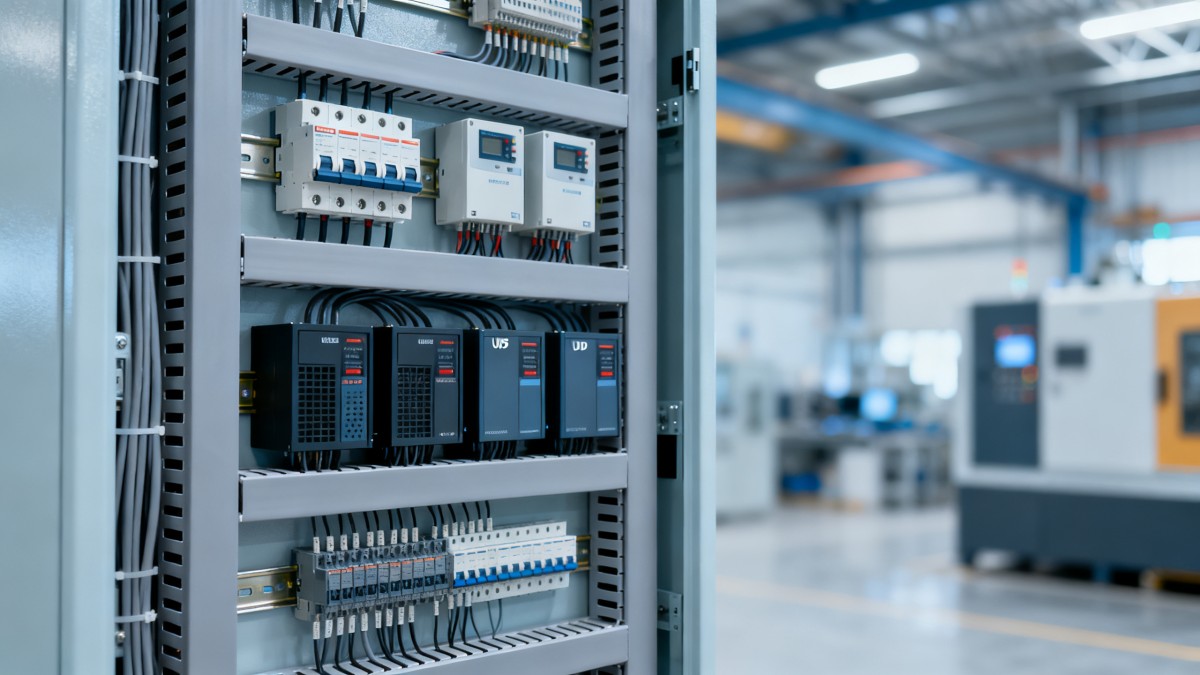
Sizing an SPD means selecting electrical ratings that fit the system where the device will be installed. The most important values usually include maximum continuous operating voltage MCOV, nominal discharge current In, maximum discharge current Imax, voltage protection level Up, and where relevant, impulse current Iimp. In many industrial projects, these values must align with the network type, such as 230/400 V low-voltage systems, 480 V three-phase systems, or higher-risk service entrances exposed to external lightning influence.
A common mistake is to size an SPD based only on kA rating. High surge current capacity matters, but it is only 1 part of the decision. If the MCOV is below the actual steady-state system voltage, the SPD may age prematurely or fail. If the protection level Up is too high, sensitive PLCs, VFD controls, or instrument loops may still be exposed to damaging residual voltage even though the SPD itself survives.
In industrial settings, it also helps to think in zones. A service entrance SPD may be selected for high-energy events, while a downstream panelboard SPD focuses on reducing residual overvoltage closer to loads. For control cabinets serving sensors, HMI panels, or metering devices, a finer protection stage is often necessary. This layered approach often uses 2 to 3 coordinated protection points rather than relying on a single device.
From a procurement and lifecycle perspective, proper sizing reduces unplanned replacement frequency. Plants that experience repeated switching transients from capacitor banks, VCB operation, or large motor starts may subject an SPD to many events over time, not just rare lightning-related impulses. That is why engineers should evaluate both one-time withstand capability and repetitive discharge performance.
Key SPD Parameters to Review First
Before comparing brands or price points, teams should confirm the electrical baseline. The table below summarizes the parameters most often used during industrial SPD sizing and why each matters during specification review.
The key takeaway is that no single number defines the “right” SPD. A balanced specification should combine voltage compatibility, surge endurance, and adequate clamping performance for the loads being protected.
Size the SPD by System Voltage, Earthing Arrangement, and Installation Point
The first sizing step is to confirm the electrical system. In practice, this means identifying nominal voltage, frequency, phase configuration, and the earthing arrangement such as TN-S, TN-C-S, TT, or IT. An SPD selected for a 230/400 V TN-S network is not automatically suitable for a 277/480 V system or a floating IT configuration. Even when the panel looks similar, the permissible continuous voltage stress can differ significantly.
Installation point is the second major factor. A Type 1 SPD is commonly considered at the service entrance where lightning current or high-energy external surges may enter the facility. A Type 2 SPD is typically used in distribution boards and subpanels. Type 3 protection is often placed close to sensitive loads within 5 to 10 meters of terminal equipment, especially where control electronics or communication interfaces are exposed.
Cable length also affects performance. Long conductor runs can increase residual voltage due to lead inductance, especially during fast transients. Even a well-rated SPD may underperform if installed with excessive lead length or poor routing. As a field rule, many installers aim to keep connecting conductors as short and direct as possible, often below 0.5 meters total lead length where layout allows.
Industrial buyers should also ask whether the SPD configuration matches line-to-neutral, line-to-line, and neutral-to-earth protection needs. In some plants, neutral disturbance can damage low-voltage control systems just as severely as phase surges. A specification that ignores mode of protection may look compliant on paper yet leave key circuits exposed.
Typical Sizing Logic by Location
The matrix below helps map common industrial installation points to typical SPD priorities. Exact ratings vary by local code, risk assessment, and equipment sensitivity, but this structure supports early specification work.
For most industrial sites, the best outcome comes from a coordinated cascade rather than a single oversized unit. This usually means 2 or more stages of protection distributed from the main board to critical loads.
Quick Verification Checklist
- Confirm nominal voltage and frequency, such as 50 Hz or 60 Hz.
- Identify system grounding arrangement before selecting protection modes.
- Check whether the SPD is for service entrance, distribution, or point-of-use protection.
- Review conductor length, breaker coordination, and enclosure environment.
Evaluate Surge Current Exposure and Equipment Sensitivity Together
Not every facility sees the same surge environment. A coastal terminal, a mining operation with long feeders, and an urban manufacturing plant may all require different SPD sizing decisions. Exposure depends on factors such as overhead line presence, external lightning protection system, feeder length, switching activity, and how often large inductive loads are started or interrupted.
In industrial power systems, transient damage is often caused by more than direct lightning effects. Reclosing events, transformer switching, VCB operation, capacitor bank switching, and VFD-driven motor behavior can all generate repetitive transients. If the site experiences these events several times per week or even several times per day, repetitive discharge rating In becomes highly relevant, not just peak kA capability.
Load sensitivity should be assessed at the same time. A large pump motor may tolerate brief disturbance better than a PLC input card, safety relay, building management controller, or precision metering module. For that reason, the SPD nearest sensitive electronics often needs a lower Up than the upstream device, even if its surge current rating is smaller.
A simple risk-based approach is to separate loads into 3 groups: robust power equipment, mixed electro-mechanical systems, and sensitive digital or instrumentation loads. Once this is done, designers can allocate stronger energy handling at the upstream level and tighter voltage limiting downstream.
Typical Exposure and Protection Strategy
The following comparison shows how exposure level and equipment sensitivity can influence SPD priorities in real industrial settings.
This comparison highlights a core principle: surge current capacity and sensitive load protection are not competing goals, but they are often delivered by different SPD stages in the same facility.
Common Misjudgments to Avoid
- Selecting the highest kA unit available without checking MCOV or Up.
- Protecting the main switchboard but leaving long downstream control circuits unprotected.
- Ignoring internal switching surges because no major lightning event has been recorded recently.
- Using the same SPD specification for VFD panels, UPS cabinets, and general lighting boards.
Coordinate the SPD with VCB, UPS, VFD, and Protective Devices
Coordination is where many otherwise reasonable SPD selections fail. An SPD must work with upstream overcurrent protection, short-circuit levels, and nearby power conversion equipment. If a unit is installed without verifying backup fuse or circuit breaker compatibility, a surge event can escalate into an avoidable shutdown, nuisance trip, or unsafe fault-clearing condition.
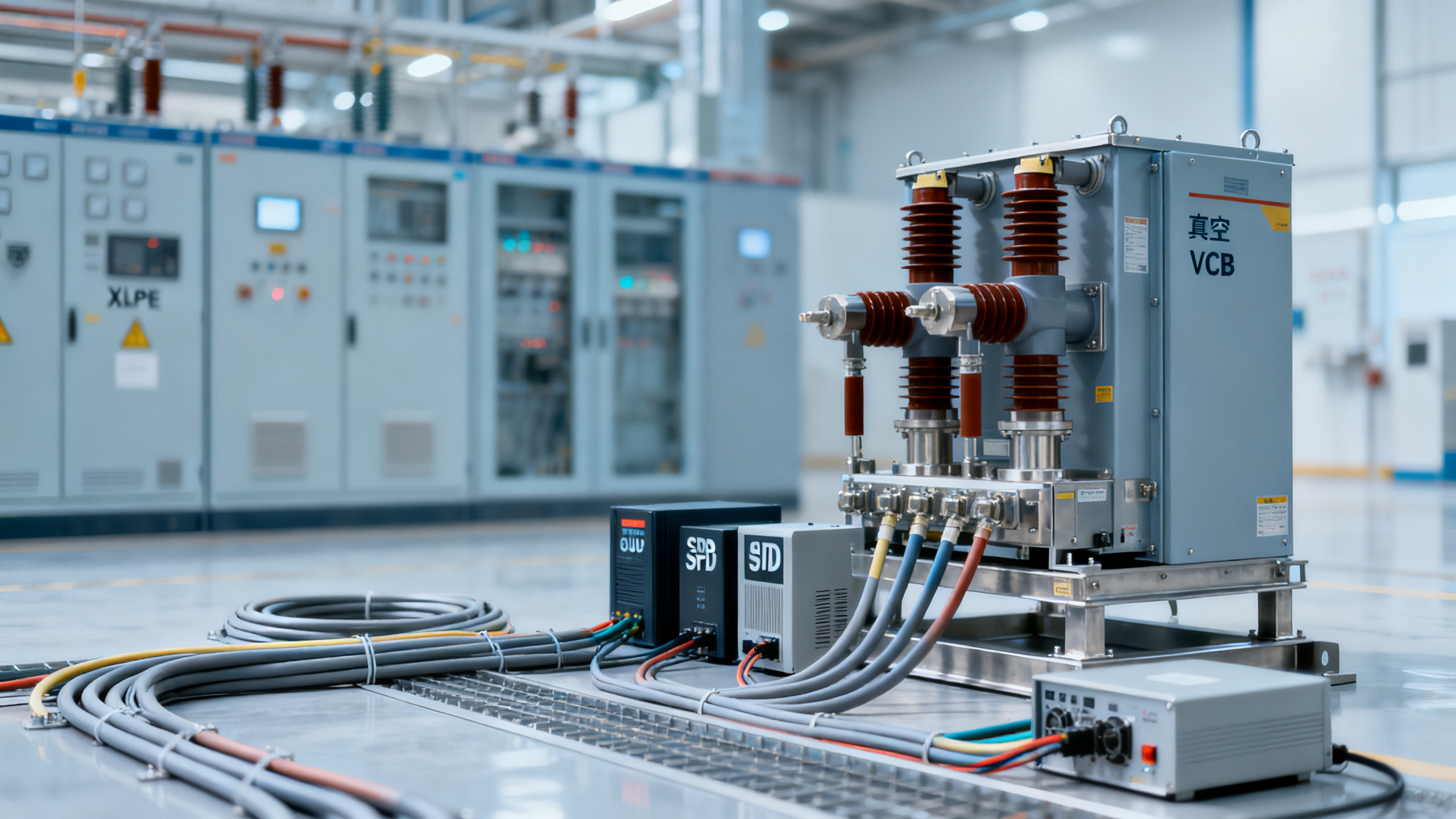
VCB-controlled circuits deserve special attention because switching operations can create steep-front transients, especially in medium-voltage to low-voltage transformation chains or motor switching applications. While the SPD may be installed on the low-voltage side, the resulting transient profile can still affect its duty cycle. In such cases, engineers should confirm both repetitive performance and the suitability of the chosen protection stage.
UPS systems introduce another layer of complexity. Some installations require protection at the UPS input, some at the output, and some at both points depending on topology, bypass arrangement, and critical load sensitivity. A poorly coordinated SPD can interfere with continuity objectives if it trips protective devices unnecessarily during transient conditions.
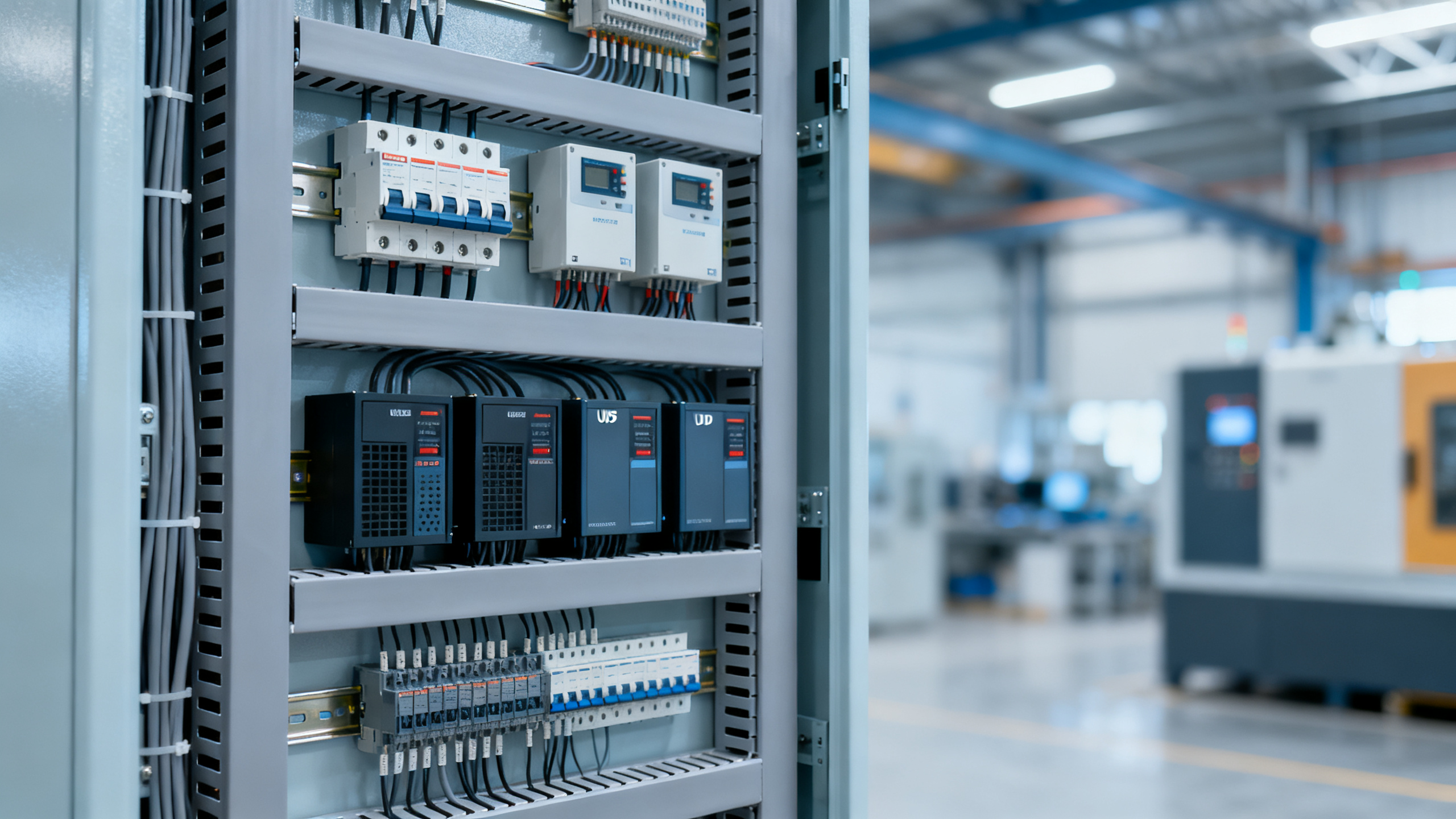
VFD-fed systems also benefit from thoughtful SPD placement. Drives contain sensitive electronics and are often connected to long motor cables that can contribute to reflected wave or transient effects. Although an SPD does not replace proper drive filtering or grounding practice, it can reduce incoming surge stress on the drive and associated control electronics when correctly selected and installed.
Practical Coordination Points for Specification Review
During design review or procurement evaluation, teams should verify at least the following 5 items:
- Short-circuit withstand and recommended upstream protective device ratings.
- Compatibility with the panel’s fault level and breaker/fuse arrangement.
- Whether the SPD is intended for use before or after a UPS, or at both positions.
- Whether VFD, PLC, and instrumentation loads require a lower downstream Up.
- Whether maintenance staff can inspect status indication or remote alarm contact easily.
Serviceability Matters Too
In facilities operating 24/7, maintainability should be built into the sizing decision. A modular SPD with pluggable cartridges and status indication may reduce service interruption compared with hardwired replacement-only formats. If an SPD is expected to experience frequent switching-related wear, maintenance access can influence total cost as much as the original purchase price.
For procurement teams, this means comparing not only unit cost but also replacement lead time, spare strategy, and service interval visibility. A lower-cost device may become more expensive if replacement parts take 6 to 8 weeks or if technicians must de-energize a critical panel for every inspection.
Build a Reliable SPD Selection and Procurement Workflow
A disciplined workflow helps align engineering, operations, and purchasing. In many industrial projects, SPD selection is delayed until late-stage panel integration, which increases the risk of mismatched ratings or rushed substitutions. A better method is to define the electrical environment early, classify critical loads, and then create an SPD schedule for each protection zone.
For multi-site organizations, using a standard review template improves consistency. The template should capture 6 basic data points: system voltage, grounding type, installation point, expected surge exposure, connected equipment type, and protective device coordination requirements. This is especially useful for EPC packages, retrofit programs, and framework procurement agreements.
Procurement should also ask for practical submittal data, not just a product brochure. Useful documentation includes rating details, wiring mode, replacement module information, installation limitations, and recommended upstream protection. Where compliance is required by project specification, buyers should confirm that documentation matches the regional standards requested by the project owner or consultant.
Finally, commissioning and maintenance should be part of the original decision. Even a correctly sized SPD can be compromised by poor grounding, loose terminals, or hidden end-of-life indication. A post-installation verification step and periodic inspection interval, such as every 6 or 12 months depending on site conditions, improves long-term protection performance.
A 5-Step Industrial SPD Workflow
- Survey the network: record voltage, earthing, short-circuit context, and panel hierarchy.
- Map surge zones: identify incoming service, distribution levels, and critical load locations.
- Match ratings: choose MCOV, In, Imax or Iimp, and Up for each installation point.
- Verify coordination: confirm breaker/fuse compatibility and interaction with UPS, VFD, and control equipment.
- Plan lifecycle support: define spare strategy, inspection frequency, and replacement process.
Decision Priorities for Buyers and Plant Leaders
When budgets are limited, prioritize boards that feed production-critical assets, safety systems, and automation infrastructure first. In many plants, 20% of panels support 80% of downtime-sensitive operations. Focusing SPD investment on those nodes often delivers the strongest return in reliability and operational continuity.
The right SPD sizing strategy protects more than hardware. It supports uptime, maintenance planning, and risk control across the entire industrial power chain. If you are evaluating service entrance protection, panel-level surge control, or a coordinated approach for UPS, VFD, and automation systems, now is the right time to review your specification basis and procurement criteria.
Global Industrial Core supports industrial buyers, engineers, and decision-makers with structured technical insight for safer and more resilient infrastructure choices. To discuss application-specific SPD selection, compare protection architectures, or obtain a tailored sourcing reference, contact us to get a customized solution and explore more industrial protection strategies.
Expert Insights

Chief Security Architect
Dr. Thorne specializes in the intersection of structural engineering and digital resilience. He has advised three G7 governments on industrial infrastructure security.
Related Analysis
Core Sector // 01
Security & Safety
- When to Use Vacuum Circuit Breakers VCBAuthor :Grid Infrastructure Analyst

- Wholesale Lightning Arresters: What Matters MostAuthor :Grid Infrastructure Analyst

- How to Size a Surge Protective Device SPDAuthor :Grid Infrastructure Analyst

- INMETRO Mandates New IEC 60947-2 Annex Q Short-Circuit Test for Industrial Circuit BreakersAuthor :Grid Infrastructure Analyst
![]()
- Copper Price Surge Impacts Electrical Equipment BOM CostsAuthor :Grid Infrastructure Analyst
![]()
- INMETRO New Rule: Industrial Circuit Breakers Must Pass IEC 60947-2 Annex Q Test from Sep 2026Author :Grid Infrastructure Analyst
![]()
- IEC 61850-90-15:2026 Published: 100 ns Time Stamp Mandatory for Substation RelaysAuthor :Grid Infrastructure Analyst
![]()
- Why relays fail during electrical safety checksAuthor :Grid Infrastructure Analyst