When to Use Vacuum Circuit Breakers VCB
Author
Date Published
Reading Time
Knowing when to use vacuum circuit breakers VCB is essential for safe, reliable power distribution in industrial and commercial systems. From thhn building wire and xlpe power cables to surge protective device spd and uninterruptible power supply ups, the right switching and protection strategy helps engineers, operators, and buyers reduce downtime, improve compliance, and make smarter infrastructure decisions.
In medium-voltage infrastructure, the decision to specify a vacuum circuit breaker is rarely just about interrupting current. It affects arc safety, maintenance planning, lifecycle cost, switchgear footprint, and service continuity across plants, utilities, data facilities, and large commercial campuses. For research teams, operators, procurement managers, and business decision-makers, understanding where VCB technology fits best can reduce avoidable risk during both design and retrofit projects.
This guide explains when to use vacuum circuit breakers, where they outperform alternative technologies, what technical and commercial factors matter most, and how to align the breaker choice with cable systems, UPS architecture, surge protection, compliance requirements, and long-term operational reliability.
Where Vacuum Circuit Breakers Fit in Modern Power Distribution
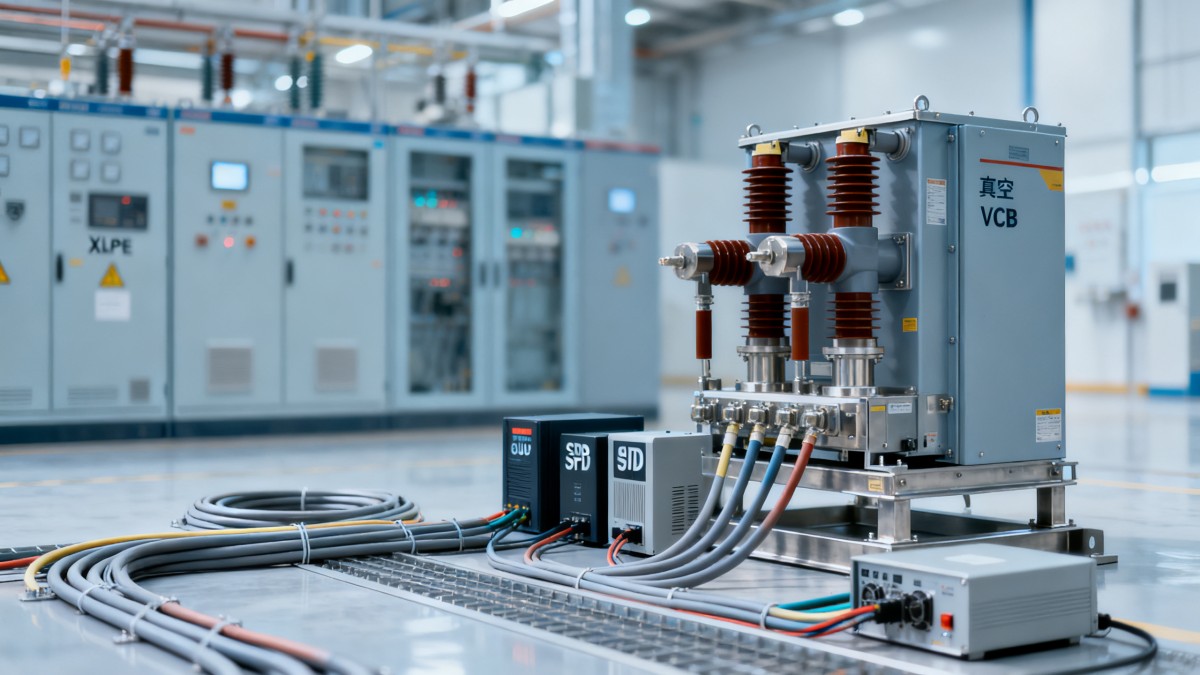
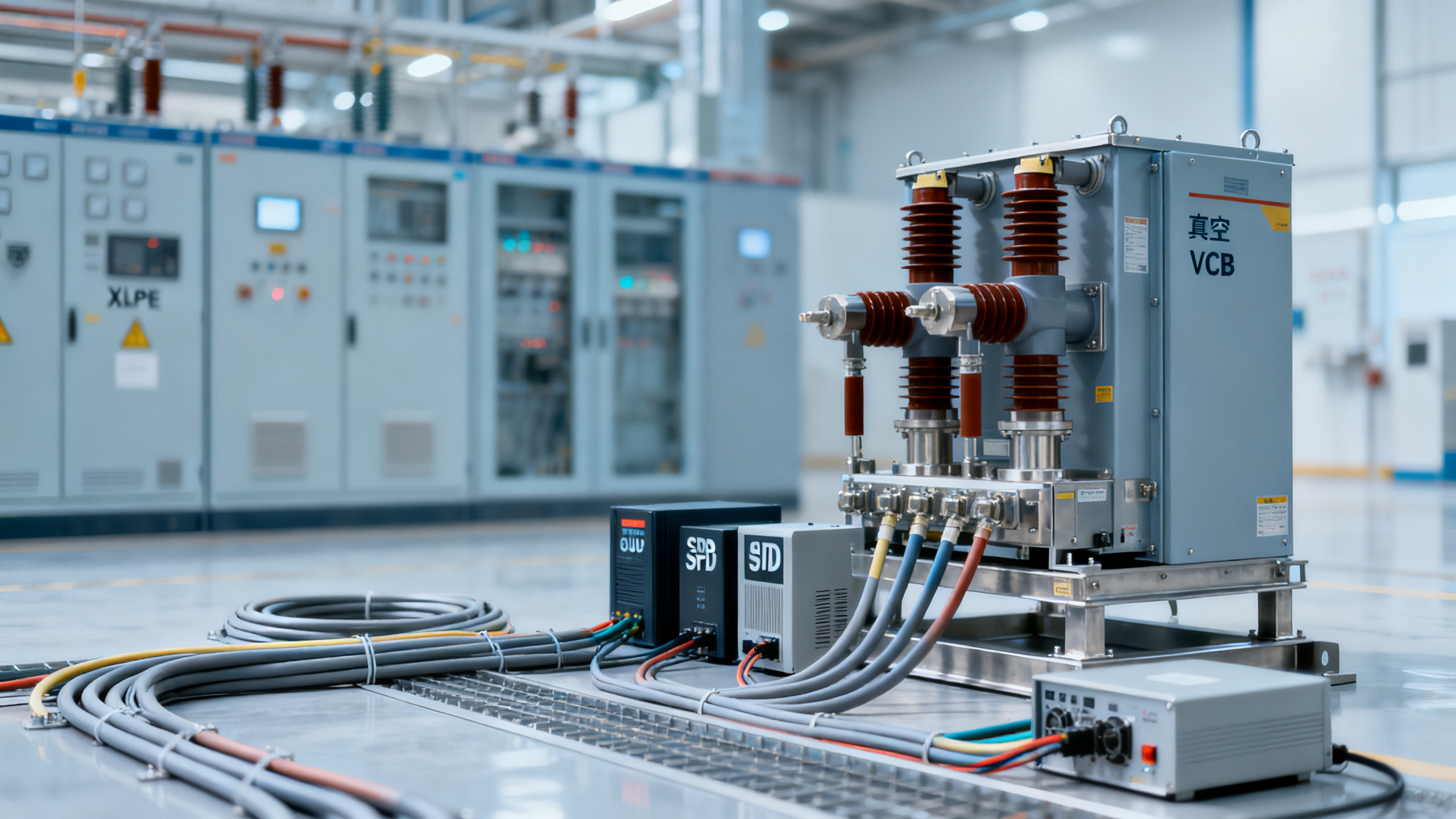
A vacuum circuit breaker is primarily used in medium-voltage networks, commonly in the 3.3kV to 36kV range, although exact application limits depend on the switchgear design and system duty. Its interrupting chamber is sealed in vacuum, allowing the arc to extinguish quickly when contacts separate. This makes VCB technology well suited for frequent switching, feeder protection, motor control, transformer protection, and indoor distribution systems where clean operation matters.
In industrial settings, VCBs are often installed in substations feeding production lines, HVAC loads, pump stations, compressors, process skids, and backup power interfaces. They are especially relevant where operators need high reliability across repeated switching cycles, often from several hundred to several thousand operations over service life, without the gas handling requirements associated with some alternative breaker technologies.
For buyers comparing protection schemes, the main value of a vacuum breaker is not simply “better performance” in abstract terms. The real advantage is a balanced combination of dielectric strength, low maintenance, compact integration, and suitability for modern metal-clad switchgear. In facilities where unplanned downtime can cost hours of production loss, or where a UPS supports critical controls rather than full plant loads, the breaker’s role in selective isolation becomes strategically important.
VCBs also integrate well with broader electrical ecosystems. A system that includes THHN building wire on low-voltage distribution, XLPE power cables on medium-voltage feeders, surge protective device SPD layers at panel and equipment level, and UPS support for control systems still depends on correct medium-voltage interruption upstream. In that chain, the VCB becomes a key switching and fault-clearing element rather than an isolated product choice.
Typical installations where VCBs are preferred
- Indoor medium-voltage switchgear for manufacturing plants, commercial towers, hospitals, transport hubs, and water treatment sites.
- Feeder and transformer protection in systems requiring reliable interruption from 6kV, 11kV, 15kV, 22kV, or 33kV classes.
- Motor switching applications with repeated operation, such as large pumps, fans, and compressors.
- Retrofit projects where oil breakers are being replaced to reduce maintenance burden and improve operational safety.
Quick comparison of breaker technologies
The table below shows how VCBs are commonly positioned against oil, air, and SF6-based options in industrial decision-making. Exact suitability still depends on fault level, switching duty, ambient conditions, and local standards.
For most indoor medium-voltage distribution projects, VCBs offer the most practical balance between safety, operating economy, and switchgear compatibility. That is why they are frequently selected for new EPC packages and staged substation upgrades.
When a VCB Is the Right Choice: Core Application Scenarios
The best time to use a vacuum circuit breaker is when a system operates in the medium-voltage band and requires dependable fault interruption with limited routine maintenance. This includes industrial feeders, transformer incomers, motor control circuits, ring main arrangements, and sectionalizing points in commercial and institutional power systems. In many projects, VCBs become the preferred choice when service continuity has a higher value than the lowest upfront hardware cost.
A VCB is particularly attractive for facilities with frequent switching duties. If a breaker must open and close repeatedly during load transfers, motor starts, scheduled isolation, or generator synchronization routines, vacuum technology generally performs better than maintenance-heavy legacy designs. In process industries running 16 to 24 hours per day, this operational rhythm matters more than brochure specifications alone.
Another strong use case is indoor switchgear rooms where clean, compact, and low-intervention operation is required. Commercial campuses, hospitals, airports, metro systems, and data-linked facilities often prefer breaker solutions that minimize contamination risk and support organized preventive maintenance intervals. When the electrical room is part of a high-availability site, predictable service windows of 6 to 12 months are often easier to manage with VCB-based equipment.
VCBs are also commonly used when replacing older oil breakers in brownfield facilities. Many legacy substations still run on equipment that increases maintenance burden, inspection frequency, and safety exposure. Upgrading to a modern vacuum breaker can simplify spare parts strategy, improve mechanical reliability, and support digital relays, remote status indication, and better arc-resistant switchgear integration.
Best-fit scenarios by facility type
The table below maps common facility conditions to typical VCB use cases. These are planning references rather than universal rules, but they help research and procurement teams align the breaker type to actual operating demands.
A clear pattern emerges: VCBs are most valuable where medium-voltage switching is routine, downtime is expensive, and the site needs safer, cleaner, and more predictable operation over 10 to 20 years of service planning.
Practical triggers for specifying a VCB
- The system voltage is above typical low-voltage breaker ranges and within common medium-voltage design classes.
- The facility requires repeated switching, such as motor feeders, load transfers, or sectionalizing duty.
- Operations teams want to reduce oil handling, contamination risk, or intensive inspection routines.
- The project includes switchgear modernization, relay upgrades, arc safety improvements, or digital monitoring integration.
Technical Selection Criteria: Voltage, Load, Coordination, and Environment
Choosing a vacuum circuit breaker starts with system data, not brand preference. Engineering teams should confirm nominal voltage, maximum system voltage, fault level, load type, insulation coordination, and switchgear compatibility. A breaker that is correct for an 11kV feeder with moderate short-circuit duty may not be sufficient for a 33kV installation with higher interruption demands, repeated motor switching, or tighter coordination requirements.
Short-circuit ratings, continuous current ratings, and operating sequences must be checked carefully. In procurement reviews, at least 4 technical items should be matched line by line: rated voltage, rated current, short-circuit breaking capacity, and mechanical endurance. In many industrial projects, coordination with protection relays is just as important as the breaker body itself, because misaligned trip settings can cause nuisance outages or failure to isolate faults selectively.
Environmental conditions also matter. Indoor clean rooms differ from dusty cement facilities, corrosive wastewater sites, and high-humidity coastal substations. Ambient temperatures may range from 0°C to 40°C in standard conditions, but some installations face wider exposure bands. In those cases, enclosure design, space heaters, anti-condensation measures, and insulation practices around XLPE power cables become part of the full breaker decision.
When VCBs are used with sensitive transformers or motors, transient behavior must be assessed. Vacuum interruption is effective, but some applications require surge mitigation or switching control strategies. That is where SPD coordination, cable length review, and equipment insulation checks become important, especially in networks with high-value motors, VFD interfaces, or process-critical electronic loads.
Key technical checks before purchase
- Confirm voltage class and insulation level for the exact switchgear application, not only the site nameplate.
- Verify continuous current rating against actual load profile, including future capacity growth of 10% to 25% where relevant.
- Review short-circuit breaking duty and protection relay settings as a coordinated package.
- Check switching frequency, especially for motors, capacitor banks, transfer operations, and generator interfaces.
- Assess environment: altitude, dust, humidity, corrosive atmosphere, and maintenance access conditions.
Selection matrix for engineering and procurement teams
The following matrix helps align breaker selection with real project variables. It is useful during tendering, technical clarification, or bid comparison across multiple suppliers.
This structured review helps avoid a common procurement mistake: buying a breaker that meets catalog ratings but does not fit the system’s switching duty, environment, or protection scheme.
Integration with Cables, SPD, UPS, and Overall Protection Strategy
A vacuum circuit breaker should never be evaluated as a stand-alone component. Its real performance depends on how it interacts with the wider electrical architecture, including transformer sizing, cable insulation, surge control, backup power strategy, and relay selectivity. In practical project terms, the breaker is one link in a coordinated protection chain from the utility incomer down to the end-use panel.
On the low-voltage side, THHN building wire may be used in internal building distribution where permitted by code and application design. On the medium-voltage side, XLPE power cables are common for feeders because they provide robust insulation performance and practical installation flexibility. The VCB upstream must be coordinated with cable ampacity, insulation stress limits, and route length, especially when switching transformers or motor feeders over longer runs.
Surge protective device SPD selection becomes important where switching events or external surges could affect sensitive downstream equipment. While the VCB interrupts faults, the SPD manages transient overvoltage at appropriate levels in the system. These are different functions, but they should be specified together. Sites with digital process controls, instrumentation networks, and power quality concerns often benefit from a layered approach rather than relying on any one component to solve every disturbance.
UPS systems add another layer. In many facilities, the UPS does not carry all mechanical load; instead, it protects control power, instrumentation, communication, safety systems, and orderly shutdown functions. That means the medium-voltage breaker must support selective isolation without unnecessarily collapsing critical low-voltage support circuits. The result is better resilience during both planned switching and abnormal fault conditions.
A coordinated protection view
- Utility or generator source enters medium-voltage switchgear with VCB-based interruption and relay logic.
- Power flows through transformer stages and XLPE cable feeders to distribution boards or motor control segments.
- SPD devices are positioned at key transition points to limit transient stress on sensitive equipment.
- UPS systems support critical control and digital loads during transfer events or short-term disturbances.
- Low-voltage final circuits, including THHN-based internal wiring where applicable, distribute protected power to end use.
Common integration risks
- Assuming breaker selection alone will solve power quality issues without SPD coordination.
- Ignoring cable length and insulation stress in repeated switching environments.
- Failing to coordinate VCB trip logic with UPS-supported critical loads, causing wider outages than necessary.
- Using a retrofit breaker without confirming compatibility with the existing switchgear cell, busbar geometry, and protection settings.
For operators and decision-makers, the message is straightforward: the best VCB choice is the one that fits a full-system protection plan, not just a price line on a bill of materials.
Procurement, Maintenance, and Lifecycle Decision Factors
From a purchasing standpoint, vacuum circuit breakers are often selected because they support lower maintenance intensity over the equipment lifecycle. However, smart procurement requires more than comparing initial quotations. Buyers should review 5 core areas: technical compliance, interoperability with existing switchgear, spare parts availability, commissioning support, and lifecycle service expectations over 10 to 15 years.
Lead time is another commercial factor. Depending on rating, accessory scope, and project documentation, standard deliveries may fall in a 4 to 12 week window, while retrofit or engineered switchgear packages may take longer. For EPC contractors and plant managers, this affects outage planning, tie-in sequencing, and temporary power strategy. A slightly lower purchase price can become expensive if long delivery causes production delays or extended shutdown risk.
Maintenance planning should include both mechanical and electrical checks. Even though vacuum interrupter technology generally reduces servicing frequency, operators still need routine inspection of mechanisms, contact wear indicators, interlocks, trip circuits, and relay communication. A disciplined maintenance cycle every 6 or 12 months, depending on duty and environment, helps preserve reliability and supports safety audits.
Decision-makers should also account for training and documentation quality. A technically good breaker can still create operational risk if local teams lack clear procedures for racking, testing, locking out, and returning the equipment to service. In mission-critical facilities, procedural clarity is just as valuable as equipment durability.
Procurement checklist for VCB projects
The strongest buying decisions usually come from balancing technical fit, maintenance effort, and delivery certainty. For many industrial users, that balance is exactly why VCBs remain a preferred medium-voltage solution.
FAQ for researchers, operators, and buyers
How do I know if a VCB is better than an oil breaker in a retrofit?
If the project aims to reduce maintenance, improve safety, and modernize protection coordination, a VCB is often the stronger option. Confirm 3 points first: physical fit in the switchgear, required short-circuit duty, and relay compatibility. Retrofit success depends as much on integration detail as on breaker technology.
Can a VCB protect systems that include UPS and SPD devices?
Yes, but the breaker must be part of a coordinated design. The VCB clears faults at medium voltage, the SPD limits transient stress, and the UPS supports critical loads during disturbances or transfer events. These components serve different roles and should be specified together rather than independently.
What maintenance interval is typical for a VCB?
A common planning range is every 6 to 12 months for inspection, with deeper service based on operation count, environment, and manufacturer guidance. Dusty, humid, or high-duty sites may require more frequent checks than climate-controlled electrical rooms.
What should procurement teams request from suppliers?
At minimum, request technical datasheets, routine or type test references where applicable, dimensional drawings, auxiliary circuit details, recommended spares, installation instructions, and commissioning scope. For retrofit work, ask for site verification steps before final approval.
Vacuum circuit breakers are the right choice when medium-voltage systems need dependable fault interruption, lower maintenance intensity, good switchgear integration, and cleaner lifecycle management than many legacy alternatives. They are especially effective in industrial feeders, transformer circuits, motor applications, indoor substations, and infrastructure upgrades where downtime, safety, and long-term serviceability all matter.
For EPC teams, operators, procurement specialists, and executive decision-makers, the smartest VCB decision comes from evaluating the full system: voltage class, fault duty, cable design, SPD coordination, UPS continuity needs, retrofit constraints, maintenance planning, and delivery timing. If you are reviewing a new project or modernization plan, contact us to discuss application details, compare options, and get a tailored power distribution solution for your facility.
Expert Insights

Chief Security Architect
Dr. Thorne specializes in the intersection of structural engineering and digital resilience. He has advised three G7 governments on industrial infrastructure security.
Related Analysis
Core Sector // 01
Security & Safety
- When to Use Vacuum Circuit Breakers VCBAuthor :Grid Infrastructure Analyst

- Wholesale Lightning Arresters: What Matters MostAuthor :Grid Infrastructure Analyst

- How to Size a Surge Protective Device SPDAuthor :Grid Infrastructure Analyst

- INMETRO Mandates New IEC 60947-2 Annex Q Short-Circuit Test for Industrial Circuit BreakersAuthor :Grid Infrastructure Analyst
![]()
- Copper Price Surge Impacts Electrical Equipment BOM CostsAuthor :Grid Infrastructure Analyst
![]()
- INMETRO New Rule: Industrial Circuit Breakers Must Pass IEC 60947-2 Annex Q Test from Sep 2026Author :Grid Infrastructure Analyst
![]()
- IEC 61850-90-15:2026 Published: 100 ns Time Stamp Mandatory for Substation RelaysAuthor :Grid Infrastructure Analyst
![]()
- Why relays fail during electrical safety checksAuthor :Grid Infrastructure Analyst