Rubber Shock Absorbers and the Hidden Cost of Overhardness
Author
Date Published
Reading Time
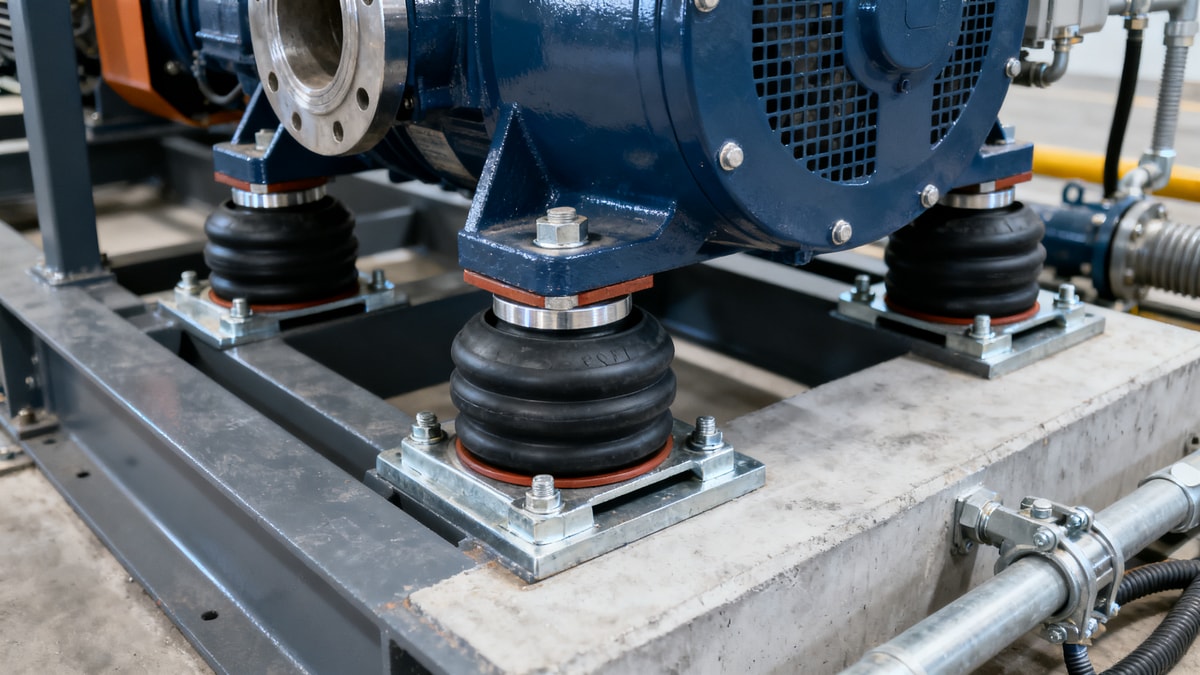
When rubber shock absorbers are specified too hard, the visible price may look lower—but the hidden operational cost can be far higher. For industrial decision-makers balancing reliability, compliance, and lifecycle value, overhardness can trigger vibration transfer, premature component wear, noise issues, and maintenance risk. This article examines why material hardness must be matched to real working conditions, not just procurement assumptions.
Why decision-makers should use a checklist before approving rubber shock absorbers
In industrial purchasing, hardness is often treated as a simple durability signal: harder means stronger, safer, and longer lasting. That assumption is incomplete. For rubber shock absorbers, hardness only becomes valuable when it is aligned with load profile, vibration frequency, installation geometry, surrounding temperature, media exposure, and the sensitivity of adjacent equipment. A unit that is too hard may survive compression, yet fail its real purpose by transmitting energy instead of isolating it.
A checklist-based approach helps procurement leaders, EPC teams, plant managers, and maintenance heads avoid a common trap: buying by durometer alone. In practice, the wrong hardness can raise total cost through bearing failures, loosened fasteners, cracked welds, operator complaints, poor instrument accuracy, and unplanned shutdowns. The most effective sourcing decision therefore starts with key checks, not catalog shortcuts.
First-screen checklist: what to confirm before comparing suppliers
Before evaluating quotations for rubber shock absorbers, decision-makers should confirm the following points internally. This simple discipline reduces redesign risk and prevents buying a component that looks acceptable on paper but performs poorly in operation.
- Define the actual function required: vibration isolation, shock attenuation, noise reduction, alignment protection, or transport restraint. These are related but not identical needs.
- Verify static load and dynamic load separately. Many projects specify one number while ignoring start-stop cycles, impact loads, or intermittent overloads.
- Identify the operating frequency range of the machine. Hardness that performs reasonably at one frequency can amplify response at another.
- Check allowable deflection. If the mounting system cannot move enough, the rubber shock absorbers may transfer vibration directly into the structure.
- Confirm environmental conditions: heat, ozone, oil, chemicals, UV, water, and outdoor aging all affect material behavior.
- Review nearby sensitive assets such as sensors, cabinets, pipe supports, precision instruments, and electrical connections.
- Ask whether regulatory or customer standards require test data, traceability, or specific material grades.
If these points are unclear, no hardness value should be considered final. Early uncertainty almost always becomes a downstream cost.
Core judgment criteria: how to tell when hardness is becoming a hidden cost
For industrial buyers, the central question is not whether hard rubber is good or bad. The question is whether the chosen hardness matches system behavior. The following judgment criteria provide a practical way to assess that risk.
1. Excess vibration reaches the supporting structure
If a machine base, skid, frame, wall bracket, or floor support shows unexpected vibration after installation, the rubber shock absorbers may be too stiff. This is especially common in fans, pumps, compressors, generator auxiliaries, HVAC assemblies, and packaged process systems. Overhardness reduces isolation efficiency and allows energy to pass into steelwork and concrete rather than dissipating through controlled deformation.
2. Noise problems persist despite “upgraded” mounts
When teams replace mounts but still experience rattling, humming, or low-frequency transmission, the problem may not be machine imbalance alone. Hard rubber shock absorbers can create an acoustic bridge, particularly in enclosed mechanical rooms or rooftop installations where resonance and structural transmission are magnified.
3. Adjacent parts wear faster than expected
A mount that appears mechanically intact may still be causing hidden harm. Overly hard isolation can increase stress on couplings, seals, brackets, conduit, fasteners, and instrument connections. In procurement reviews, this often appears as unrelated maintenance spend, even though the root cause is poor vibration management.
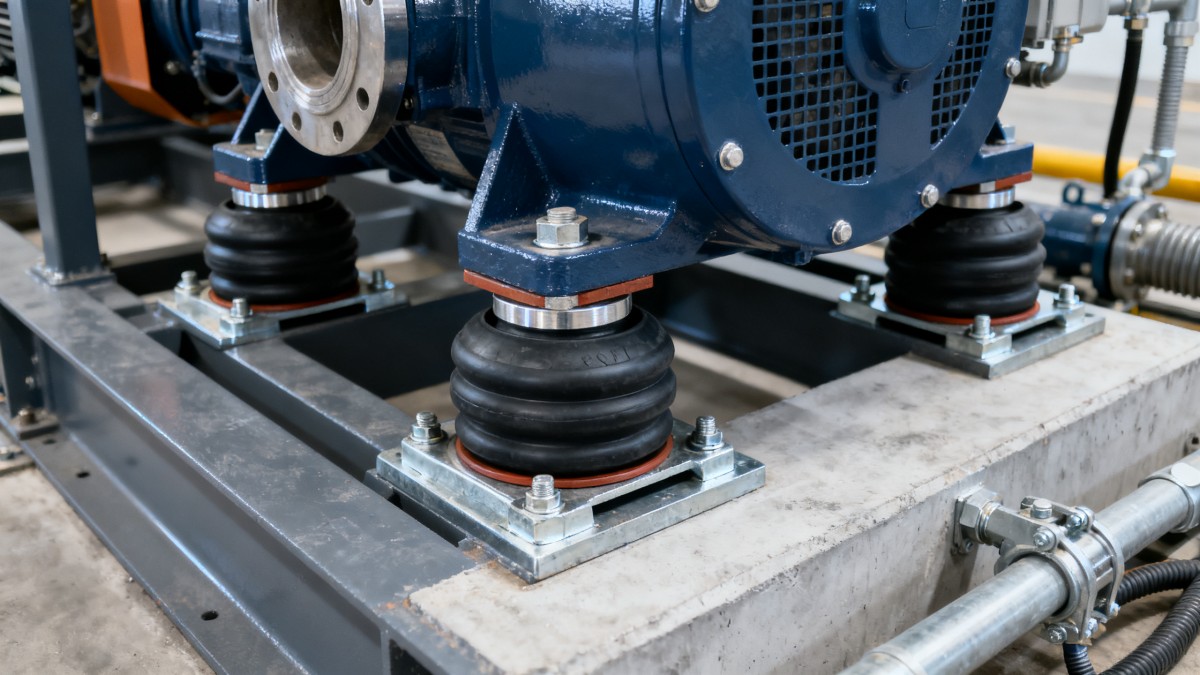
4. The system shows low deflection under real load
Minimal deflection is not always a sign of quality. For rubber shock absorbers, some controlled movement is necessary to absorb energy. If a mount barely compresses during operation, the material may be too hard for the application. That means the installation may be mechanically stable yet functionally ineffective.
5. Early field adjustments become routine
When maintenance teams repeatedly retighten bolts, realign assemblies, or troubleshoot vibration after commissioning, hardness mismatch should be investigated. Frequent corrective action is a strong signal that the mount specification did not reflect real operating conditions.
A practical evaluation table for rubber shock absorbers selection
The table below can be used as a quick internal reference when screening options and supplier recommendations for rubber shock absorbers.
Scenario-based guidance: where overhardness is most often overlooked
Rotating equipment packages
Pump skids, fan units, blowers, and compressor auxiliaries frequently suffer from “safe-looking” overhard specifications. Buyers may prefer stiffer rubber shock absorbers to minimize visible movement during transport or installation, but once the machine enters steady operation, transmitted vibration can shorten equipment life. In these cases, supplier discussions should include operating speed bands, base rigidity, and alignment tolerance.
Instrumentation and control environments
For systems near measurement devices, panel enclosures, cable trays, and precision sensing assemblies, overhardness can create indirect reliability issues. The mount itself may not fail, yet vibration transfer may reduce signal stability or increase maintenance intervention. This matters greatly in modern plants where data quality supports safety and efficiency decisions.
Building services and occupied facilities
In mixed-use industrial sites, logistics hubs, utilities buildings, and commercial-adjacent facilities, noise complaints can escalate into operational or contractual issues. Rubber shock absorbers that are too hard can underperform in reducing structure-borne sound. The result is not only technical inefficiency but also tenant dissatisfaction, remediation cost, and reputation impact.
Outdoor or chemically exposed installations
Some teams compensate for harsh environments by specifying harder compounds, assuming this improves longevity. In reality, environmental resistance depends on formulation as much as hardness. A better decision is to match the elastomer family and test data to exposure conditions rather than simply increasing durometer.
Common oversight list: what procurement teams miss most often
- Treating catalog hardness as the main performance indicator without asking for dynamic behavior data.
- Evaluating price per piece instead of lifecycle cost across maintenance, noise mitigation, and component wear.
- Ignoring mounting orientation, preload, and installation tolerance, which can change effective performance.
- Assuming “harder” equals “higher load capacity” in every geometry and service condition.
- Failing to ask for field references in comparable equipment categories.
- Separating procurement from maintenance feedback, which hides recurring operational symptoms.
Execution advice: how to buy rubber shock absorbers with lower lifecycle risk
For enterprise buyers, the most effective sourcing process is structured and evidence-based. Start by asking suppliers for recommended hardness ranges, not just one default option. Then request the basis of selection: supported load, expected deflection, dynamic response, environmental suitability, and any test results tied to comparable applications.
Next, involve both engineering and maintenance stakeholders before award. Engineering can verify system compatibility, while maintenance can identify whether previous vibration, noise, or alignment issues may have been caused by overhard mounts. This cross-functional review often reveals hidden cost drivers that procurement data alone cannot show.
Where the application is critical, consider pilot validation or limited batch installation before full standardization. The cost of confirming performance upfront is usually far lower than correcting a site-wide specification error later. For strategic assets, require traceability, material consistency, and documented compliance with relevant standards and internal quality procedures.
FAQ for industrial buyers reviewing hardness decisions
Are harder rubber shock absorbers always more durable?
No. Durability depends on formulation, load, strain, temperature, chemical exposure, and operating dynamics. A harder part may resist deformation but still cause system-level damage or age poorly in the actual environment.
Can overhardness increase total maintenance cost even if the mount does not fail?
Yes. That is one of the most common hidden costs. The mount may remain visually intact while vibration transfer accelerates wear in connected components and creates repeated service events.
What evidence should suppliers provide?
At minimum, ask for material specifications, recommended operating range, environmental resistance data, load-deflection information, relevant certifications, and references from similar industrial applications.
What to prepare before requesting quotations or technical review
If your organization is planning to source or replace rubber shock absorbers, prepare a concise technical package first. Include equipment type, total supported mass, load distribution, operating speed or frequency, installation layout, environmental conditions, service history, and any known issues such as vibration, noise, seal leakage, or fastener loosening. This information allows suppliers and internal reviewers to recommend a more accurate hardness range and mounting design.
For decision-makers focused on resilience and lifecycle value, the key takeaway is clear: do not approve rubber shock absorbers based on hardness assumption alone. Prioritize application fit, dynamic behavior, environmental suitability, and evidence of comparable performance. If you need to confirm parameters, budget impact, compliance requirements, lead time, or solution suitability across multiple sites, the next best step is a structured technical discussion built around load, frequency, deflection, and operating risk—not just unit price.
Technical Specifications
- India BIS Draft IS 17832:2026 Sets Noise & Dust Limits for Waste CrushersAuthor :Environmental Engineering Director
- Korea MFDS Mandates Korean UI & KOSHA OEL Database for Industrial Water AnalyzersAuthor :Precision Metrology Expert
- Indonesia BPOM Mandates PM0.1 Efficiency & CADR Decay Labeling for Industrial Air PurifiersAuthor :Environmental Engineering Director
Expert Insights

Chief Security Architect
Dr. Thorne specializes in the intersection of structural engineering and digital resilience. He has advised three G7 governments on industrial infrastructure security.
Related Analysis
- May 03, 2026India BIS Draft IS 17832:2026 Sets Noise & Dust Limits for Waste CrushersAuthor :Environmental Engineering Director
- May 03, 2026Korea MFDS Mandates Korean UI & KOSHA OEL Database for Industrial Water AnalyzersAuthor :Precision Metrology Expert
- May 03, 2026Indonesia BPOM Mandates PM0.1 Efficiency & CADR Decay Labeling for Industrial Air PurifiersAuthor :Environmental Engineering Director
Core Sector // 01
Security & Safety
- Conveyor Roller Belts: Early Wear Signs You Should Not IgnoreAuthor :Heavy Industry Strategist

- Gear Rack and Pinion Backlash Problems Often Start HereAuthor :Heavy Industry Strategist

- PU Timing Belts Wholesale: Why Cheap Belts Cost More LaterAuthor :Heavy Industry Strategist

- Rubber Shock Absorbers and the Hidden Cost of OverhardnessAuthor :Heavy Industry Strategist

- Stainless Steel Sprockets or Carbon Steel in Wet Lines?Author :Heavy Industry Strategist

- Beijing Non-Motor Vehicle Rules Take Effect May 1: GB 43854-2026 Applies to Industrial e-Mobility BatteriesAuthor :Heavy Industry Strategist

- Egypt SMIIC Mandates Arabic Energy Labels for Industrial PumpsAuthor :Heavy Industry Strategist

- How to Select Overhead Line FittingsAuthor :Heavy Industry Strategist