Gear Rack and Pinion Backlash Problems Often Start Here
Author
Date Published
Reading Time
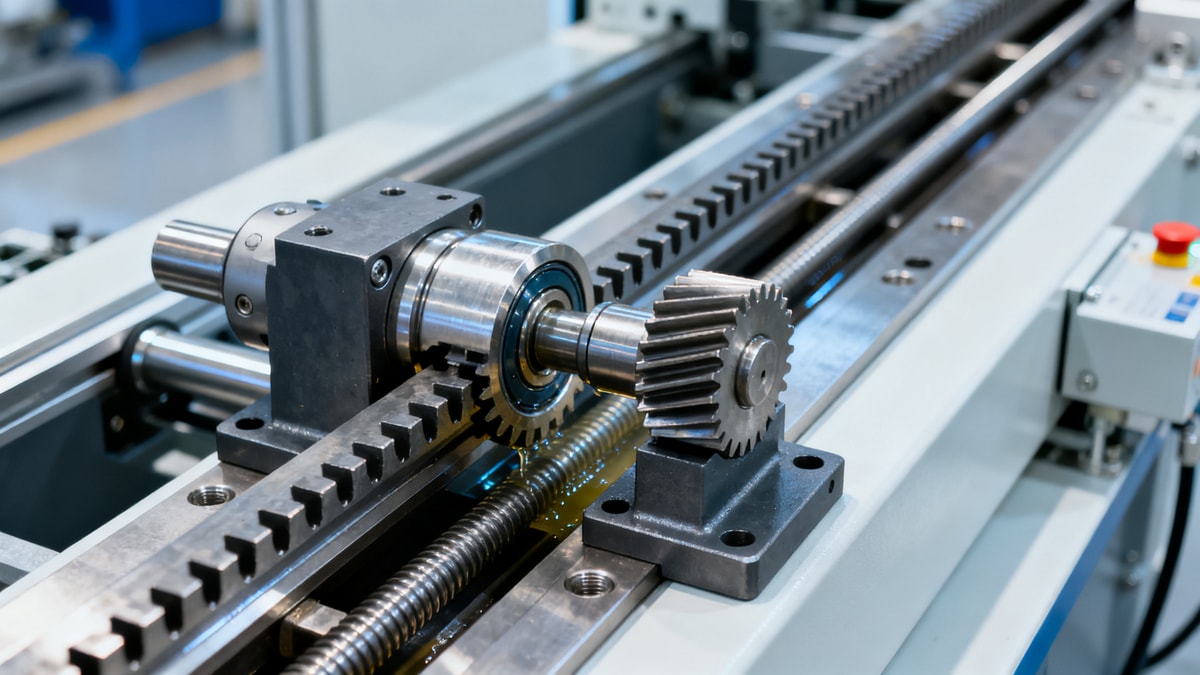
Many gear rack and pinion backlash issues do not begin at the gear teeth alone—they often start with mounting errors, alignment drift, lubrication gaps, or wear that routine checks miss. For aftermarket maintenance teams, identifying these early warning signs is essential to preventing positioning loss, vibration, noise, and costly downtime before the problem spreads through the drive system.
Understanding where backlash really begins
In industrial motion systems, the phrase gear rack and pinion usually brings attention to tooth profile, pitch accuracy, and load capacity. Those factors matter, but in day-to-day maintenance work, backlash problems often emerge from the complete installation environment rather than from the tooth set alone. A rack can be precisely machined and a pinion can meet specification, yet the assembled system may still develop excess clearance, unstable meshing, and poor repeatability if support surfaces, bearings, couplings, or lubrication practices are not controlled.
For aftermarket maintenance personnel, backlash is not merely a dimensional issue. It affects motion accuracy, servo response, energy transfer, noise levels, and the service life of connected components. In packaging lines, gantry systems, material handling equipment, cutting machines, and automated positioning units, even a small increase in free play can create larger downstream problems: missed stops, vibration under reversal, accelerated wear, and process instability. That is why the most effective maintenance approach starts with system-level observation rather than tooth replacement alone.
Why the industry pays close attention to gear rack and pinion backlash
Across modern industry, rack-driven linear motion remains popular because it combines long travel, strong load handling, and straightforward mechanical design. However, the same advantages also expose the system to practical field variables: long mounting lengths, segmented racks, thermal movement, contamination, and changing duty cycles. As industrial assets are pushed for higher uptime and tighter positional control, backlash in a gear rack and pinion system becomes a maintenance concern with operational and safety implications.
In sectors that rely on repeatable motion, backlash can compromise calibration routines, create mismatch between commanded and actual position, and trigger false assumptions about servo tuning or controller faults. In heavier environments, such as steel handling, bulk transport, or large-format automation, it can also increase impact loading during reversals. This makes backlash monitoring relevant not only to mechanical technicians, but also to reliability teams, facility managers, and EPC stakeholders responsible for equipment resilience and compliance.
What backlash means in practical maintenance terms
Backlash is the measurable lost motion between mating parts when direction changes. In a gear rack and pinion assembly, it appears as clearance between the rack teeth and the pinion teeth, but the field symptom is broader than that definition. Operators may notice hesitation before motion begins, inconsistent stopping points, knocking during direction reversal, or a noise pattern that changes under load. Maintenance staff may detect uneven contact marks, fluctuating current draw, or progressive wear at only certain points along the travel.
What matters in practice is that backlash can be true tooth clearance, apparent backlash caused by loose mounting, or a combined effect from several mechanical sources. A worn gearbox output shaft, a fatigued coupling, bearing play, or a distorted mounting beam may all make a rack system behave as if the rack and pinion themselves are failing. Distinguishing among these sources is the foundation of effective diagnosis.
Common starting points that maintenance teams should inspect first
Most recurring backlash issues in a gear rack and pinion drive begin in a short list of overlooked conditions. These are often visible before tooth damage becomes severe:
- Improper rack mounting: Uneven support, poor flatness, or inconsistent fastener torque can shift the rack out of ideal mesh.
- Pinion alignment drift: Bearing wear, loosened brackets, or frame distortion can move the pinion centerline.
- Lubrication breakdown: Inadequate film thickness raises friction and accelerates micro-wear at the contact surface.
- Contamination: Dust, scale, chips, or hardened grease can interfere with meshing and create localized damage.
- Segment transition errors: On long racks, poor joining between sections can create repeating impact points.
- Overload or shock reversal: Frequent starts and stops under load can increase wear even when the tooth form is correct.
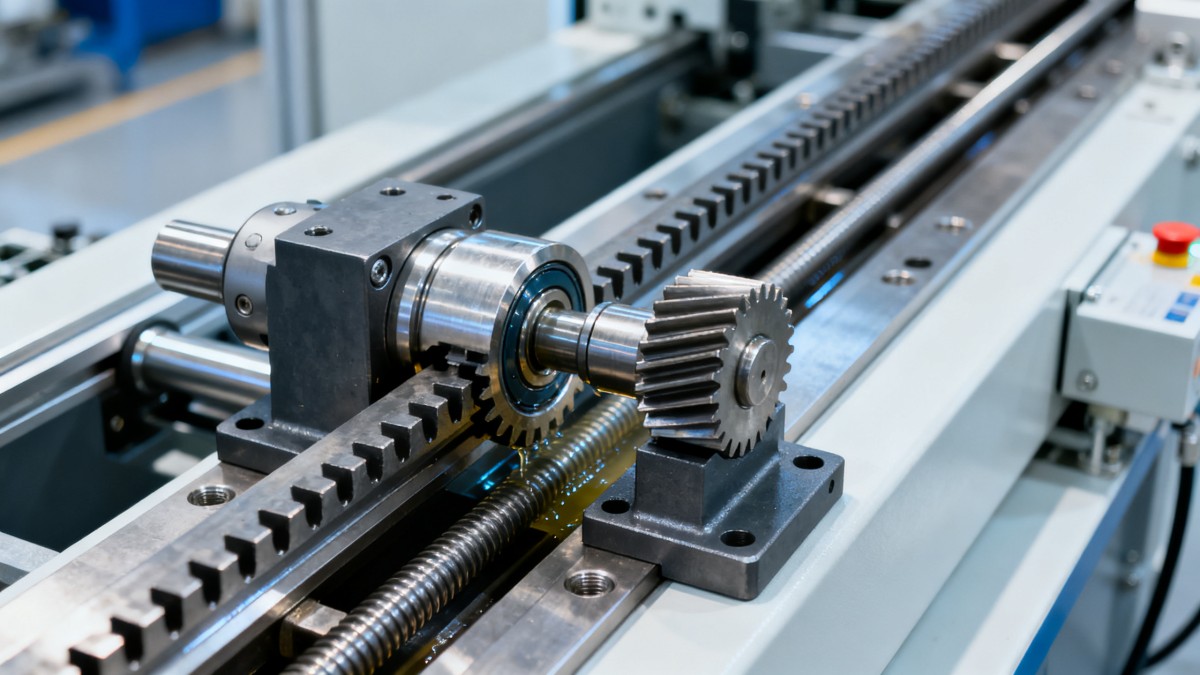
Industry overview: where backlash risk is highest
The severity and causes of backlash vary by equipment type. For maintenance planning, it helps to classify gear rack and pinion systems by duty profile, environment, and motion precision requirements.
The business value of early diagnosis
For industrial organizations, early backlash detection protects more than one component set. It preserves machine availability, reduces emergency maintenance, and prevents misdiagnosis that leads to unnecessary parts replacement. A gear rack and pinion system with unmanaged backlash can cause controllers to compensate beyond their intended range, increase cycle instability, and amplify wear in bearings, reducers, and support structures.
From a reliability perspective, a structured inspection program improves lifecycle visibility. From a sourcing perspective, it helps teams identify whether corrective action requires a new rack, a matched pinion, bearing replacement, alignment shimming, or a lubrication upgrade. This distinction matters in large industrial environments where maintenance budgets, spare parts inventory, and compliance documentation must all support efficient asset stewardship.
Typical symptom patterns and what they often indicate
Aftermarket teams can often narrow the root cause by observing when and where symptoms occur. In many gear rack and pinion installations, the pattern is as important as the measured backlash value itself.
Practical inspection approach for aftermarket maintenance teams
A reliable inspection sequence prevents maintenance teams from replacing the wrong part. Start with machine history: note recent impacts, production changes, load increases, or lubrication interval drift. Then isolate the motion axis and confirm whether the apparent looseness is coming from the rack mesh or from adjacent power transmission elements. A dial indicator, contact pattern check, and controlled reversal test can provide more useful information than a quick visual review alone.
Next, inspect the rack mounting surface for flatness issues, debris under the rack, uneven bolt torque, and witness marks that show movement. Review pinion shaft bearings and support brackets for radial or axial play. In longer installations, compare backlash values at multiple travel positions. If the reading changes significantly along the path, the problem is often related to installation geometry, rack section continuity, or localized wear rather than to uniform tooth clearance.
Lubrication should be treated as a diagnostic category, not a housekeeping task. The wrong viscosity, interrupted application, or contamination with abrasive particles can change contact behavior long before major tooth damage is visible. For every gear rack and pinion system operating in dust, humidity, heat, or washdown conditions, lubricant suitability and delivery method deserve periodic reassessment.
What to watch when evaluating corrective action
Corrective action should match the failure mode. If backlash comes mainly from mounting error, replacing the rack will not solve it. If the pinion and rack show uneven but recoverable wear, realignment and controlled preload adjustment may restore acceptable performance. If the tooth profile is damaged, pitted, or deformed beyond tolerance, replacement should include a review of root cause so that the new parts do not fail in the same pattern.
Maintenance teams should also evaluate whether the application now exceeds the original design assumptions. A once-light axis may now run faster, reverse harder, or carry more load than it did at commissioning. In such cases, the best solution may involve upgraded material grade, improved sealing, better lubrication distribution, or changes to support stiffness. For critical equipment, documented measurements and verified component specifications help maintain traceability and support compliance expectations common in global industrial operations.
Building a preventive strategy around gear rack and pinion systems
The strongest preventive strategy combines measurement, observation, and disciplined scheduling. Teams should define acceptable backlash bands by machine function, not by a single generic rule. A high-speed packaging machine and a heavy transfer carriage may tolerate very different conditions. Establishing baseline readings after installation or overhaul gives technicians a meaningful reference for future trend analysis.
It is also good practice to link backlash inspection with other reliability checks: bearing condition, fastener retention, lubrication audits, contamination control, and vibration review. This integrated approach reflects how a gear rack and pinion drive actually behaves in service. The goal is not only to reduce noise or play, but to keep the entire motion system safe, efficient, and predictable over time.
Moving from symptom response to controlled reliability
Backlash problems rarely appear without context. They usually begin as small installation shifts, lubrication lapses, or progressive support wear that spread into a larger system issue. For aftermarket maintenance personnel, the value lies in recognizing those early signals before they become positioning failures or unplanned shutdowns. A careful, system-level review of each gear rack and pinion installation helps separate true component wear from alignment, support, and operating-condition problems.
Organizations that treat backlash as a reliability indicator rather than a last-minute repair topic are better positioned to protect uptime, reduce wasteful replacement, and maintain consistent machine performance. In industrial environments where safety, precision, and continuity are non-negotiable, that disciplined approach is not optional—it is part of sound asset management.
Technical Specifications
- India BIS Draft IS 17832:2026 Sets Noise & Dust Limits for Waste CrushersAuthor :Environmental Engineering Director
- Korea MFDS Mandates Korean UI & KOSHA OEL Database for Industrial Water AnalyzersAuthor :Precision Metrology Expert
- Indonesia BPOM Mandates PM0.1 Efficiency & CADR Decay Labeling for Industrial Air PurifiersAuthor :Environmental Engineering Director
Expert Insights

Chief Security Architect
Dr. Thorne specializes in the intersection of structural engineering and digital resilience. He has advised three G7 governments on industrial infrastructure security.
Related Analysis
- May 03, 2026India BIS Draft IS 17832:2026 Sets Noise & Dust Limits for Waste CrushersAuthor :Environmental Engineering Director
- May 03, 2026Korea MFDS Mandates Korean UI & KOSHA OEL Database for Industrial Water AnalyzersAuthor :Precision Metrology Expert
- May 03, 2026Indonesia BPOM Mandates PM0.1 Efficiency & CADR Decay Labeling for Industrial Air PurifiersAuthor :Environmental Engineering Director
Core Sector // 01
Security & Safety
- Conveyor Roller Belts: Early Wear Signs You Should Not IgnoreAuthor :Heavy Industry Strategist

- Gear Rack and Pinion Backlash Problems Often Start HereAuthor :Heavy Industry Strategist

- PU Timing Belts Wholesale: Why Cheap Belts Cost More LaterAuthor :Heavy Industry Strategist

- Rubber Shock Absorbers and the Hidden Cost of OverhardnessAuthor :Heavy Industry Strategist

- Stainless Steel Sprockets or Carbon Steel in Wet Lines?Author :Heavy Industry Strategist

- Beijing Non-Motor Vehicle Rules Take Effect May 1: GB 43854-2026 Applies to Industrial e-Mobility BatteriesAuthor :Heavy Industry Strategist

- Egypt SMIIC Mandates Arabic Energy Labels for Industrial PumpsAuthor :Heavy Industry Strategist

- How to Select Overhead Line FittingsAuthor :Heavy Industry Strategist