Conveyor Roller Belts: Early Wear Signs You Should Not Ignore
Author
Date Published
Reading Time
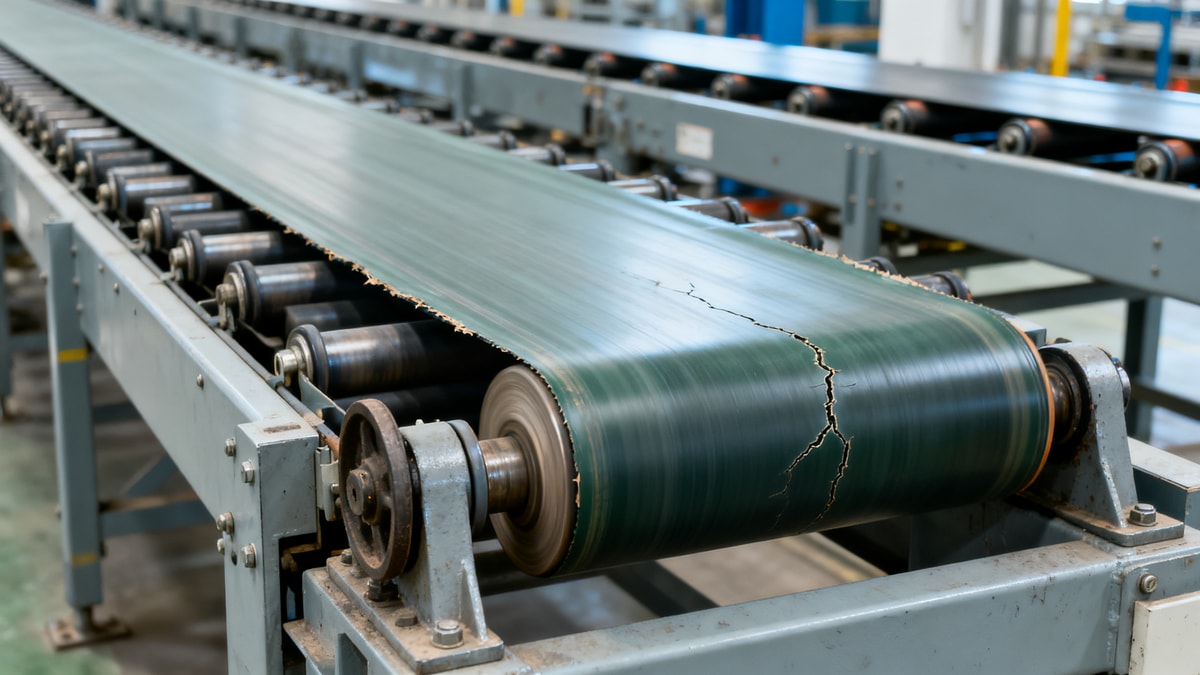
Conveyor roller belts rarely fail without warning, but early wear signs are often missed during routine service checks. For after-sales maintenance teams, spotting uneven tracking, abnormal noise, surface cracking, or roller drag early can prevent costly downtime and safety risks. This guide highlights the warning signals you should not ignore and what they reveal about system health.
What do early wear signs on conveyor roller belts usually indicate?
Early wear on conveyor roller belts is rarely just a belt problem. In most industrial systems, the belt, rollers, pulleys, bearings, motor drive, frame alignment, and loading pattern work as one mechanical chain. When one element drifts out of tolerance, the belt often becomes the first visible indicator. For after-sales maintenance personnel, this is important: a worn belt surface may point to deeper issues such as seized rollers, material buildup, mistracking, incorrect tension, poor splicing, or misaligned idlers.
This is why conveyor roller belts deserve close inspection even when production has not yet stopped. Light edge fraying, unusual dust around return rollers, glazing on the belt cover, or repeated tracking correction are early warnings of system stress. Ignoring those signs can turn a minor service intervention into a larger shutdown involving emergency replacement, damaged pulleys, or even safety incidents.
In practical field service, the question is not simply whether the belt looks worn. The better question is what type of wear is appearing, where it is concentrated, and whether the wear pattern is stable or accelerating. A localized defect near one transfer point means something different from full-width abrasion along the carry side. Reading those patterns correctly helps maintenance teams move from reactive repair to root-cause diagnosis.
Which visible signs should after-sales maintenance teams never ignore?
Several warning signs on conveyor roller belts deserve immediate attention because they typically develop before catastrophic failure. The first is uneven belt tracking. If the belt consistently runs to one side, rubs the structure, or requires frequent adjustment, the issue may involve frame squareness, pulley lagging wear, stuck rollers, or off-center loading. A belt that tracks poorly under load but appears normal when empty often suggests loading or material distribution problems rather than a basic alignment issue alone.
The second sign is abnormal noise. Squealing, rhythmic knocking, scraping, or rumbling usually indicates friction where there should be rolling movement. In systems using conveyor roller belts, a noisy zone often reveals a dragging roller, contaminated bearing, contact between the belt edge and steelwork, or a hardened splice passing over pulleys. Sound changes are especially valuable because they often appear before severe visible damage.
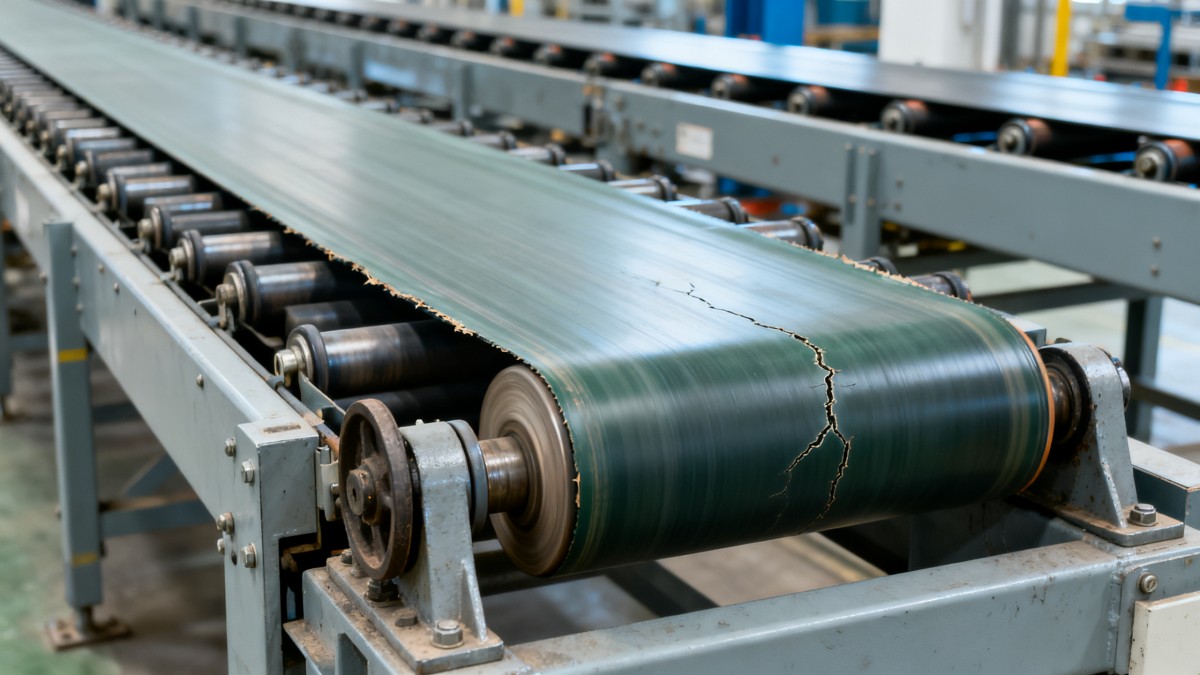
The third sign is surface cracking, hardening, or glazing. These conditions may result from age, temperature exposure, chemical attack, over-tensioning, or repeated flexing around undersized pulleys. Cracking on the top cover often points to impact, product abrasion, or environmental degradation, while damage on the bottom cover may signal roller problems or return-side contamination.
The fourth sign is roller drag. If a roller is not rotating freely, the belt slides over it instead of rolling smoothly. That creates heat, dust, cover wear, and power loss. A single seized roller may not stop the line immediately, but across time it can shorten the service life of conveyor roller belts and create a chain of failures in adjacent components.
How can you tell whether the problem is the belt itself or the roller system around it?
This is one of the most common field questions, and the answer usually comes from comparing wear pattern, operating behavior, and mechanical inspection results. If the wear is symmetrical, gradual, and distributed across the working surface, the belt may simply be approaching normal replacement age. But if the damage is directional, localized, or repeated at the same point in each cycle, the root cause is usually somewhere in the support or drive system.
For example, edge damage on only one side often suggests mistracking, skewed rollers, or frame deviation. Burn-like marks or polished strips on the underside often indicate a frozen roller or contact with a stationary structure. Repeated longitudinal cuts can point to trapped debris, sharp transfer hardware, or poor chute sealing. Splice separation may be caused by tension problems, poor installation, or pulley diameter mismatch.
A practical method is to inspect the system in sequence: confirm lockout procedures, rotate suspect rollers manually, check pulley lagging condition, observe loading centering, inspect take-up performance, and review any recent changes in speed, material, or cleaning method. For maintenance teams supporting customers after installation, service history is also critical. If conveyor roller belts begin wearing faster after a modification such as a new chute liner, altered product mix, or different cleaning blade, the belt may be reacting to an operating change rather than failing on its own.
What are the most common wear patterns, and what do they usually mean?
A structured wear diagnosis table helps after-sales teams communicate clearly with plant operators and procurement managers. Instead of saying the belt “looks bad,” you can tie symptoms to likely causes and next actions.
For conveyor roller belts, wear pattern analysis is often more reliable than looking at total service hours alone. Two belts with the same operating age can show completely different health conditions depending on load consistency, environmental exposure, and roller condition. That is why pattern recognition should be part of every structured service visit.
How often should conveyor roller belts be checked, and what should be included in a real inspection?
Inspection frequency depends on duty cycle, material type, environment, and criticality of the conveyor line. A lightly loaded indoor line may allow weekly visual checks and monthly mechanical review. A dusty, abrasive, or high-throughput operation may require shift-level observations and more frequent planned inspections. For critical process lines where downtime is expensive, daily monitoring of conveyor roller belts is justified, even if the check is brief.
A meaningful inspection should go beyond “belt looks okay.” It should include belt tracking behavior at startup and full load, roller rotation quality, unusual vibration, splice condition, edge wear, carryback accumulation, cleaner contact pressure, pulley lagging status, and evidence of frame contact. Maintenance staff should also watch for heat buildup around bearings and localized dust deposits, since both can point to friction-related wear.
Documentation matters as much as observation. If after-sales teams record wear progression with photos, operating hours, load notes, and corrective actions, trends become easier to interpret. This creates a more professional support process for industrial clients and improves future sourcing and planning decisions. In B2B maintenance environments, especially those governed by uptime, safety, and compliance expectations, a disciplined record can be as valuable as the repair itself.
What mistakes cause maintenance teams to miss early warning signs?
One common mistake is focusing only on the belt cover while ignoring the rotating support system. Conveyor roller belts often wear because rollers stop doing their job correctly, yet visual inspections may skip manual roller checks. Another mistake is correcting tracking repeatedly without asking why the belt is drifting. Constant adjustment can hide the symptom temporarily while the underlying alignment or loading issue continues to damage the belt.
A third mistake is assuming noise is normal in heavy industry. Experienced technicians know that sound changes matter. A line that becomes louder, more rhythmic, or more metallic is providing useful diagnostic information. Dismissing that change can delay intervention until greater damage occurs.
Another frequent issue is replacing the belt too early without root-cause analysis. If a new belt is installed into the same misaligned, contaminated, or poorly loaded system, premature wear returns quickly. This increases lifecycle cost and may create unnecessary procurement cycles. For industrial buyers and facility managers, the more cost-effective approach is not just replacing conveyor roller belts, but restoring the mechanical conditions that allow the next belt to achieve its designed service life.
When should you repair, adjust, or replace conveyor roller belts?
Not every wear sign requires immediate replacement. If the issue is limited to mild mistracking, a few seized rollers, cleaner misadjustment, or early-stage edge contact, the right response may be adjustment and localized repair. If the belt carcass remains structurally sound, correcting the surrounding system can restore stable operation. This is especially true when the wear is recent and clearly linked to a serviceable cause.
Replacement becomes more urgent when the damage affects belt strength, splice integrity, safety, or product handling reliability. Deep cuts, extensive delamination, severe cracking, exposed reinforcement, repeated splice failure, or ongoing drift that cannot be stabilized should be treated as major concerns. In those cases, continuing operation may raise the risk of sudden outage or personnel exposure during emergency intervention.
A balanced decision should weigh operational criticality, lead time, belt specification, stock availability, and shutdown windows. In many plants, the best strategy is to combine immediate corrective maintenance with a scheduled replacement plan, supported by inspection data. That approach reduces unplanned stoppage while giving procurement and operations enough time to source the correct belt and supporting components.
What questions should you confirm before recommending a solution to the customer?
Before proposing service action, after-sales teams should confirm several points: What material is being conveyed, and has it changed recently? Is the wear on the carry side, return side, edges, or splice? Does the issue appear at startup, under full load, or only after long operation? Have any rollers, cleaners, chute parts, or drive settings been modified? Is there a history of repeated tracking correction? Are standards, safety compliance, or uptime commitments driving the urgency of response?
These questions improve diagnosis and build trust with industrial customers. They also support stronger technical communication between maintenance personnel, plant engineering, and sourcing teams. In a professional industrial environment, the goal is not simply to react to visible wear on conveyor roller belts, but to connect mechanical evidence with operational reality and make decisions that protect safety, efficiency, and asset life.
If you need to confirm a next-step plan, prioritize discussion around belt specification, roller condition, loading alignment, inspection interval, expected shutdown window, and whether the client needs only corrective maintenance or a broader reliability review. Those questions will clarify whether the right path is adjustment, component replacement, a full belt change, or a deeper system-level assessment.
Technical Specifications
- India BIS Draft IS 17832:2026 Sets Noise & Dust Limits for Waste CrushersAuthor :Environmental Engineering Director
- Korea MFDS Mandates Korean UI & KOSHA OEL Database for Industrial Water AnalyzersAuthor :Precision Metrology Expert
- Indonesia BPOM Mandates PM0.1 Efficiency & CADR Decay Labeling for Industrial Air PurifiersAuthor :Environmental Engineering Director
Expert Insights

Chief Security Architect
Dr. Thorne specializes in the intersection of structural engineering and digital resilience. He has advised three G7 governments on industrial infrastructure security.
Related Analysis
- May 03, 2026India BIS Draft IS 17832:2026 Sets Noise & Dust Limits for Waste CrushersAuthor :Environmental Engineering Director
- May 03, 2026Korea MFDS Mandates Korean UI & KOSHA OEL Database for Industrial Water AnalyzersAuthor :Precision Metrology Expert
- May 03, 2026Indonesia BPOM Mandates PM0.1 Efficiency & CADR Decay Labeling for Industrial Air PurifiersAuthor :Environmental Engineering Director
Core Sector // 01
Security & Safety
- Conveyor Roller Belts: Early Wear Signs You Should Not IgnoreAuthor :Heavy Industry Strategist

- Gear Rack and Pinion Backlash Problems Often Start HereAuthor :Heavy Industry Strategist

- PU Timing Belts Wholesale: Why Cheap Belts Cost More LaterAuthor :Heavy Industry Strategist

- Rubber Shock Absorbers and the Hidden Cost of OverhardnessAuthor :Heavy Industry Strategist

- Stainless Steel Sprockets or Carbon Steel in Wet Lines?Author :Heavy Industry Strategist

- Beijing Non-Motor Vehicle Rules Take Effect May 1: GB 43854-2026 Applies to Industrial e-Mobility BatteriesAuthor :Heavy Industry Strategist

- Egypt SMIIC Mandates Arabic Energy Labels for Industrial PumpsAuthor :Heavy Industry Strategist

- How to Select Overhead Line FittingsAuthor :Heavy Industry Strategist