PU Timing Belts Wholesale: Why Cheap Belts Cost More Later
Author
Date Published
Reading Time
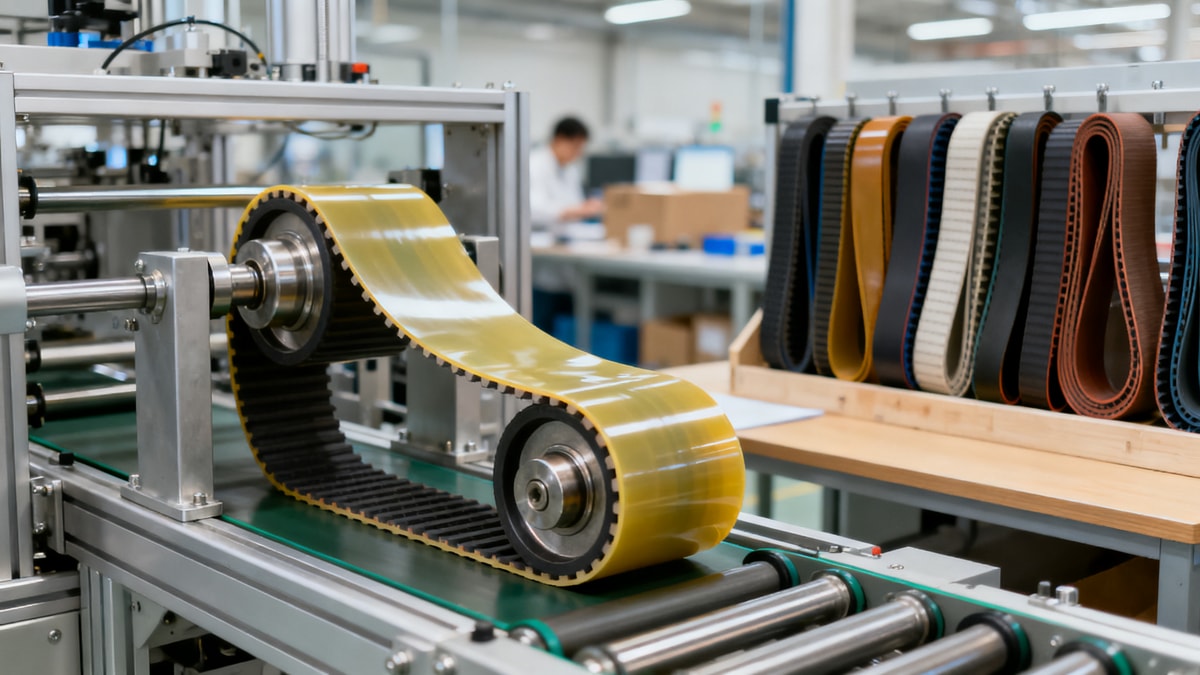
In pu timing belts wholesale, the lowest quote often hides the highest long-term cost. For distributors, agents, and resellers, poor belt quality can mean premature wear, unstable performance, customer complaints, and costly replacements. Understanding how material consistency, production precision, and supplier reliability affect total value is essential to protecting margins and building lasting market trust.
Why application differences matter in pu timing belts wholesale
For many buyers, pu timing belts wholesale begins as a price comparison exercise. That is understandable, especially when resellers compete in crowded markets. However, timing belts do not fail in spreadsheets; they fail in machines, on customer sites, and inside production lines where downtime is expensive. A belt that looks acceptable for one application may be a poor fit for another because load, speed, temperature, pulley quality, and installation conditions vary widely.
This is why distributors and agents should judge wholesale options by scenario, not just by unit cost. A low-cost polyurethane timing belt may work in light-duty automation with short operating cycles, yet become a warranty problem in packaging lines, woodworking equipment, textile machines, or precision conveying systems. The real business question is not “Which belt is cheapest?” but “Which belt protects margin in the target application?”
For B2B channel partners, the quality gap also affects reputation. End users rarely blame only the belt manufacturer; they remember the seller who recommended the product. In pu timing belts wholesale, that means every sourcing decision influences repeat orders, technical trust, and after-sales workload.
Typical business scenarios where cheap belts create expensive problems
Different markets place different demands on timing belts. Understanding these scenarios helps wholesalers build the right product portfolio and avoid mismatched inventory.
Scenario 1: General industrial distribution with mixed customer profiles
A broadline distributor may serve repair shops, OEMs, maintenance teams, and machine builders at the same time. In this environment, cheap belts are tempting because they promise faster turnover. The risk is that product inconsistency becomes visible quickly. One batch performs well, the next stretches early, tooth profiles vary, or reinforcement cords differ in strength. Mixed-customer distribution requires dependable baseline quality more than the absolute lowest price.
Scenario 2: OEM supply for packaging, printing, and automation equipment
OEM customers care about repeatability. They need belts that match design tolerances across many units. If the pitch accuracy is inconsistent, machine synchronization suffers. If hardness varies, noise and wear may increase. In this scenario, cheap products often generate hidden costs through assembly delays, rejected parts, field claims, and engineering adjustments.
Scenario 3: Replacement market for maintenance and urgent repairs
The replacement market values availability and speed. Yet this is exactly where low-grade wholesale belts can damage a reseller’s name. Maintenance buyers usually return to suppliers who solve problems permanently. If a replacement belt fails after a short run, the next purchase may go elsewhere even if your price was lower.
Scenario 4: Export and cross-border distribution
In export sales, returns are harder, disputes last longer, and technical misunderstandings multiply. Poor quality in pu timing belts wholesale becomes more expensive when freight, customs handling, lead time, and local service limitations are involved. For cross-border distributors, reliable documentation, stable quality control, and traceable production are not optional advantages; they are risk management tools.
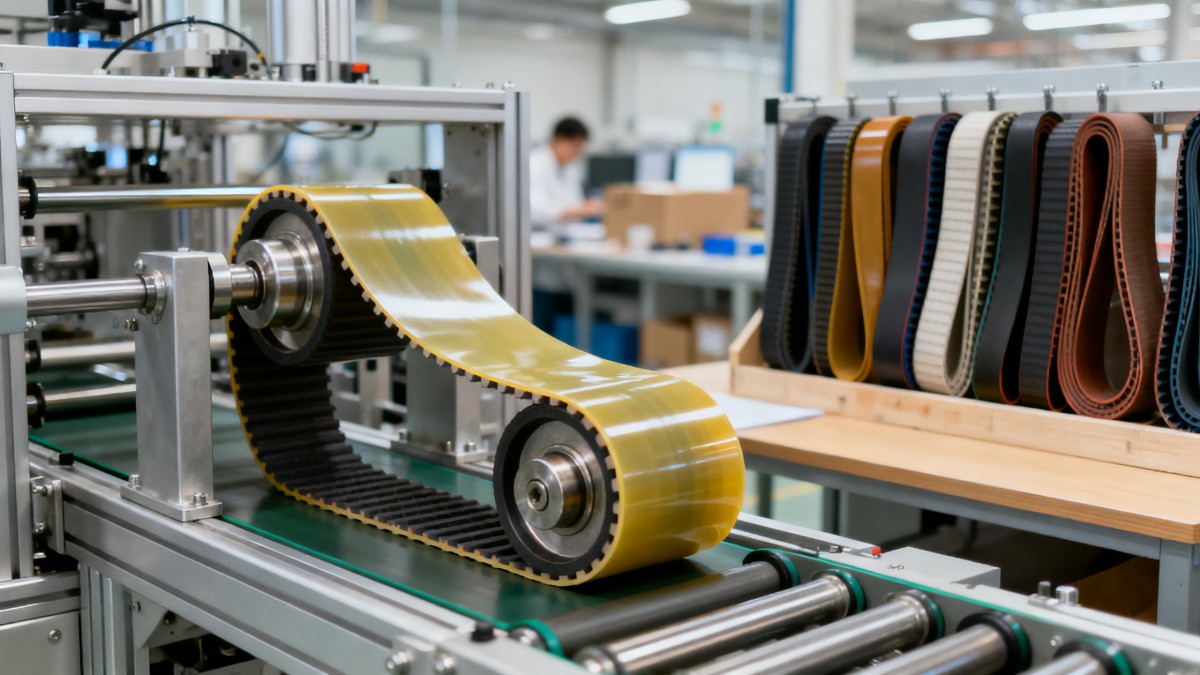
Application comparison: what different customers really need
The most effective pu timing belts wholesale strategy is to map belt quality requirements to the customer’s actual use case. The table below highlights how evaluation criteria change by application.
What low price often hides in pu timing belts wholesale
A low quotation can reflect efficiency, but it can also hide compromises that only surface after installation. Distributors should know where shortcuts usually happen.
Material inconsistency
Polyurethane quality affects wear resistance, flexibility, chemical stability, and dimensional behavior. Low-grade materials may vary from batch to batch, which makes field performance less predictable. For resellers, unpredictable performance is harder to manage than slightly higher purchase cost.
Weak cord reinforcement
The strength of a timing belt is not only about the surface. Internal tension members determine elongation control and fatigue life. If cord quality is poor, belts can lose synchronization under load even when the teeth still look acceptable. This is especially damaging in OEM and continuous-process applications.
Poor tooth profile precision
Timing performance depends on accurate tooth geometry and consistent pitch. Small deviations can lead to vibration, meshing errors, and uneven wear. In pu timing belts wholesale, precision matters more as machine speeds rise or positioning accuracy becomes critical.
Limited quality control and traceability
Without lot traceability, test records, or stable process control, distributors have little protection when claims arise. If a customer reports repeated failures, you need more than a replacement policy; you need evidence of what was supplied and how it was produced.
How scenario-based buyers should evaluate suppliers
The best supplier for pu timing belts wholesale is not always the one with the largest catalog. It is the one whose capabilities match your customer mix and service model.
If you sell to price-sensitive local repair markets
Focus on dependable standard specifications, short lead times, and low claim rates. Your customers may accept mid-range pricing if the belt solves the problem without repeat service calls. Here, consistency beats extreme cheapness.
If you supply OEMs or engineering projects
Ask for dimensional tolerances, material details, test methods, and sample validation. OEM clients care about repeat production, not just one successful batch. A supplier that supports technical verification will usually create more long-term value than one offering the lowest opening quote.
If you export under your own brand
Prioritize suppliers that can support labeling, documentation, packaging consistency, and complaint handling. In export-focused pu timing belts wholesale, branding and traceability work together. A belt failure can quickly become a brand trust issue in overseas markets.
Common misjudgments distributors make across applications
Several purchasing mistakes appear again and again in the timing belt market. Most are not technical failures alone; they are scenario-matching failures.
- Assuming all PU belts with the same nominal size perform the same in real use.
- Using one low-cost source for every customer segment, from basic repairs to precision machinery.
- Ignoring application temperature, duty cycle, pulley condition, and environmental exposure.
- Evaluating suppliers only by first cost instead of complaint rate, replacement burden, and delivery reliability.
- Underestimating how quality variation affects reseller reputation over time.
A practical checklist before placing a pu timing belts wholesale order
Before committing to volume purchases, distributors, agents, and wholesalers should confirm a few high-impact points:
- Which customer scenarios will this belt family serve: replacement, OEM, export, or mixed distribution?
- Are pitch accuracy, hardness, tensile behavior, and wear performance documented?
- Can the supplier maintain stable quality between batches and across reorder cycles?
- Is there technical support for troubleshooting field problems?
- Do packaging, labeling, and traceability fit your resale channel requirements?
- What is the realistic total cost after freight, returns, claims, and customer service time?
FAQ: scenario-based questions in pu timing belts wholesale
Are cheap belts always a bad choice?
Not always. For low-load, non-critical, price-sensitive applications, a lower-cost option may be commercially reasonable. The key is to separate acceptable economy products from high-risk products with unstable quality.
Which applications should be most cautious?
Continuous-duty equipment, precision automation, export resale, and OEM assembly lines should be especially cautious. In these scenarios, belt failure creates a chain of costs that far exceeds the initial savings.
How can a distributor reduce risk when testing a new supplier?
Start with pilot orders, compare batch consistency, collect feedback from target applications, and review documentation quality. Small-scale validation is far safer than switching an entire customer base to an unproven source.
Choose wholesale timing belts by use case, not just by quote
In pu timing belts wholesale, smart buyers win by matching product quality to application risk. Distributors serving mixed industrial markets need dependable consistency. OEM-focused suppliers need precision and repeatability. Export resellers need traceability and low claim exposure. Across all these scenarios, the cheapest belt can become the most expensive one if it damages uptime, trust, and customer retention.
If your business depends on sustainable margin rather than one-time price advantage, evaluate suppliers through the lens of real operating conditions, customer expectations, and after-sales burden. The right pu timing belts wholesale strategy is not simply about buying lower. It is about sourcing smarter for the applications you serve and the reputation you want to build.
Technical Specifications
- India BIS Draft IS 17832:2026 Sets Noise & Dust Limits for Waste CrushersAuthor :Environmental Engineering Director
- Korea MFDS Mandates Korean UI & KOSHA OEL Database for Industrial Water AnalyzersAuthor :Precision Metrology Expert
- Indonesia BPOM Mandates PM0.1 Efficiency & CADR Decay Labeling for Industrial Air PurifiersAuthor :Environmental Engineering Director
Expert Insights

Chief Security Architect
Dr. Thorne specializes in the intersection of structural engineering and digital resilience. He has advised three G7 governments on industrial infrastructure security.
Related Analysis
- May 03, 2026India BIS Draft IS 17832:2026 Sets Noise & Dust Limits for Waste CrushersAuthor :Environmental Engineering Director
- May 03, 2026Korea MFDS Mandates Korean UI & KOSHA OEL Database for Industrial Water AnalyzersAuthor :Precision Metrology Expert
- May 03, 2026Indonesia BPOM Mandates PM0.1 Efficiency & CADR Decay Labeling for Industrial Air PurifiersAuthor :Environmental Engineering Director
Core Sector // 01
Security & Safety
- Conveyor Roller Belts: Early Wear Signs You Should Not IgnoreAuthor :Heavy Industry Strategist

- Gear Rack and Pinion Backlash Problems Often Start HereAuthor :Heavy Industry Strategist

- PU Timing Belts Wholesale: Why Cheap Belts Cost More LaterAuthor :Heavy Industry Strategist

- Rubber Shock Absorbers and the Hidden Cost of OverhardnessAuthor :Heavy Industry Strategist

- Stainless Steel Sprockets or Carbon Steel in Wet Lines?Author :Heavy Industry Strategist

- Beijing Non-Motor Vehicle Rules Take Effect May 1: GB 43854-2026 Applies to Industrial e-Mobility BatteriesAuthor :Heavy Industry Strategist

- Egypt SMIIC Mandates Arabic Energy Labels for Industrial PumpsAuthor :Heavy Industry Strategist

- How to Select Overhead Line FittingsAuthor :Heavy Industry Strategist