Where Metallurgical Engineering Standards Affect Product Consistency
Author
Date Published
Reading Time
Where product failure can trigger safety risks, costly rework, and compliance gaps, metallurgical engineering standards become the benchmark for consistency. For quality control and safety leaders, understanding how these standards shape material selection, processing, testing, and certification is essential to maintaining reliable performance across industrial applications. This article explores where standards matter most and how they directly influence repeatable, audit-ready product outcomes.
Why do metallurgical engineering standards directly affect product consistency?
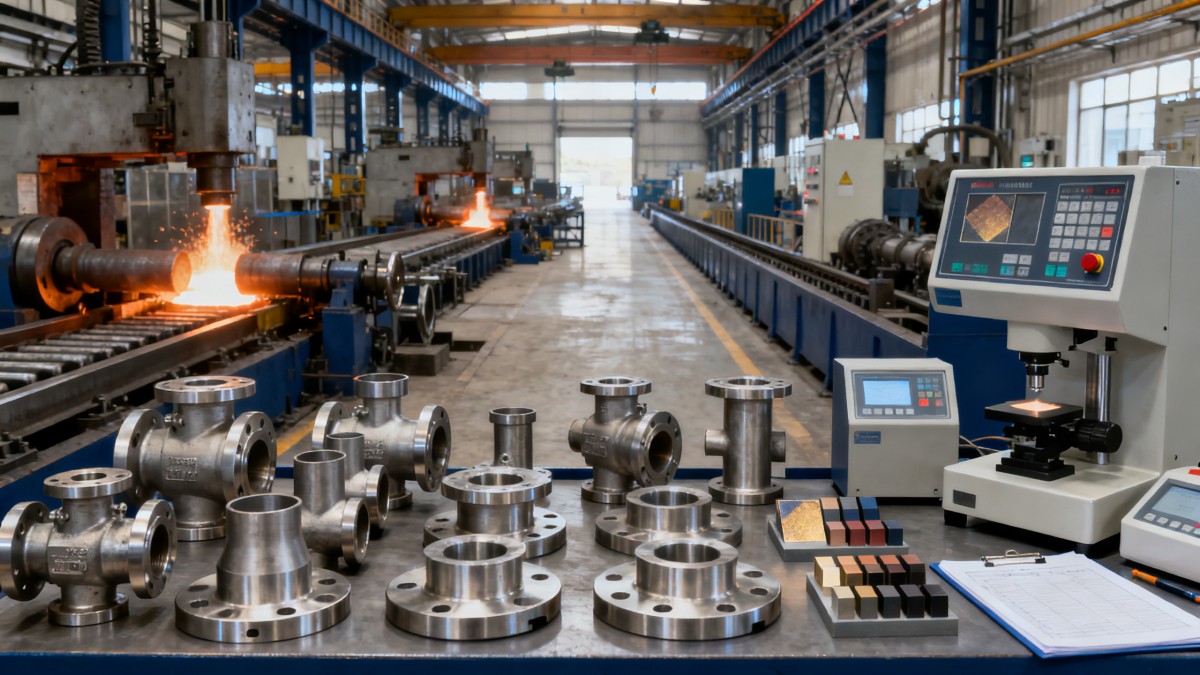
In industrial supply chains, consistency is rarely the result of inspection alone. It is built upstream through controlled chemistry, traceable processing, defined tolerances, and repeatable test methods. That is where metallurgical engineering standards matter most. They translate broad material expectations into measurable requirements for steel, alloys, castings, forgings, fasteners, wear parts, pressure components, and structural elements used across energy, construction, water treatment, transportation, and manufacturing environments.
For quality control personnel, the central challenge is not simply whether a part passes once. It is whether every lot, every supplier batch, and every delivered component behaves predictably under real operating conditions. For safety managers, the stakes are even higher. A mismatch between specification and actual metallurgy can lead to brittle fracture, premature corrosion, weld failure, leakage, distortion, overheating, or loss of containment. In each of these cases, product inconsistency starts as a metallurgical control issue before it becomes a field incident.
Metallurgical engineering standards provide the common language that connects design intent, procurement requirements, plant acceptance criteria, and third-party verification. Standards from ISO, ASTM, EN, ASME, DIN, JIS, and related frameworks do not guarantee perfect outcomes by themselves, but they sharply reduce ambiguity. They define chemical composition ranges, mechanical properties, heat treatment conditions, microstructure expectations, sampling rules, non-destructive examination methods, and documentation requirements. Without these controls, two products labeled with the same material name may perform very differently.
This is especially relevant in the broad industrial market served by Global Industrial Core. EPC contractors, facility operators, and industrial buyers often source from multiple regions while working under strict compliance timelines. In that setting, product consistency depends on more than price or nominal grade equivalence. It depends on whether the full standard chain has been maintained from raw material to finished part.
- Material designation must align with recognized standards rather than informal trade descriptions.
- Manufacturing routes such as casting, forging, rolling, or machining must be controlled because process history changes final properties.
- Inspection and test plans must reference standardized methods so results remain comparable across suppliers and projects.
- Certificates and traceability records must be complete enough to support audits, incident review, and lifecycle maintenance decisions.
Where standards matter most in the material-to-product chain
The influence of metallurgical engineering standards is easiest to understand when mapped across the full production chain. Consistency can be lost at several points, and each point has its own control logic. Quality and safety teams should not treat standards as a final paperwork exercise; they should use them as checkpoints across sourcing, processing, inspection, and release.
1. Raw material selection and melt quality
Standards begin with chemistry limits. Carbon, sulfur, phosphorus, chromium, nickel, molybdenum, and other elements affect strength, toughness, corrosion behavior, weldability, and hardenability. If melt chemistry drifts outside the specified range, the final product may still look acceptable dimensionally but behave unpredictably during service. This is a common source of hidden inconsistency in imported or substitute materials.
2. Forming and heat treatment
A standard material grade does not perform consistently unless the prescribed thermal and mechanical route is followed. Normalizing, quenching, tempering, annealing, and solution treatment each alter grain structure and mechanical response. Forged and cast products can share similar nominal chemistry while differing in porosity, grain flow, residual stress, and impact resistance. Standards help procurement teams distinguish true equivalence from superficial equivalence.
3. Machining, welding, and finishing
Secondary operations also influence product consistency. Welding procedures, filler compatibility, preheat, post-weld heat treatment, and surface finishing can introduce hardness changes, heat-affected zone cracking, or corrosion initiation points. In safety-critical systems, standards establish acceptable procedures and qualification expectations so the final assembly retains the intended metallurgical performance.
4. Testing, certification, and lot release
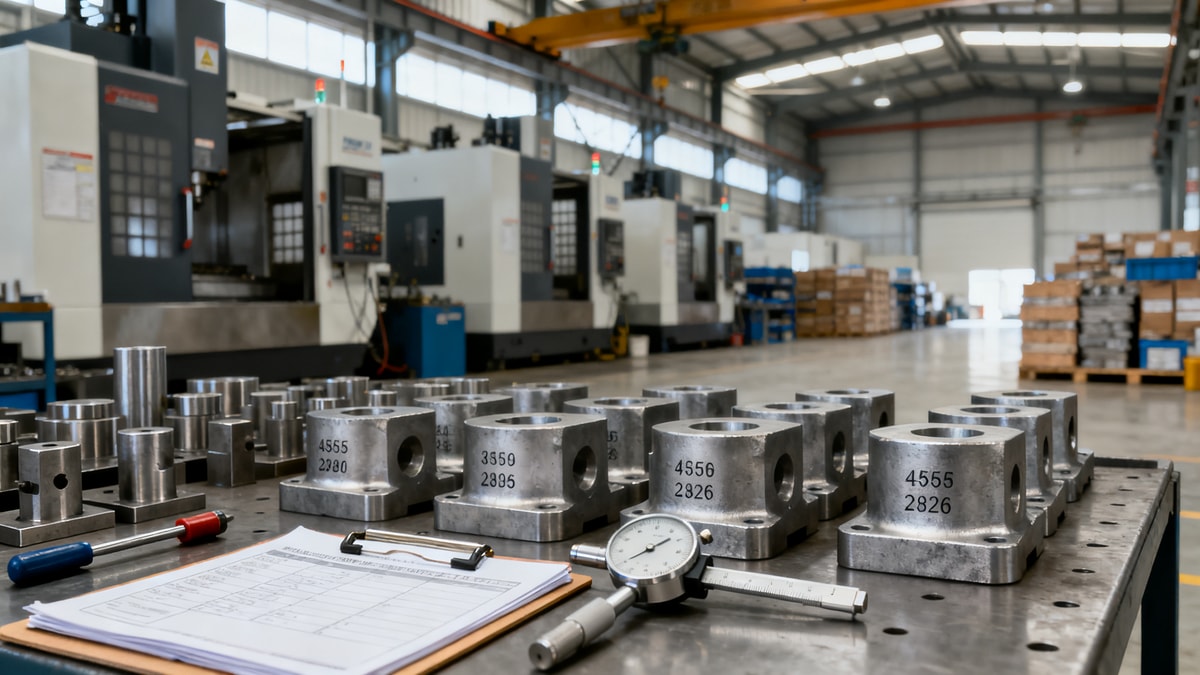
If test methods vary, consistency claims become weak. Tensile testing, hardness verification, Charpy impact testing, chemical analysis, metallography, positive material identification, and non-destructive testing must follow recognized methods. Sampling frequency matters too. A passing result from one coupon does not always represent an entire batch. Metallurgical engineering standards clarify how to sample, what to test, and how to report results for acceptance.
The table below shows where metallurgical engineering standards most often influence consistency outcomes in industrial procurement and production.
For procurement teams working across multiple vendors, this stage-by-stage view is practical because it highlights where specifications must be explicit. It also shows why metallurgical engineering standards are not isolated to design departments. They guide supplier approval, incoming inspection, production monitoring, and field reliability.
Which standards and documents should quality and safety teams verify first?
In complex projects, teams can drown in documentation while still missing the critical controls. A disciplined review sequence helps. The goal is to confirm not only that a standard is named on paper, but that the delivered product truly conforms to the applicable requirements for composition, processing, testing, and intended use.
Priority document check sequence
- Review the engineering specification and purchase order to confirm the exact material grade, revision level, and application environment.
- Verify the governing standard family, such as ASTM, EN, ISO, or ASME, including any supplementary requirements for impact testing, corrosion allowance, or NDT.
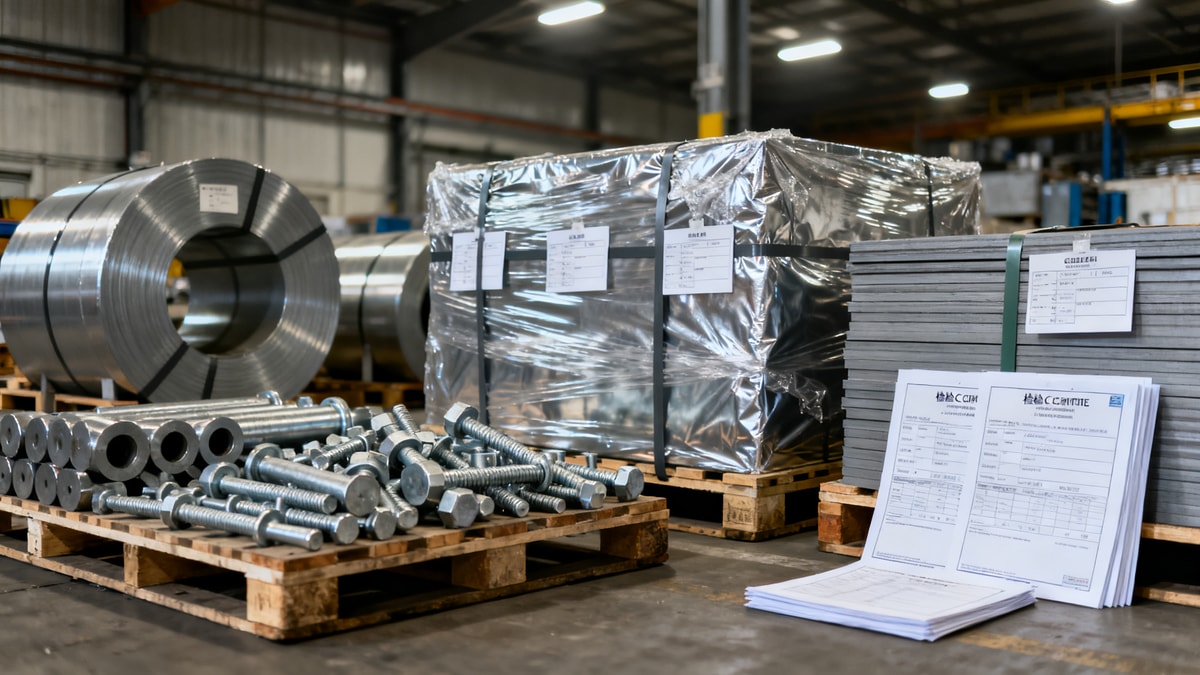
- Check mill test certificates or inspection certificates for heat number traceability, chemistry, mechanical results, and heat treatment condition.
- Confirm test method references, sampling frequency, and acceptance criteria rather than relying only on pass or fail summaries.
- Match the supplied documentation with actual markings, dimensions, lot identity, and where needed, positive material identification or third-party verification.
The next table can be used as a procurement and QC screening tool when metallurgical engineering standards are part of a bid review or incoming inspection process.
This verification model is particularly useful when multiple suppliers quote comparable prices but provide different documentation depth. In many industrial purchases, the stronger offer is not the cheapest unit cost. It is the bid that lowers downstream inspection uncertainty, rework exposure, and safety risk.
How do metallurgical engineering standards support safer decisions in real application scenarios?
Standards become most valuable when applied to actual service conditions rather than treated as paperwork. Product consistency means different things in different operating environments. A water treatment skid, a substation support structure, a rotating equipment base, and a safety enclosure may all use metal components, yet the dominant failure modes are not the same. Metallurgical engineering standards help teams match the material system to the real risk profile.
Corrosive and humid environments
In wastewater, marine-adjacent, or chemical plant settings, consistency depends heavily on corrosion resistance, passive layer stability, coating compatibility, and weld zone behavior. Standards help specify stainless grades, low-alloy steels, or protected carbon steels with the right chemistry and finishing requirements. Without that discipline, visually similar components may corrode at very different rates after installation.
Low-temperature or impact-prone service
Cold climates, cryogenic media, and dynamic loading conditions demand proven toughness. A material that meets room-temperature tensile values may still fail under impact at lower temperatures. Standards that specify Charpy impact testing and heat treatment condition protect against brittle behavior that ordinary dimensional inspection will never reveal.
High-load structural and mechanical duty
In supports, frames, brackets, shafts, couplings, and wear components, consistency depends on yield strength, hardness range, fatigue resistance, and internal soundness. Metallurgical engineering standards define acceptance not only for nominal strength, but often for manufacturing soundness and heat treatment condition. That creates more stable field performance under repeated stress cycles.
Safety-critical containment and pressure-related systems
For valves, flanges, fittings, pressure boundaries, and welded assemblies, standards provide a disciplined path from material specification to inspection release. In these cases, inconsistency is dangerous because leaks or fractures can escalate into personnel hazards, environmental incidents, or plant shutdowns. Safety managers should insist on complete traceability and standardized testing when products serve containment functions.
Common procurement mistakes that weaken consistency
Even experienced buyers can undermine product consistency when schedules are tight or budgets are constrained. Several recurring mistakes appear across broad industrial procurement. Most are preventable if metallurgical engineering standards are treated as a selection and risk tool rather than a post-award compliance check.
- Assuming grade equivalence across regions without checking the full standard scope, supplementary clauses, and required test methods.
- Accepting generic certificates that list nominal properties but omit heat number traceability or heat treatment condition.
- Approving substitution based mainly on lead time, without reviewing corrosion exposure, impact requirements, or weld procedure implications.
- Relying on dimensional conformity while neglecting internal soundness, hardness variation, or microstructural controls.
- Treating inspection as the buyer’s only defense instead of embedding material and process controls into supplier qualification from the beginning.
A practical response is to build a cross-functional review path. Quality, safety, procurement, and engineering should all sign off on critical materials for high-risk systems. This approach reduces the chance that a lower-price alternative introduces hidden lifecycle cost through failure analysis, delayed commissioning, or warranty disputes.
How Global Industrial Core helps buyers evaluate metallurgical risk before it becomes a failure
In modern industrial sourcing, the challenge is not a lack of suppliers. It is separating credible, standards-aligned offers from incomplete or high-variance ones. Global Industrial Core supports that decision process by focusing on foundational engineering systems where consistency, compliance, and operational reliability matter more than headline price.
For quality control and safety management teams, the most useful support often includes structured interpretation of material standards, comparison of documentation quality between vendors, and practical alignment between technical requirements and procurement language. That is especially important in cross-border sourcing, where equivalent-sounding grades and certificates may differ in testing scope, reporting detail, or acceptance basis.
Because GIC operates across security and safety, measurement, power infrastructure, environmental systems, and mechanical components, it can help industrial buyers assess metallurgical engineering standards within the broader context of system reliability. A metal component is never only a metal component. It interacts with temperature, vibration, fluid chemistry, insulation, electrical continuity, maintenance intervals, and regulatory oversight.
- Interpretation support for material standards and compliance-sensitive procurement language.
- Screening of supplier documentation depth for traceability, testing, and certification completeness.
- Application-oriented guidance for corrosive, structural, temperature-sensitive, or safety-critical service conditions.
- Decision support that connects metallurgy with lifecycle reliability, inspection workload, and operational risk.
FAQ: what quality and safety leaders ask most about metallurgical engineering standards
How do I know whether two material grades are truly equivalent?
Do not rely on naming similarity alone. Compare the governing standards, composition limits, mechanical property windows, heat treatment condition, test methods, and any supplementary requirements such as impact testing or NDT. Equivalent use in one application does not guarantee equivalent performance in another. If welding, corrosion, or low-temperature service is involved, a deeper review is necessary.
Which certificate details matter most during incoming inspection?
Start with traceability to heat or lot number, then confirm chemistry, tensile values, hardness where relevant, heat treatment condition, and referenced test methods. For critical items, also check whether impact results, NDT records, or third-party witness documentation are required. A certificate that lacks traceability or method references provides weak protection in an audit or failure investigation.
Can a product still fail even if it meets the standard?
Yes. Standards create a baseline, not a guarantee against every service condition. Failure can still occur if the wrong standard was selected for the application, if fabrication introduced damage, if operating conditions exceed design assumptions, or if maintenance controls are weak. That is why quality and safety teams must combine standard compliance with application review.
What should buyers do when lead times force material substitution discussions?
Request a formal technical comparison before approval. Review chemistry, strength, toughness, corrosion behavior, weldability, availability of certification, and downstream inspection impact. Include engineering, QC, and safety stakeholders in the decision. Fast substitutions without metallurgical review often create more delay later through rejection, rework, or commissioning risk.
Why choose us for standards-sensitive industrial sourcing decisions?
When metallurgical engineering standards affect safety, uptime, and compliance, buyers need more than broad catalog information. They need technically grounded decision support that helps them clarify specifications, reduce documentation gaps, and compare supplier offers with confidence. Global Industrial Core is built for that environment, with a focus on the foundational systems and engineered components that keep industrial operations stable.
You can contact GIC for practical support on parameter confirmation, material selection logic, standards mapping, expected delivery constraints, certification requirements, sample evaluation considerations, and quotation-stage comparison points. This is particularly valuable when your team is balancing strict audit expectations with cross-border procurement pressure and limited tolerance for field failure.
If you are reviewing a new supplier, validating a substitute material, preparing a compliance-sensitive purchase, or tightening consistency controls for critical components, start the conversation with the exact application, service conditions, required standards, and documentation expectations. That allows a faster, more accurate path to product selection and risk reduction.
Technical Specifications
- US DOE Level 3 Transformer Efficiency Rule Takes Effect July 1, 2026Author :Grid Infrastructure Analyst
- INMETRO Proposes EMP Immunity Requirement for Industrial Laser Distance Meters in BrazilAuthor :Precision Metrology Expert
- Indonesia BPOM Fast-Tracks Chinese Industrial Air PurifiersAuthor :Environmental Engineering Director
Expert Insights

Chief Security Architect
Dr. Thorne specializes in the intersection of structural engineering and digital resilience. He has advised three G7 governments on industrial infrastructure security.
Related Analysis
- May 05, 2026US DOE Level 3 Transformer Efficiency Rule Takes Effect July 1, 2026Author :Grid Infrastructure Analyst
- May 05, 2026INMETRO Proposes EMP Immunity Requirement for Industrial Laser Distance Meters in BrazilAuthor :Precision Metrology Expert
- May 05, 2026Indonesia BPOM Fast-Tracks Chinese Industrial Air PurifiersAuthor :Environmental Engineering Director
Core Sector // 01
Security & Safety
- Metallurgical Engineering Solutions for Corrosion Problems That ReturnAuthor :Heavy Industry Strategist

- How to Judge a Components & Metals Manufacturer on StabilityAuthor :Heavy Industry Strategist

- Where Metallurgical Engineering Standards Affect Product ConsistencyAuthor :Heavy Industry Strategist

- Components & Metals Bulk Order: Where Savings Usually DisappearAuthor :Heavy Industry Strategist

- When Components & Metals bulk order pricing stops being cheaperAuthor :Heavy Industry Strategist

- What a Components & Metals manufacturer should prove firstAuthor :Heavy Industry Strategist

- How metallurgical engineering manufacturers improve consistencyAuthor :Heavy Industry Strategist

- Why Components & Metals specs break sourcing plansAuthor :Heavy Industry Strategist