When a Components & Metals manufacturer becomes a supply risk
Author
Date Published
Reading Time
When a Components & Metals manufacturer becomes a supply risk, the consequences rarely stop at late deliveries or temporary price increases. For business evaluation teams, the bigger issue is whether that supplier can still support compliance, production continuity, contract obligations, and long-horizon capital projects. In most cases, supply risk does not appear suddenly. It builds through visible but often ignored signals in quality performance, financial stability, operational discipline, certification control, and customer concentration.
For buyers in industrial environments, the most useful question is not simply, “Is this supplier having trouble?” It is, “How exposed are we if this Components & Metals manufacturer weakens, and how early can we detect that change?” The answer requires more than vendor scorecards based on price and on-time delivery. It requires a broader business-risk view that connects factory capability, metallurgy consistency, compliance maturity, and organizational resilience.
This article explains how business evaluation teams can identify early warning signs, assess real supply exposure, and separate manageable vendor issues from structural supplier risk. The goal is practical: help decision-makers protect industrial procurement programs before hidden weaknesses become costly disruptions.
Why a Components & Metals manufacturer can become a strategic risk faster than buyers expect
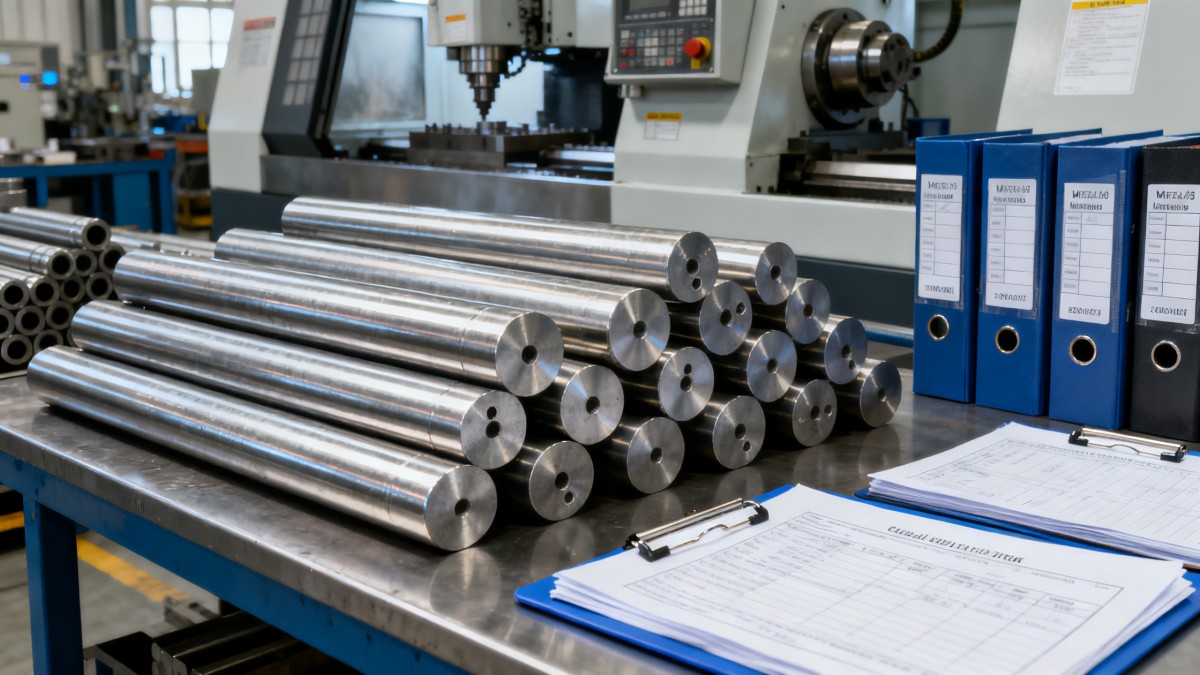
Components and metals sit close to the physical foundation of industrial systems. If castings, machined parts, fabricated assemblies, alloy inputs, fasteners, seals, housings, precision metal components, or structural elements fail to arrive on time or fail quality requirements, the downstream impact can spread quickly. EPC schedules slip, maintenance windows extend, warranty exposure rises, and regulatory scrutiny intensifies.
What makes this category especially sensitive is that substitution is often harder than procurement teams initially assume. A replacement supplier may match dimensions on paper but still fail to match tolerances, heat treatment performance, corrosion resistance, traceability records, welding procedure qualifications, coating durability, or required certifications. In heavy industry, these differences matter. A sourcing delay is one problem; a technically unsuitable replacement is a much larger one.
Business evaluation teams should also recognize that supply risk in this segment is rarely caused by a single event. It often comes from an accumulation of stress factors: volatile raw material costs, energy price pressure, labor shortages, aging production equipment, weak quality systems, overdependence on one region, or customer demand shifts. By the time a supplier formally misses commitments, the underlying deterioration may already be advanced.
What business evaluation teams are really trying to determine
When assessing a Components & Metals manufacturer, commercial evaluators are not only checking whether the supplier can ship today. They are trying to understand whether the company can remain dependable across the life of a contract, a project phase, or a multi-year asset program. That means evaluating not just current performance, but resilience under stress.
In practice, most evaluation teams care about five core questions. First, can this supplier maintain consistent quality and compliance in regulated or safety-sensitive applications? Second, can it absorb cost shocks or operational disruptions without collapsing service levels? Third, how difficult would it be for us to requalify an alternative source? Fourth, how concentrated is our internal dependence on this vendor? Fifth, are there visible indicators that risk is increasing faster than our procurement controls can respond?
These questions matter because supply failure is not always measured in direct purchase price. The real cost often appears elsewhere: idle labor, delayed commissioning, emergency logistics, nonconformance investigations, field failure liability, project liquidated damages, or reputational damage with end customers. A low-cost supplier can become very expensive once resilience is tested.
Early warning signs that a manufacturer is moving from acceptable vendor to supply risk
The clearest signal is not one bad shipment. Most industrial suppliers occasionally experience delays or isolated quality escapes. The stronger indicator is pattern change. If a Components & Metals manufacturer starts showing repeated process inconsistency, unstable lead times, slower engineering response, or growing documentation gaps, business evaluators should treat that as a trend, not a one-off incident.
One major warning sign is deteriorating quality discipline. This includes higher defect rates, more deviation requests, frequent rework, inconsistent material test reports, traceability issues, rising customer complaints, or delayed corrective action closure. In metals and precision components, weak quality control often points to broader operational strain, including rushed production, staffing gaps, inadequate calibration, or compromised raw material selection.
A second warning sign is commercial instability. Sudden pricing behavior can reveal internal stress. Examples include aggressive underquoting to win cash flow, repeated surcharge revisions, shortened quotation validity, requests for prepayment, or resistance to standard payment terms. None of these automatically means failure is coming, but together they can indicate liquidity pressure or margin distress.
A third signal is operational fragility. Watch for longer lead times without a clear capacity explanation, recurring machine downtime, management turnover in plant leadership or quality roles, low responsiveness during audits, or an unusual increase in subcontracting. A supplier that quietly shifts critical work to outside processors without robust oversight may still deliver parts, but its actual control over quality and schedule may be weakening.
A fourth warning sign is compliance drift. Expired certifications, inconsistent renewal records, poor audit preparation, weak environmental or safety reporting, and gaps in product conformity documentation should never be dismissed as administrative inconvenience. In industrial procurement, documentation weakness can become shipment holds, site rejection, insurance exposure, or legal vulnerability.
How to assess whether the risk is temporary or structural
Not every problem means a manufacturer should be removed. Some suppliers face short-term disruptions and recover well. The task for business evaluation teams is to determine whether the issue is temporary, cyclical, or structural. This distinction is essential because overreaction can damage supply continuity, while underreaction can lock the business into avoidable exposure.
Start with duration and recurrence. A one-time furnace outage or port disruption is different from recurring missed commitments across multiple quarters. Structural risk usually shows persistence. If quality escapes, shipment delays, and pricing stress are repeating despite management assurances, the problem is likely embedded in the operating model rather than caused by one event.
Next, test management credibility against evidence. Strong suppliers respond to disruption with transparent root-cause analysis, recovery timelines, preventive actions, and measurable follow-up. Weak suppliers rely on vague explanations, shift blame to upstream vendors, or provide data that cannot be reconciled with actual performance. Credibility matters because business continuity depends on whether leadership can diagnose and control the problem.
Then assess the recoverability of the manufacturing base. Ask whether the plant has the equipment, skills, working capital, and process controls to restore stability. If critical machines are obsolete, quality staff turnover is high, and there is no capital investment plan, recovery may be unlikely even if current management appears cooperative.
The supplier risk dimensions that matter most in components and metals sourcing
For a useful evaluation, business teams should move beyond generic vendor templates and focus on the dimensions most relevant to components and metallurgy. Financial health is one, but it is only part of the picture. In this category, technical and operational realities often determine whether financial pressure becomes a supply event.
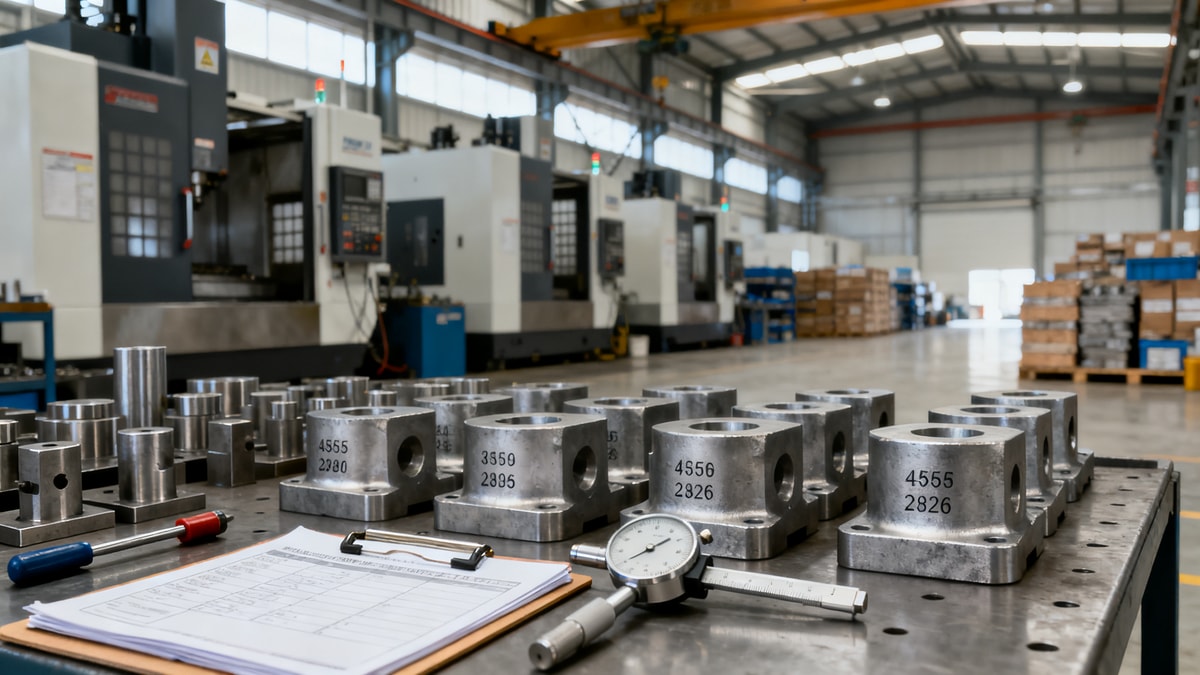
First is process capability. Can the manufacturer repeatedly produce to required tolerances, metallurgical properties, and finishing specifications? Capability must be demonstrated through process control, inspection records, calibration discipline, and validated production routes. A supplier that can make a prototype is not necessarily able to sustain serialized industrial production.
Second is raw material security. Components & Metals manufacturers often depend on volatile inputs such as alloy steel, aluminum, copper, nickel-bearing materials, specialty bar stock, forgings, or cast feedstock. Evaluation teams should understand not only where the direct supplier buys, but also how diversified and contractually secure those upstream channels are.
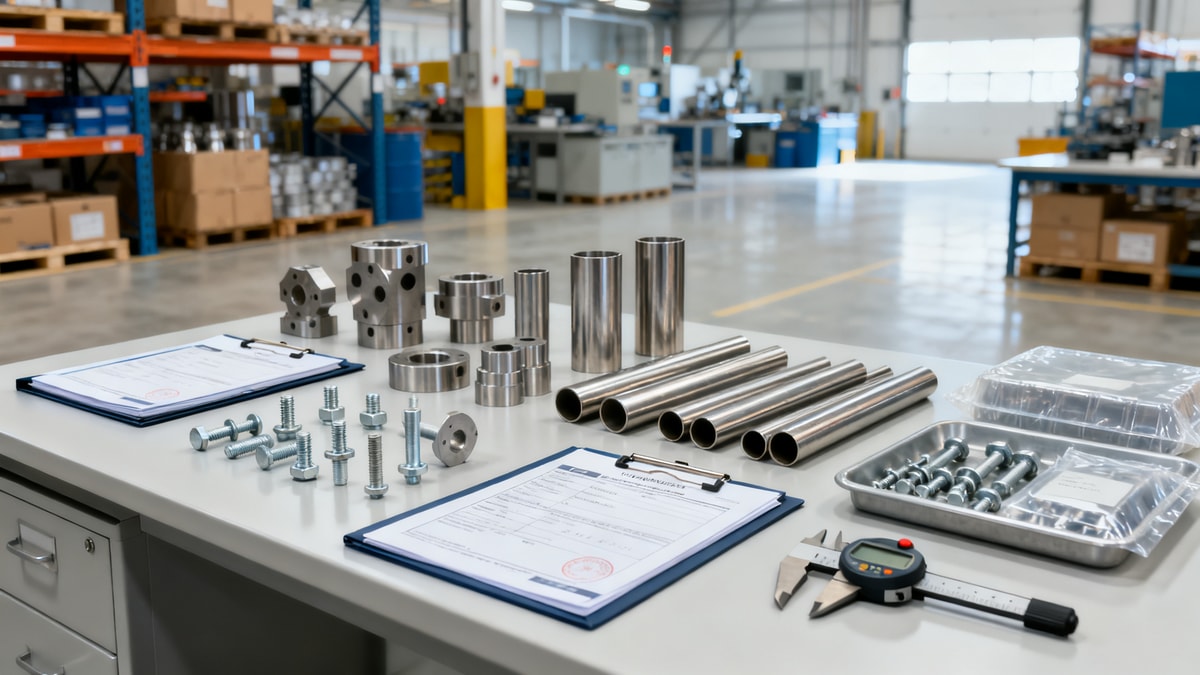
Third is certification and traceability maturity. In many industrial applications, it is not enough that the part performs. It must be provable that it performs, and that it was manufactured under the appropriate controls. Material certificates, lot traceability, inspection reports, coating records, welding qualifications, and compliance declarations all influence whether a delivered component is truly usable.
Fourth is capacity resilience. A supplier running near full utilization may look efficient during stable periods, but it may have little room to absorb engineering changes, urgent orders, or rework events. Real resilience includes spare capacity, multi-machine redundancy, maintenance planning, and labor flexibility.
Fifth is geographic and customer concentration. If the manufacturer depends heavily on one export lane, one plant, one major customer, or one politically exposed region, your risk rises even when direct performance remains acceptable. Concentration risk is often hidden until the environment changes.
Practical due diligence questions to ask before supply disruption happens
Effective assessment depends on asking better questions. Instead of broad inquiries such as “Do you have capacity?” evaluators should request evidence that reveals how the business actually operates. This turns supplier review from a paperwork exercise into a decision tool.
Ask for the last 12 to 24 months of on-time delivery performance by product family, not just an overall percentage. Ask for scrap, rework, and customer return trends. Ask how many critical production steps are outsourced and how those subcontractors are controlled. Ask which certifications are essential to the supplied parts and when each was last renewed. Ask whether any major raw material source changed during the past year.
It is also important to ask about organizational stability. How long have the quality manager, operations manager, and plant manager been in role? What is the turnover rate in skilled machining, metallurgy, welding, or inspection positions? Has the company delayed capital expenditure or maintenance due to cost constraints? These questions often reveal more than polished sales presentations.
For larger exposures, request scenario-based answers. What happens if a key machine goes down for two weeks? What happens if alloy costs spike 20 percent? What happens if one subcontract heat treater fails qualification? A resilient Components & Metals manufacturer should be able to describe contingency plans clearly.
How to build an internal risk rating that supports better sourcing decisions
Many organizations have supplier scorecards, but not all scorecards capture supply risk effectively. A practical model should combine commercial, technical, compliance, and continuity indicators. This creates a more realistic view of whether the supplier is merely under pressure or becoming strategically unsafe.
A useful framework includes four weighted categories. The first is performance stability: on-time delivery, lead-time variance, quality escapes, and corrective action effectiveness. The second is business health: pricing behavior, payment term changes, capacity utilization, management turnover, and visible investment levels. The third is technical assurance: process capability, traceability, certification validity, and change-control discipline. The fourth is dependency exposure: spend concentration, single-source status, qualification difficulty, and replacement lead time.
Each category should include trigger thresholds that prompt escalation. For example, two consecutive quarters of rising defect rates, any major certification lapse, repeated emergency pricing requests, or a significant increase in subcontracted work without prior approval should move the supplier into enhanced review. Risk scoring only matters if it drives action.
That action may include executive supplier meetings, expanded incoming inspection, dual-sourcing acceleration, inventory buffering, revised contract clauses, or engineering review for substitute specifications. The point is not to punish the supplier. It is to reduce business exposure before failure becomes irreversible.
What to do when a supplier is risky but difficult to replace
In industrial procurement, the most uncomfortable situation is not a bad supplier. It is a risky supplier that is deeply embedded in your operations. This is common with custom metal parts, qualified assemblies, or application-specific components that require long validation cycles. In these cases, simply switching vendors may not be realistic in the short term.
The right response is staged risk reduction. First, classify the supplied items by criticality. Determine which parts affect safety, regulatory compliance, production uptime, or customer delivery commitments most directly. Second, map where internal dependence is highest by plant, project, and customer contract. Third, separate short-term continuity actions from long-term exit options.
Short-term actions may include safety stock increases, more frequent supplier reviews, batch-level inspection, reserved production slots, financial exposure monitoring, or support for corrective action execution. Long-term actions may include alternate supplier development, drawing simplification, material standardization, tooling transfer planning, or regional source diversification.
Business evaluation teams should also align closely with engineering, quality, operations, and legal stakeholders. A supply-risk decision in this category is rarely just procurement’s decision. It affects technical acceptance, warranty posture, project scheduling, and contractual remedies.
Conclusion: evaluate the manufacturer, but also evaluate your own exposure
When a Components & Metals manufacturer becomes a supply risk, the smartest response is not panic and not passive optimism. It is disciplined evaluation. Business teams need to look beyond late deliveries and ask whether the supplier’s quality systems, financial stability, operational resilience, compliance controls, and leadership credibility still support dependable industrial supply.
The most important insight is that supplier risk is always two-sided. One side is the manufacturer’s weakness. The other is your organization’s dependence on that weakness. A supplier with moderate instability may pose limited danger if alternatives exist. The same supplier may represent severe risk if qualification cycles are long and the parts are operationally critical.
For that reason, the best evaluations combine external supplier evidence with internal impact analysis. If you can identify trend deterioration early, test whether the issue is structural, and act before disruption spreads, you turn procurement intelligence into operational resilience. In industrial markets, that is not just good sourcing practice. It is a core business protection function.
Technical Specifications
- SASO Mandates Dual Energy Label for Industrial Transformers in Saudi Arabia from May 2026Author :Grid Infrastructure Analyst
- EN 61000-4-30:2026 Enforced: Class A Harmonic Traceability Mandatory for EU PQ AnalyzersAuthor :Precision Metrology Expert
- US DOE Level 3 Transformer Efficiency Standard Effective July 1, 2026Author :Grid Infrastructure Analyst
Expert Insights

Chief Security Architect
Dr. Thorne specializes in the intersection of structural engineering and digital resilience. He has advised three G7 governments on industrial infrastructure security.
Related Analysis
- May 06, 2026SASO Mandates Dual Energy Label for Industrial Transformers in Saudi Arabia from May 2026Author :Grid Infrastructure Analyst
- May 06, 2026EN 61000-4-30:2026 Enforced: Class A Harmonic Traceability Mandatory for EU PQ AnalyzersAuthor :Precision Metrology Expert
- May 06, 2026US DOE Level 3 Transformer Efficiency Standard Effective July 1, 2026Author :Grid Infrastructure Analyst
Core Sector // 01
Security & Safety
- Foundational engineering solutions for bridges that cut rework riskAuthor :Heavy Industry Strategist

- When a Components & Metals manufacturer becomes a supply riskAuthor :Heavy Industry Strategist

- How to compare Components & Metals suppliers for bulk ordersAuthor :Heavy Industry Strategist

- Metallurgical Engineering Solutions for Corrosion Problems That ReturnAuthor :Heavy Industry Strategist

- How to Judge a Components & Metals Manufacturer on StabilityAuthor :Heavy Industry Strategist

- Where Metallurgical Engineering Standards Affect Product ConsistencyAuthor :Heavy Industry Strategist

- Components & Metals Bulk Order: Where Savings Usually DisappearAuthor :Heavy Industry Strategist

- When Components & Metals bulk order pricing stops being cheaperAuthor :Heavy Industry Strategist