How to compare Components & Metals suppliers for bulk orders
Author
Date Published
Reading Time
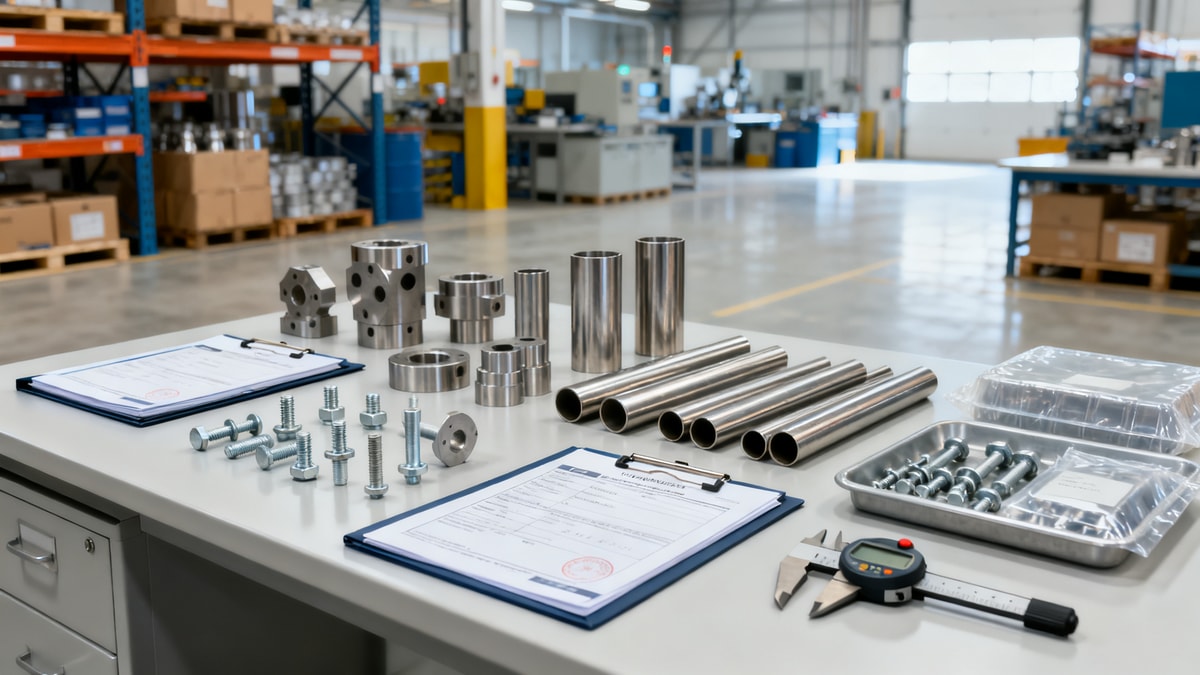
Choosing the right partner for a Components & Metals bulk order can directly affect cost, compliance, lead times, and long-term operational reliability. For procurement professionals, comparing suppliers means looking beyond price to assess certifications, material consistency, production capacity, and delivery performance. This guide outlines how to evaluate Components & Metals suppliers strategically, reduce sourcing risk, and secure dependable value for large-scale industrial purchasing.
What should procurement teams compare first in a Components & Metals bulk order?
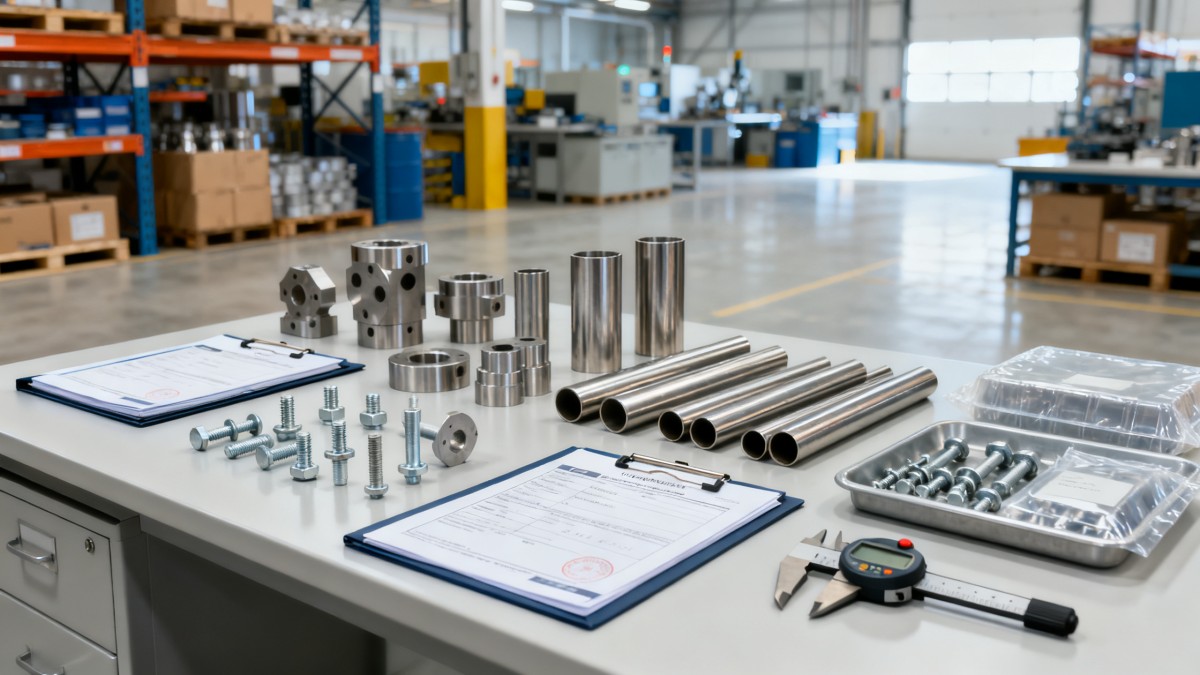
In industrial sourcing, a Components & Metals bulk order is rarely a simple price exercise. A lower unit quote may hide inconsistent metallurgy, unclear inspection scope, weak document control, or poor schedule discipline. For buyers serving EPC projects, maintenance programs, utilities, and manufacturing operations, the real question is not who offers the cheapest part, but who can deliver repeatable conformity under commercial and operational pressure.
The first comparison should focus on supply risk. That includes whether a supplier can maintain material traceability, process stability, and dependable delivery over multiple lots. It also includes whether the supplier understands the application environment, such as corrosion exposure, mechanical loading, thermal cycling, electrical safety, or dimensional tolerance requirements.
For mixed industrial portfolios, buyers often source castings, fasteners, machined parts, fabricated assemblies, structural metals, tubing, or specialty alloys from different regions. This makes supplier comparison more complex. Global Industrial Core supports procurement teams by framing supplier evaluation around technical validity, compliance readiness, and execution reliability rather than quote-only decisions.
- Check whether the supplier can meet the exact specification, including grade, tolerance, surface treatment, and inspection level.
- Review whether production capacity matches your forecast, not only your first purchase order.
- Verify document readiness, such as mill test certificates, inspection reports, packing records, and export paperwork.
- Assess communication discipline, especially response speed during drawing clarification, nonconformance handling, and shipment updates.
Which evaluation criteria matter most beyond price?
A strong supplier comparison model translates technical and commercial risk into measurable criteria. Procurement professionals should use a scorecard that balances price with compliance, lead time realism, manufacturing control, and after-order support. This prevents a common failure point in Components & Metals bulk order management: selecting a vendor that can quote quickly but cannot sustain quality at shipment scale.
The table below gives a practical framework for comparing suppliers for industrial components and metal products. It is especially useful when several vendors appear similar on paper but differ in process maturity and execution capability.
This scorecard works best when procurement, engineering, and quality teams review suppliers together. In many Components & Metals bulk order decisions, the winning supplier is the one with fewer hidden variables, even if the initial quote is not the lowest.
A practical weighting model for industrial purchasing
Not every purchase requires the same weighting. For standard carbon steel hardware, price and delivery may dominate. For precision-machined stainless parts, alloy-critical forgings, or safety-related assemblies, technical conformance and documentation may deserve a higher score. Buyers should align the weighting with consequence of failure, not only annual spend.
- Low criticality items: emphasize price competitiveness, stock availability, and packaging consistency.
- Medium criticality items: balance manufacturing control, lead times, and dimensional repeatability.
- High criticality items: prioritize traceability, inspection depth, compliance documents, and change control.
How do you compare technical capability for metals and components?
Technical capability is where many sourcing decisions either gain confidence or create future claims. In a Components & Metals bulk order, technical review should confirm whether the supplier can actually manufacture the required item at scale, not just supply a sample that passes one-off inspection.
For metals, compare base material sourcing, heat treatment control, weld procedure discipline where applicable, corrosion protection methods, and consistency between lots. For components, compare tolerance capability, critical dimension control, thread quality, coating thickness, assembly accuracy, and packaging protection during transit.
Key technical checkpoints
- Confirm exact standards and drawings. Generic descriptions such as “stainless steel part” are not enough for bulk procurement.
- Review tolerance capability against production method. Machined, stamped, cast, and forged parts carry different repeatability risks.
- Ask how special processes are controlled, including plating, galvanizing, passivation, polishing, or heat treatment.
- Check how nonconforming material is segregated and whether deviations can be formally reported before shipment.
A reliable supplier should be able to explain process capability in plain terms. If technical discussions stay vague, or if process ownership is unclear because several steps are outsourced without control, procurement should treat that as a warning sign.
What certifications and compliance documents should buyers request?
Compliance is a major decision factor in any Components & Metals bulk order, especially for infrastructure, energy, electrical, environmental, or safety-related applications. Buyers should request only relevant documents, but they should request them early. Waiting until pre-shipment often exposes gaps that are costly to resolve.
The table below summarizes common document categories that help procurement teams compare suppliers in a disciplined and auditable way.
For regulated or safety-sensitive applications, buyers may also need product-specific documentation tied to CE, UL, ISO-related systems, or project specifications. GIC helps procurement teams interpret which documents are commercially useful, technically meaningful, and worth prioritizing during supplier selection.
Common compliance mistakes in bulk sourcing
- Assuming a quality certificate alone proves product conformity for every item in the order.
- Reviewing certificates without checking whether the document scope matches the actual supplied product.
- Failing to define document submission timing in the purchase order or supply agreement.
- Treating traceability as optional for items that later become critical in failure analysis.
How should buyers assess lead times, capacity, and service reliability?
Lead time is often misread as a single number. In reality, a supplier’s delivery promise depends on raw material availability, machine loading, tool readiness, inspection queue, export handling, and transport booking. In a Components & Metals bulk order, comparing quoted lead time without understanding those assumptions can distort the sourcing decision.
Procurement teams should ask suppliers to break down lead time by stage. This reveals whether the quote is built on current stock, rolling capacity, or optimistic planning. It also shows where schedule risk sits. A supplier with a slightly longer but transparent schedule is often safer than one offering an aggressive promise without process detail.
Questions that expose schedule realism
- What portion of the order depends on imported raw material or third-party processing?
- Can the supplier support phased deliveries if the full bulk order is not ready at once?
- What is the escalation path if quality issues delay the first production lot?
- How are urgent engineering changes handled once production has started?
Service reliability matters after award as much as before award. Buyers should compare supplier responsiveness during sampling, clarification rounds, packaging review, and claim resolution. These behaviors often predict how the supplier will perform when real project pressure appears.
How can procurement reduce total cost, not just purchase price?
The total cost of a Components & Metals bulk order includes much more than the quoted part price. It includes inspection effort, inbound delays, line stoppage exposure, rejection handling, extra freight, repacking, customs corrections, and replacement administration. A quote that seems cheaper by a few percentage points can become more expensive once execution costs are added.
Buyers should compare total landed cost and total risk-adjusted cost. This approach is especially relevant for industrial procurement where downtime, liquidated damages, or maintenance disruption can exceed the price of the original order.
Cost levers worth comparing
- Packaging quality: weak packing can turn a compliant shipment into a damaged claim.
- Lot consolidation: combining compatible items may reduce freight and customs handling cost.
- Material optimization: alternate grades may be acceptable in some applications, but only after engineering review.
- Supplier proximity to raw material sources: this can improve stability during volatile market periods.
- Inspection strategy: first-article approval and critical-dimension focus often reduce rework later.
GIC’s sourcing perspective is useful here because industrial buyers often need to compare commercial savings against operational exposure. The right supplier for a Components & Metals bulk order is usually the one that supports continuity, compliance, and predictable execution across repeated purchase cycles.
What are the most common supplier comparison mistakes?
Many procurement issues come from incomplete comparison methods rather than bad intent. Teams under time pressure may compare only quotations, basic certificates, and promised lead times. That is rarely enough for industrial components and metal products that will enter critical systems or long-lived assets.
- Comparing prices from mismatched specifications, where one supplier included testing or coating and another did not.
- Skipping pre-award clarification on tolerance, finish, or marking requirements.
- Accepting broad promises about capacity without validating the production route.
- Ignoring communication quality, even though poor coordination often causes delays and claim disputes.
- Treating first orders as isolated events instead of testing the supplier for long-term supply continuity.
A better comparison process starts with a normalized RFQ package, a defined review checklist, and clear bid clarifications. When buyers standardize what each supplier must quote and document, the decision becomes more accurate and easier to defend internally.
FAQ: procurement questions about Components & Metals bulk order evaluation
How many suppliers should be compared for a bulk order?
For most industrial purchases, comparing three qualified suppliers creates a useful balance between market visibility and evaluation workload. Fewer than three can limit commercial insight. Too many can slow the process without improving decision quality, especially if the RFQ package is technically complex.
What is the best way to compare suppliers when drawings are incomplete?
Do not rely on price comparisons until missing details are resolved. Create a clarification list covering material grade, finish, tolerance, inspection level, and packaging. If urgent sourcing is unavoidable, require suppliers to state all assumptions in writing so commercial comparisons stay transparent.
Should procurement always request samples before a Components & Metals bulk order?
Not always, but samples or first-article validation are strongly recommended for new suppliers, critical geometries, special finishes, or high-consequence applications. For standard catalog items, document review and prior performance may be enough. For custom items, sampling can prevent expensive lot rejection later.
What lead time is reasonable for industrial components and metal products?
There is no universal answer because lead time depends on material type, process route, quantity, and logistics mode. Buyers should focus less on a “fast” number and more on whether the timeline is supported by raw material plan, production sequence, inspection schedule, and shipping readiness.
Why work with us when comparing suppliers for industrial bulk purchasing?
Global Industrial Core helps procurement teams make more informed Components & Metals bulk order decisions by connecting sourcing strategy with industrial risk analysis. Our focus spans mechanical components, metallurgy, electrical infrastructure, safety systems, instruments, and environmental applications, which is critical when purchase decisions affect broader facility reliability.
We support buyers with practical evaluation logic rather than generic vendor lists. That includes guidance on specification review, supplier comparison criteria, certification interpretation, delivery risk questions, and commercial checkpoints that matter in real procurement environments.
- Ask us to help confirm technical parameters before issuing an RFQ.
- Consult us on supplier comparison frameworks for custom or compliance-sensitive items.
- Discuss expected delivery cycles, phased shipment options, and inspection hold points.
- Request support for certification review, documentation expectations, and traceability requirements.
- Use our perspective when evaluating sample strategy, quotation gaps, or cost-risk tradeoffs.
If your team is preparing a Components & Metals bulk order and needs clearer supplier benchmarking, reach out with your drawings, material requirements, target lead times, compliance expectations, and quotation questions. A more structured comparison process can reduce sourcing friction, protect project schedules, and improve long-term supplier performance.
Technical Specifications
- SASO Mandates Dual Energy Label for Industrial Transformers in Saudi Arabia from May 2026Author :Grid Infrastructure Analyst
- EN 61000-4-30:2026 Enforced: Class A Harmonic Traceability Mandatory for EU PQ AnalyzersAuthor :Precision Metrology Expert
- US DOE Level 3 Transformer Efficiency Standard Effective July 1, 2026Author :Grid Infrastructure Analyst
Expert Insights

Chief Security Architect
Dr. Thorne specializes in the intersection of structural engineering and digital resilience. He has advised three G7 governments on industrial infrastructure security.
Related Analysis
- May 06, 2026SASO Mandates Dual Energy Label for Industrial Transformers in Saudi Arabia from May 2026Author :Grid Infrastructure Analyst
- May 06, 2026EN 61000-4-30:2026 Enforced: Class A Harmonic Traceability Mandatory for EU PQ AnalyzersAuthor :Precision Metrology Expert
- May 06, 2026US DOE Level 3 Transformer Efficiency Standard Effective July 1, 2026Author :Grid Infrastructure Analyst
Core Sector // 01
Security & Safety
- Foundational engineering solutions for bridges that cut rework riskAuthor :Heavy Industry Strategist

- When a Components & Metals manufacturer becomes a supply riskAuthor :Heavy Industry Strategist

- How to compare Components & Metals suppliers for bulk ordersAuthor :Heavy Industry Strategist

- Metallurgical Engineering Solutions for Corrosion Problems That ReturnAuthor :Heavy Industry Strategist

- How to Judge a Components & Metals Manufacturer on StabilityAuthor :Heavy Industry Strategist

- Where Metallurgical Engineering Standards Affect Product ConsistencyAuthor :Heavy Industry Strategist

- Components & Metals Bulk Order: Where Savings Usually DisappearAuthor :Heavy Industry Strategist

- When Components & Metals bulk order pricing stops being cheaperAuthor :Heavy Industry Strategist