Foundational engineering solutions for bridges that cut rework risk
Author
Date Published
Reading Time
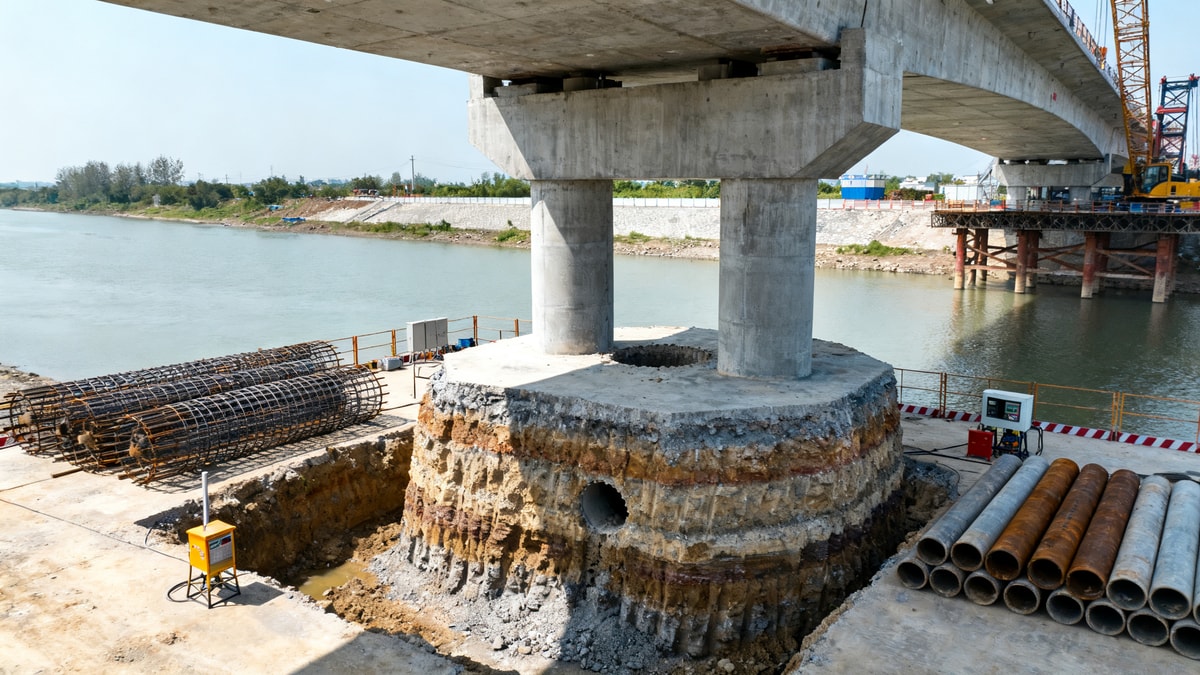
For technical evaluators, choosing foundational engineering solutions for bridges is less about lowest upfront cost and more about controlling settlement, load transfer, compliance, and constructability from day one. The right approach can reduce redesign cycles, prevent field conflicts, and cut costly rework risk across procurement, installation, and long-term performance.
When users search for foundational engineering solutions for bridges, the core intent is usually practical rather than academic. They want to understand which foundation systems reduce uncertainty, how to compare options under real site constraints, and what design, procurement, and execution decisions most directly prevent rework.
For technical evaluators, the biggest concerns are predictable load performance, geotechnical suitability, installation risk, code compliance, inspection requirements, lifecycle durability, and the likelihood of downstream construction conflicts. The most useful content is therefore not a generic overview of bridge foundations, but a decision-oriented framework that connects soil conditions, structural demands, construction methods, and procurement criteria to measurable project outcomes.
This article focuses on those high-value questions first. It prioritizes selection logic, risk triggers, design-review checkpoints, and specification details that help evaluators make sound judgments early, while avoiding broad theory that does little to improve project decisions.
Why bridge foundation choices are a major source of rework risk
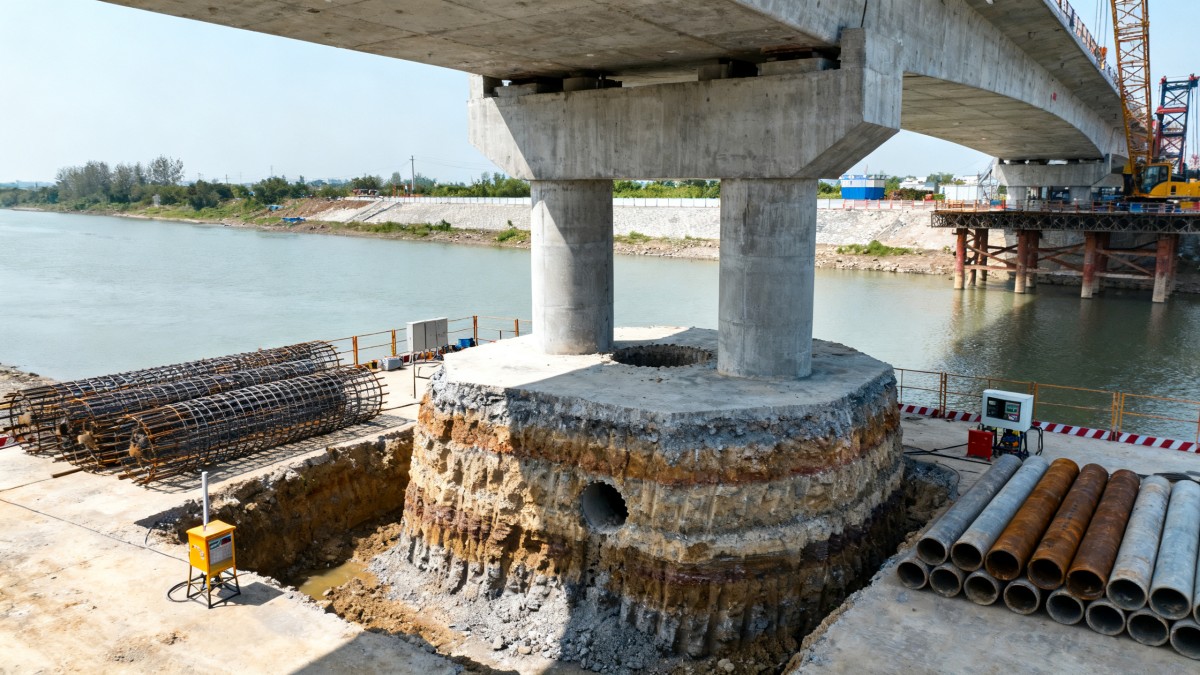
Bridge rework rarely starts in the field. It usually begins much earlier, when subsurface uncertainty, incomplete load assumptions, or poorly coordinated specifications are allowed to pass through concept design and into procurement. By the time crews are mobilized, even minor mismatches between foundation design and site reality can trigger redesign, delays, claims, or remedial work.
That is why foundational engineering solutions for bridges should be assessed as a risk-control strategy, not just a structural requirement. A foundation system that looks economical on paper can become expensive if it is highly sensitive to variable strata, difficult to inspect, or dependent on specialized equipment with limited local availability.
Technical evaluators should begin with a simple principle: the best solution is not the one with the lowest theoretical material quantity, but the one that maintains performance margins under realistic construction and geological variation. In bridge projects, robustness often saves more money than nominal optimization.
What technical evaluators should examine before comparing foundation types
Before choosing between shallow foundations, driven piles, bored piles, drilled shafts, micropiles, or hybrid systems, evaluators need a disciplined pre-selection framework. Without that framework, comparisons become inconsistent and vulnerable to bias from vendor preference, outdated standard details, or incomplete site characterization.
The first issue is subsurface confidence. Not all geotechnical investigations are equal. Evaluators should check borehole spacing, depth of exploration, groundwater characterization, seasonal variability, scour exposure, and the likelihood of mixed strata. A bridge crossing with variable alluvium, weathered rock lenses, or undocumented fill demands a different risk posture than a site with relatively uniform bearing conditions.
The second issue is load definition. Bridge foundations must carry more than static vertical demand. Technical review should include axial compression, uplift, lateral loading, vessel impact considerations where applicable, seismic effects, cyclic loading, settlement limits, and how these forces are distributed across piers and abutments over time.
The third issue is constructability. A technically valid design may still be a poor project choice if access is constrained, environmental windows are tight, vibration must be limited, cofferdam work is risky, or equipment logistics are impractical. Evaluators should ask whether the specified system can actually be installed with quality and consistency under site conditions, not just whether it meets design intent in principle.
Finally, there is integration risk. Foundation design should be reviewed against column geometry, reinforcement congestion, bearing elevations, drainage interfaces, utility conflicts, temporary works, and planned sequencing. Rework often comes from these handoff failures rather than from a pure structural miscalculation.
How different bridge foundation systems affect rework exposure
Shallow foundations can be highly efficient where competent bearing strata are near grade, settlement is tightly controlled, and scour risk is manageable. They are generally easier to inspect and simpler to construct than deep foundation systems. However, they become risky when soil variability is underestimated or when hydraulic conditions can undermine long-term support conditions.
Driven piles are often selected for schedule certainty and repeatable installation, especially where soft overburden overlies deeper competent layers. They can reduce spoil handling and offer reliable production in some environments. But they may introduce vibration concerns, refusal uncertainty, pile damage risk, and field adjustments if actual driving behavior differs from assumptions used in design.
Bored piles and drilled shafts are frequently favored for high-load bridge applications, limited-vibration sites, and locations where larger diameters improve load transfer efficiency. Their flexibility is valuable, but so is scrutiny. Rework risk can rise if slurry management, base cleanliness, shaft verticality, cage placement, tremie procedures, or concrete continuity are not tightly controlled.
Micropiles can be effective in restricted-access conditions, retrofit work, seismic upgrades, or where minimal disturbance is required. They are especially useful when bridge widening or rehabilitation limits available work zones. Yet their performance depends heavily on installation quality, grout control, bond zone behavior, and accurate understanding of load-sharing mechanisms within the group.
Hybrid solutions may offer the best balance in difficult projects. For example, combining ground improvement with shallow systems, or mixing pile types across abutments and piers, may better align with local geotechnical variability. The key is not to force uniformity when site conditions clearly support differentiated design responses.
Which early-stage checks most effectively cut redesign and field change orders
Technical evaluators can reduce rework risk substantially by formalizing a few early-stage review gates. One of the most effective is a foundation basis-of-design review that explicitly documents load cases, settlement criteria, durability assumptions, hydraulic conditions, and accepted geotechnical interpretations. If these inputs remain ambiguous, later detail design will inherit that ambiguity.
Another important check is independent constructability validation. This should include installation equipment availability, local contractor capability, test pile or proof load strategy, spoil and water management planning, and contingency procedures for obstructions, unexpected refusal, or overbreak. Field issues become expensive when they are treated as surprises instead of anticipated scenarios.
Evaluators should also require a tolerance and interface review. Many foundation-related rework events arise from cumulative tolerances between pile layouts, pier stems, anchor bolts, bearings, precast elements, and reinforcement cages. If allowable tolerances are not coordinated across disciplines, fit-up problems emerge during erection and can force site modifications.
Material and compliance review matters as well. For bridge work, durability is often inseparable from structural adequacy. Cement chemistry, corrosion protection, coating systems, steel grade traceability, grout performance, and concrete exposure-class requirements should be checked before final procurement. A system that passes initial design review but fails durability expectations may still generate major rework later in the asset life.
How to evaluate load transfer, settlement, and long-term performance with fewer assumptions
One reason foundational engineering solutions for bridges are difficult to compare is that different systems rely on different performance assumptions. Some depend more on end bearing, others on skin friction, confinement effects, or improved ground behavior. Evaluators should therefore focus less on nominal capacity alone and more on how reliably that capacity can be mobilized in actual site conditions.
Settlement assessment should distinguish between total settlement, differential settlement, time-dependent movement, and movement under cyclic or seasonal conditions. A foundation may meet ultimate limit state requirements yet still create serviceability issues that affect deck alignment, bearing performance, or approach slab behavior. These are the kinds of downstream issues that often produce hidden rework.
Load testing and verification plans are essential decision tools. Static load tests, dynamic pile monitoring, integrity testing, crosshole sonic logging, thermal profiling, and grout verification methods should be selected based on the actual failure modes the project is trying to avoid. Testing should not be treated as a compliance formality. It is one of the clearest ways to reduce uncertainty before full production work proceeds.
Long-term performance review should include scour, corrosion, freeze-thaw exposure, sulfate or chloride attack, fatigue-related loading implications, and accessibility for future inspection. Evaluators should favor systems that remain inspectable and maintainable over the bridge lifecycle, especially in aggressive environments where hidden deterioration can become a structural and financial liability.
What procurement and specification details help prevent foundation-related rework
Many bridge foundation problems are not caused by bad concepts, but by weak specifications. If the procurement package does not define acceptance criteria clearly, contractors and suppliers may interpret requirements differently, leading to disputes, substitutions, or inconsistent installation quality. Good engineering intent can fail through poor documentation.
Strong specifications should identify design assumptions that must be preserved in execution, including minimum founding levels, allowable installation deviations, reinforcement placement limits, concrete placement requirements, test frequency, and rejection criteria. They should also define what happens when actual conditions differ from the geotechnical baseline.
Technical evaluators should review whether the specification encourages value engineering without undermining risk control. Alternative foundation proposals can be beneficial, but only if they are evaluated against equivalent performance, durability, and verification standards. Low-bid substitutions that reduce construction visibility or increase dependence on optimistic assumptions often shift cost from procurement to rework.
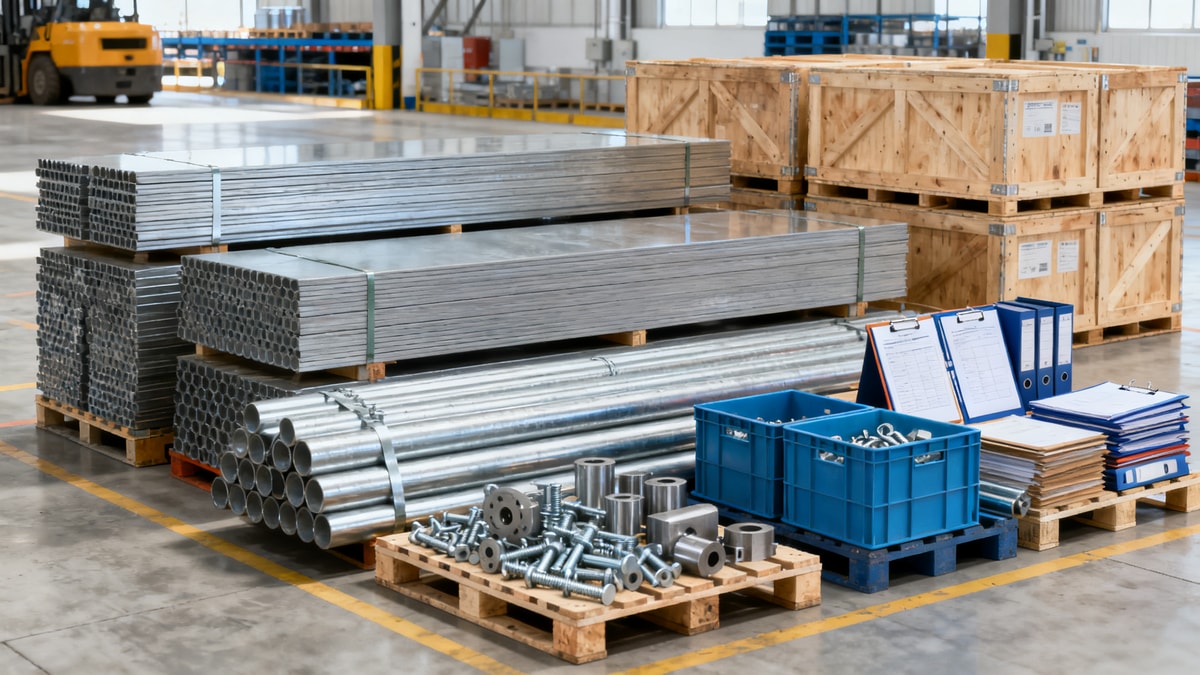
Supply chain readiness also matters. Foundation systems that require specialized casings, proprietary grouts, high-grade steel, instrumentation, or certified fabrication should be checked for lead time, regional availability, quality documentation, and backup sources. Delays and substitutions in these components can cascade into redesign pressure and site improvisation.
How technical evaluators can build a practical decision matrix
A useful decision matrix for bridge foundations should score options against criteria that actually predict project success. Typical categories include geotechnical suitability, structural performance, settlement control, constructability, inspection verifiability, environmental impact, schedule certainty, supply chain resilience, compliance burden, and lifecycle maintenance implications.
Weighting should reflect project realities. For example, in a remote or water-adjacent bridge site, equipment access and installation reliability may deserve higher weighting than small differences in theoretical material cost. In a high-seismic region, deformation behavior and redundancy may take priority. In corrosive marine exposure, durability and inspectability may dominate.
Evaluators should also record uncertainty explicitly. Instead of treating every criterion as equally known, it is more useful to score both expected performance and confidence level. A solution with slightly lower nominal efficiency but much higher confidence may represent the better engineering and commercial decision.
Where possible, lessons learned from comparable bridge projects should be included in the matrix. Historical refusal rates, concreting issues, cage stability problems, test outcomes, and maintenance observations often reveal more about rework risk than theoretical comparisons alone. This is where data-driven engineering judgment becomes especially valuable.
What a low-rework bridge foundation strategy looks like in practice
In practice, a low-rework strategy begins with adequate site investigation and a transparent basis of design. It continues with option screening that includes not only strength and cost, but installation realism, testability, and tolerance coordination. It is strengthened by specifications that define both required outcomes and field decision rules when conditions deviate.
It also requires cross-functional review. Structural, geotechnical, construction, procurement, and quality teams should not work in sequence with minimal feedback. On bridge projects, foundation decisions influence temporary works, schedule windows, environmental controls, inspection methods, and superstructure alignment. Early collaboration is one of the simplest ways to reduce downstream correction work.
For technical evaluators, the central takeaway is clear: the most effective foundational engineering solutions for bridges are those that convert uncertainty into managed risk. They do this through verified geotechnical inputs, realistic constructability, measurable quality controls, and specifications that preserve design intent through procurement and installation.
When these factors are addressed early, bridge teams can cut redesign cycles, prevent field conflicts, and improve long-term asset reliability. That is the real value of foundation engineering in bridge delivery: not just supporting the structure, but protecting the project from avoidable failure, delay, and rework.
Technical Specifications
- SASO Mandates Dual Energy Label for Industrial Transformers in Saudi Arabia from May 2026Author :Grid Infrastructure Analyst
- EN 61000-4-30:2026 Enforced: Class A Harmonic Traceability Mandatory for EU PQ AnalyzersAuthor :Precision Metrology Expert
- US DOE Level 3 Transformer Efficiency Standard Effective July 1, 2026Author :Grid Infrastructure Analyst
Expert Insights

Chief Security Architect
Dr. Thorne specializes in the intersection of structural engineering and digital resilience. He has advised three G7 governments on industrial infrastructure security.
Related Analysis
- May 06, 2026SASO Mandates Dual Energy Label for Industrial Transformers in Saudi Arabia from May 2026Author :Grid Infrastructure Analyst
- May 06, 2026EN 61000-4-30:2026 Enforced: Class A Harmonic Traceability Mandatory for EU PQ AnalyzersAuthor :Precision Metrology Expert
- May 06, 2026US DOE Level 3 Transformer Efficiency Standard Effective July 1, 2026Author :Grid Infrastructure Analyst
Core Sector // 01
Security & Safety
- Foundational engineering solutions for bridges that cut rework riskAuthor :Heavy Industry Strategist

- When a Components & Metals manufacturer becomes a supply riskAuthor :Heavy Industry Strategist

- How to compare Components & Metals suppliers for bulk ordersAuthor :Heavy Industry Strategist

- Metallurgical Engineering Solutions for Corrosion Problems That ReturnAuthor :Heavy Industry Strategist

- How to Judge a Components & Metals Manufacturer on StabilityAuthor :Heavy Industry Strategist

- Where Metallurgical Engineering Standards Affect Product ConsistencyAuthor :Heavy Industry Strategist

- Components & Metals Bulk Order: Where Savings Usually DisappearAuthor :Heavy Industry Strategist

- When Components & Metals bulk order pricing stops being cheaperAuthor :Heavy Industry Strategist