What sets a reliable sand casting iron parts manufacturer apart
Author
Date Published
Reading Time
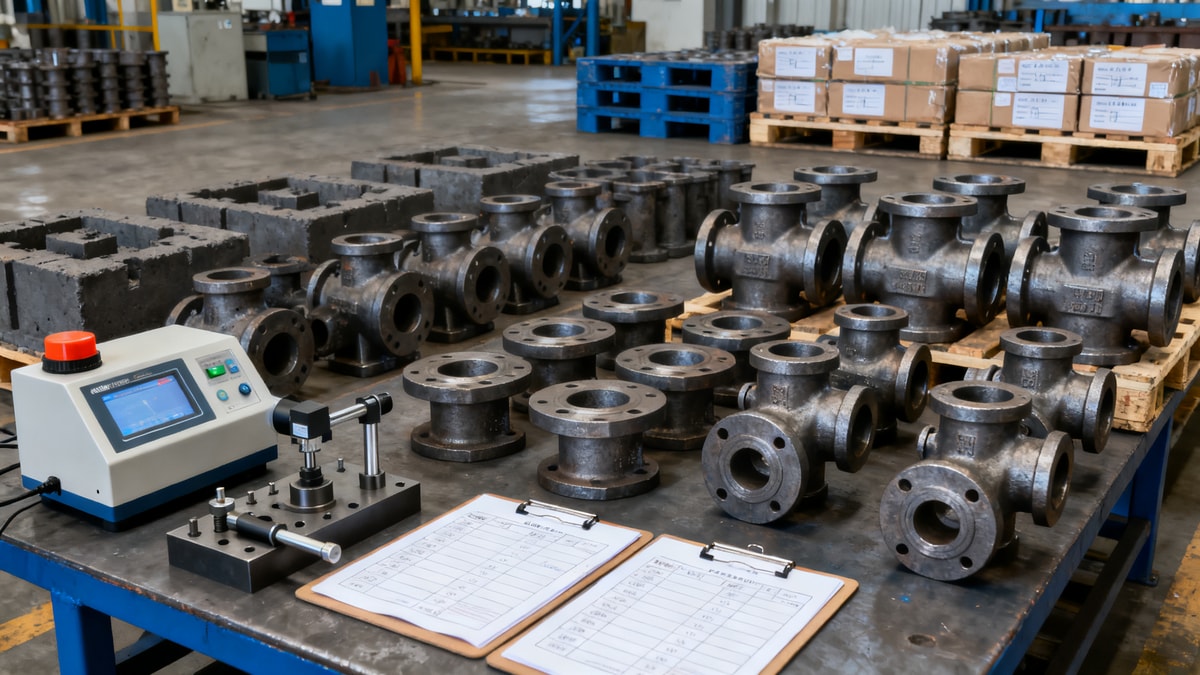
Choosing a reliable sand casting iron parts manufacturer is about far more than price. For procurement teams, the right partner delivers consistent quality, certified processes, stable lead times, and the technical support needed to reduce sourcing risk. This article explores the key factors that separate dependable manufacturers from the rest and helps buyers make smarter, lower-risk decisions.
In heavy industry, iron castings often sit inside pumps, valve bodies, housings, brackets, machine frames, municipal infrastructure parts, and wear-resistant mechanical assemblies. A weak supplier can create a chain of problems: scrap rates above 5%, repeated dimensional deviations, incomplete material traceability, and shipment delays that push project schedules by 2 to 6 weeks. For buyers responsible for uptime, compliance, and total landed cost, the manufacturer selection process must be structured, technical, and evidence-based.
A dependable sand casting iron parts manufacturer stands out through process discipline, metallurgy control, inspection capability, documentation quality, and supply continuity. Those strengths matter whether the order is a 50-piece replacement batch, a 5,000-piece production run, or a mixed low-volume, high-complexity sourcing package for EPC and industrial maintenance projects.
Why supplier reliability matters more than unit price
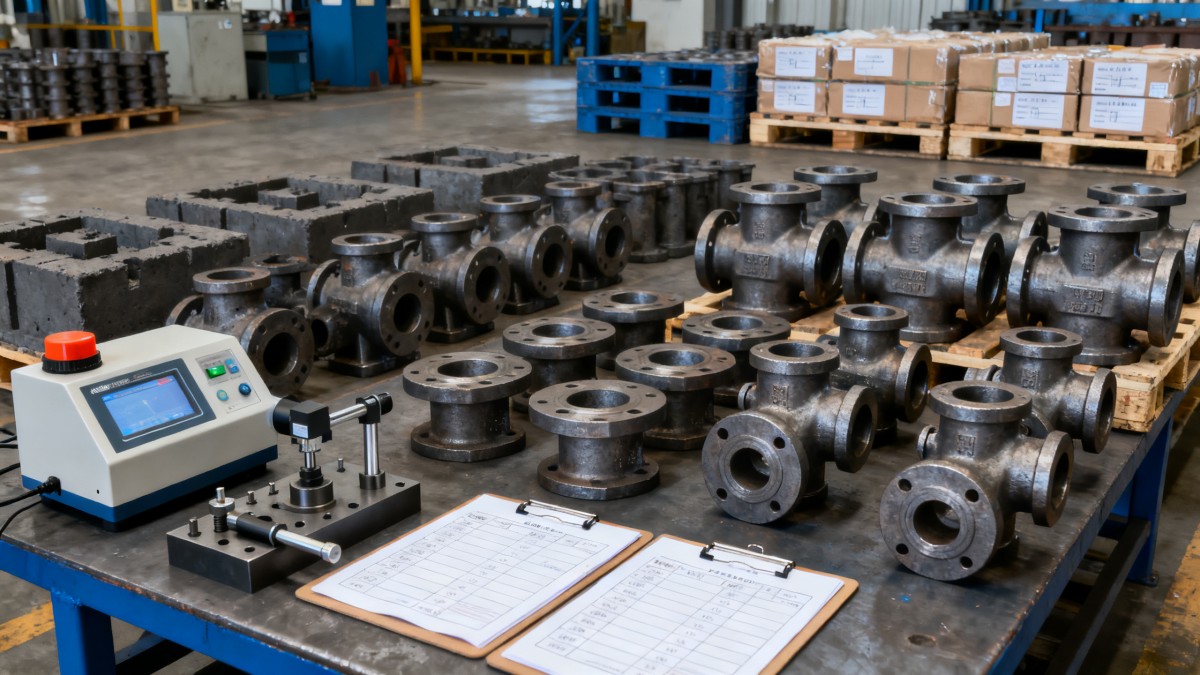
When procurement compares foundries, the visible quotation is only one layer of risk. A part that is 8% cheaper can become significantly more expensive if porosity causes machining rejection, if hardness falls outside the specified range, or if late delivery interrupts assembly. In industrial purchasing, the more useful metric is total cost of ownership over one sourcing cycle, usually measured across quality, logistics, documentation, and response time.
For sand-cast iron components, variation can appear in molding, core making, melt chemistry, inoculation, pouring temperature, shakeout, fettling, machining allowance, and final inspection. If a manufacturer cannot control these steps consistently, the buyer absorbs the consequences through emergency replenishment, overtime machining, or field failure exposure. This is why serious procurement teams often evaluate at least 4 dimensions before approval: manufacturing capability, quality system, delivery performance, and engineering support.
The hidden cost drivers buyers should measure
A reliable sand casting iron parts manufacturer helps reduce non-obvious cost drivers that do not always appear on a quotation sheet. These include scrap during incoming inspection, rework during machining, packaging damage in transit, incomplete certificates, and slow corrective action after a non-conformance. If each issue adds 1 to 3 days, the accumulated delay across one quarter can affect inventory, customer commitments, and maintenance shutdown planning.
- Dimensional stability across repeat batches, often monitored over 3 to 6 production lots
- Material consistency for grades such as gray iron or ductile iron with defined hardness or tensile targets
- On-time delivery performance, ideally tracked by monthly shipment adherence
- Response speed for technical queries, drawing review, and corrective action requests
- Traceability from raw material charge to final inspection records
What good and poor suppliers look like in practice
The table below provides a practical comparison framework for procurement teams screening a sand casting iron parts manufacturer. It focuses on operational signals that are visible during RFQ review, factory audit, pilot sampling, and early production release.
For buyers, the pattern is clear: a capable supplier reduces uncertainty before production begins. That lowers the chance of disputes later and makes cost comparisons more meaningful because the commercial offer is linked to real process assumptions.
Core technical traits that separate a reliable sand casting iron parts manufacturer
Foundry reliability starts with the ability to control repeatability. In sand casting, repeatability does not mean zero variation; it means the manufacturer can keep variation inside an agreed range and prove it with records. For many industrial castings, buyers should expect documented control over chemical composition, mold process, core integrity, dimensional checkpoints, and final surface condition.
Material and metallurgy control
A serious sand casting iron parts manufacturer should be able to discuss material selection in practical terms. For gray iron, buyers may ask about machinability, damping performance, and hardness consistency. For ductile iron, the discussion often centers on nodularity, tensile performance, elongation targets, and section sensitivity. The supplier should explain how melt chemistry is adjusted and how final properties are verified across test coupons or agreed sampling points.
Procurement should also review whether the manufacturer can support typical industrial requirements such as hardness ranges, heat treatment if required, and material equivalency against customer drawings or international standards. Even when a drawing is simple, missing metallurgy discipline can lead to brittle edges, inconsistent machining behavior, or reduced wear life.
Questions worth asking during supplier qualification
- What iron grades are produced regularly, and in what monthly volume range?
- How is chemical composition checked before and during pouring?
- What hardness or mechanical property ranges are typically controlled?
- Can the foundry provide traceability by heat number, lot, or production date?
- How are material deviations handled if test results fall outside tolerance?
Pattern, molding, and core-making capability
Many sourcing failures originate before metal is poured. Pattern design, draft angle planning, shrinkage allowance, and core location determine whether a casting can be produced with stable dimensions. A reliable manufacturer reviews geometry for hotspots, thin-wall risk, and core shift risk at the quotation or pre-production stage. That early engineering input can prevent repeated defects later.
For medium and large castings, dimensional tolerance may vary by size, geometry, and machining stock, but the foundry should define achievable levels clearly. Buyers should be cautious if a supplier promises very tight tolerances without explaining process limits, gauge method, or machining allowance. In many cases, a transparent tolerance plan is more valuable than an aggressive but unrealistic claim.
Inspection and documentation discipline
Documentation is a major differentiator, especially for industrial procurement teams managing multi-site approvals. A reliable sand casting iron parts manufacturer usually offers a documentation package matched to project criticality. For low-risk commercial parts, this may include dimensional reports and material confirmation. For infrastructure, fluid handling, or safety-related components, buyers may require more detailed records such as process checkpoints, hardness results, NDT where applicable, and packaging verification.
The following table shows the technical checkpoints that procurement teams commonly request before moving from trial order to approved supplier status.
A supplier that can provide these controls consistently is usually easier to scale. That matters when annual demand grows from 500 units to 5,000 units or when the buyer must synchronize multiple part families across different projects.
Commercial and operational signs of a dependable partner
Technical capability alone is not enough. Procurement success also depends on how the manufacturer manages communication, scheduling, packaging, and change control. A foundry may produce acceptable samples but still become a weak long-term partner if it cannot maintain predictable lead times or support engineering changes without confusion.
Lead time realism and production planning
Buyers should distinguish between quoted lead time and demonstrated lead time. For a new sand casting iron parts manufacturer, a sample timeline might include 2 to 4 weeks for tooling preparation, 1 to 2 weeks for first samples, and 3 to 6 weeks for production after approval, depending on size, machining content, and order quantity. What matters is not the shortest promise but whether the supplier can explain each milestone and flag bottlenecks early.
Reliable suppliers also separate standard parts from urgent replacement orders. If a procurement team handles both MRO and project buying, it is useful to ask how the foundry manages expedited orders, minimum batch sizes, and production slot reservation. Clear answers indicate that planning is controlled rather than improvised.
Communication quality and engineering support
Strong suppliers are easy to work with because they communicate in a structured way. During RFQ review, they confirm drawing revision, material grade, machining requirement, surface expectation, test scope, and packing method. During production, they provide status updates at agreed checkpoints instead of waiting for the buyer to ask repeatedly. For global procurement teams, response discipline within 24 to 48 hours is often a practical threshold.
Engineering support is especially important when drawings are incomplete or when a current supplier has quality drift. A capable sand casting iron parts manufacturer may suggest fillet changes, core redesign, riser optimization, or machining stock adjustments that improve yield and dimensional stability without altering the part’s function. That kind of collaboration protects both cost and continuity.
Operational checks before supplier approval
- Review 3 recent sample reports for consistency in format and data completeness
- Confirm packaging method for rough castings versus machined castings
- Ask for a corrective action example showing root cause, containment, and recurrence prevention
- Verify whether subcontracted machining or testing is disclosed and controlled
- Check if drawing revisions are managed with formal version tracking
How procurement teams can evaluate and onboard a supplier with lower risk
A practical approval process is often more effective than relying on claims, brochures, or trade show conversations. Buyers can reduce sourcing risk by using a staged qualification model. This allows technical and commercial performance to be tested before larger commitments are made.
A 5-step evaluation framework
- RFQ screening: confirm material, weight range, annual volume, tooling ownership, and inspection scope.
- Capability review: evaluate foundry process, machining support, documentation, and relevant certifications.
- Sample order: test 1 to 3 representative parts before approving a wider family of castings.
- Batch trial: place a controlled production order and monitor scrap, dimensional trends, and delivery adherence.
- Approved supplier release: set KPIs for quality, lead time, response time, and documentation accuracy.
This framework is useful because it converts selection into measurable checkpoints. A supplier that performs well across sample and batch stages is more likely to support long-term purchasing plans, dual sourcing strategies, and project expansion into additional regions.
Common mistakes buyers should avoid
One frequent mistake is selecting a sand casting iron parts manufacturer based only on the lowest initial quote. Another is approving a supplier after one successful sample without checking repeatability over the next 2 or 3 lots. Buyers also create unnecessary risk when specifications are incomplete, especially around acceptance criteria for cosmetic defects, machining allowance, or test documentation.
A better approach is to define the sourcing package clearly from the start: part function, critical dimensions, material expectations, annual demand, delivery windows, and required records. The more clearly these inputs are set, the easier it is to compare suppliers on a like-for-like basis.
What a strong long-term partnership looks like
Over time, a reliable manufacturer becomes more than a production source. It becomes a risk-control partner that supports cost reduction, drawing optimization, forecast planning, and quality stability. For procurement leaders in industrial sectors, this means fewer emergency purchases, better stock planning, and improved confidence when standardizing parts across multiple facilities or project sites.
If you are comparing suppliers, focus on evidence: process control, inspection records, delivery discipline, and technical responsiveness. The right sand casting iron parts manufacturer will make procurement more predictable, not more complicated. To evaluate suitable sourcing options, discuss your drawings, performance requirements, and target lead times with a qualified partner and get a tailored solution for your application.
Technical Specifications
Expert Insights

Chief Security Architect
Dr. Thorne specializes in the intersection of structural engineering and digital resilience. He has advised three G7 governments on industrial infrastructure security.
Related Analysis
- May 04, 2026When Components & Metals bulk order pricing stops being cheaperAuthor :Heavy Industry Strategist
- May 04, 2026What makes an Instruments & Measurement supplier dependableAuthor :Precision Metrology Expert
- May 04, 2026How to assess an Environment & Ecology exporter by documentationAuthor :Environmental Engineering Director
Core Sector // 01
Security & Safety
- When Components & Metals bulk order pricing stops being cheaperAuthor :Heavy Industry Strategist

- What a Components & Metals manufacturer should prove firstAuthor :Heavy Industry Strategist

- How metallurgical engineering manufacturers improve consistencyAuthor :Heavy Industry Strategist

- Why Components & Metals specs break sourcing plansAuthor :Heavy Industry Strategist

- How to vet a closed die forging parts supplier fastAuthor :Heavy Industry Strategist

- Closed die forging parts or casting parts for high loads?Author :Heavy Industry Strategist

- Industrial metallurgy choices that affect part lifespanAuthor :Heavy Industry Strategist

- Why investment casting manufacturer quotes vary so muchAuthor :Heavy Industry Strategist