What makes an Instruments & Measurement supplier dependable
Author
Date Published
Reading Time
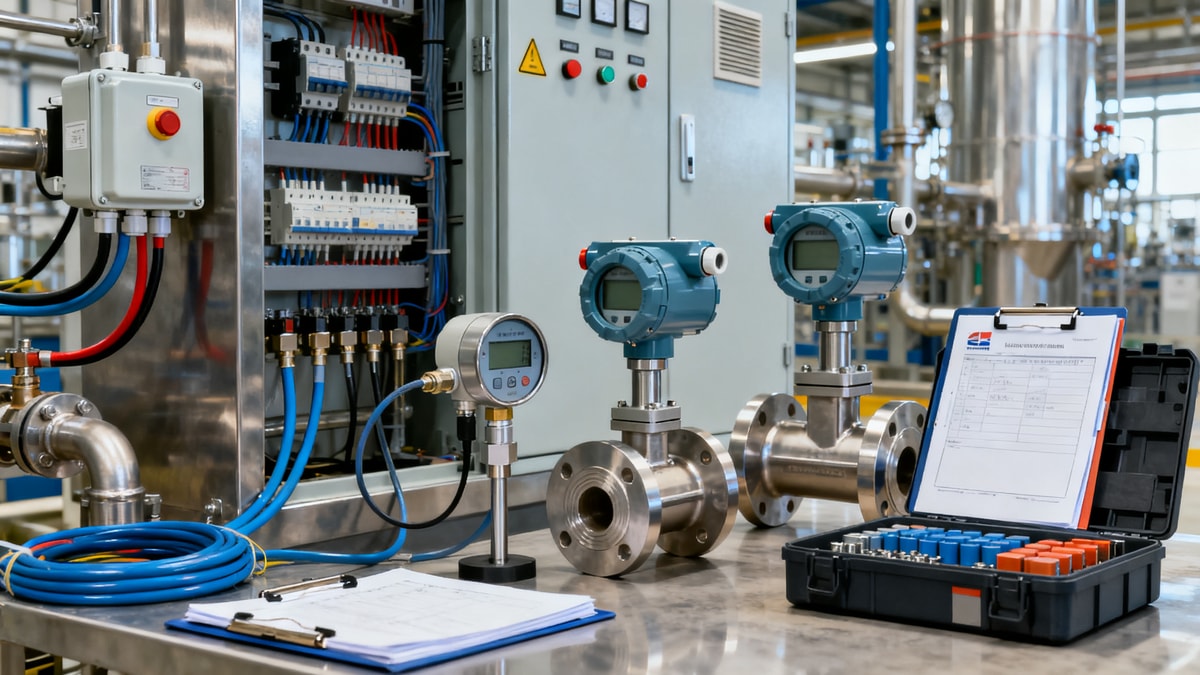
A dependable Instruments & Measurement supplier does more than ship products on time—it helps after-sales maintenance teams keep systems accurate, compliant, and running under pressure. From calibration support and traceable certifications to fast spare-parts response and technical guidance, the right partner reduces downtime and risk. This article explores the key traits that separate reliable suppliers from risky ones in demanding industrial environments.
Why scenario differences matter for after-sales maintenance teams
For after-sales maintenance personnel, choosing an Instruments & Measurement supplier is rarely a generic purchasing decision. The same vendor that performs well for a stable indoor production line may fail badly in a remote water-treatment station, a hazardous process area, or a fast-cycling power application. Dependability is not only about product quality. It is about whether the supplier fits the operating reality of your site, your service obligations, and your response window when equipment drifts, alarms, or fails.
This is why maintenance teams should evaluate suppliers through real use cases: calibration-intensive environments, critical uptime systems, regulated facilities, harsh outdoor installations, and mixed-brand legacy plants. In each scenario, the meaning of “dependable” changes. Sometimes it means same-day technical support. In other cases, it means strong documentation, multi-standard compliance, long-term spare availability, or the ability to guide technicians through field troubleshooting without delay.
An effective Instruments & Measurement supplier supports maintenance outcomes across the full life cycle: installation, verification, calibration, replacement, audit readiness, and root-cause analysis. For teams responsible for keeping assets safe and productive, this support often matters more than the initial price.
Typical application scenarios where supplier dependability is tested
Dependability becomes visible when conditions are difficult. After-sales maintenance teams usually judge an Instruments & Measurement supplier by what happens after commissioning, not during the sales pitch. The following scenarios are especially useful when assessing supplier fitness.
1) Continuous-process plants with no downtime tolerance
In chemical processing, utilities, food production, and similar continuous operations, instrument failure can stop output, create safety exposure, or force expensive manual intervention. Here, a dependable supplier must provide stable product quality, fast spare-part access, and clear replacement compatibility. Maintenance teams need exact cross-reference guidance, not guesswork.
2) Audit-driven facilities with strict compliance requirements
Facilities facing regular audits need traceable calibration records, certification support, and documented conformity to standards such as ISO, CE, UL, or industry-specific testing expectations. In this setting, an Instruments & Measurement supplier is dependable only if it can deliver paperwork with the same discipline as hardware.
3) Harsh environments and remote field installations
Outdoor pumping stations, mining support systems, marine environments, and remote substations place high demands on enclosure ratings, corrosion resistance, temperature tolerance, and field serviceability. A supplier may look strong on catalog specifications, but dependability in these conditions requires proven field history, practical installation guidance, and robust logistics.
4) Mixed-brand legacy systems
Many maintenance teams work with older facilities where transmitters, gauges, sensors, analyzers, and control interfaces come from different generations and brands. A dependable Instruments & Measurement supplier must understand migration paths, signal compatibility, mounting dimensions, and retrofit risks. This is where technical depth matters more than a low quote.
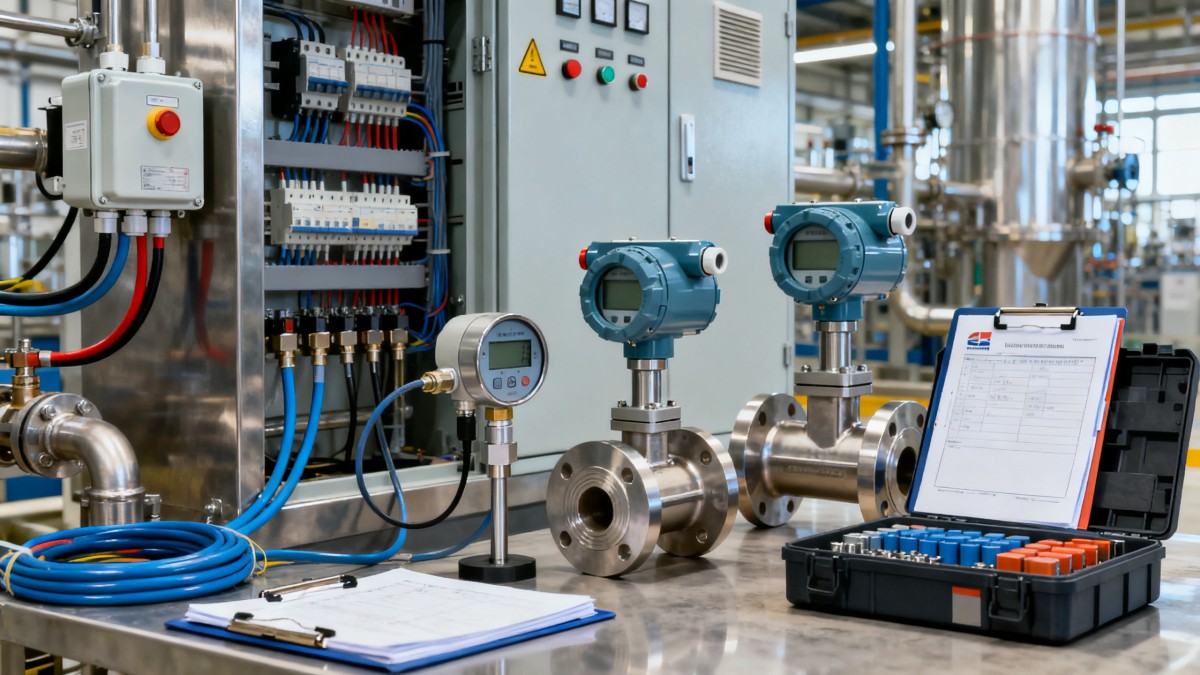
A practical comparison: what dependable means in different scenarios
The table below helps after-sales teams compare supplier expectations by operating context rather than by product category alone.
Key traits that separate a dependable Instruments & Measurement supplier from a risky one
Across industries, a dependable Instruments & Measurement supplier usually demonstrates the same core capabilities, but the importance of each one changes by scenario. For maintenance teams, the following traits are the most useful screening points.
Traceable quality and calibration support
If measurements cannot be trusted, the equipment is not dependable. Suppliers should provide calibration certificates where relevant, serial traceability, documented test conditions, and clear recalibration intervals. In service-heavy environments, support for verification procedures and field recalibration tools can save major time.
Strong technical response after delivery
After-sales maintenance teams often need fast answers on signal drift, wiring behavior, pressure range mismatch, process interference, and replacement setup. A dependable supplier offers access to engineers or product specialists who understand application context, not just catalog data. Timely diagnosis is often the difference between a minor interruption and a serious outage.
Spare parts continuity and lifecycle visibility
An Instruments & Measurement supplier becomes risky when models are discontinued without migration planning. Maintenance teams should confirm product lifecycle status, spare availability, replacement lead times, and backward compatibility. Dependable suppliers communicate changes early and offer realistic transition plans.
Documentation that supports real field work
The best documentation is usable under pressure. Wiring diagrams, installation notes, maintenance intervals, troubleshooting charts, material compatibility notes, and commissioning checklists all matter. Good documents reduce errors during emergency replacement and help new technicians work more safely.
Consistent compliance discipline
For many industrial users, compliance is not optional. A dependable supplier should be able to explain the scope of its certifications, operating limits, material specifications, and testing basis without ambiguity. Teams should verify whether certifications apply to the exact model, configuration, and region in question.
How different maintenance environments change supplier priorities
Not every maintenance department values the same supplier strengths. The right Instruments & Measurement supplier for one site can be the wrong choice for another. Below are common differences in decision priorities.
For routine plant maintenance teams
Routine teams usually prioritize ease of replacement, stock availability, repeatable quality, and straightforward support. They benefit from suppliers that standardize product families and minimize retraining needs.
For mobile service and field support teams
Field technicians often need rugged designs, compact spare kits, remote troubleshooting help, and dependable logistics. In these scenarios, the supplier’s packaging, labeling accuracy, and response speed are just as important as the sensor or transmitter itself.
For compliance-focused maintenance groups
These teams need a supplier that treats documentation as part of the product. Fast access to calibration history, revision records, and certificate copies is critical during inspections, customer audits, or incident reviews.
Common misjudgments when selecting an Instruments & Measurement supplier
Many supplier problems begin with an incomplete evaluation process. After-sales teams should watch for several common errors.
- Choosing only on unit price while ignoring downtime cost, recalibration labor, and replacement delays.
- Assuming certifications are universal rather than model-specific or region-specific.
- Failing to verify spare parts strategy for aging assets and legacy models.
- Overlooking service responsiveness during off-hours or emergency conditions.
- Accepting generic technical advice in applications that require process-specific guidance.
A dependable Instruments & Measurement supplier reduces uncertainty before problems happen. If a supplier is vague about lead times, support ownership, calibration scope, or replacement compatibility, maintenance teams should treat that as an early warning.
A simple fit-check list for scenario-based supplier evaluation
Before approving or expanding a supplier relationship, after-sales maintenance personnel can use the following fit-check questions:
- Can the supplier support my exact operating environment, including temperature, vibration, humidity, contamination, and installation constraints?
- Are calibration records, certificates, and traceability documents available in a usable format?
- What is the emergency response path if a critical measurement device fails?
- How long will spare parts remain available, and what are the approved substitutes?
- Can the supplier support retrofit, integration, or mixed-brand replacement work?
- Is technical support handled by application-capable staff or only by sales contacts?
FAQ: what maintenance teams often ask
Is a large supplier always a more dependable Instruments & Measurement supplier?
Not always. Large suppliers may offer stronger inventory and broader product lines, but smaller specialists can outperform them in niche applications, custom support, or local responsiveness. Dependability should be measured against your service scenario.
How important is calibration support compared with delivery speed?
Both matter, but their priority depends on the application. In audit-sensitive or precision-driven environments, calibration traceability may be more important than a slightly shorter lead time. In uptime-critical operations, quick replacement can dominate the decision.
What is the biggest red flag in supplier evaluation?
A supplier that cannot clearly explain compatibility, certification scope, or service escalation is risky. Unclear answers usually create bigger problems once equipment is in the field.
Final guidance: match the supplier to the maintenance reality
A dependable Instruments & Measurement supplier is not defined by claims, catalog size, or pricing alone. It is defined by how well it performs in your specific maintenance scenario: urgent replacement, calibration control, compliance readiness, harsh conditions, or legacy system support. For after-sales teams, the safest approach is to evaluate suppliers through real operating demands rather than generic reputation.
If your site depends on accurate readings, fast restoration, and defensible documentation, build your supplier shortlist around measurable support capabilities. Ask for sample certificates, escalation paths, lead-time commitments, lifecycle statements, and application references relevant to your environment. That is how maintenance teams identify an Instruments & Measurement supplier that truly helps keep industrial systems accurate, compliant, and resilient.
Technical Specifications
Expert Insights

Chief Security Architect
Dr. Thorne specializes in the intersection of structural engineering and digital resilience. He has advised three G7 governments on industrial infrastructure security.
Related Analysis
- May 04, 2026When Components & Metals bulk order pricing stops being cheaperAuthor :Heavy Industry Strategist
- May 04, 2026What makes an Instruments & Measurement supplier dependableAuthor :Precision Metrology Expert
- May 04, 2026How to assess an Environment & Ecology exporter by documentationAuthor :Environmental Engineering Director
Core Sector // 01
Security & Safety
- What makes an Instruments & Measurement supplier dependableAuthor :Precision Metrology Expert

- When rapid prototyping CNC saves money and when it does notAuthor :Precision Metrology Expert

- Rapid prototyping CNC custom parts and the tolerance tradeoffAuthor :Precision Metrology Expert

- When Instruments & Measurement OEM quality becomes the bottleneckAuthor :Precision Metrology Expert

- Rapid prototyping CNC services for low-risk product validationAuthor :Precision Metrology Expert

- Global Industrial Laser Distance Meter Price Index Up 9.3% WeeklyAuthor :Precision Metrology Expert

- Noise Monitoring Terminal Data Looks Normal, but Is It Trustworthy?Author :Precision Metrology Expert

- Stack Gas Analyzer Calibration Issues That Lead to Bad DecisionsAuthor :Precision Metrology Expert