Why investment casting manufacturer quotes vary so much
Author
Date Published
Reading Time
If you have ever wondered why investment casting manufacturer quotes can differ by 20%, 50%, or even more for seemingly similar parts, you are not alone. For financial approvers, these price gaps often signal hidden variables in tooling, alloy selection, tolerances, certification, yield rates, and supplier risk. Understanding what drives investment casting manufacturer quotes is essential for controlling total cost, avoiding costly surprises, and making sourcing decisions with confidence.
Why scenario differences matter more than the headline unit price
In industrial sourcing, a quote is never just a number. Two suppliers may appear to be quoting the same casting, yet they may be pricing very different assumptions about quality risk, machining allowance, testing depth, scrap rate, packaging, delivery commitment, and after-sales accountability. This is why investment casting manufacturer quotes often vary so widely even before negotiation begins.
For finance teams, the practical issue is not whether one quote is lower, but whether it is lower for the same business scenario. A prototype part for design validation, a certified safety component for regulated infrastructure, and a high-volume commercial component may all use investment casting, but the cost logic is completely different. If the scenario is misread, approvals may be based on false comparability.
That is why reviewing investment casting manufacturer quotes through the lens of application, risk exposure, and downstream cost is more reliable than comparing only the price per piece. In many cases, the cheapest quote simply pushes cost into later stages such as inspection, rework, field failure, delayed installation, or contract penalties.
Common business scenarios where quote gaps become most visible
Quote differences tend to expand in a few recurring industrial scenarios. Financial approvers should identify which scenario applies before evaluating any supplier proposal.
Scenario 1: New product development and prototype validation
In prototype programs, tooling life is less important than speed, engineering collaboration, and change flexibility. One supplier may quote lower because it uses simplified tooling or relaxed process controls, while another prices in multiple design iterations, dimensional feedback, and metallurgical support. Here, investment casting manufacturer quotes often reflect engineering service depth as much as production cost.
Scenario 2: Certified infrastructure and safety-critical components
For parts used in power systems, industrial safety assemblies, process plants, or regulated facilities, compliance can dominate pricing. Quotes may differ because one manufacturer includes material traceability, third-party inspection, pressure integrity testing, or documentation aligned with ISO, CE, or customer-specific standards. In this scenario, lower prices can hide noncompliance risk that becomes expensive later.
Scenario 3: High-volume cost reduction programs
In mature products with stable drawings, buyers usually focus on unit economics. Even then, investment casting manufacturer quotes vary based on yield optimization, automation level, gating design, shell process consistency, and raw material procurement strength. A supplier with better process control may quote more competitively at volume, while a smaller shop may only appear attractive in the first round.
Scenario 4: Complex geometry with downstream machining impact
Some castings are quoted cheaply because the foundry leaves extra stock, accepts wider dimensional variation, or transfers complexity to secondary machining. A quote should therefore be judged against the total manufactured part, not just the casting blank. This scenario is especially important for components requiring tight fit, surface integrity, or precise weight control.
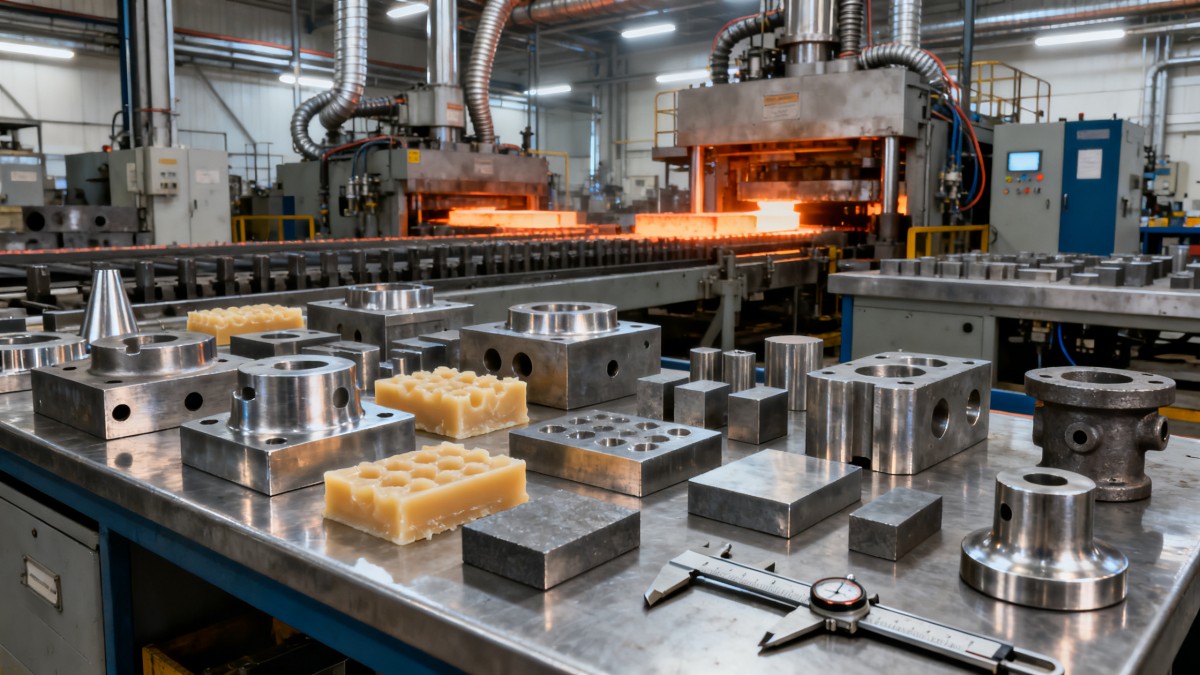
Scenario comparison: what financial approvers should expect behind the quote
The table below helps translate investment casting manufacturer quotes into practical review priorities.
What actually causes investment casting manufacturer quotes to vary so much
Across these scenarios, several quote drivers appear repeatedly. For finance reviewers, the key is to ask which of them are necessary for the intended application and which are optional cost adders.
Tooling strategy and pattern complexity
A low tooling quote may mean shorter tool life, fewer cavities, or less support for future revisions. A higher tooling cost may be justified when production volume is high, geometry is difficult, or dimensional repeatability matters. In long-running programs, the right tool design can reduce the total landed cost even if the first quote is higher.
Alloy choice and melt control
Not all stainless steel, carbon steel, or specialty alloy pricing reflects only commodity value. Some manufacturers quote based on tighter chemistry control, better furnace discipline, or stronger sourcing resilience. For demanding industrial environments, this can affect corrosion resistance, fatigue life, and consistency between batches.
Tolerance requirements and finishing expectations
Investment casting manufacturer quotes rise quickly when drawings demand tighter tolerances, better surface finish, lower porosity risk, or critical datum control. However, unclear drawings also create price spread because suppliers interpret manufacturability differently. One supplier may include robust process controls; another may assume the customer will absorb extra inspection or machining.
Inspection, certification, and documentation depth
A quote that includes heat records, material certificates, dimensional reports, non-destructive testing, and lot traceability is not equivalent to one that includes only a basic certificate of conformity. Financial approvers in regulated or contract-heavy industries should verify documentation scope line by line.
Yield rate and process maturity
Two factories making the same part can have dramatically different internal scrap rates. This is influenced by mold design, shell cracking control, wax injection stability, gating, and pouring expertise. Better process maturity often leads to more stable supply and fewer emergency cost events, even if the quote is not the lowest.
How different buyer types should read investment casting manufacturer quotes
Although the part may be the same, evaluation priorities differ across organizations.
For EPC contractors
Schedule reliability and document compliance usually matter more than the lowest unit price. A quote should be reviewed for packaging, export readiness, certificate completeness, and capacity to meet project milestones. A low-cost supplier that misses handover dates can erase any savings.
For plant operators and facility managers
Lifecycle cost is the better lens. Spare part durability, dimensional interchangeability, and service consistency often justify a stronger supplier. In maintenance-heavy environments, stable quality can be worth more than initial purchase savings.
For procurement and finance directors
The most useful question is whether the quote structure exposes hidden variability. Are tooling, sample approval, machining, testing, packaging, tariffs, and logistics separated clearly? Transparent investment casting manufacturer quotes reduce approval risk because they show where cost changes may occur later.
Frequent misjudgments that lead to bad approvals
Many poor sourcing decisions come from comparing quotes that are not commercially aligned. A few patterns appear repeatedly.
- Assuming all suppliers priced the same revision, tolerance notes, and acceptance criteria.
- Approving based on unit price without checking tooling amortization or minimum order quantity.
- Ignoring the cost effect of certification, PPAP-style documentation, or third-party inspection.
- Missing the difference between cast-only pricing and fully machined, inspected delivery.
- Underestimating supplier risk in cross-border logistics, communication, and corrective action speed.
In each case, investment casting manufacturer quotes looked far apart, but the real issue was inconsistent scope. Finance teams can reduce this problem by forcing a normalized commercial comparison before final approval.
A practical approval framework for scenario-based quote evaluation
A useful review method is to score quotes across five dimensions: technical fit, compliance fit, delivery confidence, cost transparency, and supplier resilience. This approach is especially effective when the lowest quote comes from a supplier with limited history or weaker documentation.
When a higher quote is actually the better financial decision
There are many cases where the higher quote wins on total value. This is common when the supplier can reduce machining hours, lower incoming inspection burden, shorten qualification time, improve first-pass yield, or support global documentation needs. For complex industrial supply chains, these hidden savings often outweigh visible purchase price differences.
This does not mean expensive quotes are always better. It means investment casting manufacturer quotes should be interpreted in the context of the application. In low-risk, stable, high-volume parts, aggressive pricing can be appropriate. In engineered, regulated, or schedule-critical situations, underpriced quotes should trigger deeper review rather than faster approval.
FAQ for finance-led quote reviews
Why are two quotes different when the drawing is the same?
Because suppliers often interpret process route, tolerance risk, inspection scope, tooling design, and scrap expectations differently. The drawing may be the same, but the manufacturing assumptions are not.
Should finance always ask for a quote breakdown?
Yes, especially for new suppliers, complex parts, or certified applications. A breakdown makes investment casting manufacturer quotes more comparable and exposes where future cost variation may appear.
What is the biggest warning sign in a very low quote?
The biggest warning sign is undefined scope. If testing, machining, packaging, tooling life, or traceability are vague, the low price may simply exclude necessary work.
Final decision guidance
The wide spread in investment casting manufacturer quotes is usually not random. It reflects differences in scenario, capability, process discipline, compliance depth, and commercial transparency. For financial approvers, the safest path is to normalize scope first, evaluate supplier fit by application, and then compare total business impact instead of unit price alone.
Before approving your next sourcing round, confirm the real-use scenario, define mandatory quality and certification requirements, and request a structured quote comparison. When investment casting manufacturer quotes are reviewed through a scenario-based framework, approvals become faster, more defensible, and far less likely to generate hidden downstream cost.
Technical Specifications
Expert Insights

Chief Security Architect
Dr. Thorne specializes in the intersection of structural engineering and digital resilience. He has advised three G7 governments on industrial infrastructure security.
Related Analysis
- May 04, 2026When Components & Metals bulk order pricing stops being cheaperAuthor :Heavy Industry Strategist
- May 04, 2026What makes an Instruments & Measurement supplier dependableAuthor :Precision Metrology Expert
- May 04, 2026How to assess an Environment & Ecology exporter by documentationAuthor :Environmental Engineering Director
Core Sector // 01
Security & Safety
- When Components & Metals bulk order pricing stops being cheaperAuthor :Heavy Industry Strategist

- What a Components & Metals manufacturer should prove firstAuthor :Heavy Industry Strategist

- How metallurgical engineering manufacturers improve consistencyAuthor :Heavy Industry Strategist

- Why Components & Metals specs break sourcing plansAuthor :Heavy Industry Strategist

- How to vet a closed die forging parts supplier fastAuthor :Heavy Industry Strategist

- Closed die forging parts or casting parts for high loads?Author :Heavy Industry Strategist

- Industrial metallurgy choices that affect part lifespanAuthor :Heavy Industry Strategist

- Why investment casting manufacturer quotes vary so muchAuthor :Heavy Industry Strategist