Closed die forging parts or casting parts for high loads?
Author
Date Published
Reading Time
When components must survive extreme loads, impact, and fatigue, the choice between casting and closed die forging parts becomes a critical engineering decision. For technical evaluators, this comparison goes beyond cost to include grain flow, defect risk, dimensional consistency, and long-term reliability. Understanding these differences helps ensure safer designs, lower lifecycle failure rates, and better performance in demanding industrial applications.
Understanding the two manufacturing routes
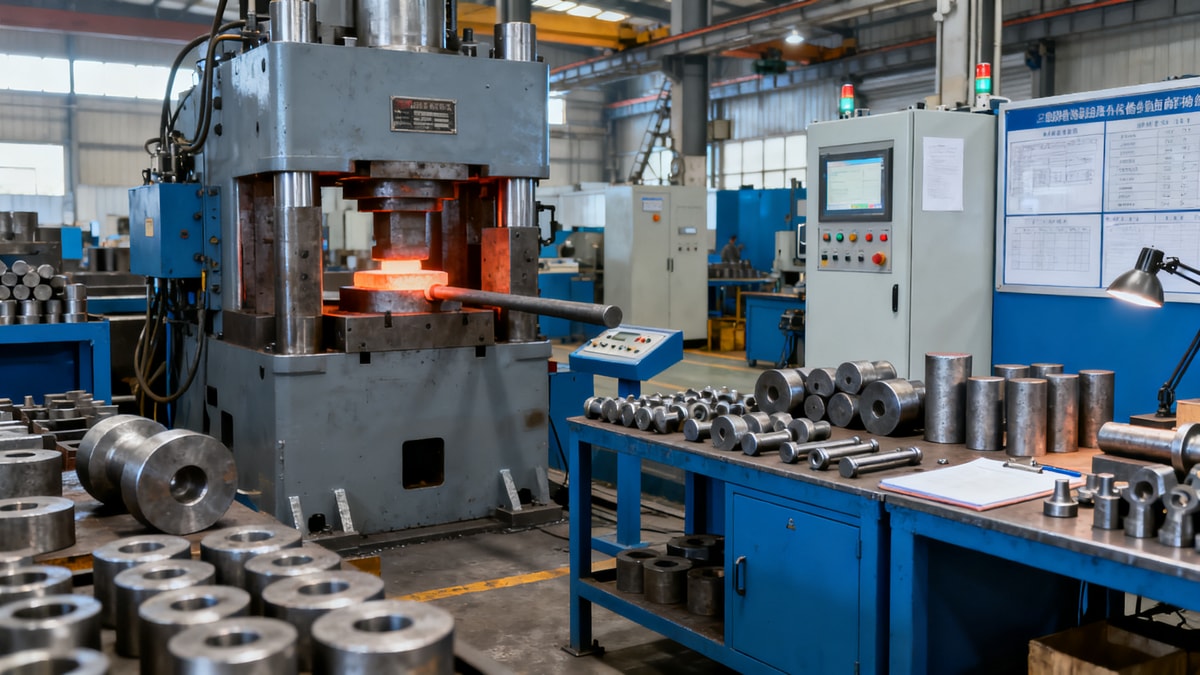
In industrial design, both casting and forging are mature shaping methods, but they create very different internal structures. Casting forms a part by pouring molten metal into a mold and allowing it to solidify. Closed die forging parts, by contrast, are produced by plastically deforming heated metal between shaped dies under high pressure. The external geometry may appear similar after machining, yet the metallurgical condition inside the part can differ substantially.
For technical evaluation teams in heavy industry, this distinction matters because high-load components rarely fail only from static overload. They often fail from fatigue, impact, stress concentration, or hidden material discontinuities. In those conditions, process history is not a manufacturing detail; it is part of the engineering performance of the finished component.
Closed die forging parts are typically selected when the design requires a refined grain structure, improved directional strength, and lower sensitivity to internal voids. Castings remain valuable where geometry is highly complex, section thickness varies greatly, or near-net-shape economics dominate. The correct choice is therefore application-specific, but under extreme loads, the balance often moves toward forging.
Why high-load industries pay close attention
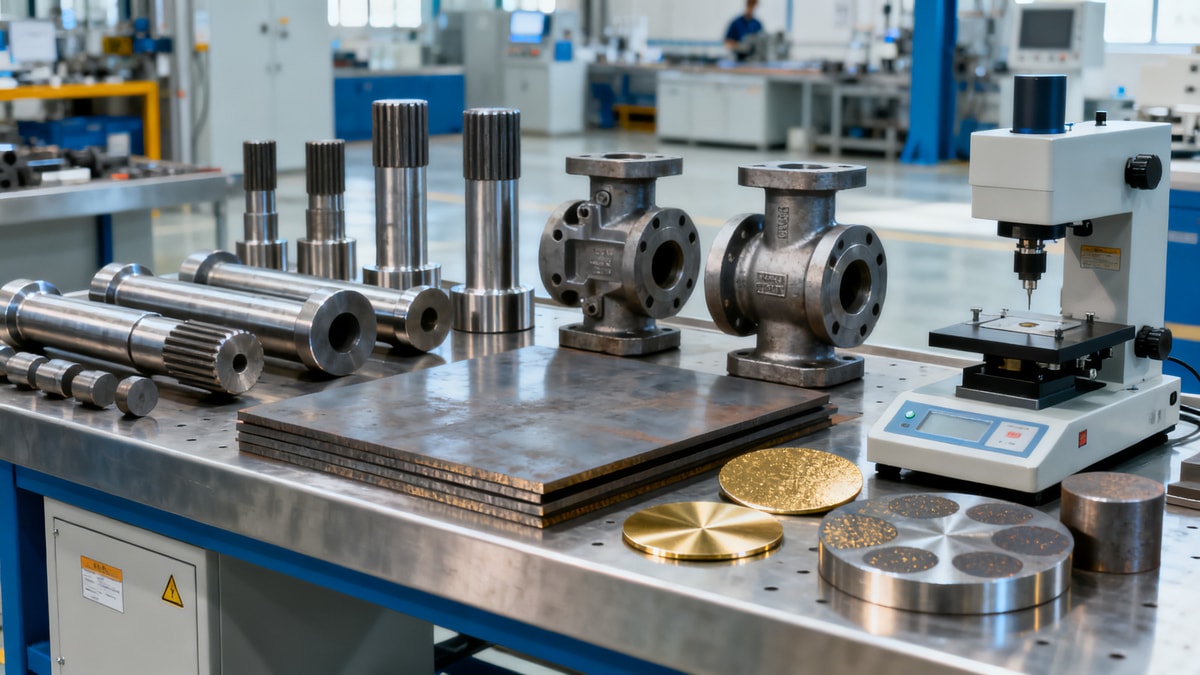
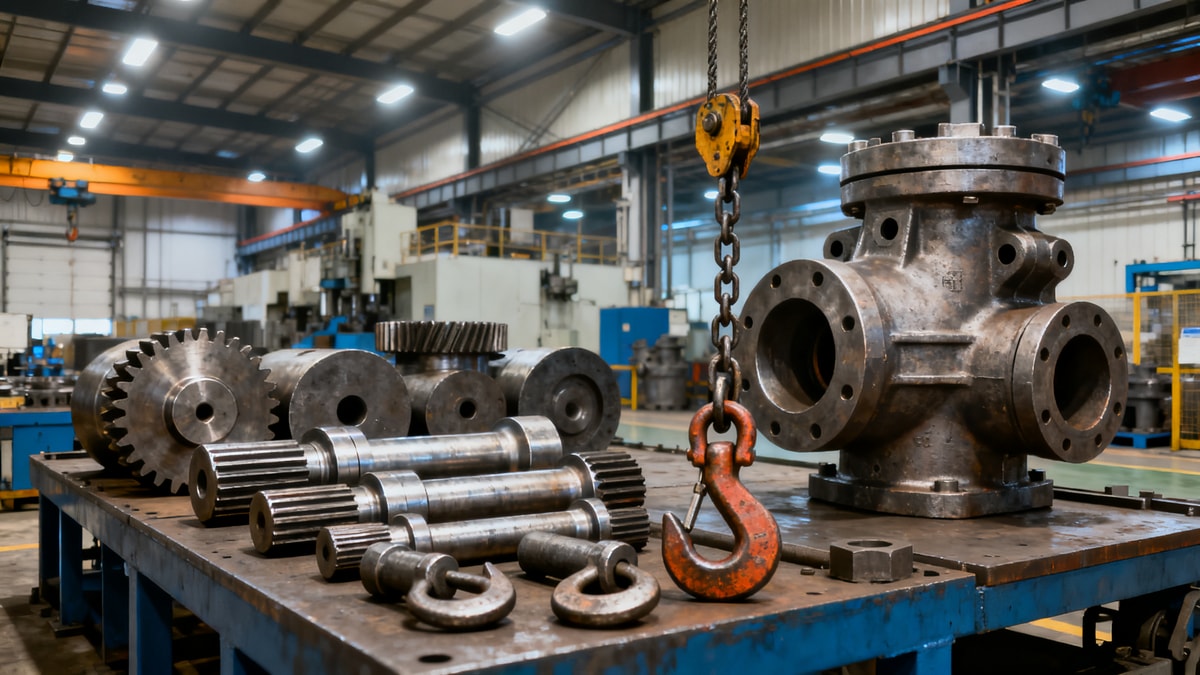
Across sectors such as power generation, mining, transport equipment, petrochemical processing, lifting systems, and heavy machinery, load-bearing parts are exposed to repeated stress cycles and harsh environments. Failures in shafts, hooks, connecting arms, couplings, gear blanks, valve bodies, and structural joints can trigger shutdowns, safety incidents, or very costly secondary damage.
This is why industrial buyers and engineering reviewers increasingly assess not only dimensions and price, but also process capability, traceability, heat treatment control, NDT coverage, and conformity with ISO, ASTM, EN, or project-specific standards. At Global Industrial Core’s level of industrial analysis, the question is not simply “which part is cheaper,” but “which process delivers the required margin of safety over the full operating life.”
In mission-critical environments, a lower purchase price can be quickly erased by a single unplanned failure. For that reason, closed die forging parts often attract attention in specification reviews for safety-related assemblies, rotating equipment, and components subject to shock loading.
What makes closed die forging parts different in performance
The central advantage of closed die forging parts lies in controlled deformation. During forging, the metal flow aligns the grain structure more favorably with the part shape. This produces a denser microstructure and can improve toughness, fatigue resistance, and impact strength compared with many cast equivalents. In components that see alternating loads, this grain flow advantage is often a major reason engineers prefer forging.
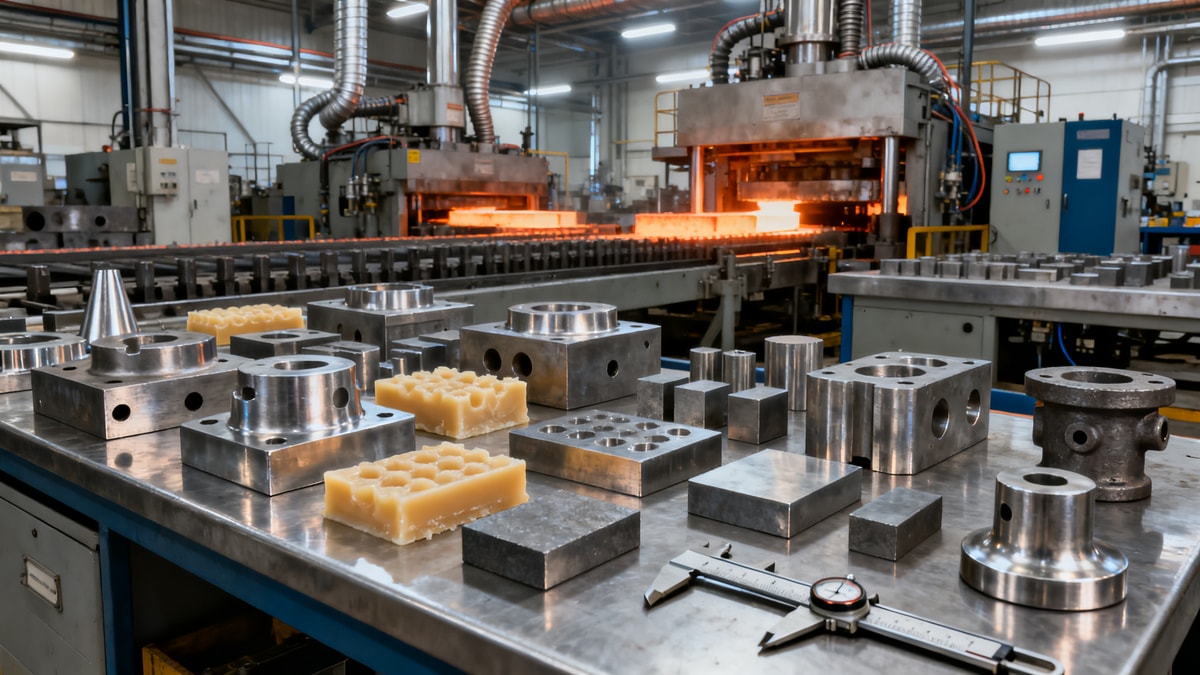
Cast parts can perform very well when the design, alloy, mold system, feeding, and inspection methods are carefully controlled. However, casting is inherently vulnerable to defects such as shrinkage, gas porosity, segregation, inclusions, and hot tears. Modern foundry practice can reduce these risks significantly, but not eliminate them entirely. In high-load service, the practical concern is that even a small discontinuity can become a crack initiation site under cyclic stress.
Closed die forging parts also tend to offer more consistent mechanical properties in heavily stressed zones, especially when combined with proper die design, controlled forging ratios, and qualified heat treatment. This consistency is valuable during design validation because it reduces uncertainty in real-world operating margins.
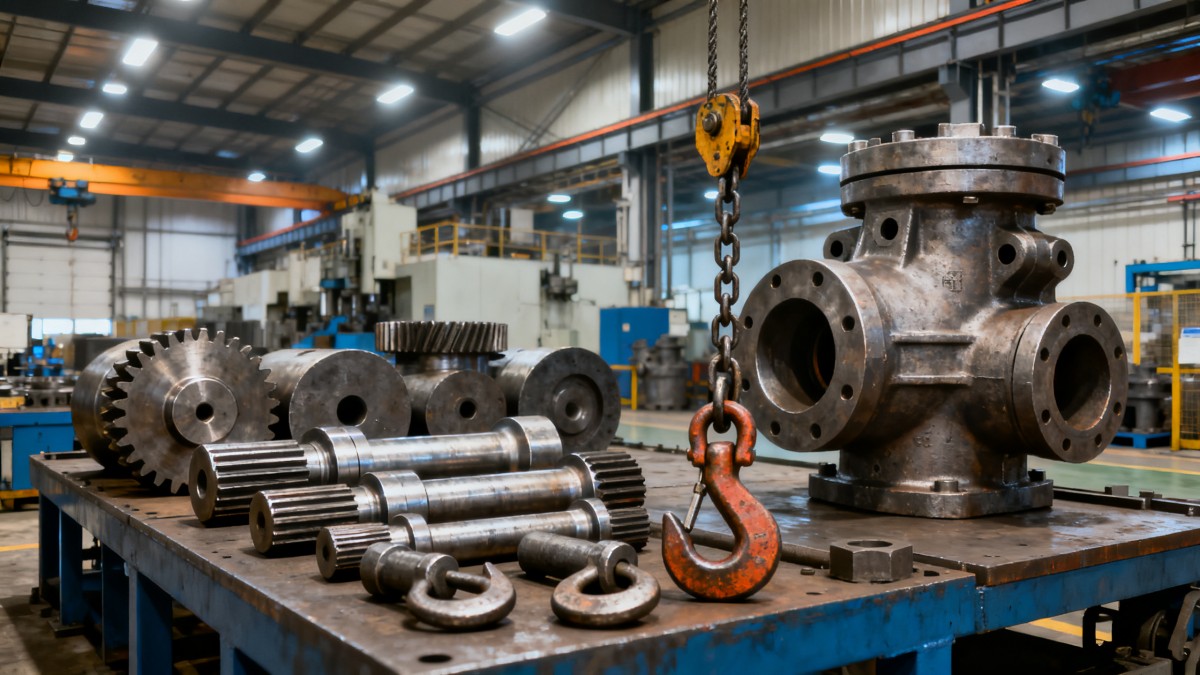
Industry overview table: forging versus casting under heavy load conditions
The following overview helps technical evaluators compare the two routes from a functional, rather than purely commercial, perspective.
Application value across common industrial component types
Not every component needs the same manufacturing route. The practical value of closed die forging parts becomes clearer when viewed through the lens of operating duty, failure mode, and maintenance consequence.
This classification shows why the debate is not absolute. Closed die forging parts excel when load path reliability matters most. Casting remains highly relevant where flow channels, cavities, large envelopes, or complex geometry outweigh the benefits of forged grain flow.
Key technical factors for evaluators
A sound evaluation should move beyond the simple statement that forging is “stronger.” Technical teams should examine at least five factors.
1. Failure mode and service conditions
If the part sees impact, bending reversal, vibration, torque fluctuation, or overload events, closed die forging parts usually deserve priority review. If the loading is primarily static and the geometry is highly intricate, casting may remain fully acceptable.
2. Geometry and section transition
Forging performs best when the part can be shaped with favorable material flow and controlled flash. Sharp transitions, deep cavities, and highly irregular hollow sections may push the design toward casting or a hybrid route involving forged preforms plus machining.
3. Inspection and certification needs
For EPC contractors and industrial procurement directors, traceability is often as important as strength. Closed die forging parts should be assessed together with heat numbers, mechanical test results, UT or MPI reports, die-process stability, and compliance with applicable codes. Cast parts should receive equally rigorous review of radiography, porosity control, pressure testing, and foundry qualification.
4. Post-processing requirements
Neither route should be judged in isolation. Heat treatment, machining allowance, surface finishing, and coating all affect performance. A forged part with poor heat treatment can lose much of its advantage, while a carefully engineered casting can outperform expectations in moderate-duty service.
5. Total lifecycle cost
For technical evaluators, lifecycle cost includes downtime exposure, maintenance intervals, inspection frequency, warranty risk, and consequences of failure. Closed die forging parts may carry a higher initial price, but they often lower the total risk-adjusted cost in severe operating environments.
Common misconceptions in high-load part selection
One common misconception is that casting is always inferior. That is not technically accurate. Many cast alloys and foundry processes deliver reliable service, especially for pressure-containing or shape-complex parts. Another misconception is that all forged components are automatically high quality. In reality, die wear, improper deformation, laps, inadequate trimming, and poor thermal control can compromise closed die forging parts if supplier discipline is weak.
A better approach is to match process capability to service demands. The real engineering question is not which method is more prestigious, but which method provides sufficient and verifiable integrity for the exact duty cycle of the component.
Practical guidance for specification and sourcing
When preparing RFQs, technical datasheets, or approval reviews, teams should define the part in performance terms rather than naming a process without reason. If the component is load-critical, state the required mechanical properties, fatigue expectations, impact toughness, NDT scope, and allowable discontinuity criteria. This makes it easier to justify why closed die forging parts are needed, if they are indeed necessary.
Supplier evaluation should also include more than commercial capacity. Review die design competence, metallurgical control, furnace calibration, lot traceability, machining capability, and prior experience with similar load-bearing applications. For globally sourced industrial components, evidence-based qualification is essential to maintain reliability across regions and projects.
In organizations managing complex infrastructure, the strongest practice is cross-functional review. Design engineers, QA specialists, procurement teams, and operations personnel should align on service risk before selecting cast or forged routes. That shared decision framework reduces later disputes between cost targets and reliability expectations.
Final perspective for technical decision-makers
For high-load applications, closed die forging parts frequently offer the safer and more robust path because they support superior grain flow, better resistance to fatigue initiation, and more predictable performance under shock and cyclic stress. Casting continues to play an indispensable role where geometry complexity, internal passages, or size constraints dominate the design problem. The strongest decisions come from evaluating service conditions, defect tolerance, inspection strategy, and lifecycle consequence together.
For technical evaluators working in modern industry, the goal is not to prefer one process by habit, but to specify the process that best protects operational continuity and safety. Where load severity is high and failure is unacceptable, closed die forging parts should be considered early, justified clearly, and verified through disciplined supplier and quality assessment.
If your team is comparing manufacturing routes for critical industrial components, a structured review of metallurgy, compliance evidence, and application risk will deliver better results than price comparison alone. That is the foundation for resilient sourcing and durable engineering performance.
Technical Specifications
Expert Insights

Chief Security Architect
Dr. Thorne specializes in the intersection of structural engineering and digital resilience. He has advised three G7 governments on industrial infrastructure security.
Related Analysis
- May 04, 2026When Components & Metals bulk order pricing stops being cheaperAuthor :Heavy Industry Strategist
- May 04, 2026What makes an Instruments & Measurement supplier dependableAuthor :Precision Metrology Expert
- May 04, 2026How to assess an Environment & Ecology exporter by documentationAuthor :Environmental Engineering Director
Core Sector // 01
Security & Safety
- When Components & Metals bulk order pricing stops being cheaperAuthor :Heavy Industry Strategist

- What a Components & Metals manufacturer should prove firstAuthor :Heavy Industry Strategist

- How metallurgical engineering manufacturers improve consistencyAuthor :Heavy Industry Strategist

- Why Components & Metals specs break sourcing plansAuthor :Heavy Industry Strategist

- How to vet a closed die forging parts supplier fastAuthor :Heavy Industry Strategist

- Closed die forging parts or casting parts for high loads?Author :Heavy Industry Strategist

- Industrial metallurgy choices that affect part lifespanAuthor :Heavy Industry Strategist

- Why investment casting manufacturer quotes vary so muchAuthor :Heavy Industry Strategist