Industrial metallurgy choices that affect part lifespan
Author
Date Published
Reading Time

For technical evaluators, industrial metallurgy is more than a material selection issue—it directly shapes fatigue resistance, corrosion performance, maintenance cycles, and total service life. Understanding how alloy composition, heat treatment, and manufacturing standards interact helps teams reduce failure risk, improve lifecycle value, and make sourcing decisions that stand up in demanding industrial environments.
Why does industrial metallurgy have such a strong impact on part lifespan?
Industrial metallurgy affects lifespan because every part failure begins with material behavior under real stress. A shaft may meet nominal strength requirements yet fail early from fatigue. A valve body may pass initial inspection but degrade rapidly in chloride-rich service. A wear plate may look hard enough on paper while cracking due to poor toughness. In each case, the root cause is not only geometry or loading, but how the metal was designed, processed, and verified.
For technical evaluators, the practical value of industrial metallurgy lies in predicting service performance before installation. Metallurgical choices determine grain structure, hardness profile, inclusion control, residual stress, and corrosion resistance. These factors influence whether a component survives cyclic loading, elevated temperatures, abrasive media, impact events, or long idle periods followed by restart.
This is especially important in heavy industry, where downtime costs often exceed the unit price of the component itself. A lower-cost alloy can become the highest-cost option if it increases inspection frequency, causes sealing instability, or shortens replacement intervals. Good industrial metallurgy therefore supports not only reliability, but also procurement discipline, maintenance planning, and compliance with EPC quality expectations.
What material decisions usually matter most when evaluating service life?
Technical teams often focus on tensile strength first, but lifespan depends on a wider set of metallurgical decisions. The most influential variables usually include alloy chemistry, heat treatment route, cleanliness level, manufacturing method, and the quality standard applied during inspection. These decisions interact, so no single datasheet value should be read in isolation.
Alloy composition sets the base potential. Carbon content affects hardness and weldability. Chromium, nickel, and molybdenum improve combinations of corrosion resistance, toughness, and high-temperature stability. Microalloying elements can refine grain structure and improve strength without making a material excessively brittle. For evaluators, the question is not whether an alloy is “strong,” but whether its chemistry matches the real damage mode expected in service.
Heat treatment is equally decisive. Normalizing, quenching and tempering, annealing, precipitation hardening, and surface hardening all create different microstructures. Two parts made from the same steel grade can show very different fatigue life or crack sensitivity if the heat treatment is not tightly controlled. This is why industrial metallurgy review should include hardness range, tempering records, and evidence of process repeatability.
Manufacturing route also matters. Cast, forged, rolled, powder-metallurgy, and additively manufactured parts have different internal structures and defect risks. Forgings usually offer better directional strength and lower porosity for critical rotating or pressure-loaded parts. Castings may be suitable for complex geometry but require stricter defect control and acceptance criteria. Evaluators should connect process route to failure mode rather than compare prices alone.

How should technical evaluators compare alloys for corrosion, wear, fatigue, and heat?
A useful approach is to compare alloys by dominant degradation mechanism instead of by generic category. Industrial metallurgy decisions are strongest when the selection logic begins with the real environment: cyclic loads, abrasive particles, chemical exposure, thermal fluctuation, pressure, or combined damage.
For corrosion-driven applications, stainless steels, duplex grades, nickel alloys, or coated carbon steels may all be valid depending on pH, chlorides, temperature, and flow conditions. In some systems, a higher-alloy solution cuts unplanned shutdowns dramatically. In others, a lower-cost substrate with a qualified coating system is more economical over the full lifecycle. The key is to verify localized corrosion resistance, not just general corrosion rate.
For abrasive wear, hardness is important but should be balanced with toughness. A very hard material may resist sliding wear yet fail by chipping or impact cracking. This is common in conveying, crushing, slurry handling, and mining-related systems. Industrial metallurgy review should therefore include both hardness and impact behavior, especially where load direction or feed quality varies.
For fatigue-loaded parts such as shafts, fasteners, springs, couplings, and rotating equipment components, surface condition, residual stress, cleanliness, and notch sensitivity become critical. High strength alone does not guarantee long life. In fact, as strength increases, tolerance for defects may decrease. Evaluators should review inclusion ratings, surface finish requirements, shot peening where relevant, and inspection methods for subsurface defects.
For elevated-temperature service, creep resistance, oxidation behavior, and microstructural stability may matter more than room-temperature yield strength. Heat exchangers, boilers, furnace components, and turbine-adjacent systems often fail because material selection was based on ambient properties rather than long-term thermal exposure. Industrial metallurgy in these cases must be linked to time-at-temperature data and code compliance.
Quick comparison table for common evaluation priorities
What are the most common mistakes when judging industrial metallurgy options?
One frequent mistake is selecting by grade name alone. A standard grade can be supplied with different cleanliness levels, heat treatment quality, dimensional tolerances, and testing depth. When industrial metallurgy is treated as a label rather than a controlled process, evaluators may approve a technically compliant but operationally weak part.
Another mistake is overvaluing hardness or tensile strength without checking fracture toughness, impact values, or weldability. This often leads to short life in components exposed to shock loading, thermal cycling, or field repair. High numbers can look impressive in bid comparisons, but they do not automatically translate into resilience.
A third error is ignoring the heat-affected zone and joining method. Many failures occur not in the base metal, but in welded regions where microstructure changes, residual stress accumulates, or post-weld heat treatment is inadequate. Technical evaluators should review filler compatibility, welding procedure qualification, and NDT scope whenever fabrication is part of the supply package.
It is also risky to rely only on generic certificates. Traceability, batch consistency, and actual test relevance matter. A mill certificate may confirm composition, but it may not prove resistance to the exact service medium, impact temperature, or fatigue condition expected onsite. Industrial metallurgy decisions improve when documentation is matched to application risk rather than accepted as a routine formality.
Which standards, tests, and supplier controls should be checked before approval?
Technical evaluators should begin with the governing material and application standards. Depending on the equipment category, these may include ASTM, ASME, EN, ISO, NACE, API, or project-specific EPC specifications. The key is to verify that the selected industrial metallurgy route satisfies both baseline material standards and any environmental or safety-specific requirements.
Mechanical test data should go beyond minimum strength. Useful approval checks include hardness mapping, impact testing at service temperature, corrosion testing where relevant, microstructure examination, ferrite control for stainless weldments, and non-destructive testing such as UT, RT, PT, or MT. For critical parts, evaluator confidence rises when tests are linked to the actual risk profile instead of being copied from a generic quality plan.
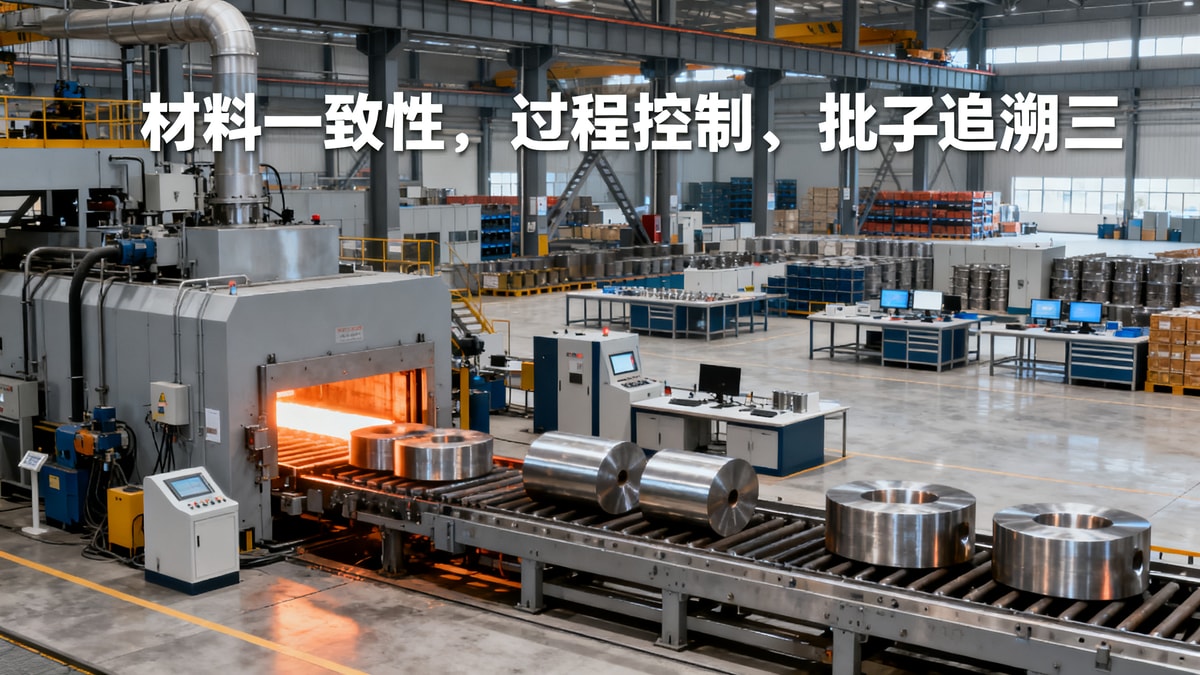
Supplier process controls are just as important as the final report. Ask how raw material is sourced, how heat treatment is monitored, what calibration system governs measurement, and how nonconforming batches are isolated. Industrial metallurgy quality depends on repeatability. A supplier with strong metallurgical discipline will usually show clear route cards, furnace records, traceability controls, and documented corrective action methods.
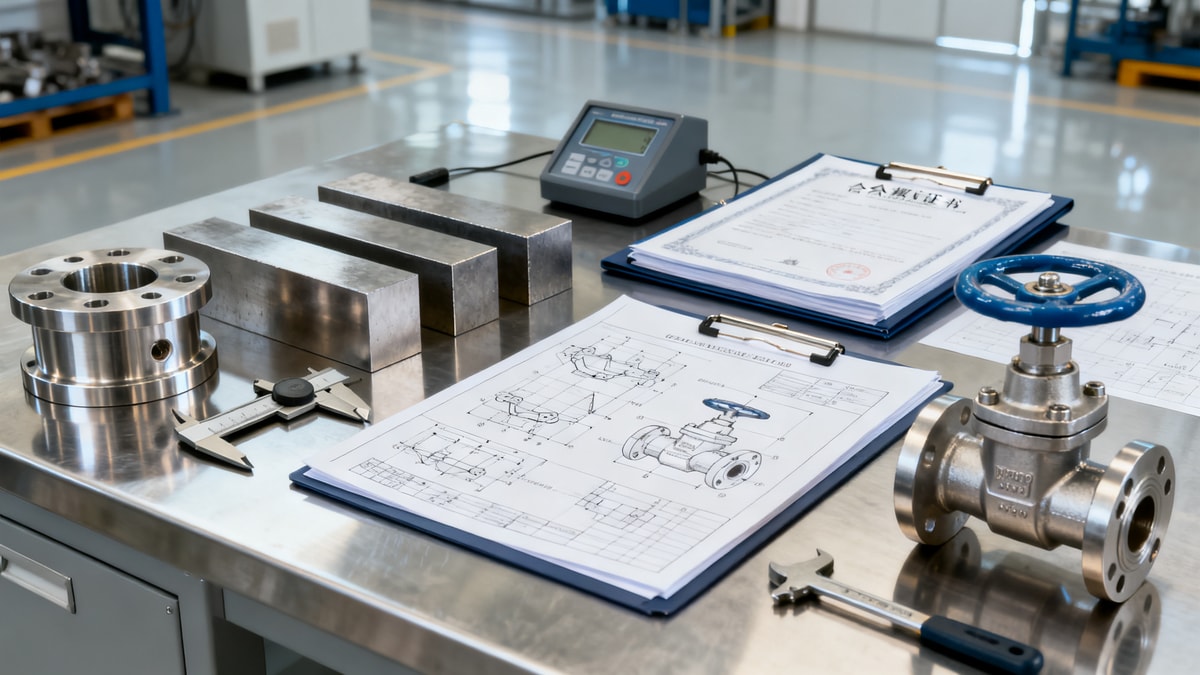
Where lifecycle impact is high, requesting a manufacturing dossier is often justified. This may include chemical analysis, heat number traceability, heat treatment charts, NDT reports, dimensional inspection, coating records, and certificates aligned with CE, UL, ISO, or project mandates where applicable. For global sourcing, this documentation helps close the gap between theoretical specification and field confidence.
How can teams balance lifespan, cost, and sourcing practicality without overengineering?
The goal is not always to choose the most advanced alloy. It is to choose the industrial metallurgy solution that delivers the lowest risk-adjusted lifecycle cost. In some applications, that means upgrading material grade. In others, it means tightening heat treatment control, changing surface treatment, improving inspection, or redesigning a local stress concentration while keeping the same base alloy.
A practical decision framework starts with five questions: What is the primary damage mechanism? What failure consequence is acceptable? Which property actually limits life? What process variation is realistic in the supply chain? And what verification evidence is necessary before release? These questions keep procurement from drifting into either under-specification or unnecessary metallurgical complexity.
Overengineering often appears when teams specify premium corrosion-resistant or high-strength materials for moderately demanding service without validating the true exposure profile. Underengineering appears when buyers substitute “equivalent” grades that match chemistry loosely but differ in toughness, cleanliness, or heat treatment response. Industrial metallurgy decisions become defensible when the chosen specification is tied to clear service assumptions, maintenance expectations, and inspection strategy.
FAQ checklist before final selection
What should be clarified first when moving toward sourcing or technical approval?
Before approving a supplier or finalizing a purchase, technical evaluators should clarify the actual operating envelope, expected design life, maintenance philosophy, and failure consequence level. These four points define how rigorous the industrial metallurgy review must be. A spare part for noncritical intermittent service does not need the same evidence package as a pressure-retaining or high-cycle rotating component.
It is also smart to confirm whether the supplier can support metallurgical consistency across batches, not just one successful sample. Ask about equivalent substitutions, lead-time impact of premium alloys, repairability, weld procedure limitations, and the availability of third-party inspection. If a part will operate in aggressive media or under thermal fatigue, request application-specific validation rather than relying on broad catalog claims.
In high-value industrial environments, industrial metallurgy should be treated as a reliability strategy, not a background material note. If you need to confirm a specific route, parameters, timeline, quotation basis, or supplier capability, start by discussing service conditions, dominant failure modes, required standards, inspection scope, and expected lifecycle economics. Those conversations usually reveal whether a proposed material solution is truly fit for purpose.
Technical Specifications
Expert Insights

Chief Security Architect
Dr. Thorne specializes in the intersection of structural engineering and digital resilience. He has advised three G7 governments on industrial infrastructure security.
Related Analysis
- May 04, 2026When Components & Metals bulk order pricing stops being cheaperAuthor :Heavy Industry Strategist
- May 04, 2026What makes an Instruments & Measurement supplier dependableAuthor :Precision Metrology Expert
- May 04, 2026How to assess an Environment & Ecology exporter by documentationAuthor :Environmental Engineering Director
Core Sector // 01
Security & Safety
- When Components & Metals bulk order pricing stops being cheaperAuthor :Heavy Industry Strategist

- What a Components & Metals manufacturer should prove firstAuthor :Heavy Industry Strategist

- How metallurgical engineering manufacturers improve consistencyAuthor :Heavy Industry Strategist

- Why Components & Metals specs break sourcing plansAuthor :Heavy Industry Strategist

- How to vet a closed die forging parts supplier fastAuthor :Heavy Industry Strategist

- Closed die forging parts or casting parts for high loads?Author :Heavy Industry Strategist

- Industrial metallurgy choices that affect part lifespanAuthor :Heavy Industry Strategist

- Why investment casting manufacturer quotes vary so muchAuthor :Heavy Industry Strategist