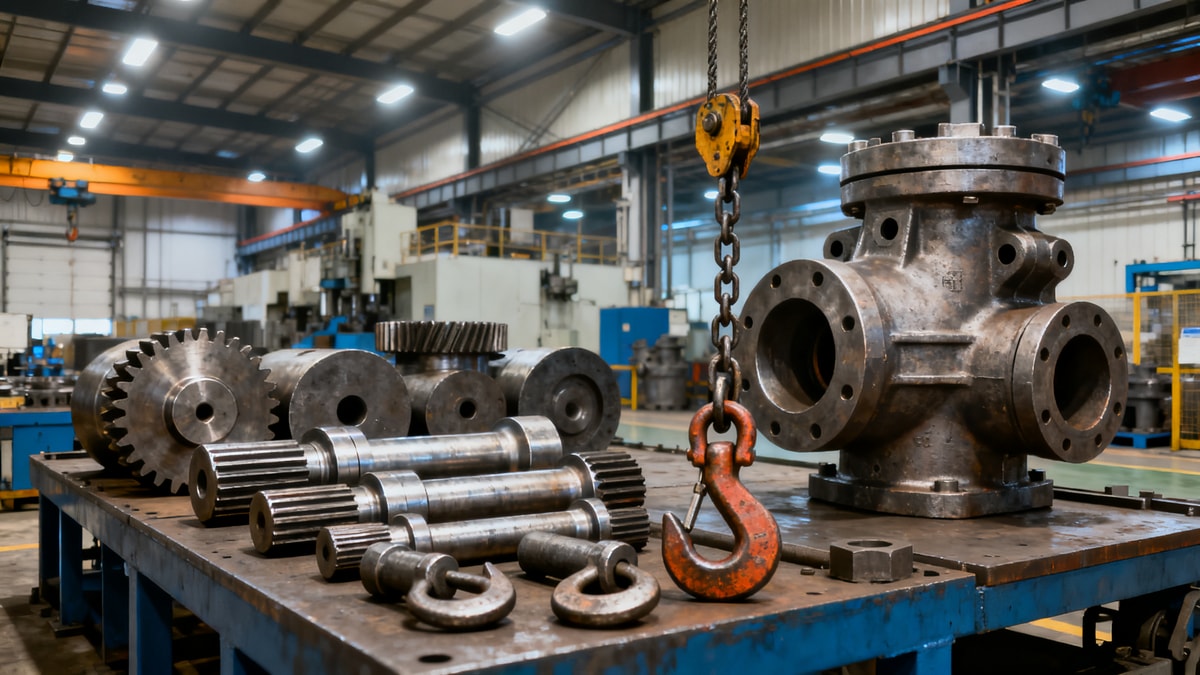
How to vet a closed die forging parts supplier fast
Author
Date Published
Reading Time
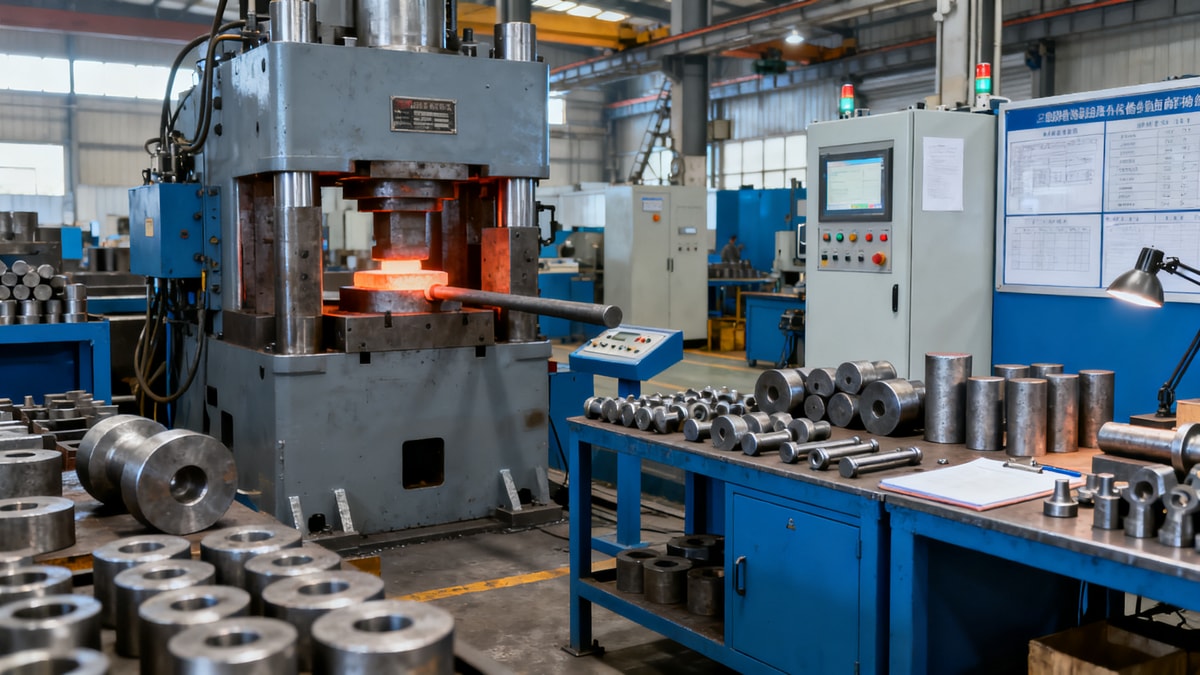
Choosing a reliable closed die forging parts supplier can make or break your procurement timeline, quality targets, and compliance goals. For buyers under pressure to move fast, the challenge is knowing which supplier truly has the tooling expertise, material control, certifications, and production consistency to support critical industrial applications. This guide shows how to vet suppliers quickly and confidently without sacrificing due diligence.
For most procurement teams, the core search intent behind “How to vet a closed die forging parts supplier fast” is practical, not academic. Buyers want a faster way to shortlist capable suppliers, avoid quality and delivery failures, and reduce sourcing risk before placing RFQs, samples, or production orders.
The good news is that fast vetting does not mean shallow vetting. In closed die forging, a few specific signals tell you much more than a long generic supplier profile ever will. If you focus on process capability, tooling discipline, material traceability, quality systems, and application fit, you can identify serious suppliers quickly and eliminate weak ones early.
What procurement teams should check first when evaluating a closed die forging parts supplier
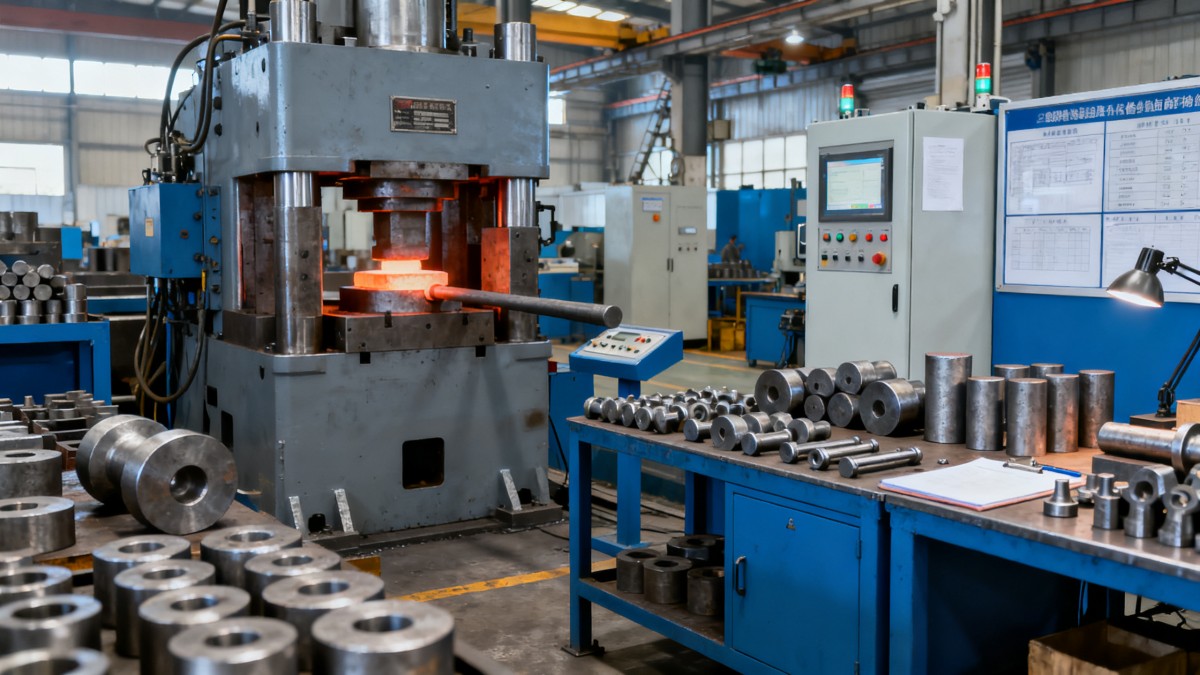
If time is limited, start with the factors most likely to affect supply risk: part complexity fit, material experience, tooling capability, inspection resources, lead time realism, and export documentation readiness. These six areas usually reveal whether a supplier can support your project or is simply trying to win the quote.
A credible closed die forging parts supplier should be able to explain what types of parts they routinely forge, their typical weight range, dimensional tolerances, alloy families, heat treatment options, and secondary machining support. If they cannot describe their process in concrete terms, they are unlikely to control it well.
Ask for evidence, not marketing claims. A useful first-screen package should include company certifications, sample inspection reports, material certificates, photos or videos of forging and die-making equipment, and examples of similar exported parts. Serious suppliers usually have this ready.
For industrial buyers, speed comes from knowing what to ignore. Do not spend too much time on polished brochures, vague capacity numbers, or broad statements like “high quality” and “competitive price.” Instead, look for operational proof that the supplier can make your part consistently and document it properly.
Understand whether the supplier truly fits your part and application
Not every forging company is the right fit for every project. Some suppliers are strong in automotive volumes but weak in low-volume industrial runs. Others are good at carbon steel brackets yet lack experience with alloy steel, stainless steel, or high-integrity safety parts.
Start by matching your requirements to the supplier’s actual production profile. Ask what percentage of their business comes from closed die forging versus open die forging, casting, or machining. If closed die forging is only a small side business, process depth may be limited.
Then verify application familiarity. A supplier that understands parts for valves, flanges, power transmission, construction equipment, mining, or fluid handling will usually ask better technical questions. They should be able to discuss grain flow, load direction, flash control, draft angles, die wear, and machining allowances in relation to end use.
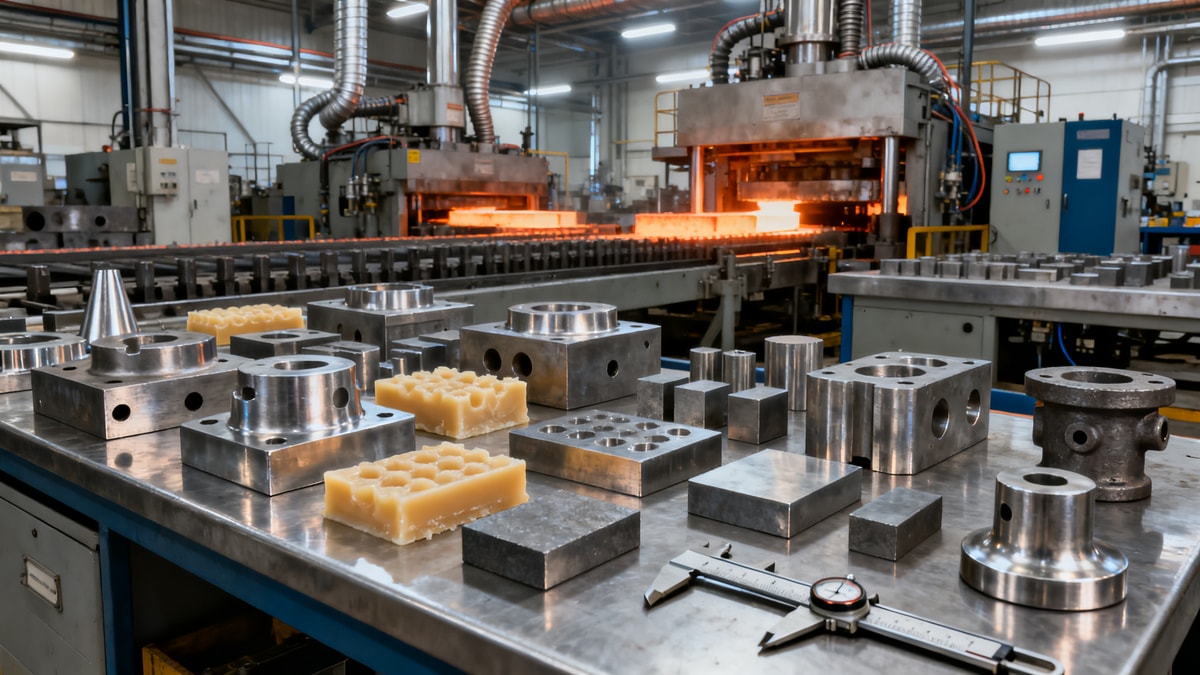
Buyers should also check whether the supplier’s equipment size matches the part. Hammer or press tonnage, billet size range, trimming capability, and finishing capacity matter. A supplier using equipment near its limit may still quote the job, but consistency and lead time can suffer.
If your part is safety-critical or used in harsh conditions, ask how they manage defects such as laps, underfill, scale-related surface issues, die mismatch, or internal discontinuities. Their answer will tell you whether they think like a production engineer or only like a salesperson.
How to verify manufacturing capability without a long audit cycle
When an on-site audit is not immediately possible, remote vetting needs structure. The fastest approach is to run a capability interview built around your part drawing and quality requirements. This can often expose weak suppliers in a single call.
Send a controlled RFQ package with drawing, material grade, annual volume, required standards, heat treatment needs, machining scope, testing requirements, and target delivery terms. Then compare how suppliers respond. Strong suppliers usually identify forging-specific concerns quickly, such as parting line location, fiber flow orientation, die development time, or stock optimization.
Ask for a process flow from raw material intake to final shipment. A dependable closed die forging parts supplier should be able to outline billet preparation, heating, forging, trimming, heat treatment, shot blasting or cleaning, machining if applicable, inspection, marking, packing, and traceability records.
Video verification can also save time. Request a live video walkthrough of the forging line, die storage, tool room, inspection area, raw material identification method, and finished goods warehouse. A recorded marketing video is far less useful than a live, unscripted session where you can ask questions in real time.
Also ask who makes the dies and who owns the tooling process. In closed die forging, tooling quality strongly affects repeatability, scrap rate, and dimensional stability. If the supplier outsources die making without close engineering control, that is a risk worth noting early.
Certifications matter, but process control matters more
Many buyers begin with ISO 9001, and that is a sensible baseline. Depending on your industry, you may also need IATF 16949, ISO 14001, PED-related controls, or customer-specific compliance requirements. But certificates alone do not guarantee strong forging discipline.
What matters more is whether the supplier can show how quality is built into production. Ask for incoming material verification procedures, in-process inspection checkpoints, first article inspection practices, calibration records, nonconformance handling, and corrective action examples.
Material traceability is especially important. A competent supplier should be able to link raw material heat numbers to production lots and final shipped parts, whether through tags, batch records, ERP systems, or traveler documents. If traceability breaks between forging, heat treatment, and machining, your compliance exposure rises.
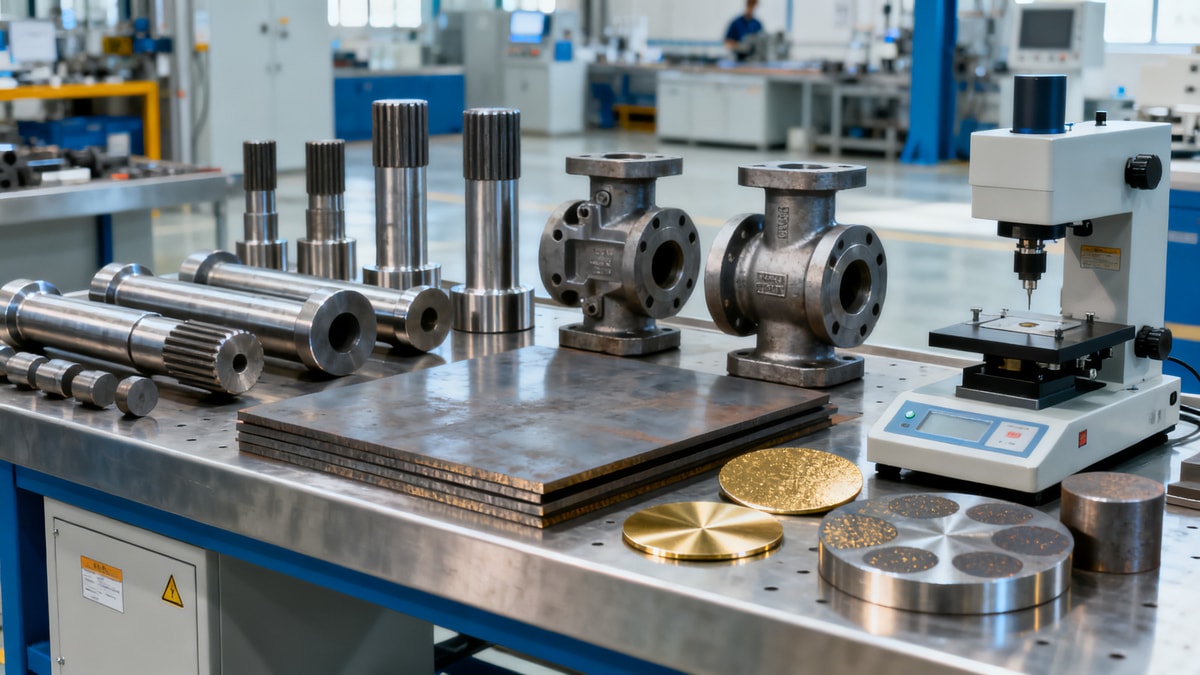
For critical parts, ask about NDT capability and outsourced laboratory control. Depending on the application, relevant checks may include ultrasonic testing, magnetic particle inspection, hardness testing, microstructure review, mechanical testing, or dimensional verification with CMM support. The right supplier will explain not only what tests are available, but when and why they are used.
Request redacted examples of certificates of conformity, inspection reports, and material test reports from past shipments. This is one of the fastest ways to confirm whether documentation quality matches the seriousness of your procurement standards.
Tooling, lead times, and sampling: where many projects go wrong
In closed die forging, supplier vetting often fails because buyers focus too much on piece price and not enough on launch discipline. A low unit quote means little if die development drags on, samples fail repeatedly, or dimensional variation creates downstream machining losses.
Ask for a detailed tooling and sample timeline. It should cover die design review, die manufacturing, trial forging, sample inspection, corrective adjustments, PPAP or first article submission if required, and mass production release. Vague promises like “fast delivery” are not enough.
It is also important to confirm how the supplier handles die maintenance and life tracking. Dies wear, especially in demanding alloys and high-volume runs. Without preventive maintenance and revision control, production drift is likely. Ask how they monitor wear and when they decide to rework or replace dies.
For new suppliers, a pilot order or sample batch is often the best risk-control step. Use it to evaluate more than dimensional results. Review communication speed, deviation reporting, packaging quality, marking accuracy, and documentation completeness. These operational habits usually predict future performance better than the quotation stage does.
If machining is part of the scope, make sure the forging supplier and machine shop responsibilities are clearly defined. Tolerance stack-up, machining allowance, datum strategy, and surface condition should be agreed before tools are cut. Otherwise, each party may blame the other when issues appear.
Commercial signals that reveal whether a supplier is dependable
Technical capability is only half of supplier vetting. Procurement teams also need to know whether the company is commercially reliable. Fast evaluation here can prevent long-term headaches.
Look closely at quote quality. A dependable supplier usually provides clear assumptions on material grade, weight, tooling cost, minimum order quantity, sampling charges, lead time, Incoterms, payment terms, and exclusions. A messy or incomplete quote often reflects deeper execution problems.
Responsiveness matters too. Suppliers that answer technical questions precisely, confirm revision levels, and flag missing information early are easier to work with in production. Slow or generic responses during RFQ often become worse after PO placement.
Check export experience if you source internationally. Ask which countries they ship to, what export documents they can provide, how they pack forged components against corrosion or impact, and how they manage labeling and customs requirements. A good factory can still be a poor export partner if logistics control is weak.
It is also wise to request customer references, especially for similar industries or part families. While references are naturally selective, they can still help validate delivery consistency, communication quality, and problem resolution speed.
A fast vetting checklist buyers can actually use
To speed up decision-making, procurement teams should use a weighted checklist rather than relying on intuition. The goal is not to create bureaucracy. It is to compare suppliers against the factors that truly drive risk, cost, and launch success.
Include these criteria in your first-round scorecard: closed die forging specialization, similar part experience, alloy expertise, press or hammer fit, in-house die capability, machining support, heat treatment control, traceability system, inspection equipment, certification status, export readiness, sample lead time, communication quality, and quote clarity.
Then assign practical pass-fail thresholds. For example, if a supplier cannot provide traceable material documentation, cannot explain its die development process, or cannot show inspection capability relevant to your tolerances, it should not proceed to the next round.
For many buyers, the best workflow is this: first, desk-based screening; second, technical RFQ review; third, live capability call; fourth, sample or pilot order; fifth, commercial negotiation; and finally, approval for regular sourcing. This sequence balances speed with control.
Remember that the “best” closed die forging parts supplier is not always the largest or the cheapest. It is the one whose capability aligns with your part, quality expectations, compliance needs, and delivery model with the least hidden risk.
Common red flags that should stop the process immediately
Some warning signs deserve immediate attention. One is overconfidence without technical detail. If a supplier says yes to every requirement but struggles to discuss material flow, tooling, inspection, or process limitations, be cautious.
Another red flag is weak documentation discipline. Missing revision control, inconsistent certificates, unclear test records, or poor traceability usually indicate system weakness, not just administrative oversight.
Be careful with unrealistic lead times, especially for new dies. Tooling, sampling, and process stabilization take time. A quote far faster than the market norm may mean corners will be cut or commitments will later slip.
Finally, watch for mismatch between declared capability and actual evidence. If the website shows advanced forging operations but the supplier avoids live video, cannot share shop-floor examples, or provides generic photos, verification should pause until proof is clearer.
Final takeaway: move fast, but verify the right things
If you need to vet a closed die forging parts supplier fast, the smartest approach is to narrow your focus to the few factors that truly predict performance: process fit, tooling control, material traceability, inspection strength, launch discipline, and communication quality.
Procurement teams do not need a slow, exhaustive audit to make a strong first decision. They need the right questions, the right evidence, and a consistent comparison method. Suppliers that can answer clearly, document thoroughly, and demonstrate relevant experience usually stand out quickly.
In industrial sourcing, speed is valuable only when it reduces time without increasing risk. By applying a structured vetting process, buyers can shortlist dependable forging partners faster, protect quality and compliance goals, and make sourcing decisions with much greater confidence.
Technical Specifications
Expert Insights

Chief Security Architect
Dr. Thorne specializes in the intersection of structural engineering and digital resilience. He has advised three G7 governments on industrial infrastructure security.
Related Analysis
- May 04, 2026When Components & Metals bulk order pricing stops being cheaperAuthor :Heavy Industry Strategist
- May 04, 2026What makes an Instruments & Measurement supplier dependableAuthor :Precision Metrology Expert
- May 04, 2026How to assess an Environment & Ecology exporter by documentationAuthor :Environmental Engineering Director
Core Sector // 01
Security & Safety
- When Components & Metals bulk order pricing stops being cheaperAuthor :Heavy Industry Strategist

- What a Components & Metals manufacturer should prove firstAuthor :Heavy Industry Strategist

- How metallurgical engineering manufacturers improve consistencyAuthor :Heavy Industry Strategist

- Why Components & Metals specs break sourcing plansAuthor :Heavy Industry Strategist

- How to vet a closed die forging parts supplier fastAuthor :Heavy Industry Strategist

- Closed die forging parts or casting parts for high loads?Author :Heavy Industry Strategist

- Industrial metallurgy choices that affect part lifespanAuthor :Heavy Industry Strategist

- Why investment casting manufacturer quotes vary so muchAuthor :Heavy Industry Strategist