What makes foundational engineering harder for offshore structures?
Author
Date Published
Reading Time
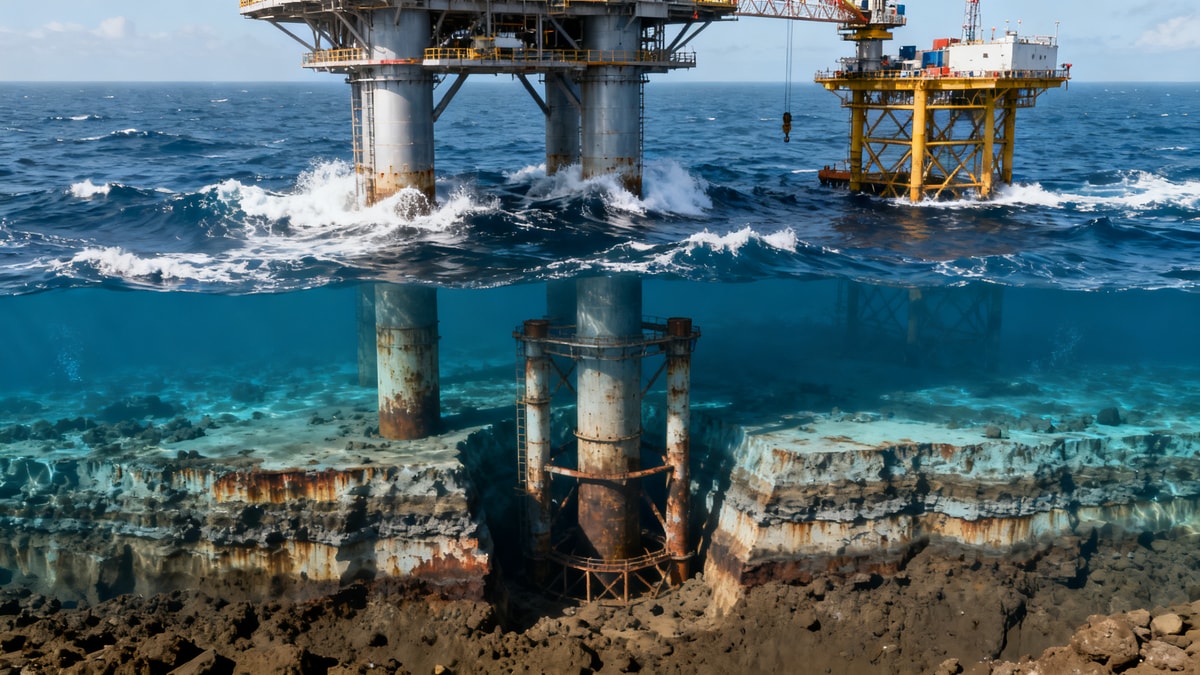
Foundational engineering for offshore structures is harder because every decision must withstand relentless waves, corrosive seawater, shifting seabeds, and extreme loading over decades of service. For project managers and engineering leads, these challenges affect not only design integrity but also cost, schedule, compliance, and long-term risk—making early technical judgment critical to offshore project success.
Why foundational engineering for offshore structures becomes a high-risk management issue
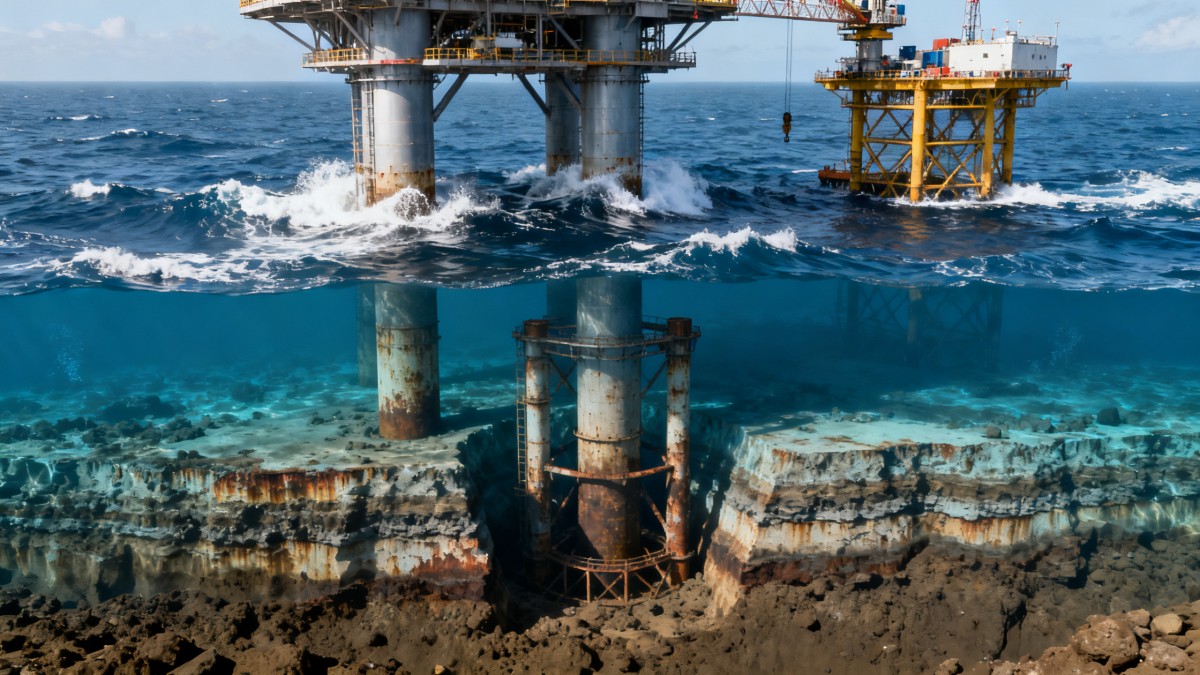
In onshore construction, teams can often investigate soil, mobilize equipment, revise designs, and manage logistics with relative predictability. Foundational engineering for offshore structures changes that equation. The foundation must perform in a remote, submerged, and constantly moving environment where inspection is harder, installation windows are shorter, and design mistakes are far more expensive to correct.
For project leaders, this is not only a geotechnical problem. It is a multidisciplinary risk package involving structural loading, marine operations, corrosion exposure, environmental permits, survey quality, fabrication tolerances, and supply-chain coordination. A small error in seabed characterization or pile drivability assumptions can cascade into vessel standby costs, re-engineering, and delayed commissioning.
This is why foundational engineering for offshore structures demands stronger front-end planning than many land-based projects. The project team must align civil, marine, mechanical, environmental, electrical, and compliance functions earlier than usual, because the foundation influences everything above it: jacket stability, turbine alignment, platform fatigue life, cable routing, and maintenance access.
- The seabed is not directly visible during normal operations, so uncertainty is inherently higher.
- Installation often depends on specialized vessels, weather windows, and port logistics, raising schedule sensitivity.
- Foundation failure affects not just repair cost but environmental exposure, safety, and downstream production loss.
- Verification and maintenance are more complex, so the initial design margin and material choices matter more.
What makes the offshore foundation environment fundamentally different?
The environment combines cyclic loading, aggressive corrosion, marine growth, sediment mobility, and installation uncertainty. Unlike a static land foundation, offshore systems must survive repetitive wave and current action, storm events, possible vessel impact, and long-term fatigue. Even where the average load looks manageable, repeated cycles can govern design life.
In practical terms, foundational engineering for offshore structures is harder because the design must account for uncertainty in both the ground and the loading. The seabed may include layered clays, dense sands, carbonate soils, boulders, or scour-prone zones. At the same time, environmental loading may vary seasonally and operationally over decades.
Which technical factors create the biggest design and delivery challenges?
Project teams often ask whether the main difficulty lies in the structure, the marine environment, or the ground. In reality, foundational engineering for offshore structures becomes difficult because those three systems interact. A foundation type that works geotechnically may be hard to install. A design that installs quickly may drive up corrosion protection or fatigue demands. A conservative concept may solve risk but exceed vessel or budget constraints.
The table below summarizes the most common technical drivers and why they matter to project managers responsible for budget, risk, and schedule control.
For management teams, the key message is that offshore foundations are rarely optimized by one parameter alone. The best solution is usually the one that balances geotechnical performance, constructability, vessel availability, inspection access, and long-term integrity rather than minimizing only initial material cost.
How loading combinations become more severe offshore
Offshore loading is multi-directional and time-dependent. Foundations may face axial compression, uplift, overturning moment, cyclic lateral loads, and accidental loads over the same service life. This is especially relevant for wind installations, jackets, mooring systems, and offshore substations, where stiffness and displacement criteria can be as important as ultimate strength.
Project managers should also consider temporary phases. Loads during transport, lifting, upending, driving, grouting, or preloading can differ materially from in-service conditions. Many budget overruns occur because the permanent design is studied in depth while temporary marine operations are under-scoped early in procurement.
Why geotechnical investigation quality directly affects CAPEX
Foundational engineering for offshore structures depends heavily on site investigation quality. Inadequate cone penetration testing, limited borehole coverage, or weak laboratory characterization can force conservative assumptions. Conservative design may appear safe, but it often increases steel weight, embedment length, installation energy, and vessel time.
Better data does not guarantee a cheaper foundation, but it improves design confidence. That confidence supports tighter procurement specifications, fewer claims, and stronger planning for drivability, suction behavior, or ground improvement needs.
How do common offshore foundation options compare?
Selection is one of the most difficult parts of foundational engineering for offshore structures because no single concept fits every water depth, soil profile, and installation strategy. Project teams typically compare driven piles, monopiles, suction caissons, gravity-based solutions, and drilled systems based on ground conditions, equipment access, environmental constraints, and lifecycle inspection burden.
The comparison below is a practical planning tool for early-stage screening. Final decisions should still be validated through detailed geotechnical, structural, and marine analysis.
This comparison shows why procurement cannot be isolated from engineering. A concept that reduces acoustic impact may increase survey demands. A foundation that minimizes steel may require higher seabed preparation cost. Project teams should therefore evaluate total installed cost and integrity exposure, not only unit fabrication price.
What project managers should ask during concept selection
- What is the confidence level in the geotechnical data set, and where are the major uncertainty zones?
- Can the selected concept be installed with realistically available vessels, hammers, suction spreads, or lifting capacity?
- How do fatigue, scour, and corrosion allowances change the lifecycle economics?
- What are the environmental and permitting implications of the installation method?
- What are the consequences if the soil profile differs from the baseline during offshore execution?
What should procurement and project teams evaluate before placing orders?
Foundational engineering for offshore structures often fails at the interface between design intent and procurement reality. Specifications may define capacity but omit tolerances, testing scope, material traceability, coating zones, weld inspection criteria, or transport restraints. That gap creates claims, change orders, and field modifications later.
A disciplined procurement package should cover technical performance, documentation, compliance, logistics, and verification. For EPC teams and industrial buyers, this is where intelligence-driven support from a specialist platform such as Global Industrial Core becomes valuable: not as a generic vendor list, but as a structured decision framework across mechanical components, metallurgy, measurement, safety, and environmental risk.
Procurement checklist for offshore foundation packages
- Confirm design basis inputs, including water depth, metocean criteria, soil model, target design life, and temporary installation loads.
- Define material grades, toughness requirements, corrosion allowance, coating system zones, and cathodic protection interfaces.
- Specify dimensional tolerances, weld quality levels, non-destructive examination scope, and hold points for client or third-party inspection.
- Align fabrication packaging with transport and lifting strategy to avoid rehandling or offshore fit-up complications.
- Require documentation for raw material traceability, test certificates, procedure qualifications, and installation records.
How standards and compliance affect decisions
Offshore work is shaped by a network of standards rather than one single rulebook. Depending on location and asset class, teams may need to align with ISO frameworks, classification society requirements, marine warranty expectations, electrical safety interfaces, environmental approvals, and client-specific specifications. Foundational engineering for offshore structures therefore requires document control discipline from the beginning.
Project managers should also remember that compliance is not only about final certification. It affects procurement lead times, inspection plans, witness points, and approval workflows. Missing a required procedure qualification or material document can stop fabrication just as effectively as a design error.
Where do costs escalate, and what alternatives deserve early review?
In offshore work, cost escalation rarely comes from a single visible line item. It usually emerges from interactions between weather downtime, vessel day rates, conservative overdesign, seabed remediation, rework, and documentation delays. That is why foundational engineering for offshore structures should be assessed through a total project lens rather than a fabrication-only lens.
The table below highlights typical cost drivers and practical alternatives that may be worth screening during pre-FEED or early EPC planning.
The most cost-effective offshore foundation is often the one that reduces uncertainty earliest. Spending more on surveys, metocean data review, or fabrication quality control can lower total exposure when compared with redesign offshore, vessel idle time, or post-installation remedial works.
Common false economies to avoid
- Reducing investigation scope to save early budget, then paying for oversized foundations and construction contingencies later.
- Selecting lower-cost materials without full consideration of splash-zone durability, fatigue detail sensitivity, or coating maintenance access.
- Treating installation engineering as a subcontractor detail instead of a core design input.
- Underestimating document review cycles for test certificates, welding records, and marine assurance approvals.
What mistakes are most common in foundational engineering for offshore structures?
Is stronger always safer?
Not necessarily. Adding steel or embedment can improve capacity, but it may also increase fabrication difficulty, transport complexity, and installation energy requirements. In foundational engineering for offshore structures, safety comes from system fit, not from one-dimensional oversizing. Stiffness, fatigue behavior, drivability, and inspectability must all remain in balance.
Can one foundation concept be standardized across multiple offshore sites?
Standardization can help procurement and fabrication, but offshore sites rarely behave identically. Soil layering, scour potential, water depth, and environmental loading can change enough to make a repeat concept inefficient or risky. Standardization works best when paired with clear site-specific adjustment rules and a disciplined review of geotechnical boundaries.
How early should procurement engage with engineering?
Earlier than many teams expect. Procurement should be involved during concept screening, not only after design freeze. Vessel availability, steel mill lead times, coating capacity, testing hold points, and regional compliance requirements can all shape the most viable solution. This is especially true when project deadlines are tight and contractor interfaces are numerous.
What signals suggest the project is under-scoped?
Warning signs include weak seabed data coverage, unclear fatigue criteria, missing temporary load cases, undefined corrosion strategy, vague inspection scope, and unrealistic vessel assumptions. If these items remain open late into procurement, foundational engineering for offshore structures is likely carrying hidden cost and schedule risk.
Why informed project teams use specialist intelligence before committing to suppliers
Offshore foundations sit at the intersection of structural mechanics, marine execution, metallurgy, measurement, environmental exposure, and safety compliance. Few teams can afford fragmented decision-making across these domains. That is where Global Industrial Core supports industrial buyers and EPC leaders: by helping them compare technical options, interpret compliance expectations, and identify sourcing risks across the foundational systems that keep critical assets operational.
For project managers, the value is practical. Better intelligence supports more accurate parameter confirmation, clearer RFQ packages, stronger vendor evaluation, and earlier detection of lifecycle cost traps. Whether the issue is material selection, corrosion mitigation, measurement requirements, or documentation discipline, a structured decision process reduces uncertainty before it becomes offshore rework.
Why choose us
Global Industrial Core is built for teams making high-stakes industrial decisions where foundation performance, compliance, and delivery reliability cannot be separated. We help EPC contractors, facility managers, and procurement leaders evaluate foundational engineering for offshore structures through a cross-disciplinary lens that includes safety, measurement, electrical interfaces, environmental constraints, and mechanical integrity.
You can consult us for practical decision support on parameter confirmation, foundation concept screening, material and corrosion considerations, documentation expectations, supplier comparison logic, delivery schedule risks, certification questions, and quotation alignment. If your team is preparing a bid, reviewing a redesign, or narrowing a sourcing shortlist, we can help structure the technical and commercial questions before commitments are made.
Contact us when you need support with offshore foundation option selection, RFQ preparation, lead-time evaluation, sample or document requirements, compliance checkpoints, or coordination between engineering and procurement. In offshore projects, clarity gained early is often the most valuable cost control available.
Technical Specifications
- Hidden Environment & Ecology cost after project approvalAuthor :Environmental Engineering Director
- When does an Environment & Ecology impact assessment need updating?Author :Environmental Engineering Director
- Security & Safety standards that affect product approval speedAuthor :Safety Compliance Lead
Expert Insights

Chief Security Architect
Dr. Thorne specializes in the intersection of structural engineering and digital resilience. He has advised three G7 governments on industrial infrastructure security.
Related Analysis
- May 07, 2026Hidden Environment & Ecology cost after project approvalAuthor :Environmental Engineering Director
- May 07, 2026When does an Environment & Ecology impact assessment need updating?Author :Environmental Engineering Director
- May 07, 2026Security & Safety standards that affect product approval speedAuthor :Safety Compliance Lead
Core Sector // 01
Security & Safety
- What makes foundational engineering harder for offshore structures?Author :Heavy Industry Strategist

- Foundational engineering choices that affect high-rise stability laterAuthor :Heavy Industry Strategist

- How to spot a dependable Components & Metals manufacturer earlyAuthor :Heavy Industry Strategist

- Components & Metals: when does bulk buying reduce risk?Author :Heavy Industry Strategist

- Foundational engineering solutions for bridges that cut rework riskAuthor :Heavy Industry Strategist

- When a Components & Metals manufacturer becomes a supply riskAuthor :Heavy Industry Strategist

- How to compare Components & Metals suppliers for bulk ordersAuthor :Heavy Industry Strategist

- Metallurgical Engineering Solutions for Corrosion Problems That ReturnAuthor :Heavy Industry Strategist