Foundational engineering choices that affect high-rise stability later
Author
Date Published
Reading Time
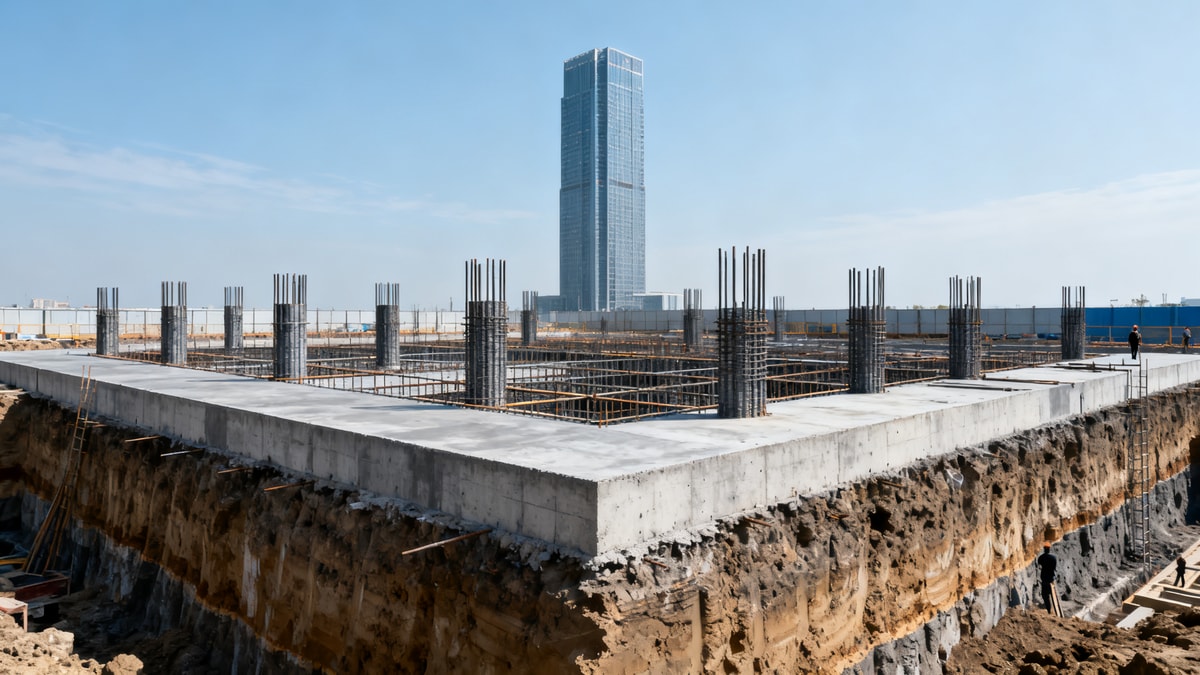
Early decisions in foundational engineering for high-rise buildings shape far more than initial constructability—they directly influence long-term stability, load performance, settlement risk, and lifecycle resilience. For technical evaluators, understanding how soil data, foundation type, material selection, and compliance criteria interact at the design stage is essential to preventing costly structural issues later.
Why a checklist approach works best for technical evaluation
In high-rise delivery, late-stage structural symptoms rarely begin late. They usually start with early assumptions that were not tested thoroughly enough. That is why technical reviewers should assess foundational engineering for high-rise buildings through a structured checklist rather than through isolated calculations or supplier claims. A checklist makes hidden dependencies visible: the geotechnical model affects pile design, pile design affects load transfer, load transfer affects differential settlement, and all of these influence long-term serviceability.
For EPC teams, consultants, and procurement-led evaluators, the goal is not simply to confirm that a foundation can stand up today. The goal is to verify whether the selected system will remain stable under construction sequencing, groundwater variation, seismic input, thermal cycles, neighboring excavation, and future usage intensity. A disciplined review process improves design quality, procurement alignment, and risk forecasting.
First-pass checklist: what to confirm before comparing foundation schemes
Before reviewing raft, mat, pile, caisson, or hybrid options, technical evaluators should confirm whether the design inputs are complete and dependable. This first-pass screen is often more valuable than jumping directly into structural modeling.
- Verify geotechnical investigation depth and density. Borehole spacing, sampling quality, in-situ testing, and laboratory correlation must be adequate for the tower footprint, podium area, and adjacent interfaces.
- Check whether soil variability has been mapped laterally and vertically. A strong average soil report can still hide weak lenses, fill zones, collapsible strata, or abrupt stiffness transitions.
- Confirm groundwater behavior, not only static groundwater level. Seasonal fluctuation, artesian pressure, seepage pathways, and construction-stage dewatering effects all matter.
- Review actual load paths. Separate gravity loads, overturning effects, lateral drift demands, transfer structure concentrations, and basement interaction.
- Determine whether adjacent buildings, utilities, tunnels, retaining walls, or future developments impose movement limits stricter than code minimums.
- Confirm applicable standards and approval requirements, including seismic, fire, durability, settlement, material certification, and regional construction controls.
Core evaluation criteria for foundational engineering for high-rise buildings
1. Soil model quality and interpretive confidence
The most important technical question is not “What foundation type is preferred?” but “How certain are we about the ground behavior under all key loading conditions?” Foundational engineering for high-rise buildings depends on reliable interpretation of bearing strata, compressibility, consolidation rate, shear strength, and liquefaction potential where relevant. Technical evaluators should ask whether the report includes enough data to support finite element modeling, settlement prediction, and construction-phase behavior. If the soil profile is highly variable, the right decision may be additional investigation, not immediate design optimization.
2. Foundation system suitability, not just theoretical capacity
A deep pile solution may provide excellent capacity but still perform poorly if installation tolerances, vibration effects, or negative skin friction are not addressed. A raft may be cost-efficient but unsuitable where differential settlement tolerance is tight. Hybrid systems such as piled rafts can improve performance, yet they require careful coordination between geotechnical assumptions and structural redistribution models. In foundational engineering for high-rise buildings, the best option is the one that balances capacity, stiffness, constructability, inspection access, and long-term monitoring feasibility.
3. Differential settlement tolerance
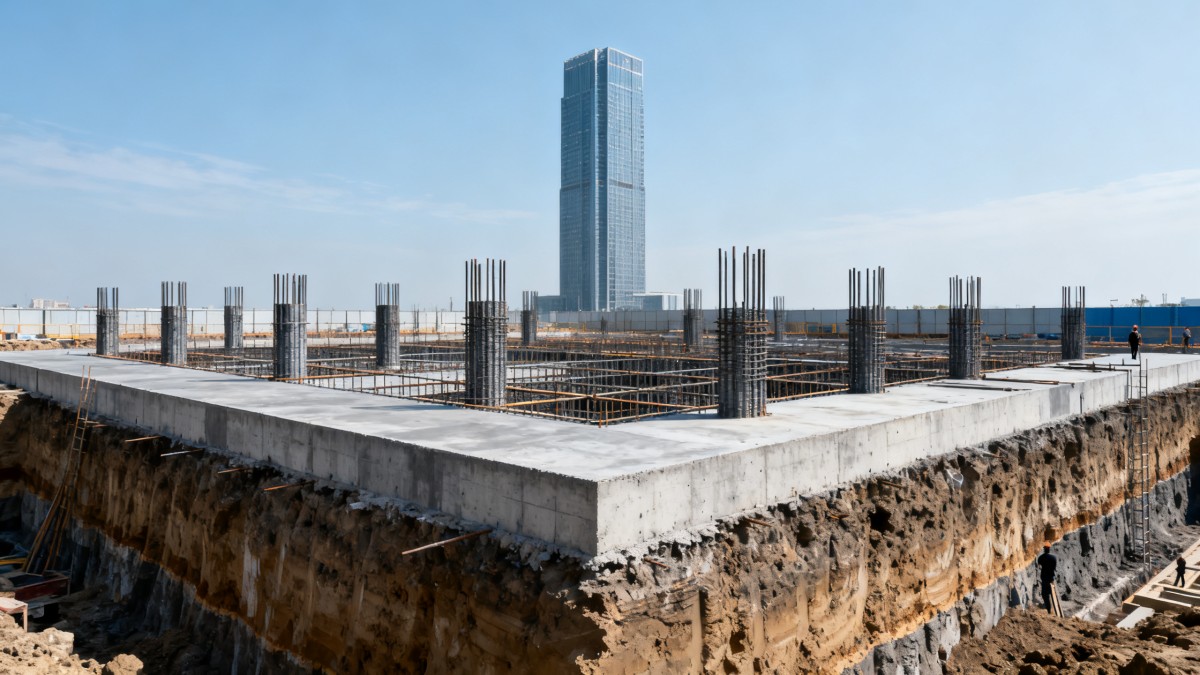
Many projects pass ultimate capacity checks but underestimate differential settlement. For a tall structure, even modest uneven movement can affect façade alignment, elevator rails, MEP connections, transfer beams, and floor flatness. Evaluators should request predicted total settlement, angular distortion, time-dependent settlement, and sensitivity ranges based on alternate soil parameters. Review whether the superstructure has enough tolerance to absorb movement without service interruption.
4. Lateral stability and overturning resistance
High-rise foundations do more than carry vertical load. They anchor the entire building against wind, seismic action, and torsional effects. The review should include uplift resistance, rocking behavior, pile group interaction, and basement diaphragm contribution where applicable. If the tower includes irregular geometry or transfer levels, the evaluator should look for eccentric loading and local overstress in the foundation block.
5. Material durability under service environment
Concrete strength alone is not enough. Sulfates, chlorides, groundwater chemistry, stray current exposure, freeze-thaw risk, and high-temperature construction conditions can all shorten service life. For foundational engineering for high-rise buildings, durability design should cover concrete mix specification, reinforcement protection, corrosion risk, crack control, and quality assurance testing. Material certificates and compliance records should align with project exposure class and expected design life.
Quick comparison table for technical reviewers
Use the following matrix as a screening tool before requesting deeper calculations or vendor revisions.
Scenario-based checks: what changes by project context
Dense urban sites
In constrained city locations, foundational engineering for high-rise buildings must account for excavation support interaction, vibration restrictions, nearby heritage assets, and utility corridors. Review monitoring plans for settlement markers, inclinometer data, and groundwater movement. A technically sound foundation can still become a project risk if the installation method disturbs neighboring assets.
Coastal or reclaimed land
Sites near the coast often combine aggressive chemical exposure with soft ground and higher water sensitivity. Ask for long-term consolidation assessment, corrosion mitigation details, and any ground improvement assumptions. If reclaimed fill is present, confirm how heterogeneity was tested and whether performance assumptions were validated with trial sections or load tests.
Seismic regions
Seismic review should include liquefaction screening, cyclic degradation, kinematic pile effects, and residual displacement potential. Check whether the chosen system is evaluated for both strength and post-event functionality. Technical evaluators should not accept a simple code checkbox where site-specific dynamic response is critical.
Frequently overlooked items that affect stability later
- Basement and foundation interaction is modeled too simply, especially where retaining walls contribute stiffness.
- Construction sequence changes load distribution before the final structural system is complete.
- Dewatering assumptions are not linked to nearby settlement risk or rebound effects after water recovery.
- Pile integrity testing and proof loading plans are defined too late, reducing corrective options.
- Material substitutions are evaluated on strength only, without checking creep, durability, permeability, or shrinkage impact.
- Tolerance compatibility between foundation works and superstructure installation is not formally reviewed.
Execution advice: documents and evidence to request early
If you are responsible for technical due diligence, procurement review, or design validation, prioritize document completeness. Strong foundational engineering for high-rise buildings is supported by traceable evidence, not only by polished drawings.
- Request the geotechnical baseline report, raw investigation logs, laboratory summaries, and interpreted design parameters.
- Ask for a foundation options study that compares at least two realistic systems on cost, risk, time, and long-term performance.
- Review settlement predictions with sensitivity ranges, not only single-value outputs.
- Obtain material specifications, durability design criteria, and third-party compliance certificates where relevant.
- Confirm QA/QC procedures for pile installation, reinforcement placement, concrete placement, testing, and as-built verification.
- Require a monitoring plan covering excavation, dewatering, foundation installation, and early-service movement tracking.
FAQ for technical evaluators
How early should foundational engineering for high-rise buildings be locked in?
The concept should begin early, but the final system should only be locked after adequate geotechnical evidence, load definition, and construction methodology review are complete. Premature commitment often causes expensive redesign.
Is higher load capacity always the best decision?
No. Capacity without stiffness control, durability, constructability, and settlement management can still produce poor lifecycle outcomes. High-rise performance depends on balanced system behavior.
What is the most common review failure?
Treating the geotechnical report as fixed truth rather than as a model with uncertainty. Good evaluators test assumptions, ranges, and consequences before approving the scheme.
Practical next step for teams moving into design or sourcing
When reviewing foundational engineering for high-rise buildings, start with the evidence chain: site data, assumptions, system alternatives, performance limits, and quality controls. If further validation is needed, prioritize discussions around soil uncertainty, settlement criteria, installation method, durability specification, monitoring scope, construction sequence, approval pathway, and contingency planning. That gives technical evaluators a practical basis for comparing consultants, contractors, and supply partners while reducing the chance that an early foundation shortcut becomes a long-term structural liability.
Technical Specifications
- Hidden Environment & Ecology cost after project approvalAuthor :Environmental Engineering Director
- When does an Environment & Ecology impact assessment need updating?Author :Environmental Engineering Director
- Security & Safety standards that affect product approval speedAuthor :Safety Compliance Lead
Expert Insights

Chief Security Architect
Dr. Thorne specializes in the intersection of structural engineering and digital resilience. He has advised three G7 governments on industrial infrastructure security.
Related Analysis
- May 07, 2026Hidden Environment & Ecology cost after project approvalAuthor :Environmental Engineering Director
- May 07, 2026When does an Environment & Ecology impact assessment need updating?Author :Environmental Engineering Director
- May 07, 2026Security & Safety standards that affect product approval speedAuthor :Safety Compliance Lead
Core Sector // 01
Security & Safety
- What makes foundational engineering harder for offshore structures?Author :Heavy Industry Strategist

- Foundational engineering choices that affect high-rise stability laterAuthor :Heavy Industry Strategist

- How to spot a dependable Components & Metals manufacturer earlyAuthor :Heavy Industry Strategist

- Components & Metals: when does bulk buying reduce risk?Author :Heavy Industry Strategist

- Foundational engineering solutions for bridges that cut rework riskAuthor :Heavy Industry Strategist

- When a Components & Metals manufacturer becomes a supply riskAuthor :Heavy Industry Strategist

- How to compare Components & Metals suppliers for bulk ordersAuthor :Heavy Industry Strategist

- Metallurgical Engineering Solutions for Corrosion Problems That ReturnAuthor :Heavy Industry Strategist