Components & Metals: when does bulk buying reduce risk?
Author
Date Published
Reading Time
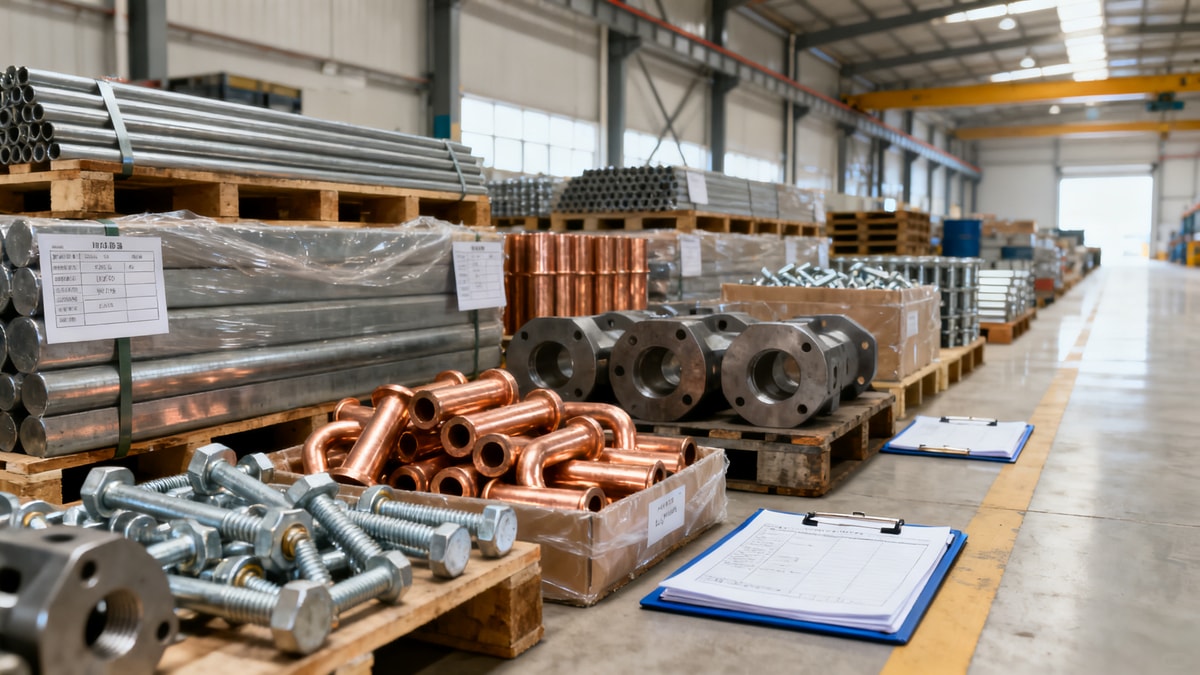
For procurement teams, a Components & Metals bulk order can lower unit costs, but the real question is whether it reduces supply risk. In industrial sourcing, larger volumes only add value when they improve lead-time stability, quality consistency, compliance readiness, and inventory resilience. This article examines when bulk buying becomes a strategic safeguard rather than a hidden liability.
Why procurement teams should use a checklist before approving a Components & Metals bulk order
A large purchase of fasteners, castings, steel sections, copper components, alloy parts, machined items, or fabricated assemblies can look attractive on paper. The quoted price drops, transport becomes more efficient, and supplier attention may improve. Yet for industrial buyers, a Components & Metals bulk order only reduces risk when the order structure matches actual operational exposure.
That is why checklist-based decision-making matters. Procurement is not simply asking whether volume discounts exist. It is asking whether larger commitments reduce the probability of production stoppage, specification deviation, non-conformance, emergency spot buying, or freight escalation. A practical checklist keeps teams focused on measurable decision points instead of optimistic assumptions.
For EPC contractors, plant operators, maintenance teams, and industrial sourcing managers, the right bulk strategy should improve continuity without creating dead stock, cash pressure, or quality exposure. The sections below provide the key checks, scenario differences, common blind spots, and execution steps that should be reviewed before locking in a larger order volume.
Start with these five decision filters
Before comparing suppliers or negotiating price bands, confirm whether the purchase category passes these basic filters. If several of them are weak, a Components & Metals bulk order may increase risk rather than reduce it.
- Demand predictability: Bulk ordering works best when monthly or quarterly consumption is stable. If project schedules shift often, large volume can trap working capital in low-turn inventory.
- Specification stability: If drawings, grades, coatings, tolerances, or standards are likely to change, large lots may become partially unusable.
- Supplier process control: A high-volume order only helps if the supplier can maintain repeatable quality across batches, heat numbers, machining runs, and packaging lots.
- Storage resilience: Metals and components need proper preservation against corrosion, contamination, deformation, and traceability loss. Warehouse limitations can erase the benefit of lower pricing.
- Compliance documentation readiness: If certificates, test reports, and inspection records cannot scale with volume, a bulk order creates audit and acceptance risk.
These filters are especially important in heavy industry, where replacement delay can be more expensive than the material itself. A low unit price is not meaningful if the order introduces uncertainty into installation, commissioning, or long-term maintenance.
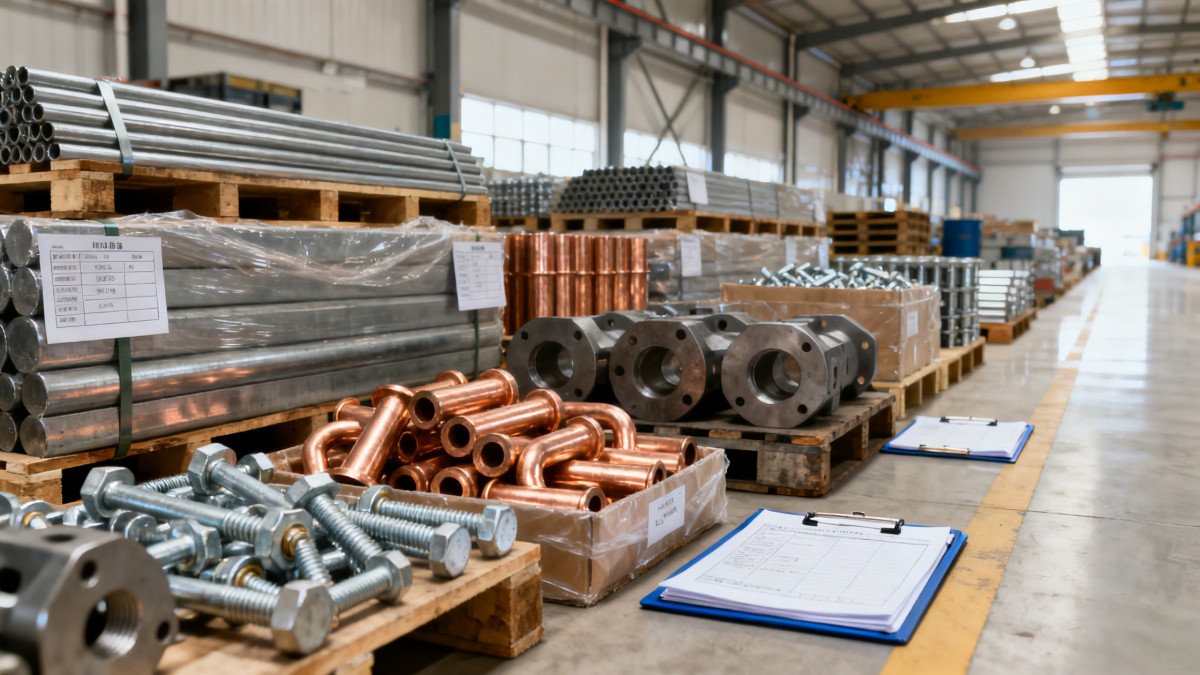
Core checklist: when does bulk buying actually reduce risk?
Use the following checklist as a practical approval screen. The more boxes you can clearly validate, the more likely a Components & Metals bulk order will function as a risk-reduction tool.
1. Lead-time risk is a bigger problem than price volatility
Bulk buying is justified when late delivery can halt fabrication, maintenance shutdowns, or site execution. This is common with imported alloys, forged components, precision-machined parts, and items tied to mill schedules. If your operational pain comes mainly from erratic supply rather than minor price movement, locking in volume can protect continuity.
2. The material has long replenishment cycles or constrained sources
Some materials depend on limited mills, foundries, or approved brands. Special stainless grades, copper busbar stock, nickel alloys, valve internals, and custom machined housings often fall into this category. If replacement options are narrow, a Components & Metals bulk order can lower sourcing disruption risk by securing supply ahead of market tightening.
3. The supplier can prove batch-to-batch consistency
Large orders magnify process variation. Confirm mill test certificates, dimensional inspection records, coating reports, hardness data, and non-destructive testing routines. Where relevant, ask how the supplier controls raw material traceability, calibration, packaging segregation, and revision management. Reliable consistency is one of the strongest reasons a bulk order can reduce downstream risk.
4. Your organization can absorb inventory without losing visibility
Risk reduction only occurs if inventory is visible, accessible, and protected. Procurement should confirm lot coding, storage conditions, shelf-life considerations for treated components, and ERP traceability. Excess stock without tracking creates hidden risk, especially in regulated or safety-critical environments.
5. The order structure includes release flexibility
The best Components & Metals bulk order is often not a single shipment. It may be a blanket purchase agreement, scheduled call-off arrangement, bonded inventory model, or framework contract with phased releases. These formats secure supply while reducing warehouse and obsolescence pressure.
A practical comparison table for procurement review
Use this quick reference before issuing a large-volume PO. It helps procurement teams distinguish categories where bulk buying is usually protective from categories where caution is required.
Scenario-based guidance: where bulk ordering makes the most sense
For maintenance and MRO procurement
A Components & Metals bulk order is often valuable for repetitive replacement parts such as fasteners, couplings, gaskets with metal carriers, brackets, pipe supports, and frequently used machined spares. The key is predictable consumption tied to installed equipment base. In this environment, reduced emergency buying is often the biggest gain.
For EPC and project procurement
Bulk ordering can work for standardized bill-of-material categories after engineering freeze, especially structural metals, cable tray supports, fabricated steel items, and repeated assembly components. It is riskier during early design stages, when material grades or dimensions may still shift. For projects, timing discipline matters more than headline discount percentages.
For global sourcing programs
International buyers may use bulk volumes to reduce freight exposure, customs complexity, and supplier capacity risk. This is particularly useful when dealing with ocean transit, port congestion, or politically sensitive shipping lanes. However, the buyer must validate Incoterms, insurance, packaging suitability, and destination compliance before scaling order size.
Commonly ignored risks that can cancel out the benefit
Many procurement teams focus on price breaks and miss the hidden costs attached to oversized commitments. Watch for these warning signs.
- Engineering change exposure: Even small drawing updates can make custom components partially obsolete.
- Mixed-batch acceptance issues: Suppliers may combine production from multiple heats or subcontractors unless controls are clearly defined.
- Corrosion and storage damage: Carbon steel, coated items, and precision-machined surfaces can degrade if preservation is weak.
- Cash-flow distortion: Savings on unit cost may be offset by financing pressure, especially for slower-moving stock.
- Documentation gaps: Missing certificates, packing traceability, or inspection reports can delay receiving and release to site.
- False demand aggregation: Combining unrelated business units into one order may create stock imbalance if actual usage differs.
Execution checklist: how to structure a safer Components & Metals bulk order
If the decision is moving forward, procurement should not stop at quantity negotiation. The order structure itself determines whether risk goes down or up.
- Define frozen technical requirements: Confirm grade, finish, hardness, tolerance, dimensions, coatings, marking, and packaging instructions in a controlled document set.
- Set release and delivery logic: Use staggered shipments, monthly call-offs, or warehouse buffer agreements instead of forcing all stock into your facility at once.
- Link payment to compliance milestones: Tie commercial terms to inspection completion, certificate submission, and receiving acceptance.
- Establish traceability rules: Require lot numbers, heat numbers, certificate mapping, and package-level identification.
- Clarify non-conformance handling: Define replacement lead time, rejection rights, sorting responsibility, and root-cause reporting.
- Review storage readiness: Verify racking, protection methods, labeling, and system visibility before goods arrive.
Questions procurement should ask suppliers before committing volume
A strong supplier conversation can reveal whether a Components & Metals bulk order will be operationally safe. Prioritize these questions:
Ask how capacity is reserved and whether your allocation is protected during market spikes. Ask whether all production is internal or partially subcontracted. Ask how the supplier separates lots, preserves materials in storage, and handles rework. Ask what happens if a shipment fails inspection and how quickly replacement stock can be dispatched. Finally, ask whether the supplier can support framework agreements that secure capacity without forcing immediate full delivery.
FAQ for buyers evaluating bulk purchasing risk
Is a larger order always better for metal price control?
No. If usage is uncertain, lower unit price may be outweighed by carrying cost, scrap risk, and tied-up capital. Price control only matters when the material will be consumed as planned.
Should standard components be bought in bulk more often than custom parts?
Usually yes. Standardized items with stable specifications and repeat demand are better candidates. Custom parts require much tighter engineering and revision control before scaling volume.
What is the safest format for a Components & Metals bulk order?
In many cases, a blanket agreement with scheduled releases is safer than a full immediate shipment. It secures supply while preserving flexibility and reducing storage burden.
Final decision guide and next action steps
A Components & Metals bulk order reduces risk only when it improves supply assurance more than it increases inventory, quality, or obsolescence exposure. Procurement teams should prioritize demand stability, specification freeze, supplier consistency, traceability, storage readiness, and release flexibility. If those conditions are present, volume buying can become a strategic shield against long lead times, cost shocks, and operational disruption.
Before moving ahead, prepare a concise internal review pack: annual usage forecast, criticality ranking, approved specifications, compliance requirements, acceptable delivery pattern, storage plan, and supplier performance history. If further validation is needed, the most useful next discussion points are material parameters, lot traceability rules, phased delivery options, inspection scope, lead-time guarantees, and total landed cost under different order structures. That is how a bulk purchase shifts from simple price negotiation to resilient industrial sourcing.
Technical Specifications
- Hidden Environment & Ecology cost after project approvalAuthor :Environmental Engineering Director
- When does an Environment & Ecology impact assessment need updating?Author :Environmental Engineering Director
- Security & Safety standards that affect product approval speedAuthor :Safety Compliance Lead
Expert Insights

Chief Security Architect
Dr. Thorne specializes in the intersection of structural engineering and digital resilience. He has advised three G7 governments on industrial infrastructure security.
Related Analysis
- May 07, 2026Hidden Environment & Ecology cost after project approvalAuthor :Environmental Engineering Director
- May 07, 2026When does an Environment & Ecology impact assessment need updating?Author :Environmental Engineering Director
- May 07, 2026Security & Safety standards that affect product approval speedAuthor :Safety Compliance Lead
Core Sector // 01
Security & Safety
- What makes foundational engineering harder for offshore structures?Author :Heavy Industry Strategist

- Foundational engineering choices that affect high-rise stability laterAuthor :Heavy Industry Strategist

- How to spot a dependable Components & Metals manufacturer earlyAuthor :Heavy Industry Strategist

- Components & Metals: when does bulk buying reduce risk?Author :Heavy Industry Strategist

- Foundational engineering solutions for bridges that cut rework riskAuthor :Heavy Industry Strategist

- When a Components & Metals manufacturer becomes a supply riskAuthor :Heavy Industry Strategist

- How to compare Components & Metals suppliers for bulk ordersAuthor :Heavy Industry Strategist

- Metallurgical Engineering Solutions for Corrosion Problems That ReturnAuthor :Heavy Industry Strategist