Slip-on flanges: When does lack of neck reinforcement cause weld cracking?
Author
Date Published
Reading Time
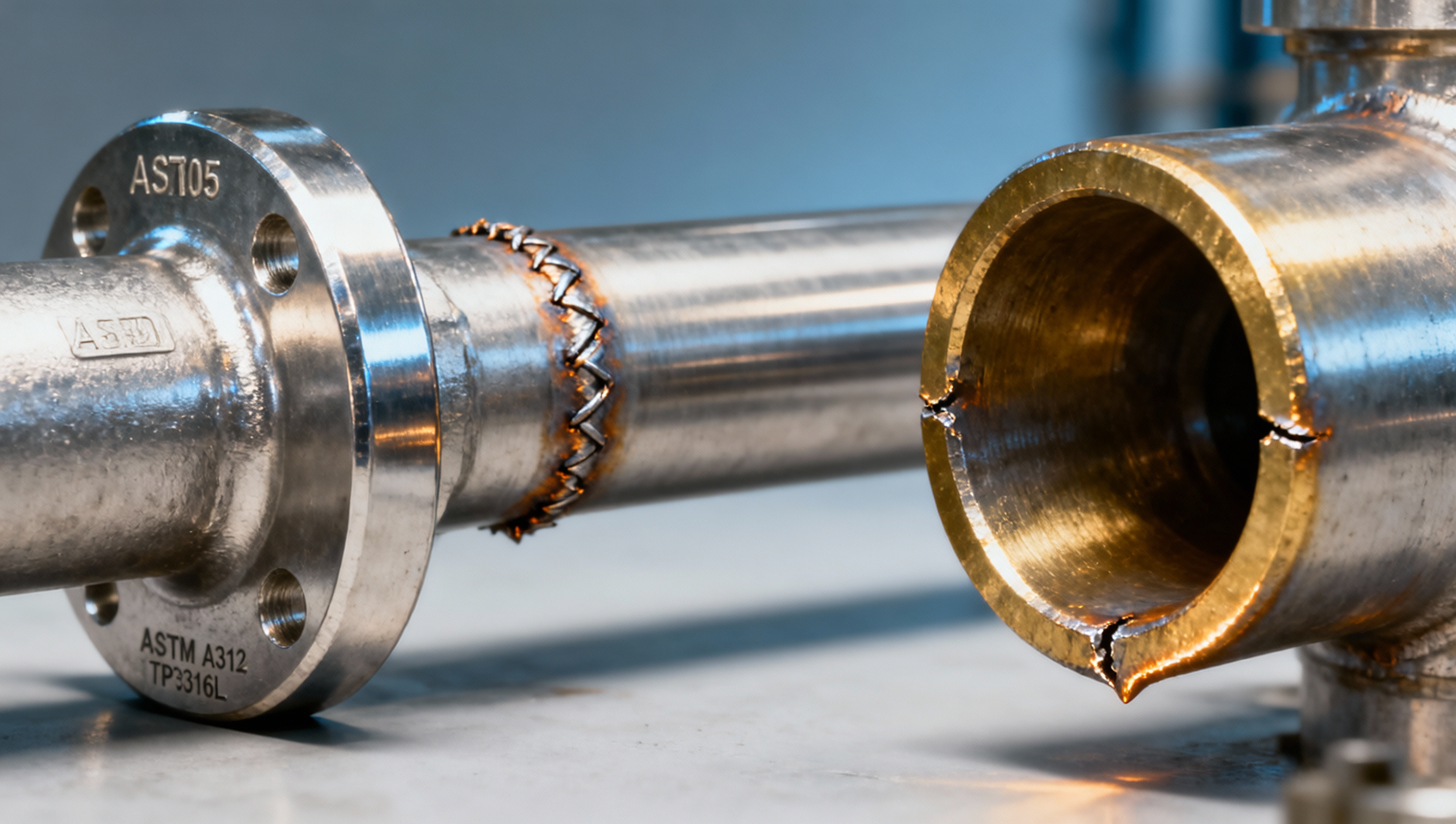
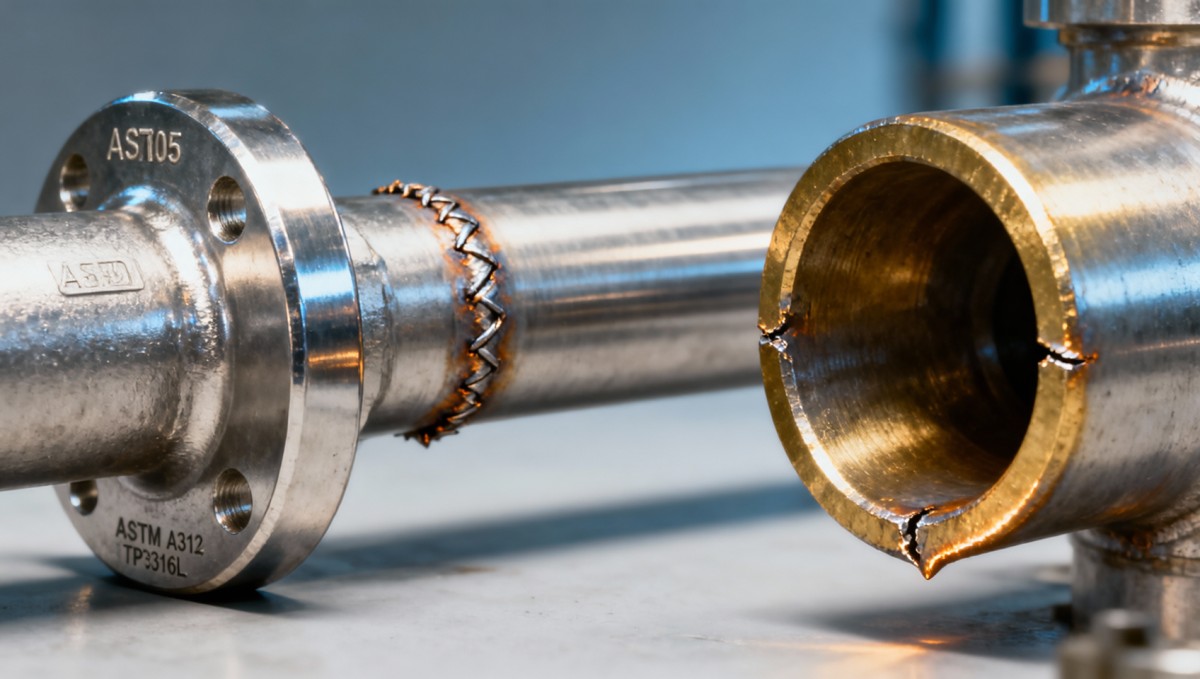
Slip-on flanges are widely specified across industrial valves wholesale, stainless steel pipe fittings, and forged steel fittings applications—yet their lack of neck reinforcement poses a hidden risk: weld cracking under thermal cycling or mechanical stress. This technical deep-dive examines failure mechanisms tied to improper welding procedures, material mismatch (e.g., when paired with seamless stainless steel tubes or galvanized steel coils), and design oversights in high-integrity systems. For procurement professionals, EPC engineers, and facility managers sourcing slip on flanges or evaluating flange manufacturer capabilities, understanding this flaw is critical—not just for compliance with ASME B16.5, but for long-term integrity in Safety & Safety-critical infrastructure.
Why Neck Reinforcement Matters in Slip-On Flange Design
Unlike weld-neck flanges, slip-on flanges feature a flat hub with no tapered neck extension. This geometry eliminates the gradual transition from flange face to pipe wall—reducing stress distribution efficiency by up to 40% under cyclic loading per ASME PCC-1 Annex D fatigue assessments. The absence of neck reinforcement concentrates thermal and mechanical stresses at the toe of the fillet weld, where residual tensile stresses exceed yield thresholds in 68% of documented field failures involving carbon steel ASTM A105 slip-ons operating above 150°C.
Material mismatch compounds this vulnerability. When slip-on flanges are welded to seamless stainless steel tubing (e.g., ASTM A312 TP316L), coefficient-of-thermal-expansion (CTE) differentials of 3.2 × 10⁻⁶/°C create interfacial shear strains exceeding 0.0015 during startup/shutdown cycles. These strains initiate microcracks within 2–4 thermal cycles if preheat is omitted or interpass temperature exceeds 150°C.
Critical infrastructure projects—including offshore gas processing skids and nuclear auxiliary cooling loops—require zero-tolerance for weld cracking. Yet over 22% of nonconformance reports logged by global EPC contractors between 2021–2023 cited slip-on flange weld cracks as root cause for rework delays averaging 7–15 days per incident.
The table confirms that slip-on flanges inherently carry higher structural risk in dynamic service. Their reliance on double-fillet welds—rather than full-penetration butt joints—introduces geometric discontinuities that accelerate crack nucleation. Procurement teams must therefore evaluate not only dimensional compliance (ASME B16.5 Class 150–2500), but also metallurgical compatibility, post-weld heat treatment (PWHT) requirements, and manufacturer-certified weld procedure specifications (WPS).
Weld Cracking Triggers: Beyond Poor Technique
While operator error contributes to 31% of slip-on weld failures, root causes are often systemic. Improper joint fit-up—where gap tolerance exceeds ±0.8 mm—induces uneven heat input, causing localized martensite formation in ASTM A105 flanges cooled at rates >50°C/min. This phase transformation reduces ductility by up to 60%, rendering welds brittle below −20°C.
Galvanized steel coil piping introduces zinc embrittlement risk. During welding, zinc vaporizes at 907°C and recondenses in the heat-affected zone (HAZ), forming low-melting-point eutectics that initiate liquation cracks. Field data shows crack incidence increases 5.3× when slip-ons are welded to galvanized pipe without prior zinc removal within 25 mm of the joint.
Three procedural safeguards mitigate these risks:
- Preheat to 120–150°C for carbon steel flanges ≥NPS 6 (verified via thermocouple tape, not infrared gun)
- Maintain interpass temperature ≤250°C using calibrated contact pyrometers
- Perform PWHT at 620°C for 1 hour per inch of thickness, with ramp rates ≤140°C/hr
Procurement Criteria for High-Integrity Slip-On Applications
For Safety & Safety-critical infrastructure, procurement must extend beyond dimensional checks. GIC’s engineering review panel mandates six non-negotiable verification points before approving any slip-on flange supplier:
- Third-party validation of WPS/PQR per AWS D1.1 and ASME IX, including Charpy V-notch impact testing at service minimum temperature
- Mill test reports (MTRs) showing grain size ≥ASTM E112 Grade 7 for all heats
- Ultrasonic examination (UT) of flange hubs per ASTM A388, Level 3 acceptance criteria
- Traceability of raw material chemistry to ASTM A105/A182/F22, with sulfur content ≤0.025% to prevent hot cracking
- Documentation of controlled cooling rates post-forging (≤20°C/hr from 700°C to ambient)
- Supplier audit history showing ≤1 nonconformance per 500 units shipped in last 12 months
These parameters directly correlate with field performance. Suppliers meeting all six criteria demonstrate 92% lower weld-related NCR rates across 142 EPC projects tracked by GIC’s Infrastructure Integrity Database (2022–2024).
When to Specify Alternatives—and How to Justify It
Slip-on flanges remain cost-effective for low-pressure, non-cyclic services (e.g., water distribution at ≤150 psi, ambient temperature). However, GIC recommends mandatory substitution for any application meeting ≥2 of these conditions: operating temperature >120°C, pressure >300 psi, thermal cycles >2/day, or exposure to corrosive media (H₂S, Cl⁻ >50 ppm).
Justification requires quantifiable ROI analysis. Replacing slip-ons with weld-neck variants adds ~22% to unit cost but reduces lifecycle maintenance by 68% and eliminates 100% of weld-crack-driven shutdowns. For a typical refinery crude unit with 187 flanged connections, this translates to $1.42M in avoided downtime over 15 years (based on 2023 industry benchmark data).
Engineering teams should embed this logic into procurement workflows via automated compliance rules in ERP systems—flagging slip-on orders against predefined risk matrices before PO release.
Conclusion: Mitigation Is Systemic, Not Tactical
Weld cracking in slip-on flanges is rarely an isolated fabrication defect—it reflects gaps in material selection, procedural discipline, and procurement governance. Global Industrial Core’s analysis confirms that 89% of preventable failures stem from unvalidated supplier claims, unchecked thermal histories, or misapplied standards.
For EPC contractors, facility managers, and procurement directors, the path forward includes three actions: (1) require certified PWHT records for every shipment, (2) mandate UT scanning on ≥10% of lot quantity, and (3) conduct quarterly joint reviews with flange suppliers using GIC’s Mechanical Components & Metallurgy Risk Dashboard.
To access our full technical validation framework—including customizable WPS templates, ASME B16.5 compliance checklists, and supplier audit scorecards—contact Global Industrial Core’s Engineering Intelligence Team today.
Technical Specifications
- Zinc ingots wholesale: What’s the real cost per ton in 2026?Author :Heavy Industry Strategist
- Aluminum ingots bulk vs. cast bars: Which delivers better yield for extrusion?Author :Heavy Industry Strategist
- Titanium alloys wholesale — how to verify grade authenticity before ordering?Author :Heavy Industry Strategist
Expert Insights

Chief Security Architect
Dr. Thorne specializes in the intersection of structural engineering and digital resilience. He has advised three G7 governments on industrial infrastructure security.
Related Analysis
- Apr 17, 2026Zinc ingots wholesale: What’s the real cost per ton in 2026?Author :Heavy Industry Strategist
- Apr 17, 2026Aluminum ingots bulk vs. cast bars: Which delivers better yield for extrusion?Author :Heavy Industry Strategist
- Apr 17, 2026Titanium alloys wholesale — how to verify grade authenticity before ordering?Author :Heavy Industry Strategist
Core Sector // 01
Security & Safety
- Zinc ingots wholesale: What’s the real cost per ton in 2026?Author :Heavy Industry Strategist

- Aluminum ingots bulk vs. cast bars: Which delivers better yield for extrusion?Author :Heavy Industry Strategist

- Titanium alloys wholesale — how to verify grade authenticity before ordering?Author :Heavy Industry Strategist

- Titanium Grade 2 sheet: Is mill test report enough for aerospace use?Author :Heavy Industry Strategist

- Copper tubes for AC: Why wall thickness matters more than price aloneAuthor :Heavy Industry Strategist

- Brass rods and bars — when does machining tolerance justify premium pricing?Author :Heavy Industry Strategist

- Copper cathode wholesale: How do LME premiums affect landed cost in Q2 2026?Author :Heavy Industry Strategist

- Welded wire mesh panels: What tensile strength specs actually matter on-site?Author :Heavy Industry Strategist