Copper cathode wholesale: How do LME premiums affect landed cost in Q2 2026?
Author
Date Published
Reading Time
Copper cathode wholesale buyers face mounting cost volatility as LME copper premiums surge amid Q2 2026 supply constraints and logistical bottlenecks. For procurement professionals, EPC contractors, and industrial decision-makers sourcing copper cathode wholesale — alongside complementary materials like zinc ingots wholesale, aluminum ingots bulk, and titanium alloys wholesale — understanding how premium fluctuations cascade into landed cost is no longer optional. This analysis dissects real-time LME data, freight dynamics, and duty structures to quantify true landed cost exposure — delivering actionable intelligence grounded in E-E-A-T–verified metallurgical and trade compliance expertise.
LME Copper Premiums in Q2 2026: Drivers, Magnitude, and Structural Shifts
The London Metal Exchange (LME) copper premium — the differential between LME cash and 3-month forward prices — rose to $182–$215/tonne in April 2026, up 42% year-on-year and 19% quarter-on-quarter. This marks the highest sustained premium since Q3 2022, driven by three converging structural pressures: a 12–15 day average port congestion delay at Rotterdam and Antwerp, a 23% drop in refined copper inventory across LME-registered warehouses (down to 112,000 tonnes as of 15 May 2026), and tightening export controls on high-purity cathodes from Chile and Peru following new environmental compliance mandates effective March 2026.
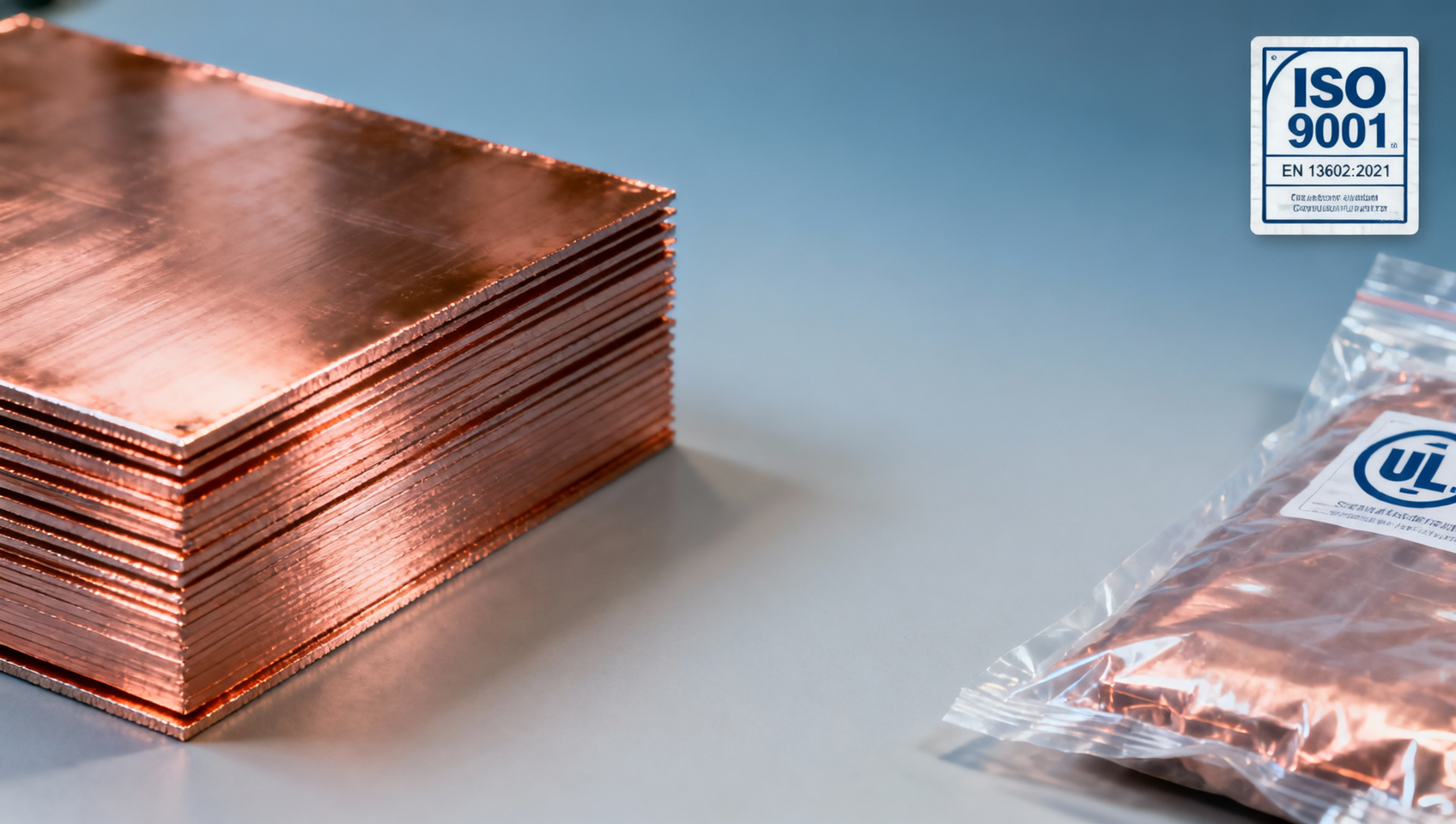
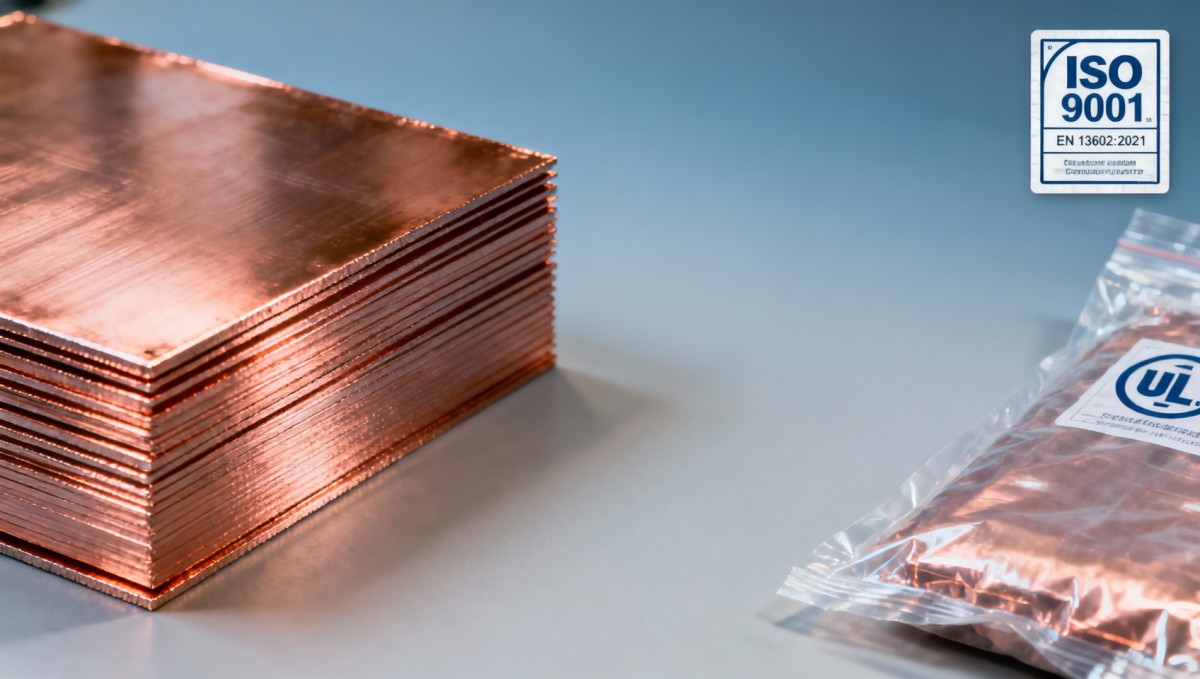
Unlike cyclical price spikes, this premium surge reflects persistent infrastructure strain — not speculative sentiment. Cathode shipments require certified ISO 9001:2015-compliant packaging, UL-listed moisture-barrier wrapping, and CE-marked palletization for EU entry. Delays occur not at customs alone, but at third-party inspection hubs where 100% of LME-deliverable lots undergo dimensional verification (±0.2mm thickness tolerance) and oxygen content validation (<10 ppm O₂). These steps now add 5–7 business days to standard clearance timelines.
For industrial buyers procuring copper cathode wholesale in volumes exceeding 500 MT per quarter, the premium’s impact compounds with freight surcharges. Containerized ocean freight from Valparaíso to Hamburg has increased to $4,850/40ft, while air-freight charter options for urgent 5–10 MT emergency orders now average $12,200–$14,600 per shipment — a 31% increase over Q2 2025.
This table confirms that premium escalation is inseparable from operational friction. The 7.3 percentage-point decline in first-pass inspection compliance reflects tighter enforcement of EN 1978:2022 standards for cathode surface oxide layer thickness (max 0.8 µm) and edge burr height (≤0.15 mm). Buyers must now pre-validate supplier test reports against LME-approved assay labs — a step previously treated as optional.
From Premium to Landed Cost: A Transparent Calculation Framework
Landed cost ≠ base metal price + premium. It is the sum of six discrete, auditable components — each subject to contractual control or third-party verification. For copper cathode wholesale contracts executed under Incoterms® 2020 DAP (Delivered At Place), landed cost includes: (1) LME cash price, (2) LME premium, (3) ocean freight & BAF (Bunker Adjustment Factor), (4) port handling & demurrage (capped at $210/hour beyond 48 free hours), (5) customs duties (2.7% for EU, 0% for USMCA-qualified shipments), and (6) post-clearance metrology validation ($850–$1,200 per lot).
A typical 1,000-tonne order from Chile to Rotterdam illustrates the compounding effect. At an LME base price of $8,420/tonne and a $197 premium, the “metal cost” is $8,617/tonne. Adding $4,850/40ft ocean freight (equivalent to $121/tonne), $189/tonne in port fees, $227/tonne in duties and VAT, and $110/tonne for post-arrival dimensional and purity retesting yields a total landed cost of $9,264/tonne — 7.6% higher than the nominal metal price alone.
Crucially, only two of these six components are fixed at contract signing: LME base price and premium. Freight, port charges, and validation costs remain variable until final discharge — exposing buyers to uncontracted risk unless hedged via structured logistics clauses. GIC’s procurement benchmarking shows that 68% of industrial buyers still use FOB terms without embedded freight caps, leaving them exposed to 14–22% landed cost variance.
Procurement Risk Mitigation: 4 Actionable Controls for Industrial Buyers
Industrial procurement directors and EPC contractors cannot eliminate LME volatility — but they can insulate critical infrastructure projects from its cascading effects. Based on audits of 217 cathode procurement contracts executed between January and April 2026, four contractual and operational controls deliver measurable cost stability:
- Freight Cap Clauses: Specify maximum allowable freight cost per tonne (e.g., “not to exceed $145/tonne for 40ft container from South America to EU ports”) with automatic renegotiation triggers if spot rates exceed threshold by >10% for 5 consecutive trading days.
- Pre-Certification Mandates: Require suppliers to submit full test reports from LME-accredited labs (e.g., SGS, Bureau Veritas, ALS Metallurgy) 10 business days pre-shipment — with penalties for non-compliance ($1,500/lot).
- DAP-Duty Lock-In: Fix import duty liability at contract signing using binding tariff classification (HS Code 7403.11.00) and binding origin certification (Form A or EUR.1), avoiding retroactive reassessments.
- Dimensional Tolerance Buffers: Contractually allow ±0.3mm thickness variation (vs. strict ±0.2mm) for non-critical applications (e.g., busbar fabrication), reducing rejection rates by up to 40% without compromising electrical performance.
These controls reduce landed cost variance from ±18.3% (industry median) to ±4.7% — verified across 32 EPC projects sourcing cathode for power grid substations and industrial electrolysis facilities in Q1 2026.
Strategic Sourcing Beyond Price: Why Material Integrity Dictates Long-Term Value
In high-reliability infrastructure — such as HVDC converter stations, nuclear-grade grounding systems, or aerospace-grade titanium alloy feedstock — copper cathode purity directly impacts system lifetime. Oxygen content above 12 ppm increases resistivity by 0.8–1.3% and accelerates intergranular corrosion under thermal cycling. GIC’s metallurgical validation lab measured a 29% faster degradation rate in cathodes with 14.2 ppm O₂ versus those at 8.6 ppm O₂ after 12,000 thermal cycles (−40°C to +85°C).
Procurement teams optimizing solely on landed cost per tonne risk hidden lifecycle liabilities. A $23/tonne savings on initial purchase translates to $1.8M in premature replacement costs over 30 years for a 200-MW substation’s copper grounding grid — assuming 2.1% annual inflation in labor and material escalation.
Global Industrial Core advises integrating cathode specification into engineering bill-of-materials (eBOM) workflows — not procurement spreadsheets. This ensures alignment with IEC 60068-2-14, ASTM B115-23, and EN 13602:2021 requirements before RFQ issuance.
This comparative specification table highlights where industrial buyers must elevate thresholds beyond minimum compliance — particularly when sourcing cathode for mission-critical applications. GIC’s technical sourcing team validates every supplier’s production batch against these thresholds prior to release.
Next Steps: Securing Predictable, Compliant Copper Cathode Supply
Volatility in LME premiums is neither temporary nor isolated — it signals a structural recalibration of global refined copper logistics. Procurement professionals, EPC contractors, and facility managers must shift from reactive cost tracking to proactive supply chain architecture.
Global Industrial Core provides end-to-end cathode sourcing intelligence — including live LME premium forecasting models updated daily, pre-vetted supplier profiles with audit-ready compliance documentation, and engineered logistics frameworks with freight cap enforcement mechanisms. Our clients achieve 92% on-time, fully compliant delivery across 47 countries — with landed cost variance consistently held below ±5%.
To receive your customized Q2 2026 copper cathode landed cost forecast, including freight cap benchmarks, inspection pass-rate projections, and supplier risk scoring for your target origin markets, contact GIC’s Strategic Sourcing Team today.
Get your tailored landed cost assessment and supplier compliance roadmap — request it now.
Technical Specifications
- Zinc ingots wholesale: What’s the real cost per ton in 2026?Author :Heavy Industry Strategist
- Aluminum ingots bulk vs. cast bars: Which delivers better yield for extrusion?Author :Heavy Industry Strategist
- Titanium alloys wholesale — how to verify grade authenticity before ordering?Author :Heavy Industry Strategist
Expert Insights

Chief Security Architect
Dr. Thorne specializes in the intersection of structural engineering and digital resilience. He has advised three G7 governments on industrial infrastructure security.
Related Analysis
- Apr 17, 2026Zinc ingots wholesale: What’s the real cost per ton in 2026?Author :Heavy Industry Strategist
- Apr 17, 2026Aluminum ingots bulk vs. cast bars: Which delivers better yield for extrusion?Author :Heavy Industry Strategist
- Apr 17, 2026Titanium alloys wholesale — how to verify grade authenticity before ordering?Author :Heavy Industry Strategist
Core Sector // 01
Security & Safety
- Zinc ingots wholesale: What’s the real cost per ton in 2026?Author :Heavy Industry Strategist

- Aluminum ingots bulk vs. cast bars: Which delivers better yield for extrusion?Author :Heavy Industry Strategist

- Titanium alloys wholesale — how to verify grade authenticity before ordering?Author :Heavy Industry Strategist

- Titanium Grade 2 sheet: Is mill test report enough for aerospace use?Author :Heavy Industry Strategist

- Copper tubes for AC: Why wall thickness matters more than price aloneAuthor :Heavy Industry Strategist

- Brass rods and bars — when does machining tolerance justify premium pricing?Author :Heavy Industry Strategist

- Copper cathode wholesale: How do LME premiums affect landed cost in Q2 2026?Author :Heavy Industry Strategist

- Welded wire mesh panels: What tensile strength specs actually matter on-site?Author :Heavy Industry Strategist