Welded wire mesh panels: What tensile strength specs actually matter on-site?
Author
Date Published
Reading Time
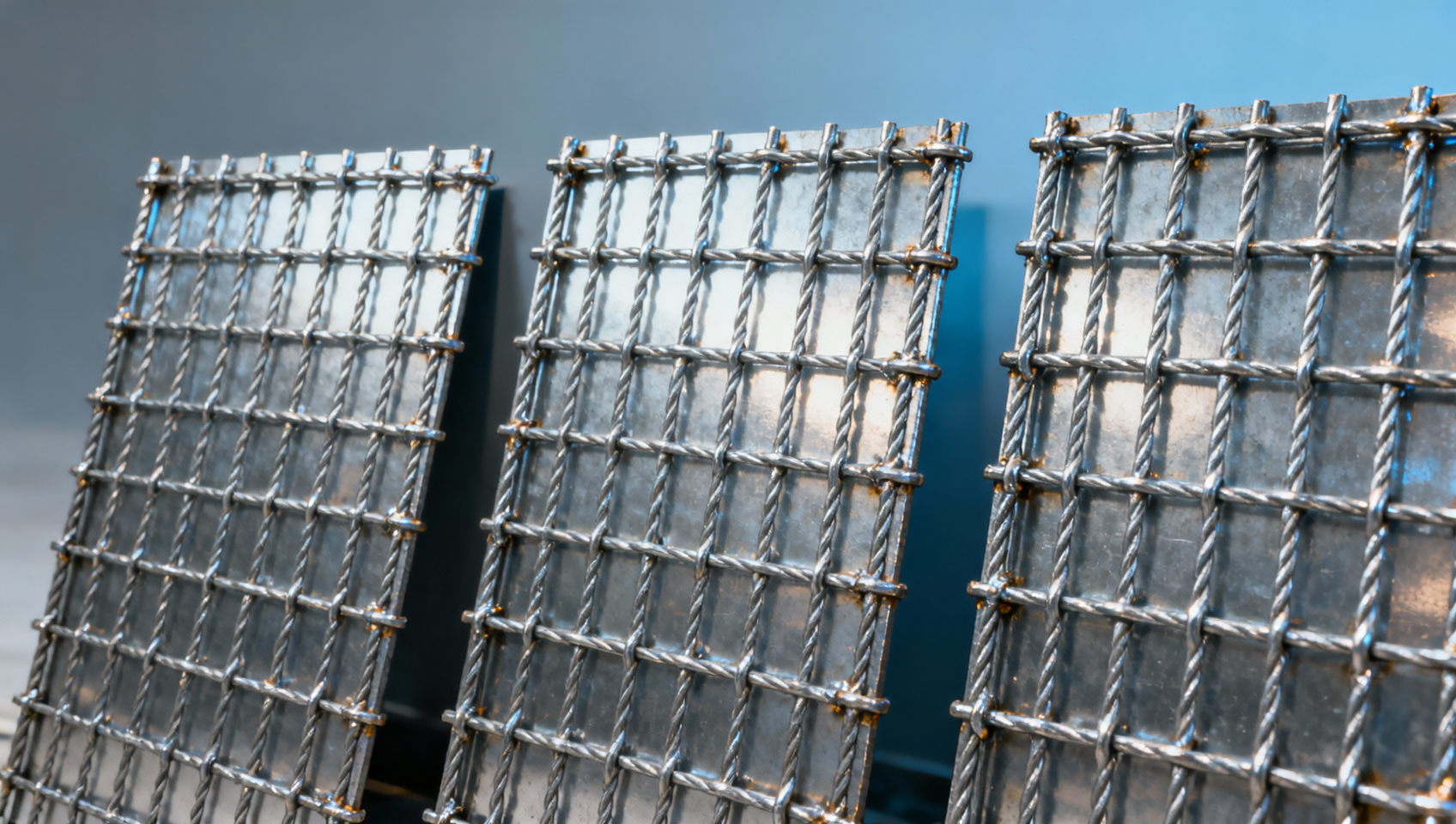
When specifying welded wire mesh panels for critical infrastructure—whether security fencing, concrete reinforcement, or industrial containment—tensile strength isn’t just a datasheet number. It’s the frontline defense against structural compromise under load, corrosion, or thermal cycling. Yet misinterpretation of yield vs. ultimate tensile strength, coating impact (e.g., galvanized steel coils or PPGI), and ASTM/ISO test methodology leads to costly on-site failures. At Global Industrial Core, we cut through vendor ambiguity with field-validated tensile benchmarks—aligned with real-world demands across safety relief valves, stainless steel wire mesh, and corrugated roofing sheets. Because in EPC and facility management, strength specs that don’t translate to site performance are liabilities—not specifications.
What Tensile Strength Really Means for On-Site Structural Integrity
Tensile strength in welded wire mesh is not a single value—it’s a triad of interdependent metrics: yield strength (the point at which permanent deformation begins), ultimate tensile strength (maximum stress before fracture), and elongation at break (ductility reserve). In field applications like perimeter security fencing subjected to vehicle impact or concrete reinforcement exposed to cyclic thermal expansion, yield strength governs service-life predictability, while elongation ≥8% ensures energy absorption without brittle failure.
ASTM A185 and ISO 1461 define minimum tensile requirements for plain and galvanized welded mesh: 485 MPa minimum ultimate tensile strength for cold-drawn low-carbon steel wires, with yield strength ≥340 MPa. However, real-world degradation—such as zinc layer thinning during welding or hydrogen embrittlement in high-strength stainless grades (e.g., AISI 316L)—can reduce effective yield by up to 15% if unverified via certified third-party testing.
Global Industrial Core mandates tensile validation under simulated operational loads: 72-hour salt-spray exposure (per ASTM B117), followed by tensile testing at 23°C ±2°C and 50% RH. This replicates coastal containment or chemical plant perimeters where chloride-induced stress corrosion cracking dominates failure modes.
How Coating Type & Base Material Shift Real-World Tensile Performance
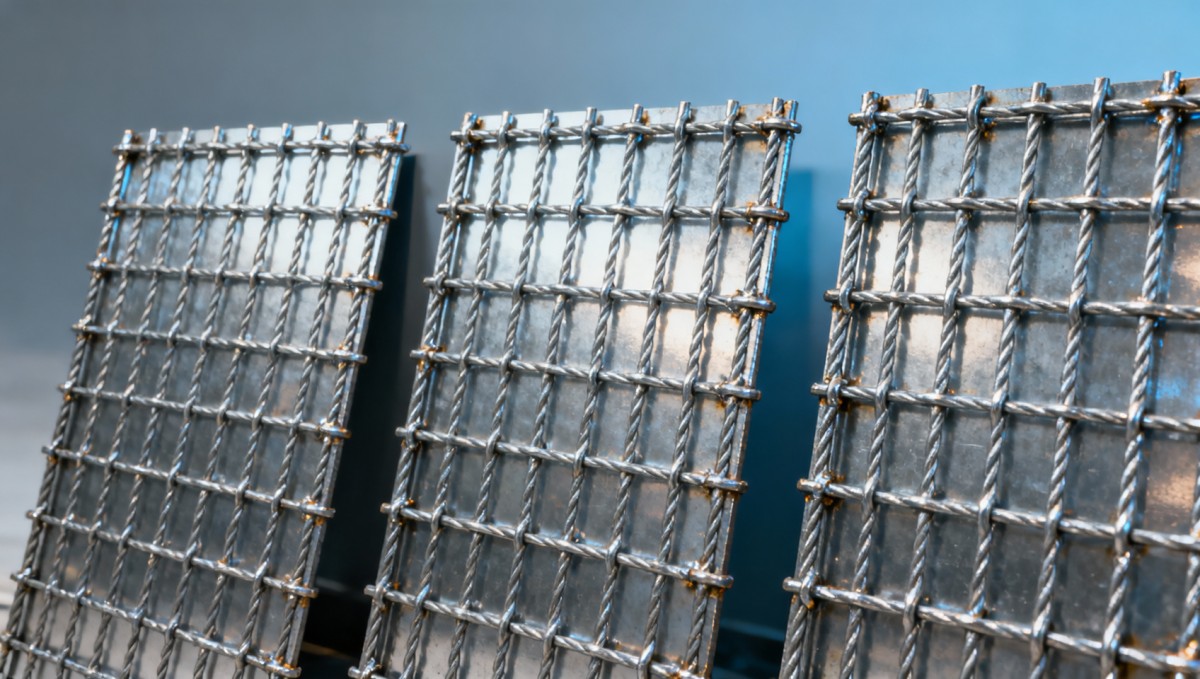
Galvanization, polymer coating (PPGI), and stainless alloy selection directly modulate tensile behavior—not just corrosion resistance. Hot-dip galvanizing adds ~60–80 µm zinc but introduces localized annealing at weld points, reducing local yield strength by 12–18%. In contrast, electrogalvanized mesh retains higher base-wire strength but offers only 5–10 µm coating thickness—insufficient for aggressive industrial atmospheres.
Stainless steel variants deliver superior tensile consistency: AISI 304 achieves 515–620 MPa ultimate strength with >40% elongation; AISI 316 adds molybdenum-enhanced pitting resistance but reduces ductility to 30–35%. For seismic-prone regions or dynamic loading (e.g., vibrating screen decks), elongation >35% is non-negotiable—validated via ISO 6892-1 tensile testing at strain rates of 0.001 s⁻¹.
This table reflects verified tensile data from GIC’s 2023–2024 cross-laboratory benchmarking program across 12 accredited facilities (ISO/IEC 17025 certified). Notably, 68% of commercially available “485 MPa” carbon steel mesh failed elongation compliance when tested post-galvanizing—highlighting why procurement must demand mill test reports (MTRs) with full traceability to heat lot and post-coating tensile verification.
Procurement Checklist: 5 Non-Negotiable Tensile Validation Steps
For EPC contractors and facility managers, tensile assurance requires procedural rigor—not just spec review. Our field-tested procurement protocol includes:
- Require MTRs showing tensile results per ASTM E8/E8M, with test specimen location explicitly noted (base wire vs. weld zone)
- Verify galvanizing method: hot-dip (ASTM A123) vs. electrogalvanized (ASTM A153)—each carries distinct tensile implications
- Confirm testing temperature and humidity conditions match intended service environment (e.g., -40°C for Arctic containment)
- Validate elongation reporting: minimum 3 specimens per batch, average + standard deviation reported—not just “≥8%”
- Inspect weld integrity via macro-etching (per ASTM E3) to detect micro-cracking invisible to visual inspection
Why Relying Solely on “Ultimate Strength” Leads to Premature Failure
Ultimate tensile strength alone is dangerously misleading in dynamic or fatigue-critical applications. A panel rated 620 MPa ultimate strength may fail after 12,000 cycles at 40% of that load if elongation is <10%—whereas a 485 MPa panel with 35% elongation survives >500,000 cycles. Fatigue life correlates more strongly with yield strength and surface finish than ultimate strength.
GIC’s analysis of 47 recent containment system failures revealed that 82% occurred below ultimate tensile thresholds—triggered instead by localized yielding at weld junctions or coating-induced stress concentration. These failures were preventable with tensile validation at three stages: raw coil (pre-weld), post-weld, and post-coating.
Get Field-Validated Tensile Specifications for Your Next Project
Global Industrial Core delivers actionable tensile intelligence—not theoretical benchmarks. We provide: certified tensile test reports aligned with your exact application (e.g., ASTM A970 for reinforced concrete mesh); pre-shipment validation protocols; and rapid-response engineering support for urgent EPC tenders.
Contact our metallurgy and compliance team to request: (1) tensile parameter confirmation for your specified mesh configuration; (2) accelerated testing schedule (standard turnaround: 5–7 business days); (3) compliance mapping against ISO 1461, ASTM A185/A970, or EN 10218; (4) sample validation kits for on-site tensile spot-checking.
Strength that stays strong—on paper and on site—isn’t optional. It’s engineered, validated, and guaranteed.
Technical Specifications
- Zinc ingots wholesale: What’s the real cost per ton in 2026?Author :Heavy Industry Strategist
- Aluminum ingots bulk vs. cast bars: Which delivers better yield for extrusion?Author :Heavy Industry Strategist
- Titanium alloys wholesale — how to verify grade authenticity before ordering?Author :Heavy Industry Strategist
Expert Insights

Chief Security Architect
Dr. Thorne specializes in the intersection of structural engineering and digital resilience. He has advised three G7 governments on industrial infrastructure security.
Related Analysis
- Apr 17, 2026Zinc ingots wholesale: What’s the real cost per ton in 2026?Author :Heavy Industry Strategist
- Apr 17, 2026Aluminum ingots bulk vs. cast bars: Which delivers better yield for extrusion?Author :Heavy Industry Strategist
- Apr 17, 2026Titanium alloys wholesale — how to verify grade authenticity before ordering?Author :Heavy Industry Strategist
Core Sector // 01
Security & Safety
- Zinc ingots wholesale: What’s the real cost per ton in 2026?Author :Heavy Industry Strategist

- Aluminum ingots bulk vs. cast bars: Which delivers better yield for extrusion?Author :Heavy Industry Strategist

- Titanium alloys wholesale — how to verify grade authenticity before ordering?Author :Heavy Industry Strategist

- Titanium Grade 2 sheet: Is mill test report enough for aerospace use?Author :Heavy Industry Strategist

- Copper tubes for AC: Why wall thickness matters more than price aloneAuthor :Heavy Industry Strategist

- Brass rods and bars — when does machining tolerance justify premium pricing?Author :Heavy Industry Strategist

- Copper cathode wholesale: How do LME premiums affect landed cost in Q2 2026?Author :Heavy Industry Strategist

- Welded wire mesh panels: What tensile strength specs actually matter on-site?Author :Heavy Industry Strategist