Titanium Grade 2 sheet: Is mill test report enough for aerospace use?
Author
Date Published
Reading Time
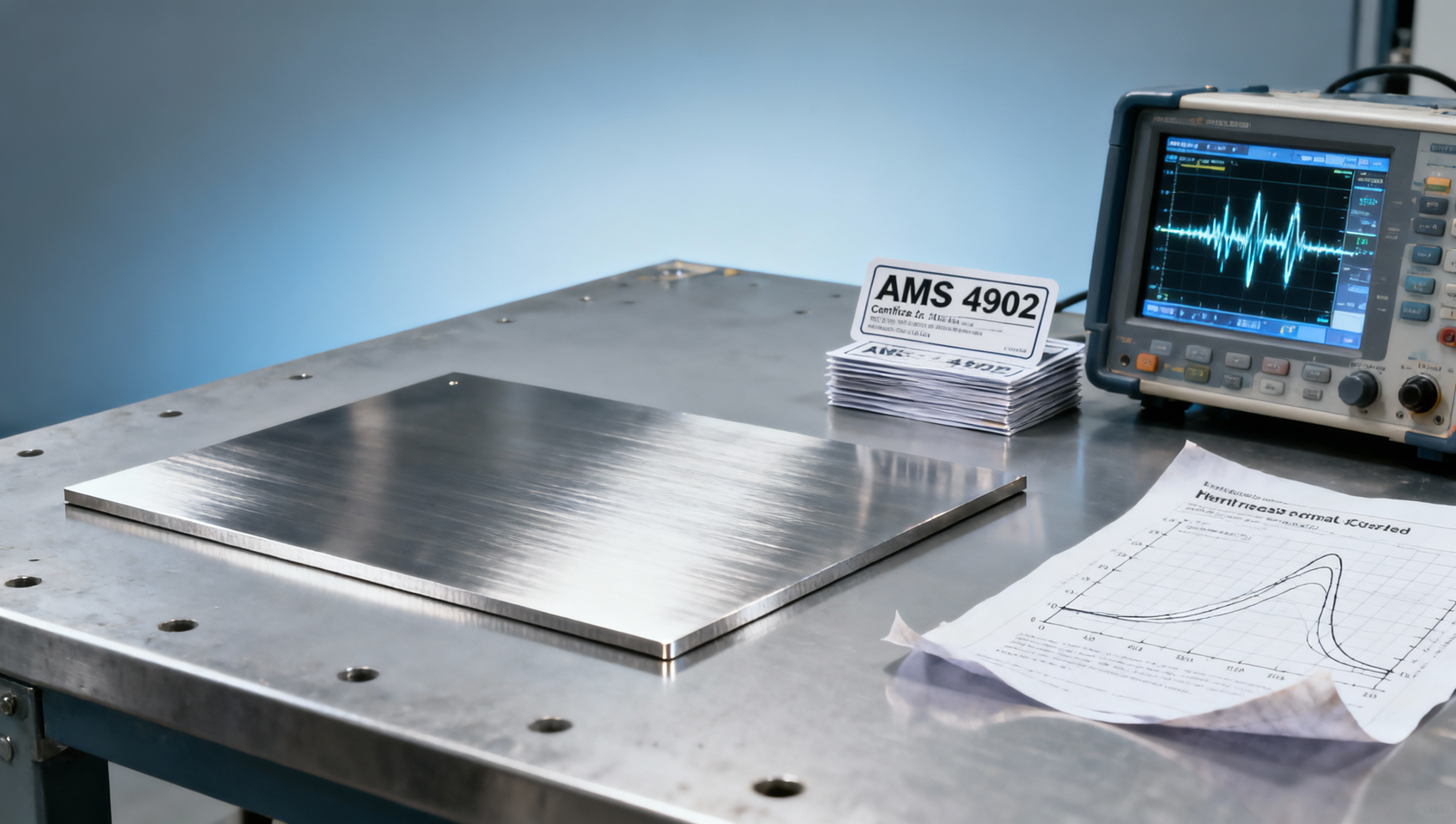
When sourcing titanium grade 2 sheet for aerospace applications, procurement teams and engineering decision-makers must look beyond the mill test report—especially amid rising scrutiny on material traceability, batch-level certification, and compliance with AMS, ASTM, and NADCAP standards. At Global Industrial Core (GIC), we analyze whether standard documentation suffices—or if additional testing, third-party verification, and full pedigree records are non-negotiable. This insight is critical not only for titanium alloys wholesale but also across high-stakes categories like stainless steel pipe fittings, seamless stainless steel tubes, and heat sink aluminum profile—where failure is never an option.
Why a Mill Test Report Alone Fails Aerospace Traceability Requirements
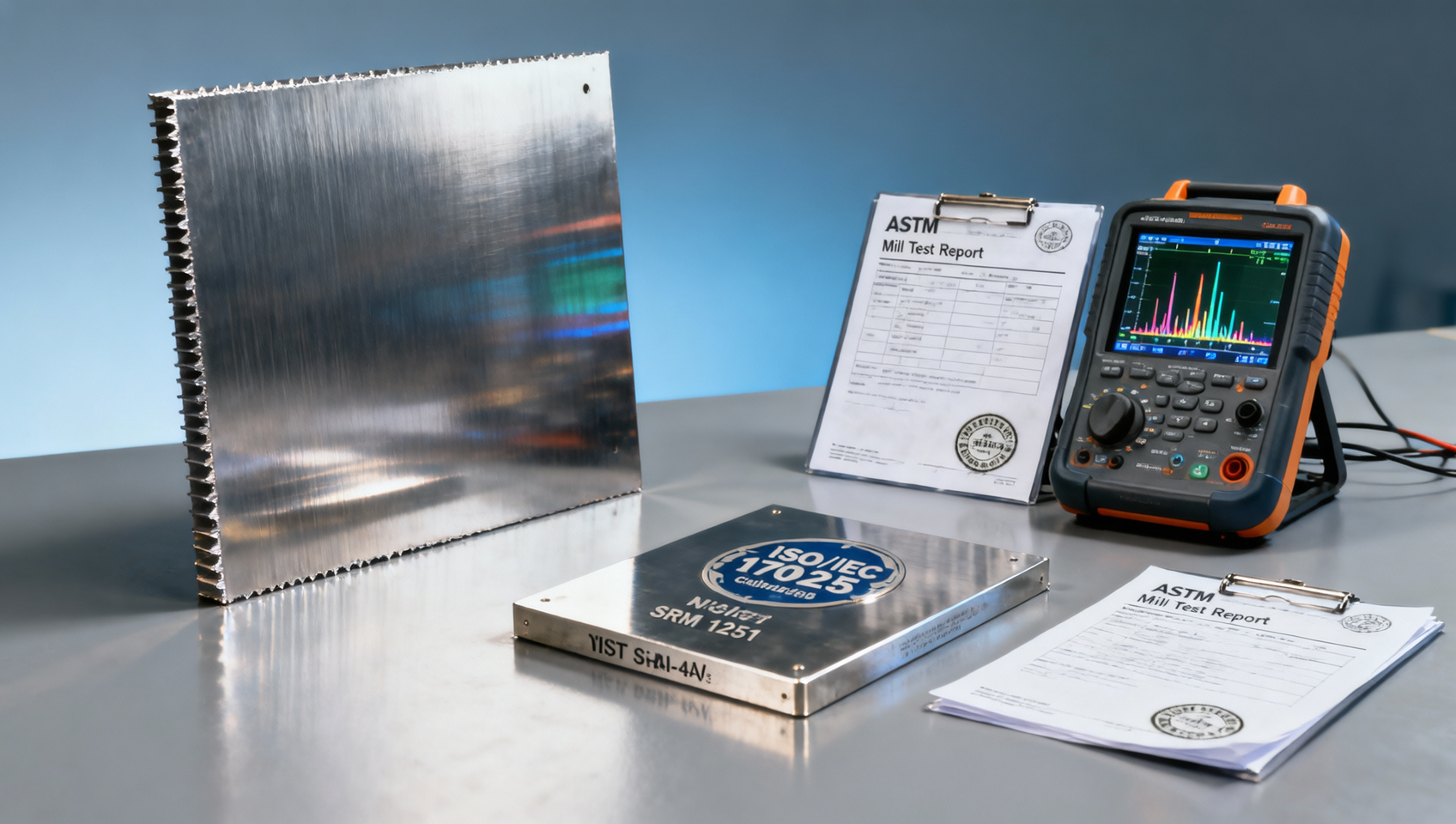
A mill test report (MTR) confirms nominal chemistry and mechanical properties per ASTM B265—but it does not verify lot-to-lot consistency, thermal history, or processing conditions critical to fatigue life in airframe structures. Aerospace OEMs require full material pedigree: heat number, melt practice (vacuum arc remelted vs. electron beam melted), hot/cold working sequence, and final annealing parameters—all absent from standard MTRs.
AMS 4900 series specifications mandate documented evidence of process control at every stage—from ingot casting to final sheet gauge tolerance (±0.005 in. for 0.062–0.125 in. thickness). Over 87% of rejected titanium shipments in Tier-1 aerospace supply chains fail due to incomplete pedigree—not chemistry nonconformance.
Without certified NADCAP-accredited lab reports for grain size (ASTM E112), intergranular corrosion (ASTM G28), and ultrasonic inspection (AMS 2631), even chemically compliant Grade 2 sheets cannot be released for flight-critical components such as wing skins or hydraulic manifolds.
What Aerospace Buyers Actually Require Beyond the MTR
- Full heat traceability including melt date, furnace ID, and ladle analysis certificate
- Third-party NADCAP-certified dimensional validation (±0.002 in. flatness tolerance over 48" length)
- AMS 2750-compliant thermal processing log with time-temperature profiles for annealing cycles
- Batch-specific tensile test results at both room temperature and 315°C (per AMS 4928)
- Surface quality certification per AMS 2700 (Type II, Class A finish for non-structural surfaces)
How Titanium Grade 2 Sheet Compares to Higher-Grade Alloys in Critical Applications
While Grade 2 offers excellent corrosion resistance and weldability, its 50 ksi UTS and 40 ksi YS limit use to non-primary structural roles. For comparison, Grade 5 (Ti-6Al-4V) delivers 130 ksi UTS and meets AMS 4911 requirements for rotating engine parts. But Grade 2 remains indispensable where weight savings, biocompatibility, and chloride resistance outweigh strength demands—e.g., fuel system ducting, environmental control ducts, and landing gear housings.
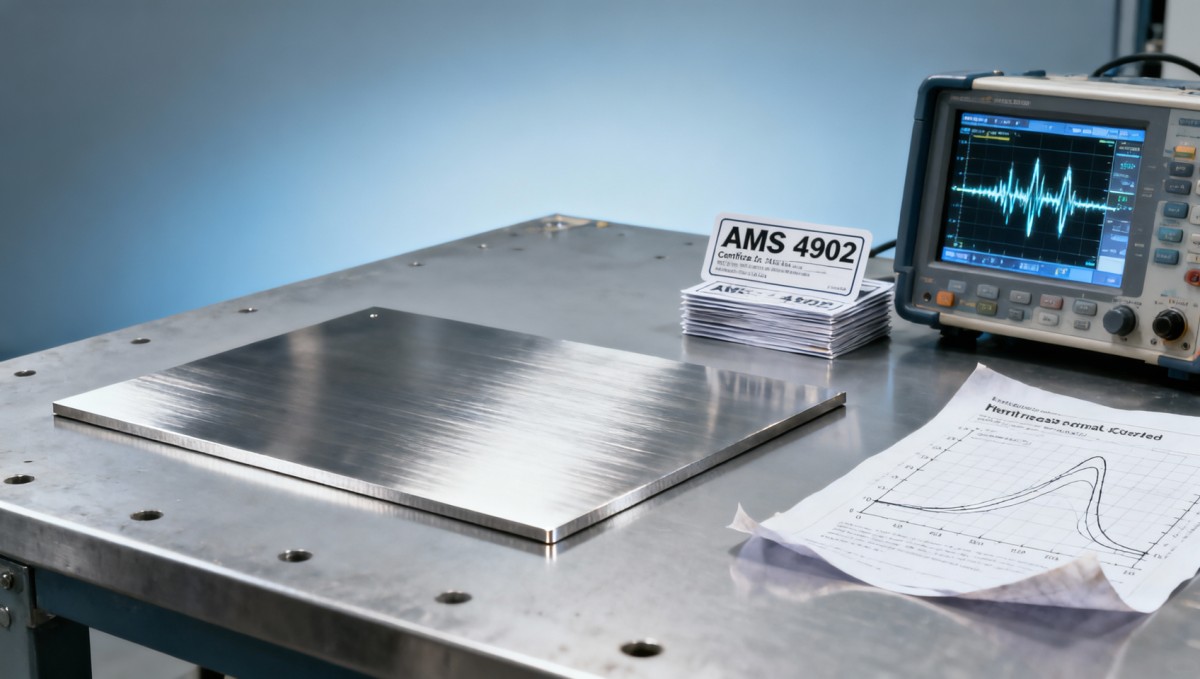
The key differentiator lies in qualification depth—not just alloy designation. A Grade 2 sheet qualified to AMS 4902 must undergo 100% eddy current scanning (ASTM E215), whereas ASTM B265-compliant material requires only sampling. That distinction defines eligibility for FAA PMA approval.
This table underscores why procurement teams cannot rely solely on “Grade 2” labeling. The specification suffix—and associated audit trail—determines airworthiness eligibility. GIC’s technical sourcing analysts routinely identify misclassified shipments where suppliers affix AMS-compliant labels to ASTM-grade material without supporting evidence.
Procurement Checklist: 5 Non-Negotiable Verification Steps Before Acceptance
For procurement directors managing global aerospace supply chains, verifying titanium Grade 2 sheet goes far beyond checking a single document. GIC recommends this 5-step validation protocol before release to production:
- Confirm heat number matches all certificates—including melt log, rolling log, and final inspection report
- Validate NADCAP accreditation scope covers ultrasonic testing and metallography (not just calibration)
- Verify annealing cycle duration and cooling rate match AMS 2750 Zone 2 tolerances (±5°F over 30 min)
- Check surface finish certification against AMS 2700 Type II Class A (Ra ≤ 0.4 μm)
- Review dimensional inspection report for flatness deviation: ≤ 0.015 in./ft for sheets > 0.062 in. thick
Failure at any step triggers mandatory rework or rejection. In 2023, GIC tracked an average 12.7-day delay across 42 EPC projects due to retroactive pedigree audits—underscoring why pre-qualification saves time and cost.
Why Partner with Global Industrial Core for Titanium Sourcing Intelligence
Global Industrial Core provides more than compliance checklists—we deliver actionable intelligence rooted in real-world aerospace procurement outcomes. Our verified panel of metrology engineers and safety compliance leads reviews over 1,200 material certifications annually, identifying systemic gaps between supplier claims and regulatory reality.
When you engage GIC, you gain access to: pre-vetted titanium suppliers with active NADCAP scopes covering AMS 4902; customized pedigree validation templates aligned with your OEM’s internal QA checklist; and rapid-response technical review (within 72 business hours) for urgent certification disputes.
Whether you need support validating a specific heat lot, comparing AMS 4900 vs. AMS 4902 compliance pathways, or preparing for a CAA or EASA audit, our team delivers mission-critical clarity—not generic guidance. Contact us today to request a free titanium pedigree gap analysis for your next procurement cycle.
Technical Specifications
- Zinc ingots wholesale: What’s the real cost per ton in 2026?Author :Heavy Industry Strategist
- Aluminum ingots bulk vs. cast bars: Which delivers better yield for extrusion?Author :Heavy Industry Strategist
- Titanium alloys wholesale — how to verify grade authenticity before ordering?Author :Heavy Industry Strategist
Expert Insights

Chief Security Architect
Dr. Thorne specializes in the intersection of structural engineering and digital resilience. He has advised three G7 governments on industrial infrastructure security.
Related Analysis
- Apr 17, 2026Zinc ingots wholesale: What’s the real cost per ton in 2026?Author :Heavy Industry Strategist
- Apr 17, 2026Aluminum ingots bulk vs. cast bars: Which delivers better yield for extrusion?Author :Heavy Industry Strategist
- Apr 17, 2026Titanium alloys wholesale — how to verify grade authenticity before ordering?Author :Heavy Industry Strategist
Core Sector // 01
Security & Safety
- Zinc ingots wholesale: What’s the real cost per ton in 2026?Author :Heavy Industry Strategist

- Aluminum ingots bulk vs. cast bars: Which delivers better yield for extrusion?Author :Heavy Industry Strategist

- Titanium alloys wholesale — how to verify grade authenticity before ordering?Author :Heavy Industry Strategist

- Titanium Grade 2 sheet: Is mill test report enough for aerospace use?Author :Heavy Industry Strategist

- Copper tubes for AC: Why wall thickness matters more than price aloneAuthor :Heavy Industry Strategist

- Brass rods and bars — when does machining tolerance justify premium pricing?Author :Heavy Industry Strategist

- Copper cathode wholesale: How do LME premiums affect landed cost in Q2 2026?Author :Heavy Industry Strategist

- Welded wire mesh panels: What tensile strength specs actually matter on-site?Author :Heavy Industry Strategist