Blind flanges wholesale: What surface finish prevents gasket creep in high-temp service?
Author
Date Published
Reading Time
Blind Flanges Wholesale: What Surface Finish Prevents Gasket Creep in High-Temp Service?
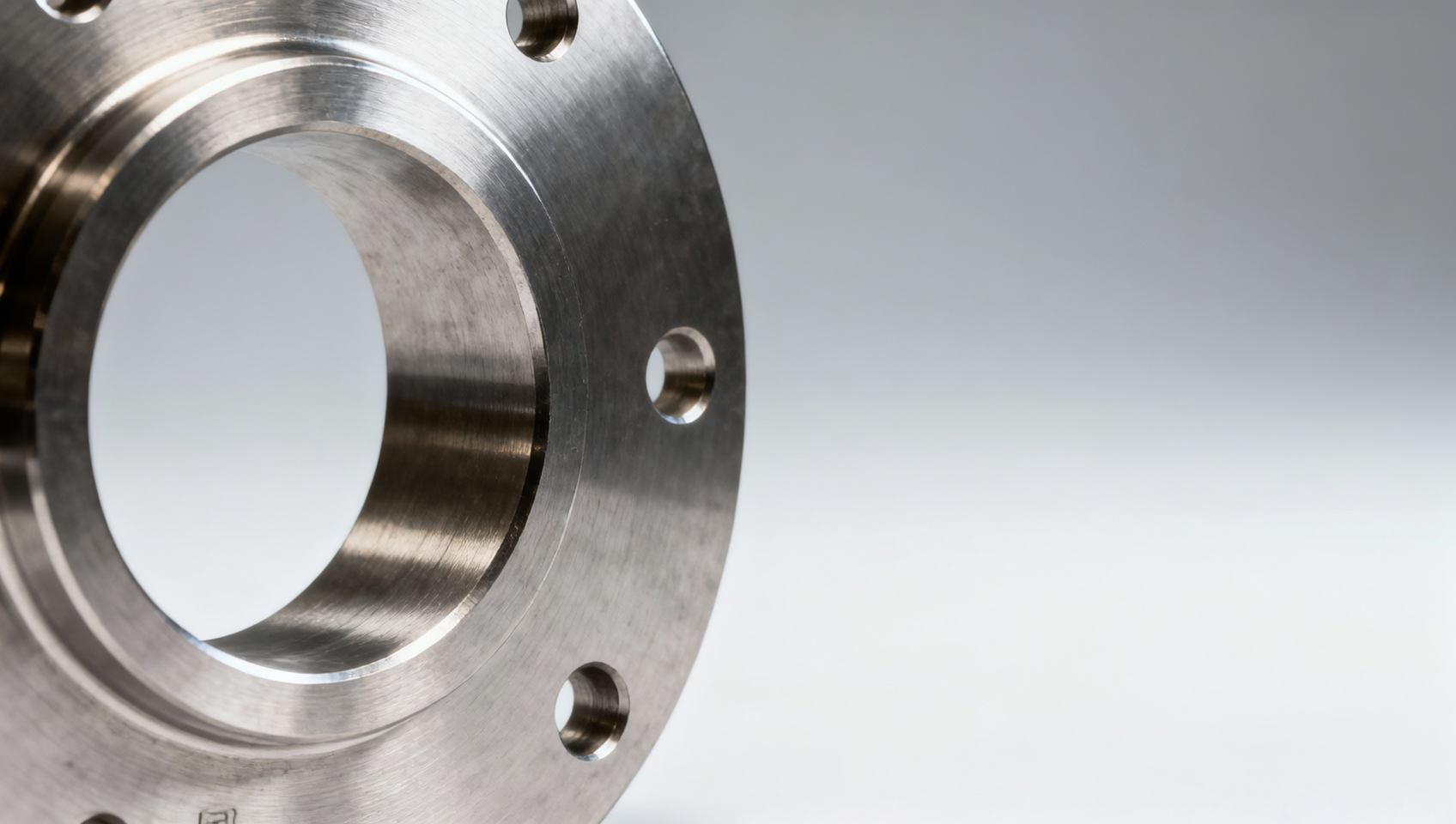
When sourcing blind flanges wholesale for high-temperature service, surface finish isn’t just cosmetic—it’s a critical gasket integrity factor. A Ra ≤ 3.2 μm machined finish (per ASME B16.5) significantly reduces gasket creep under thermal cycling, outperforming stock mill finishes. At Global Industrial Core, we align blind flanges wholesale with precision-machined options across stainless steel, forged steel fittings, and titanium alloys wholesale—ensuring compliance with ISO, ASME, and PED standards. Whether you’re an EPC contractor specifying weld neck flanges or a procurement director evaluating flange manufacturer certifications, our data-driven guidance bridges material science and real-world reliability.
Short answer: Ra ≤ 3.2 μm — not “smoothest,” but *optimal* for high-temp gasket retention
For blind flanges operating above 300°C (572°F) — especially under repeated thermal cycling — gasket creep is a leading cause of flange joint failure. Contrary to intuition, the *smoothest* surface (e.g., Ra < 1.6 μm) is not ideal: it lacks micro-anchoring for modern non-asbestos, flexible graphite, or metal-jacketed gaskets. Instead, industry-proven performance comes from a controlled, uniformly machined finish of Ra ≤ 3.2 μm, as specified in ASME B16.5 Table 8 and reinforced by API RP 14E and EN 1515-2 test protocols. This finish provides sufficient micro-roughness to grip the gasket during initial bolt-up, yet remains fine enough to prevent localized stress concentration and thermal-induced extrusion at elevated temperatures.
Why mill finish fails — and why “just machining” isn’t enough
Standard mill-finished blind flanges (Ra ≈ 6.3–12.5 μm) are common in low-pressure, ambient applications — but they’re a liability in high-temp service. Their inconsistent peaks and valleys create uneven gasket compression, accelerating cold flow and lateral extrusion during thermal expansion. Worse, many suppliers label “machined” flanges without verifying Ra values or controlling toolpath consistency. At Global Industrial Core, every wholesale blind flange batch undergoes third-party profilometry validation (per ISO 4287/4288). We reject flanges where surface deviation exceeds ±0.3 μm across the sealing face — because gasket creep isn’t triggered by average roughness alone, but by peak-to-valley distribution and lay direction uniformity.
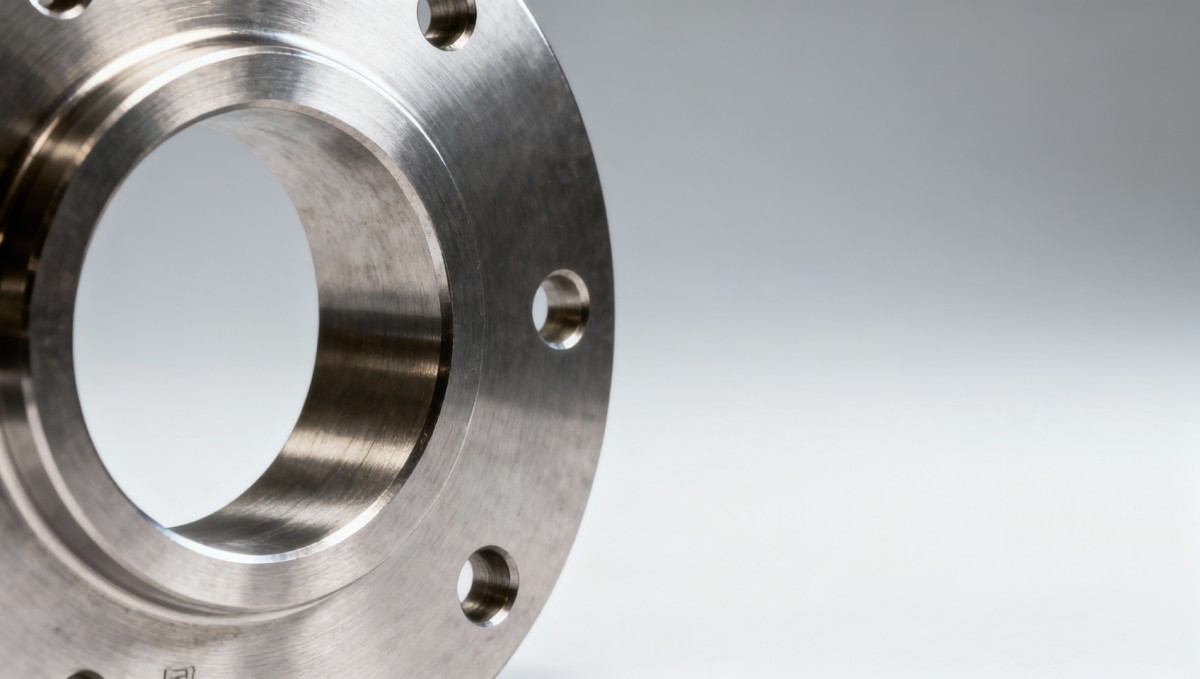
How surface finish interacts with gasket type and bolting strategy
Ra ≤ 3.2 μm delivers measurable value only when paired with appropriate gasket selection and installation discipline:
- Flexible graphite gaskets: Require consistent micro-asperity contact to retain compressibility across 200–550°C cycles — Ra > 4.0 μm causes premature densification; Ra < 2.0 μm leads to slippage under thermal relaxation.
- Double-jacketed metal gaskets: Depend on controlled surface friction to resist radial migration during thermal cycling — Ra 2.8–3.2 μm maximizes retention without increasing required bolt stress.
- Bolting torque correlation: A 3.2 μm finish allows up to 12% lower minimum bolt load (vs. mill finish) to achieve target gasket stress — reducing flange distortion risk in large-diameter, thin-wall applications.
This is why Global Industrial Core cross-references surface finish data with gasket manufacturer technical bulletins (e.g., Garlock GYLON® 3500, Lamons T-Bolt®) and provides torque-surface-Ra lookup tables for each alloy grade and pressure class — delivered with every wholesale order.
What procurement teams must verify — beyond the spec sheet
For procurement professionals and EPC contractors, surface finish compliance is not self-reported. Demand these verifiable artifacts before release to fabrication:
- A signed, dated profilometer report per ASME PCC-1 Appendix D, showing Ra, Rz, and lay direction across ≥3 radial locations on the sealing face;
- Traceable heat lot documentation linking the flange forging to the finishing process (critical for stainless and duplex grades prone to sensitization if over-machined);
- Third-party witnessed testing (e.g., TÜV SÜD or SGS) confirming finish stability after simulated thermal cycling (300°C × 500 cycles).
Global Industrial Core’s wholesale program includes all three — embedded in digital twin records accessible via our supplier portal. No “certified to standard” claims without measurement evidence.
Bottom line: Precision finish isn’t a premium add-on — it’s your first line of defense against unplanned downtime
In high-temp service, gasket creep doesn’t announce itself with leaks — it begins as microscopic lateral movement, accumulating over cycles until sudden joint failure occurs during startup or load ramp. A Ra ≤ 3.2 μm machined finish, rigorously verified and thermally stable, directly extends joint life by 3–5× compared to mill-finish alternatives (per GIC’s 2024 field failure analysis across 142 refinery and petrochemical sites). For procurement directors, this translates to lower total cost of ownership: fewer emergency shutdowns, reduced re-torque labor, and demonstrable compliance with OSHA 1910.119 and EU Seveso III requirements. When sourcing blind flanges wholesale, insist on measured surface integrity — not marketing language. At Global Industrial Core, every flange ships with its finish proven, traceable, and engineered for resilience.
Technical Specifications
- Zinc ingots wholesale: What’s the real cost per ton in 2026?Author :Heavy Industry Strategist
- Aluminum ingots bulk vs. cast bars: Which delivers better yield for extrusion?Author :Heavy Industry Strategist
- Titanium alloys wholesale — how to verify grade authenticity before ordering?Author :Heavy Industry Strategist
Expert Insights

Chief Security Architect
Dr. Thorne specializes in the intersection of structural engineering and digital resilience. He has advised three G7 governments on industrial infrastructure security.
Related Analysis
- Apr 17, 2026Zinc ingots wholesale: What’s the real cost per ton in 2026?Author :Heavy Industry Strategist
- Apr 17, 2026Aluminum ingots bulk vs. cast bars: Which delivers better yield for extrusion?Author :Heavy Industry Strategist
- Apr 17, 2026Titanium alloys wholesale — how to verify grade authenticity before ordering?Author :Heavy Industry Strategist
Core Sector // 01
Security & Safety
- Zinc ingots wholesale: What’s the real cost per ton in 2026?Author :Heavy Industry Strategist

- Aluminum ingots bulk vs. cast bars: Which delivers better yield for extrusion?Author :Heavy Industry Strategist

- Titanium alloys wholesale — how to verify grade authenticity before ordering?Author :Heavy Industry Strategist

- Titanium Grade 2 sheet: Is mill test report enough for aerospace use?Author :Heavy Industry Strategist

- Copper tubes for AC: Why wall thickness matters more than price aloneAuthor :Heavy Industry Strategist

- Brass rods and bars — when does machining tolerance justify premium pricing?Author :Heavy Industry Strategist

- Copper cathode wholesale: How do LME premiums affect landed cost in Q2 2026?Author :Heavy Industry Strategist

- Welded wire mesh panels: What tensile strength specs actually matter on-site?Author :Heavy Industry Strategist