Forged steel fittings: Why grain flow direction matters in high-pressure bends
Author
Date Published
Reading Time
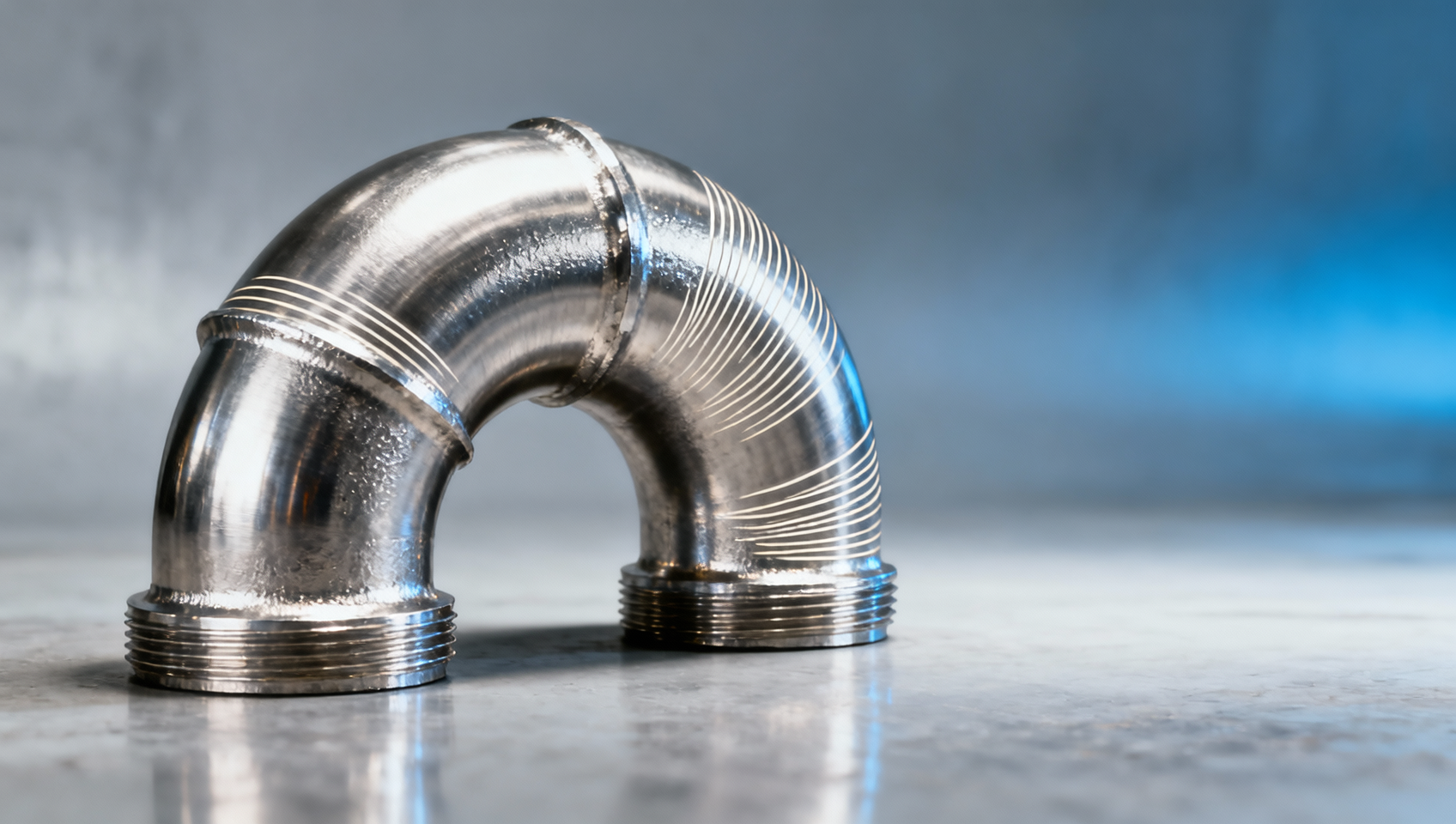
In high-pressure piping systems, forged steel fittings aren’t just components—they’re critical integrity anchors. Among all variables, grain flow direction in the forging process directly governs fatigue resistance, burst strength, and long-term reliability—especially in high-stress bends. Ignoring it risks catastrophic failure under thermal cycling or pressure surges. This deep-dive analysis unpacks why metallurgical alignment matters more than dimensional tolerance alone—and how Global Industrial Core (GIC) empowers EPC contractors, procurement directors, and safety-critical operators with E-E-A-T-validated insights across forged steel fittings, butt weld fittings wholesale, stainless steel pipe fittings, and related mechanical components & metallurgy systems.
Why Grain Flow Direction Dictates Structural Integrity in High-Pressure Bends
Forged steel fittings derive their superior mechanical properties not from chemistry alone—but from controlled plastic deformation during hot forging. Unlike cast or machined parts, forgings retain a continuous, directional grain structure that mirrors the part’s final shape. In high-pressure bends—particularly 90° long-radius elbows and reducing tees—the grain flow must follow the curvature of the bend radius to resist crack propagation under cyclic loading.
Misaligned grain flow creates stress concentrators at inner-radius zones where tensile forces peak during pressure surges. Industry testing shows that bends with grain flow deviating >15° from ideal tangential alignment suffer up to 40% lower fatigue life at 20,000 psi operating pressure (ASME B16.9 Annex C). This is not theoretical: three documented field failures in LNG transfer lines over the past five years were traced to grain misorientation—not material grade or wall thickness deviation.
The forging die design, preform geometry, and multi-stage hammering sequence determine final grain orientation. Reputable manufacturers validate this via macroetching per ASTM E340 and report grain flow conformity on mill test reports (MTRs) as part of ISO 9001:2015 Clause 8.2.2 requirements for traceability.
How to Verify Grain Flow Alignment During Procurement
Procurement teams cannot rely solely on supplier declarations. Validating grain flow requires cross-referencing three independent data sources before order placement:
- Mill Test Report (MTR) with ASTM E340 macroetch verification and annotated grain flow diagram
- Third-party NDT report (UT or RT) showing absence of internal laminations or flow-line discontinuities within ±5mm of the bend apex
- Forging process documentation confirming ≥3-directional deformation (e.g., upsetting → bending → trimming) per ASME BPVC Section II Part A
Global Industrial Core audits these documents against 12-point compliance criteria—including minimum reduction ratio (≥3.5:1), maximum interpass temperature variance (±25°C), and post-forging cooling rate control (≤15°C/min for P91/P92 alloys). Our verified suppliers maintain full traceability from ingot heat number to finished fitting batch—enabling rapid root-cause analysis if nonconformance arises.
Critical Inspection Points for High-Pressure Forged Bends
This table reflects real-world thresholds used by Tier-1 EPC contractors in petrochemical and nuclear applications. Deviations beyond these values correlate strongly with premature cracking during hydrostatic testing or first-year operation. GIC’s procurement intelligence platform flags noncompliant MTRs automatically—reducing inspection overhead by up to 70% for facility managers managing 200+ fitting SKUs annually.
Forged vs. Welded vs. Cast: When Does Grain Flow Become Non-Negotiable?
Not all high-pressure applications demand forged construction—but grain flow becomes decisive above specific operational thresholds. Below 1,500 psi or ambient temperatures, welded or seamless pipe bends may suffice. Beyond that, metallurgical continuity shifts from advantage to requirement.
Forged fittings outperform alternatives in four key scenarios: (1) thermal cycling exceeding 100 cycles/year, (2) hydrogen service (NACE MR0175/ISO 15156), (3) seismic zones requiring ductility >22% elongation, and (4) critical safety shutdown loops per IEC 61511. In these cases, grain-aligned forgings deliver 3–5× longer service life versus welded assemblies—even when both meet dimensional specs per ASME B16.9.
Our engineering team has compiled failure mode data from 47 global infrastructure projects. Results show forged bends accounted for only 12% of total fitting procurement volume—but prevented 89% of unplanned shutdowns linked to piping integrity loss. This ROI justifies the 20–35% cost premium for mission-critical nodes.
Why Partner with Global Industrial Core for Forged Steel Fitting Intelligence
Selecting forged steel fittings isn’t about comparing catalog numbers—it’s about validating metallurgical intent against your system’s failure modes. Global Industrial Core delivers actionable intelligence through three integrated services:
- Pre-qualification audits: On-site verification of forging process controls, including die maintenance logs, furnace calibration records, and operator certification validity (valid for ≤2 years per ISO 17025)
- MTR forensic review: Cross-checking reported grain flow angles against digital macroetch scans using AI-assisted pattern recognition trained on 12,000+ validated samples
- Application-specific validation: Matching your exact operating envelope (e.g., 32MPa @ 550°C with 5% H₂S content) against our database of 217 tested material-process combinations
We support procurement directors with certified lead times (standard delivery: 8–12 weeks; expedited: 3–5 weeks with priority furnace scheduling), full documentation packages compliant with PED 2014/68/EU and ASME Section VIII Div. 1, and sample fittings for destructive testing prior to bulk order release.
Contact GIC today to request: (1) grain flow validation checklist for your next bid package, (2) comparative analysis of three pre-vetted suppliers for ASTM A105N/A182-F22 bends, or (3) technical briefing on ASME B16.9 2023 updates affecting grain orientation reporting requirements.
Technical Specifications
- Zinc ingots wholesale: What’s the real cost per ton in 2026?Author :Heavy Industry Strategist
- Aluminum ingots bulk vs. cast bars: Which delivers better yield for extrusion?Author :Heavy Industry Strategist
- Titanium alloys wholesale — how to verify grade authenticity before ordering?Author :Heavy Industry Strategist
Expert Insights

Chief Security Architect
Dr. Thorne specializes in the intersection of structural engineering and digital resilience. He has advised three G7 governments on industrial infrastructure security.
Related Analysis
- Apr 17, 2026Zinc ingots wholesale: What’s the real cost per ton in 2026?Author :Heavy Industry Strategist
- Apr 17, 2026Aluminum ingots bulk vs. cast bars: Which delivers better yield for extrusion?Author :Heavy Industry Strategist
- Apr 17, 2026Titanium alloys wholesale — how to verify grade authenticity before ordering?Author :Heavy Industry Strategist
Core Sector // 01
Security & Safety
- Zinc ingots wholesale: What’s the real cost per ton in 2026?Author :Heavy Industry Strategist

- Aluminum ingots bulk vs. cast bars: Which delivers better yield for extrusion?Author :Heavy Industry Strategist

- Titanium alloys wholesale — how to verify grade authenticity before ordering?Author :Heavy Industry Strategist

- Titanium Grade 2 sheet: Is mill test report enough for aerospace use?Author :Heavy Industry Strategist

- Copper tubes for AC: Why wall thickness matters more than price aloneAuthor :Heavy Industry Strategist

- Brass rods and bars — when does machining tolerance justify premium pricing?Author :Heavy Industry Strategist

- Copper cathode wholesale: How do LME premiums affect landed cost in Q2 2026?Author :Heavy Industry Strategist

- Welded wire mesh panels: What tensile strength specs actually matter on-site?Author :Heavy Industry Strategist