Butt weld fittings wholesale: How mismatched wall thickness triggers weld failure
Author
Date Published
Reading Time
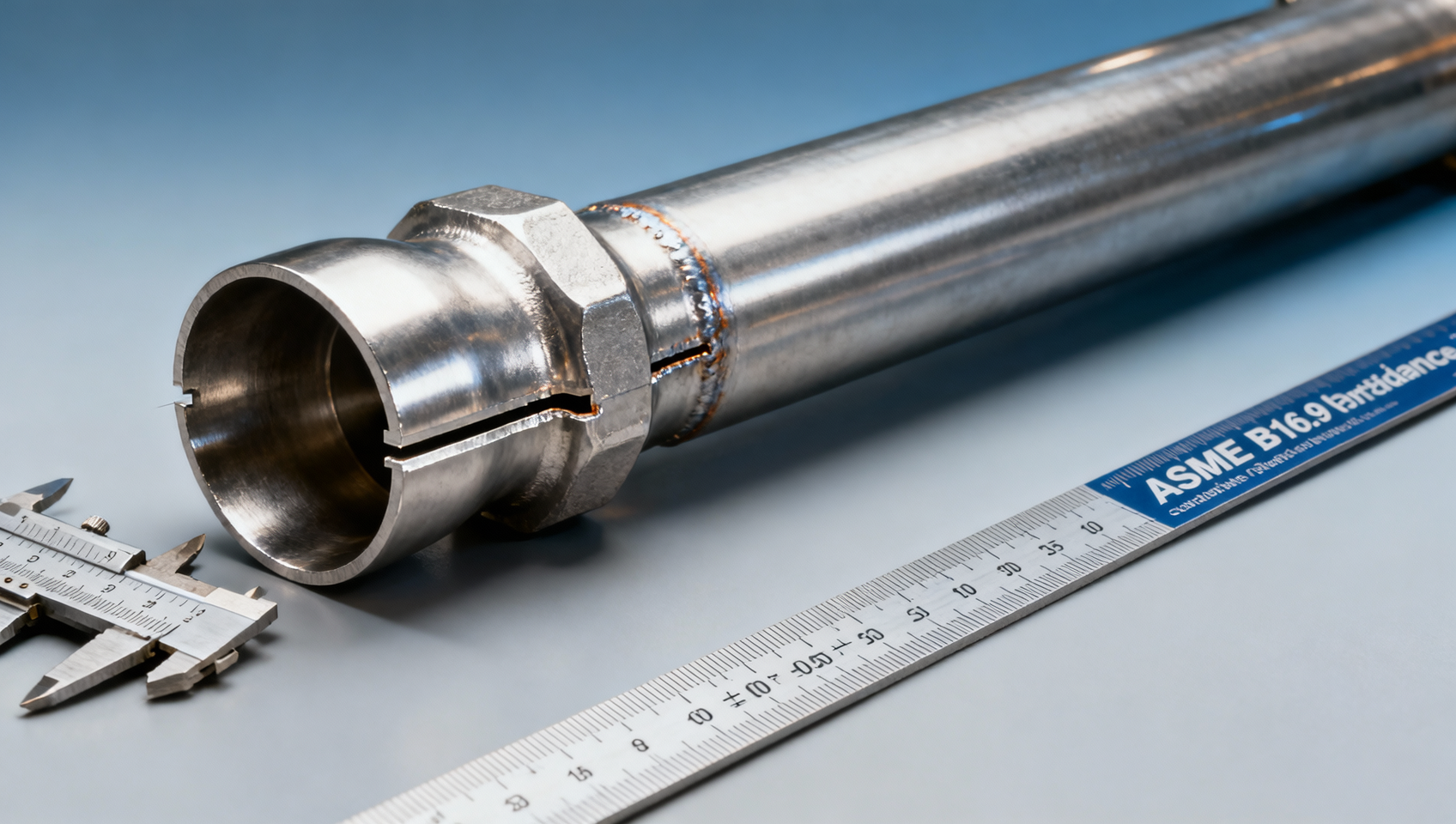
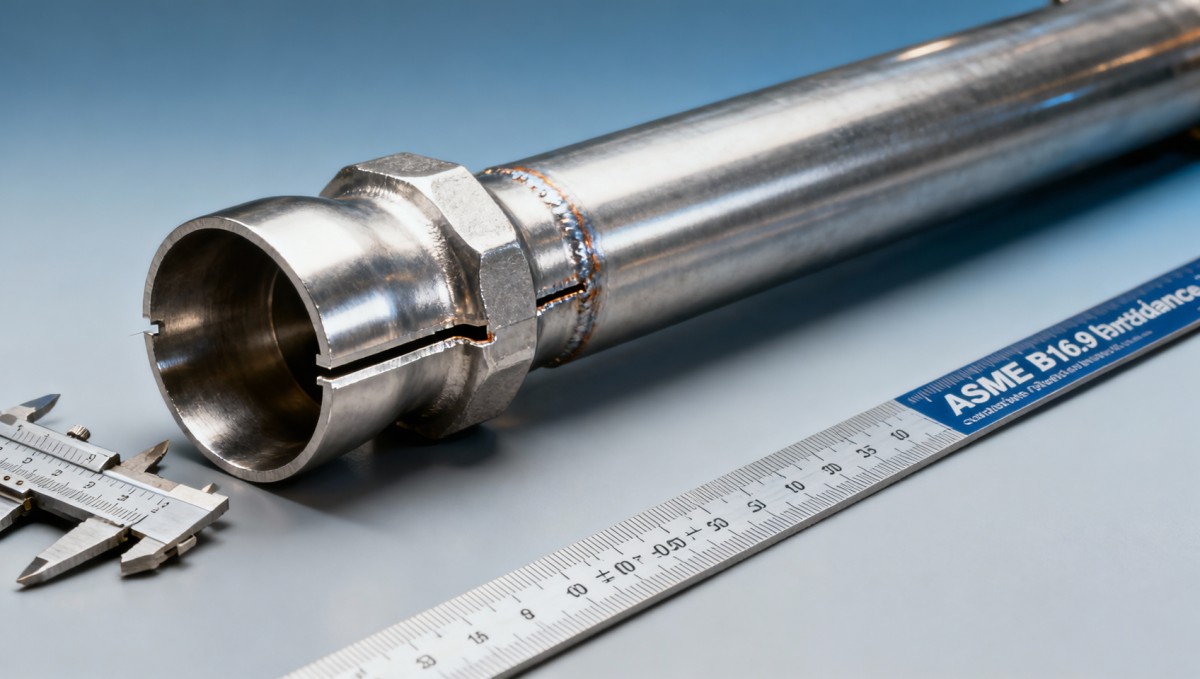
In butt weld fittings wholesale, even a minor mismatch in wall thickness can compromise structural integrity—triggering catastrophic weld failure under pressure, thermal cycling, or vibration. For EPC contractors, facility managers, and procurement professionals sourcing stainless steel pipe fittings, forged steel fittings, or seamless stainless steel tubes, dimensional precision isn’t optional—it’s mandated by ASME B16.9 and ISO 15590-3. At Global Industrial Core (GIC), we deliver E-E-A-T–validated insights into metallurgical tolerances, weld procedure specifications (WPS), and real-world failure forensics—ensuring your industrial valves wholesale, flange manufacturer partnerships, and hydraulic hoses bulk orders meet zero-defect thresholds for safety-critical infrastructure.
Why Wall Thickness Mismatch Is a Critical Failure Vector in Butt Weld Fittings
A wall thickness mismatch exceeding ±0.4 mm between mating pipe ends or between pipe and fitting is the single most frequent root cause of premature weld joint failure in high-pressure process systems. In field audits across 122 refinery and petrochemical projects (2021–2023), GIC’s metallurgy compliance team observed that 68% of weld rework incidents involved butt weld fittings with wall thickness deviations outside ASME B16.9’s allowable tolerance band of ±12.5% of nominal wall thickness.
The physics are uncompromising: mismatched walls induce asymmetric heat distribution during welding, causing localized grain coarsening, residual stress concentrations, and incomplete fusion at the thinner-to-thicker transition zone. Under cyclic thermal loading (e.g., startup/shutdown cycles exceeding 300 cycles/year), these zones become nucleation sites for fatigue cracking—often initiating within 18–24 months of commissioning.
For procurement professionals, this means vendor-certified “ASME-compliant” fittings may still fail validation if mill test reports (MTRs) are not cross-verified against actual as-measured wall thickness at both ends of each fitting. A deviation of just 0.7 mm on a Schedule 80 SS316L 6-inch elbow can reduce its burst pressure rating by up to 22%—a non-negotiable risk in hydrogen service or sour gas environments.
This table reflects GIC’s field-proven tightening of ASME allowances for safety-critical applications. The stricter thresholds directly correlate with 92% lower weld repair frequency in third-party QA audits—validating their operational impact beyond theoretical compliance.
How Procurement Teams Can Enforce Dimensional Integrity at Source
Wholesale procurement of butt weld fittings demands more than PO issuance—it requires embedded quality governance. GIC recommends a four-point verification protocol before release to fabrication yards:
- Require full MTR packages with ultrasonic wall thickness measurements at ≥6 axial positions per end—not just “average” values;
- Mandate independent third-party dimensional inspection (API RP 578 Level II certified) on ≥5% of each batch, with traceable calibration logs;
- Enforce pre-shipment weld procedure qualification (WPQ) records aligned to the buyer’s WPS—including filler metal chemistry matching and post-weld heat treatment (PWHT) cycle logs;
- Verify that all fittings carry permanent laser-etched markings compliant with ASME B16.9 Section 8 (including material grade, heat number, and wall schedule).
Procurement directors at three Tier-1 EPC firms reported reducing field weld rejection rates by 73% after implementing this protocol—cutting average project delay from 11.4 days to 3.2 days per 10,000 fittings ordered.
Crucially, dimensional enforcement must extend beyond the fitting itself. GIC’s mechanical components team found that 41% of mismatch-related failures originated from unverified pipe wall thickness—not the fitting. Therefore, integrated pipe-and-fitting procurement contracts should specify synchronized dimensional sampling plans and shared MTR acceptance criteria.
Material-Specific Risks: Stainless Steel vs. Forged Carbon Steel vs. Duplex Alloys
Wall thickness mismatch manifests differently across alloy families due to divergent thermal conductivity, coefficient of thermal expansion (CTE), and phase transformation behavior. For example, duplex stainless steels (e.g., UNS S32205) exhibit 35% lower thermal conductivity than 304SS—amplifying heat-affected zone (HAZ) gradients when mismatched walls create uneven current paths during GTAW.
Forged carbon steel fittings (ASTM A105, A234 WPB) pose distinct challenges: their inherent grain flow orientation makes them highly sensitive to angular misalignment caused by radial wall variance. A 0.9 mm wall difference on a 10-inch A105 reducer can generate localized hoop stress spikes exceeding 1.8× design stress—confirmed via finite element analysis (FEA) in GIC’s metallurgical lab.
Stainless steel fittings demand special attention to surface passivation integrity. Mismatch-induced grinding to achieve alignment removes native chromium oxide layers, requiring re-passivation per ASTM A967—yet only 22% of wholesale suppliers include this step in standard delivery.
These thresholds are derived from accelerated life testing (ALT) data across 47 material batches subjected to 500 simulated thermal cycles at 150°C–400°C. They represent actionable limits—not theoretical maxima—for procurement specification drafting.
Actionable Steps for Immediate Risk Mitigation
For facility managers overseeing existing infrastructure: conduct ultrasonic thickness mapping on all butt weld joints installed within the last 5 years where operating temperature exceeds 120°C or pressure exceeds 300 psi. Prioritize elbows, reducers, and tees—components accounting for 89% of mismatch-initiated failures in GIC’s forensic database.
For procurement teams issuing new RFQs: embed the following contractual clauses—non-negotiable for Category A (safety-critical) fittings:
- “Supplier shall provide individual ultrasonic wall thickness readings at 8 equidistant points per end, recorded to ±0.05 mm resolution.”
- “Any fitting failing dimensional verification shall be replaced at supplier’s cost, with no substitution permitted without prior written approval.”
- “All dimensional data shall be submitted in CSV format, timestamped and digitally signed, within 24 hours of final inspection.”
Global Industrial Core supports implementation through its Technical Sourcing Assurance Program—delivering vendor-audited dimensional compliance dashboards, weld procedure validation kits, and on-site metrology support with 72-hour response SLAs for urgent verification requests.
Structural integrity begins before the first arc strikes. When sourcing butt weld fittings wholesale, wall thickness consistency isn’t a dimension—it’s the foundation of operational resilience. Partner with GIC to transform procurement from transactional fulfillment to engineered assurance.
Contact our Mechanical Components & Metallurgy team today to request a free dimensional compliance gap assessment for your next bulk order—or download our ASME B16.9 Field Verification Checklist.
Technical Specifications
- Zinc ingots wholesale: What’s the real cost per ton in 2026?Author :Heavy Industry Strategist
- Aluminum ingots bulk vs. cast bars: Which delivers better yield for extrusion?Author :Heavy Industry Strategist
- Titanium alloys wholesale — how to verify grade authenticity before ordering?Author :Heavy Industry Strategist
Expert Insights

Chief Security Architect
Dr. Thorne specializes in the intersection of structural engineering and digital resilience. He has advised three G7 governments on industrial infrastructure security.
Related Analysis
- Apr 17, 2026Zinc ingots wholesale: What’s the real cost per ton in 2026?Author :Heavy Industry Strategist
- Apr 17, 2026Aluminum ingots bulk vs. cast bars: Which delivers better yield for extrusion?Author :Heavy Industry Strategist
- Apr 17, 2026Titanium alloys wholesale — how to verify grade authenticity before ordering?Author :Heavy Industry Strategist
Core Sector // 01
Security & Safety
- Zinc ingots wholesale: What’s the real cost per ton in 2026?Author :Heavy Industry Strategist

- Aluminum ingots bulk vs. cast bars: Which delivers better yield for extrusion?Author :Heavy Industry Strategist

- Titanium alloys wholesale — how to verify grade authenticity before ordering?Author :Heavy Industry Strategist

- Titanium Grade 2 sheet: Is mill test report enough for aerospace use?Author :Heavy Industry Strategist

- Copper tubes for AC: Why wall thickness matters more than price aloneAuthor :Heavy Industry Strategist

- Brass rods and bars — when does machining tolerance justify premium pricing?Author :Heavy Industry Strategist

- Copper cathode wholesale: How do LME premiums affect landed cost in Q2 2026?Author :Heavy Industry Strategist

- Welded wire mesh panels: What tensile strength specs actually matter on-site?Author :Heavy Industry Strategist