Wire mesh partitions for warehouses: fixed panels or modular?
Author
Date Published
Reading Time
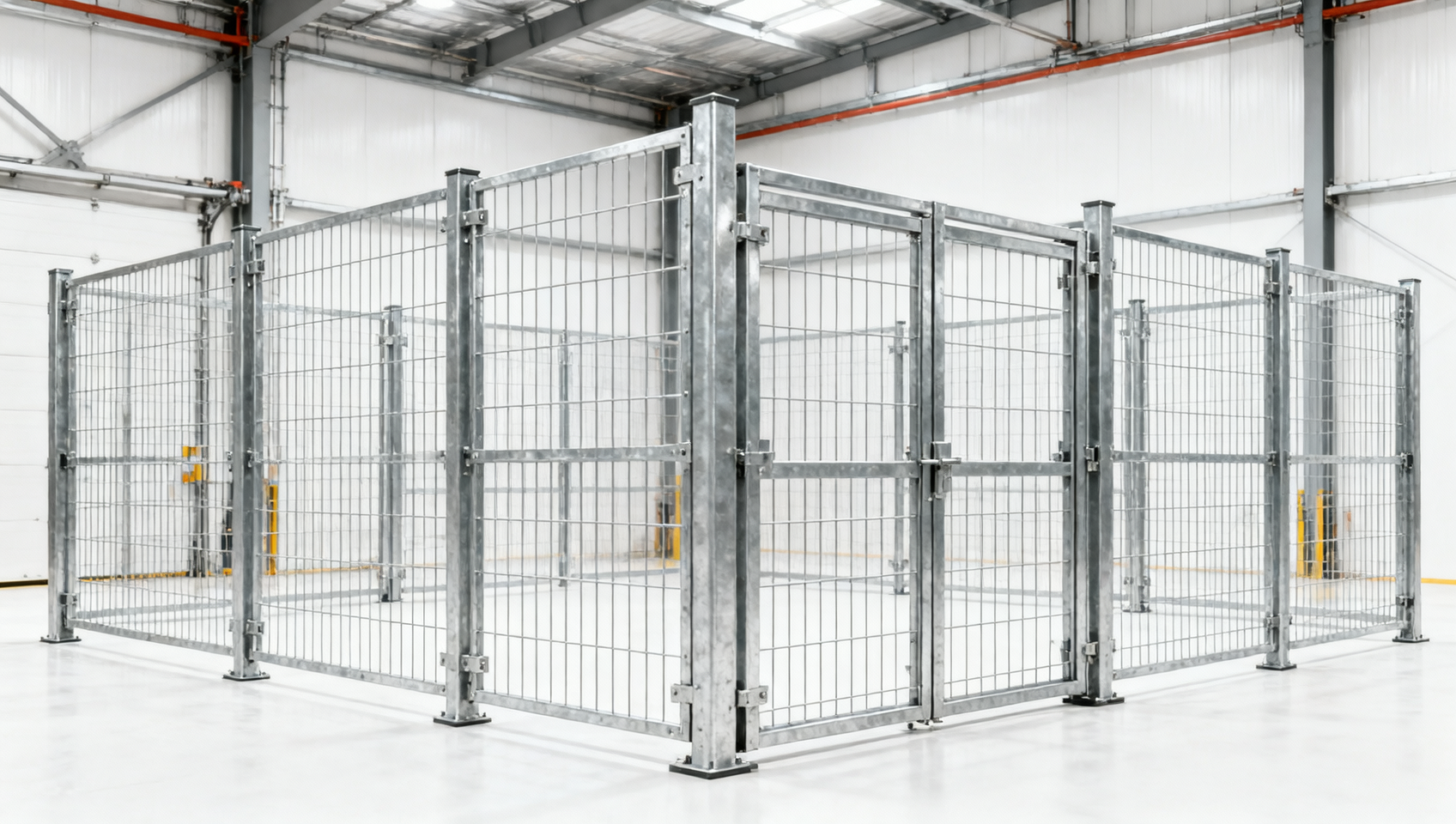
Choosing the right wire mesh partitions for warehouses can affect safety, scalability, and long-term operating costs. Should you invest in fixed panels for maximum rigidity, or choose modular systems for faster reconfiguration? This guide compares both options from the perspective of facility users, procurement teams, and decision-makers, helping you match wire mesh partitions to workflow, compliance, and expansion needs.
How do fixed and modular wire mesh partitions differ in warehouse planning?
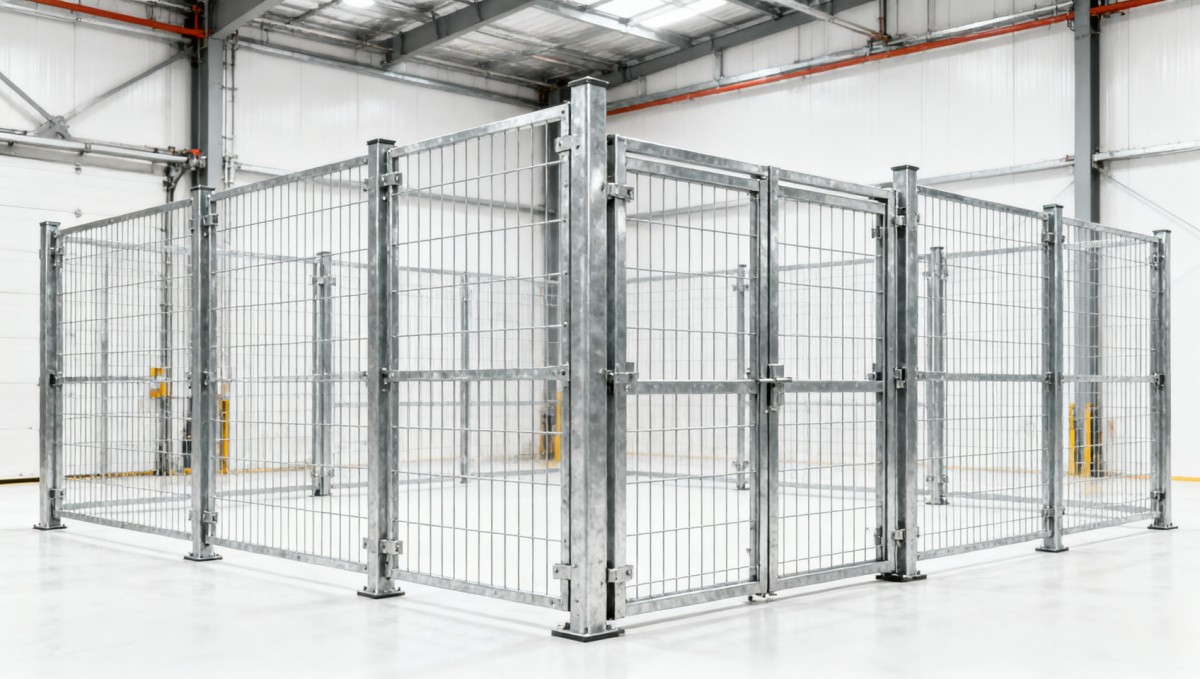
In warehouse environments, wire mesh partitions are used to create controlled zones without sacrificing airflow, visibility, or sprinkler compatibility. The core decision usually comes down to fixed panels versus modular systems. That choice affects not only installation method, but also traffic design, security levels, maintenance routines, and how easily the layout can change over the next 12–36 months.
Fixed wire mesh partitions are generally anchored as permanent or semi-permanent barriers. They are often preferred where the protected area has a stable footprint, such as bonded storage, high-value inventory cages, tool cribs, maintenance rooms, or segregated hazardous access zones. For operators, the appeal is simple: fewer moving parts, stronger perceived rigidity, and reduced risk of layout drift over time.
Modular wire mesh partitions, by contrast, are built around standardized posts, panels, doors, and connectors that can be reconfigured in stages. For facilities dealing with changing SKU profiles, seasonal throughput, phased expansion, or evolving automation cells, modularity can reduce disruption. Procurement teams also value the ability to expand in batches rather than commit all capital upfront in one large installation cycle.
From a decision-making standpoint, neither option is universally better. The right answer depends on how often the zone may need resizing, what level of access control is required, whether the site is leased or owned, and how much downtime is acceptable during installation. In many industrial sites, the practical decision is made by evaluating 4 factors together: stability, flexibility, compliance, and life-cycle cost.
What warehouse users usually need from these systems
For operators and supervisors, wire mesh partitions are not just barriers. They influence picking speed, forklift movement, line-of-sight supervision, and emergency access. A partition that looks adequate on a drawing can become a bottleneck if aisle width, door swing, or pallet staging space was underestimated by even 300–600 mm in a high-traffic lane.
For procurement teams, the challenge is broader. They need to compare quotations that may look similar at first glance but differ in panel gauge, coating quality, post anchoring, lockset specification, and installation scope. A lower initial quote can become costly if it excludes site survey, door hardware, or future extension compatibility.
For senior decision-makers, the issue is operational resilience. If the warehouse will support changing product lines, regional expansion, or stricter internal security protocols in the next 2–3 years, a rigid low-cost setup may not remain economical. That is why warehouse partition selection increasingly sits at the intersection of facilities planning, risk management, and capital allocation.
- Fixed systems usually fit stable zones with low redesign frequency and stronger preference for permanent enclosure behavior.
- Modular systems usually fit changing workflows, phased capacity growth, and sites where reconfiguration may occur every 6–18 months.
- Both types can support controlled access, but door design, lock integration, and anchoring details matter more than panel format alone.
Which option performs better in daily operations, security, and maintenance?
Operational performance should be judged by actual warehouse behavior, not catalog language. A partition may protect inventory effectively but still create friction if it slows replenishment, blocks maintenance access, or forces awkward traffic patterns. In most projects, facilities teams should review at least 5 daily-use factors: visibility, access frequency, impact resistance, cleaning access, and ease of repair.
Fixed wire mesh partitions often feel more robust in high-contact zones. Because they are usually designed with fewer reconfigurable joints, they may provide better resistance to repeated vibration and accidental contact from carts or pallet trucks. In areas with frequent perimeter contact, such as near dispatch lanes or shared staging zones, this can reduce corrective work over quarterly maintenance cycles.
Modular warehouse partitions perform well where adaptability has operational value. If a site adds a charging area, temporary quarantine zone, or secured spares cage, the ability to move posts and extend bays can save time. Instead of cutting and replacing an entire fence line, teams may only need to add 1–3 panels and relocate one access door, which can shorten intervention time significantly.
Security performance depends on more than fixed versus modular. Mesh aperture, frame construction, anti-tamper fasteners, lock options, and ceiling interface all influence real protection. In many warehouses, inventory loss risk comes less from breach of the mesh itself and more from weak door control, unprotected roof gaps, or poor key management.
Side-by-side comparison for warehouse procurement
The comparison below helps procurement and operations teams evaluate wire mesh partitions on practical criteria rather than general impressions. These are typical decision dimensions used in warehouse fit-out reviews and internal CAPEX approval discussions.
This comparison shows why many facilities select fixed panels for static security cages and modular wire mesh partitions for evolving warehouse programs. The right approach becomes clearer when you map expected reconfiguration frequency, not just current floor layout. If changes are likely more than once during a 24-month period, modular systems often deserve closer review.
Maintenance and repair checkpoints
Maintenance teams should inspect partition systems at regular intervals, especially in areas exposed to mobile equipment. A sensible routine is monthly visual inspection for doors and locks, plus quarterly checks for anchors, panel deformation, and corrosion at cut edges or high-humidity points. These intervals may tighten in food-adjacent, washdown, or coastal environments.
Repair planning also differs. With fixed panels, damage may require cut-out replacement or localized fabrication. With modular warehouse partitions, spare panels, hinges, and locking components can often be kept in stock, allowing faster field replacement. That is a real advantage for sites that cannot tolerate extended disruption during peak shipping windows.
What should buyers check before specifying wire mesh partitions?
Procurement mistakes usually happen before the quotation stage. If the site has not defined the use case clearly, suppliers may price very different systems under the same description. Before requesting proposals, buyers should document at least 6 core items: zone purpose, dimensions, height target, number of doors, access method, and expected future changes within 1–2 years.
A second key point is interface risk. Wire mesh partitions do not exist in isolation. They interact with slab condition, sprinkler layout, lighting, rack clearances, fire exits, conveyors, robotics, and pedestrian routes. In warehouses with mixed traffic, even a small door placement error can affect safety and throughput far more than a minor difference in material cost.
Buyers should also ask whether the quoted system is based on standard modules or custom fabrication. Standardized modular systems may shorten lead times to around 2–6 weeks for common configurations, while highly customized fixed enclosures can take longer depending on site measurements, finishing requirements, and hardware availability. Actual timing varies by region and project complexity, so confirmation should be explicit in the RFQ stage.
For industrial decision-makers, the best procurement outcome often comes from aligning technical, operational, and compliance checks early. This is where a sourcing intelligence partner such as Global Industrial Core adds value: not by pushing a generic answer, but by helping teams compare specifications, fit-for-purpose logic, and implementation risk before capital is committed.
A practical selection checklist
- Confirm whether the partition is for asset protection, personnel segregation, controlled access, or process isolation. One enclosure may serve several purposes, but one purpose should lead the specification.
- Define typical height range and roof treatment. Many warehouse cages use common industrial heights, but buyers should verify local code implications, overhead obstructions, and anti-climb requirements.
- Review door count, opening type, and daily use frequency. A door used 100 times per shift needs different hardware than a door opened twice per week.
- Ask how future expansion works. Can one side extend by 1 bay? Can doors be repositioned? Are spare components standardized?
- Verify coating, fasteners, and corrosion suitability if the space has humidity, cleaning chemicals, or temperature variation.
Specification and evaluation table
The table below can be used during internal review meetings to compare offers for warehouse wire mesh partitions. It helps ensure that procurement does not focus only on unit price while overlooking installation scope or future flexibility.
A checklist-driven approach reduces quotation ambiguity and makes supplier comparisons fairer. It also helps procurement explain the recommendation internally. When operations, engineering, and finance all review the same evaluation points, approval moves faster and post-installation disputes usually decrease.
How do compliance, cost, and implementation risk influence the final decision?
Warehouse partition projects often fail when teams treat them as simple metalwork. In reality, wire mesh partitions can touch several compliance areas, including emergency egress, fire protection clearance, machine safeguarding interfaces, internal security policy, and site-specific insurance requirements. Buyers should confirm applicable standards and local code interpretation before approving detailed drawings.
General international references such as CE-related product expectations, ISO-oriented management practices, and employer safety obligations may shape the project, but exact requirements depend on location and use case. For example, a secure inventory cage, a battery charging segregation area, and a machine perimeter all create different review needs. This is why one partition specification should not be copied blindly from one site to another.
Cost should also be measured over the full life cycle. A fixed system may present lower cost in a stable, long-term area if no changes are expected over 3–5 years. A modular system may carry a higher initial line item in some cases, yet still reduce total cost if the facility expects one or two layout revisions, expansion of 20%–40%, or relocation within a leased building term.
Implementation risk is often the hidden driver. If shutdown windows are short, modular installation can be valuable because work may be phased across evenings, weekends, or staged zones. If the warehouse cannot tolerate repeated adjustments, a more fixed approach with complete upfront planning may be safer. The goal is not to chase a universally low price, but to avoid expensive operational interruption later.
Common mistakes that create unnecessary cost
- Selecting by initial price only and overlooking future extension cost, spare part compatibility, or relocation risk.
- Ignoring door duty cycle, then experiencing hinge, latch, or closer issues within the first maintenance season.
- Failing to coordinate with fire routes, sprinklers, or material handling paths before installation begins.
- Assuming all wire mesh partitions offer the same security level despite differences in aperture, frame detail, and fastening method.
A 4-step implementation path
A disciplined project path usually follows 4 steps. First, survey the site and define use conditions. Second, validate layout, access, and compliance assumptions. Third, review quotation scope, lead time, and installation sequencing. Fourth, complete handover with punch-list closure and maintenance instructions. Even for modest projects, skipping one of these steps can lead to rework.
For many EPC contractors, facility managers, and industrial buyers, the best results come when technical review is linked directly to sourcing strategy. Global Industrial Core supports that process by helping teams compare warehouse partition options through a practical lens: what the site needs now, what it may need next, and which specification choices will hold up under real operating pressure.
FAQ: what do warehouse teams ask most before buying wire mesh partitions?
Search behavior around warehouse wire mesh partitions usually focuses on suitability, installation speed, long-term cost, and compliance. The questions below reflect what operations teams, buyers, and project approvers commonly ask during early research and vendor comparison.
Are modular wire mesh partitions strong enough for high-traffic warehouses?
They can be, provided the system is engineered for the duty level. Strength depends on panel frame construction, post spacing, anchoring, and door hardware more than on the word “modular” itself. In high-traffic areas, buyers should review impact exposure, vehicle proximity, and door cycle count before making a decision.
When are fixed panels the better investment?
Fixed panels are often the better choice when the zone footprint is unlikely to change for at least 24–36 months, the area needs a more permanent feel, and the warehouse wants to minimize connector-based reconfiguration. They are especially common in dedicated secure storage, permanent process segregation, and controlled maintenance rooms.
How long does a typical warehouse partition project take?
Typical timing depends on scope, standardization, and site readiness. Smaller standard projects may move from confirmed specification to installation in roughly 2–6 weeks. More customized layouts, multi-door access control integration, or phased live-site coordination can take longer. The most reliable way to reduce delay is to finalize dimensions, floor condition, and door requirements early.
What are the biggest buying mistakes?
The biggest mistakes are underestimating future layout change, failing to define access needs, and comparing offers that include different scopes. Another common issue is focusing on panel price while ignoring installation, locking hardware, or compliance coordination. A clear specification matrix usually prevents these problems.
Why work with Global Industrial Core when evaluating warehouse partition options?
Choosing between fixed and modular wire mesh partitions is not only a product question. It is a facility strategy question that affects safety, security, workflow, and capital efficiency. Global Industrial Core helps industrial buyers, EPC teams, and facility managers evaluate these decisions with a sourcing and engineering mindset rather than a catalog-only comparison.
If you are planning a new warehouse zone or replacing an outdated enclosure, you can consult GIC for practical support on parameter confirmation, layout suitability, selection logic, expected delivery range, compliance checkpoints, and custom solution direction. This is especially useful when multiple stakeholders need a clear, defensible recommendation before procurement moves forward.
We can help you review fixed versus modular wire mesh partitions based on your real operating conditions: access frequency, expansion expectations, security level, installation constraints, and budget structure. We can also help frame questions for suppliers around sample support, hardware details, phased implementation, and quotation comparison so internal approvals become faster and more informed.
If your team needs guidance on product selection, delivery planning, certification-related considerations, or a tailored warehouse partition strategy, contact Global Industrial Core with your zone dimensions, usage scenario, and project timeline. That gives you a stronger basis for supplier engagement, technical review, and final quotation negotiation.
Technical Specifications
Expert Insights

Chief Security Architect
Dr. Thorne specializes in the intersection of structural engineering and digital resilience. He has advised three G7 governments on industrial infrastructure security.
Related Analysis
- Apr 14, 2026How accurate is a true RMS multimeter on VFD signals?Author :Precision Metrology Expert
- Apr 14, 2026When a digital oscilloscope wholesale quote looks cheap at firstAuthor :Precision Metrology Expert
- Apr 14, 2026What changes when an ozone generator goes commercial gradeAuthor :Environmental Engineering Director
Core Sector // 01
Security & Safety
- Wire mesh partitions for warehouses: fixed panels or modular?Author :Heavy Industry Strategist

- Heavy duty corner guards often fail at the mounting pointsAuthor :Heavy Industry Strategist

- Loading dock bumpers wear out early for one common reasonAuthor :Heavy Industry Strategist

- Shanghai International Hydrogen-Ammonia-Methanol Expo Opens, Highlighting Middle East Green Hydrogen ProjectsAuthor :Heavy Industry Strategist

- Aluminum extrusion profiles oxidize differently at cut ends — does post-cut anodizing affect structural integrity?Author :Heavy Industry Strategist

- Seamless stainless steel tubes bend unexpectedly during installation — is wall thickness tolerance the culprit?Author :Heavy Industry Strategist

- Welded steel pipes wholesale orders often arrive with mismatched mill test reports — why verification mattersAuthor :Heavy Industry Strategist

- Galvanized steel coils develop white rust in humid storage — can packaging alone prevent it?Author :Heavy Industry Strategist