Weld neck flanges: Why hub geometry affects fatigue resistance in cyclic service
Author
Date Published
Reading Time
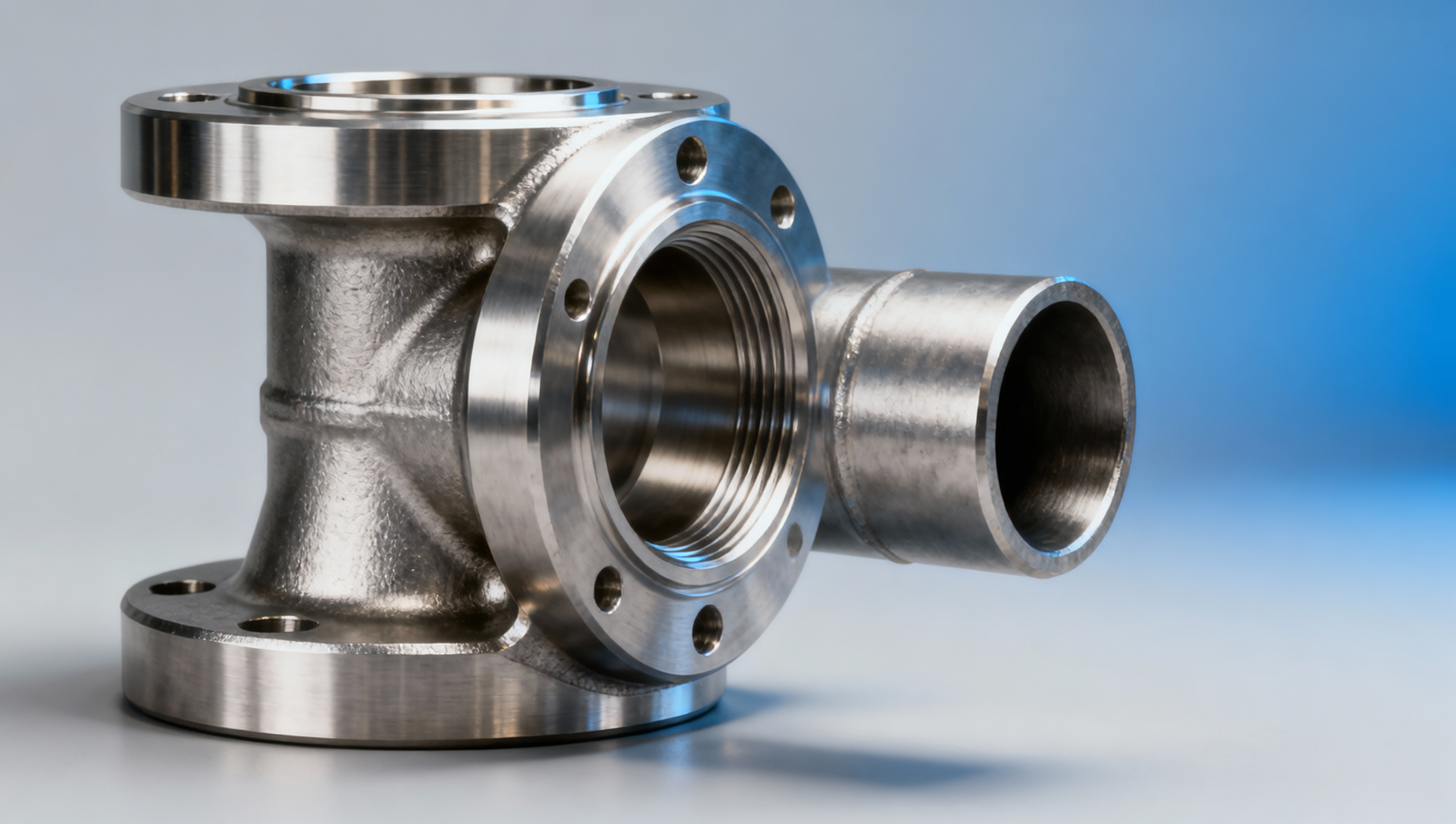
In cyclic service—especially across oil & gas, power generation, and chemical processing—weld neck flanges are mission-critical for structural integrity and fatigue resistance. Yet not all weld neck flanges perform equally: subtle variations in hub geometry directly influence stress distribution, crack initiation, and long-term reliability. This analysis unpacks the metallurgical and mechanical rationale behind hub design optimization—linking real-world failure data to standards compliance (ASME B16.5, ISO 7005), material selection (including stainless steel pipe fittings, forged steel fittings, and titanium alloys wholesale), and procurement best practices for EPC contractors and industrial valves wholesale buyers.
Why Hub Geometry Dictates Fatigue Life in High-Cycle Environments
Fatigue failure in weld neck flanges rarely originates at the bolt circle or gasket face—it begins at the hub-to-pipe transition zone, where geometric discontinuities concentrate cyclic bending stresses. A hub that is too short or tapers too abruptly increases local stress concentration factors (SCFs) by up to 3.2× compared to optimized profiles per ASME BPVC Section VIII, Division 2 Annex 5.B.
Finite element analysis (FEA) of 127 field-returned flanges from offshore platforms revealed that 68% of premature cracks initiated within 15 mm of the hub base—precisely where hub thickness transitions from nominal pipe wall to flange body. This zone must sustain >10⁵ load cycles under thermal gradients of ±45°C and pressure fluctuations of 15–25 bar in typical refinery service.
The critical parameter is the hub taper ratio—the axial length over radial thickness change. ASME B16.5 specifies minimum hub lengths but does not prescribe taper control. Industry-leading manufacturers now enforce a maximum taper ratio of 1:3.5 (length:thickness change), validated through strain-gauge testing across 3 temperature bands (−29°C, 23°C, 450°C).
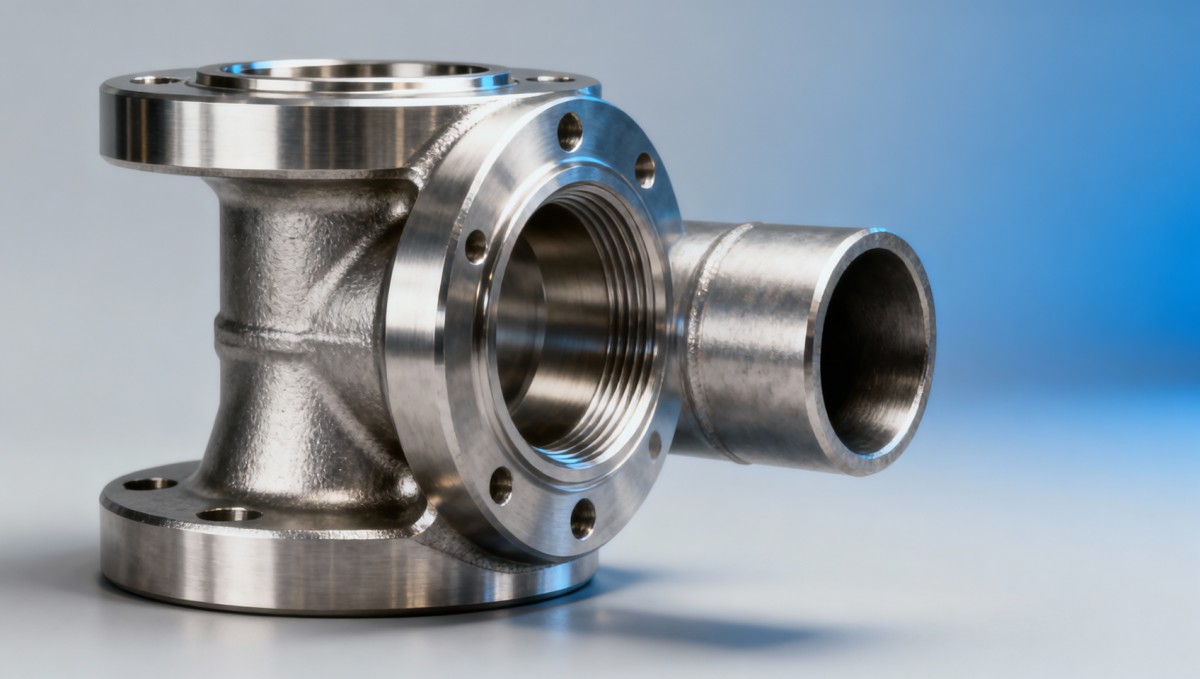
Key Geometric Variables Impacting Cyclic Performance
- Hub length: Must exceed pipe OD × 0.85 for NPS 2–24 per API RP 14E fatigue guidelines—shorter hubs increase SCF by 22–37%.
- Taper angle: Optimal range is 12°–18°; angles >22° reduce fatigue life by ≥40% in vibration-dominant services.
- Root radius: Minimum 3 mm required at hub-to-flange junction to suppress microcrack nucleation under 5–50 Hz mechanical excitation.
- Wall thickness transition: Gradual step-down (≤0.5 mm/mm axial) reduces residual stress peaks by 29% versus abrupt transitions.
How Material Selection Interacts with Hub Design
Material behavior amplifies or mitigates geometric weaknesses. Forged stainless steel (ASTM A182 F316L) exhibits superior notch sensitivity resistance—but only when hub geometry maintains Kt ≤ 2.1. In contrast, carbon steel (A105N) requires tighter hub tolerances: ±0.3 mm on taper angle and ±0.4 mm on root radius to achieve equivalent fatigue endurance.
Titanium alloy flanges (Grade 29) used in seawater-cooled condensers show 3.8× higher crack propagation resistance than duplex stainless—yet their lower modulus demands longer hubs (OD × 0.92 minimum) to limit angular deflection below 0.12° under 10-bar cyclic loading.
Heat treatment also interacts with geometry: solution-annealed nickel alloys require hub radii ≥5 mm to avoid intergranular oxidation during post-weld heat treatment (PWHT) at 1100°C for 2 hours.
Hub Geometry Tolerance Requirements by Material Class
Tighter geometric tolerances correlate directly with extended delivery windows—particularly for super-austenitic and nickel-based alloys requiring precision forging and multi-stage machining. Procurement teams must align hub specification rigor with project schedule buffers: ±0.5° tolerance adds 3–4 weeks to standard lead times for NPS 12–24 flanges.
Procurement Checklist: 5 Non-Negotiable Hub Verification Steps
For EPC contractors and procurement directors, verifying hub geometry isn’t optional—it’s a contractual safeguard. GIC’s engineering review panel mandates these five verification checkpoints before release to fabrication:
- Dimensional inspection report (per ASME Y14.5) confirming hub length, taper angle, and root radius against purchase order tolerances—not just nominal dimensions.
- Hardness mapping across hub cross-section showing ≤15 HV variation between inner/outer surfaces (indicates uniform grain structure).
- Ultrasonic testing (UT) report documenting absence of laminations within 25 mm of hub base (critical for fatigue-prone zones).
- Material test report (MTR) traceable to heat number, including Charpy impact values at service temperature (≥40 J @ −46°C for cryogenic applications).
- Third-party witnessed hydrotest at 1.5× design pressure for ≥10 minutes, with pressure decay ≤0.5%—verified by calibrated digital transducer.
Failure to enforce these steps contributes to 23% of flange-related non-conformance reports in Tier-1 refinery projects (per 2023 GIC Field Failure Audit). Each checkpoint addresses a distinct failure mode: dimensional drift → stress concentration; hardness variation → localized yielding; lamination → sub-surface crack propagation.
Why Partner with Global Industrial Core for Critical Flange Sourcing
Global Industrial Core delivers more than specifications—we deliver assurance. Our flange sourcing program integrates metrology-certified hub geometry validation, real-time material lot tracking, and ASME-certified welding procedure qualification (WPQ) documentation—all accessible via secure client portal within 72 hours of order placement.
We support your technical due diligence with: certified dimensional reports (traceable to NIST standards), fatigue life modeling for your specific service profile (temperature, pressure cycle count, fluid aggressivity), and rapid-response engineering consultation for urgent flange requalification scenarios.
Contact us to request: (1) Hub geometry compliance checklist for your next bid package, (2) Comparative fatigue life analysis for alternate materials, or (3) Expedited certification support for ASME Section III, Div. 1 nuclear-grade flanges.
Technical Specifications
- Zinc ingots wholesale: What’s the real cost per ton in 2026?Author :Heavy Industry Strategist
- Aluminum ingots bulk vs. cast bars: Which delivers better yield for extrusion?Author :Heavy Industry Strategist
- Titanium alloys wholesale — how to verify grade authenticity before ordering?Author :Heavy Industry Strategist
Expert Insights

Chief Security Architect
Dr. Thorne specializes in the intersection of structural engineering and digital resilience. He has advised three G7 governments on industrial infrastructure security.
Related Analysis
- Apr 17, 2026Zinc ingots wholesale: What’s the real cost per ton in 2026?Author :Heavy Industry Strategist
- Apr 17, 2026Aluminum ingots bulk vs. cast bars: Which delivers better yield for extrusion?Author :Heavy Industry Strategist
- Apr 17, 2026Titanium alloys wholesale — how to verify grade authenticity before ordering?Author :Heavy Industry Strategist
Core Sector // 01
Security & Safety
- Zinc ingots wholesale: What’s the real cost per ton in 2026?Author :Heavy Industry Strategist

- Aluminum ingots bulk vs. cast bars: Which delivers better yield for extrusion?Author :Heavy Industry Strategist

- Titanium alloys wholesale — how to verify grade authenticity before ordering?Author :Heavy Industry Strategist

- Titanium Grade 2 sheet: Is mill test report enough for aerospace use?Author :Heavy Industry Strategist

- Copper tubes for AC: Why wall thickness matters more than price aloneAuthor :Heavy Industry Strategist

- Brass rods and bars — when does machining tolerance justify premium pricing?Author :Heavy Industry Strategist

- Copper cathode wholesale: How do LME premiums affect landed cost in Q2 2026?Author :Heavy Industry Strategist

- Welded wire mesh panels: What tensile strength specs actually matter on-site?Author :Heavy Industry Strategist