Mechanical components for heavy machinery: where failures start first
Author
Date Published
Reading Time
Mechanical components for heavy machinery rarely fail without warning—but they do fail first at predictable stress points. For aftersales maintenance teams, recognizing where wear begins in bearings, seals, couplings, gears, and fasteners is critical to preventing unplanned downtime, safety risks, and rising repair costs. This guide highlights the early failure zones that matter most in daily field maintenance and reliability planning.
Why failure points vary by maintenance scenario
For aftersales teams, the value of understanding mechanical components for heavy machinery is not just technical—it is operational. A quarry excavator, a steel plant conveyor drive, a port crane, and a wastewater pump train may all use bearings, seals, shafts, couplings, and bolted joints, yet they fail for different reasons and at different speeds. Dust loading, intermittent shock, thermal cycling, corrosive media, poor lubrication access, and rushed field assembly each change where the first crack, leak, looseness, or metal fatigue begins.
That is why maintenance planning should not ask only, “Which part failed?” It should ask, “In this operating scene, which component normally fails first, what symptom appears earliest, and what inspection method catches it before downtime?” This scenario-based view helps teams prioritize limited labor, spare parts, and shutdown windows. It also improves conversations with OEMs, EPC contractors, and procurement managers who need evidence-based replacement decisions.
The earliest failure zones in mechanical components for heavy machinery
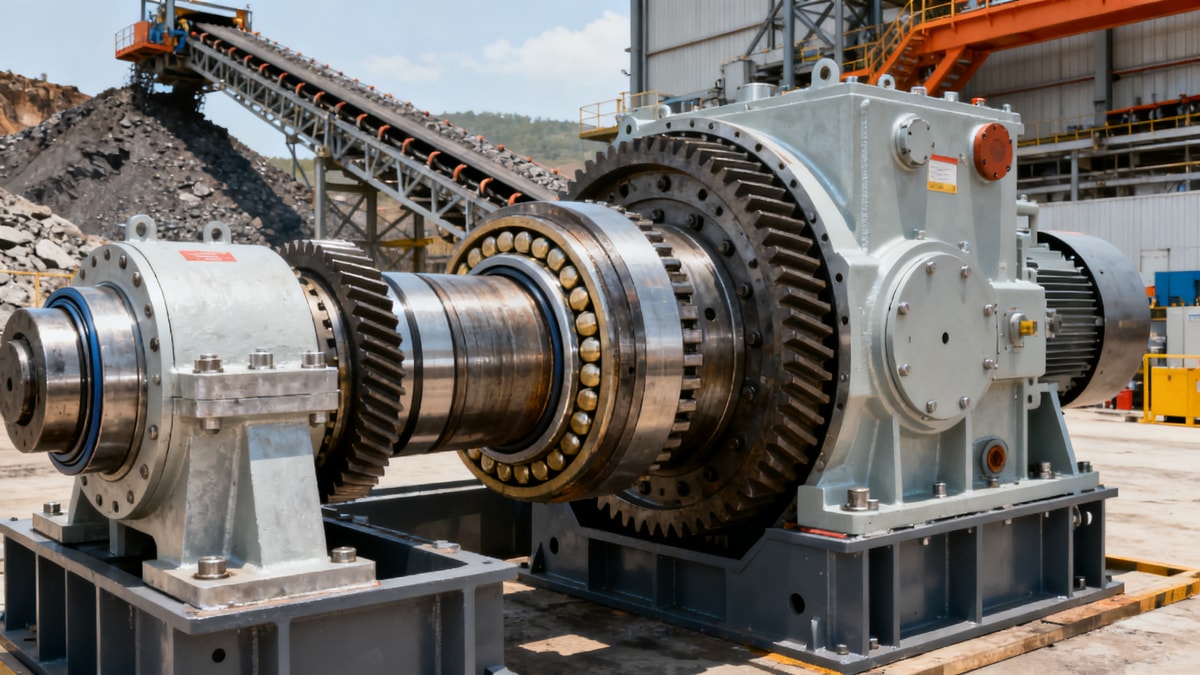
Across most industrial assets, first-stage failures usually begin in interfaces rather than large cast housings or major frames. The high-risk zones are where motion, force, contamination, and assembly tolerance meet. For aftersales maintenance personnel, these are the locations worth checking first during route inspections, shutdown audits, and warranty investigations.
- Bearing raceways and rolling elements: early pitting, false brinelling, overheating, and lubrication starvation
- Seal lips and sealing faces: hardening, abrasion, leakage tracks, and contamination ingress
- Coupling hubs and elastomer elements: misalignment wear, torsional fatigue, and fretting at fits
- Gear tooth flanks and roots: micropitting, scuffing, edge loading, and crack initiation
- Fasteners and clamp joints: preload loss, thread galling, loosening under vibration, and fatigue near first engaged threads
In practice, these failures are linked. A leaking seal lets contaminants enter; contamination degrades lubricant; poor lubricant damages bearings and gears; vibration rises; bolts loosen; alignment worsens; then the larger assembly suffers secondary damage. The earlier the first weak point is found, the lower the total repair cost.
Scenario comparison: where failures start first in different field environments
The table below helps aftersales teams match operating conditions with the most likely first-failure area in mechanical components for heavy machinery. It is especially useful when building PM checklists or deciding which spare kits to hold on site.
Mining, quarry, and cement sites: contamination starts the damage chain
In abrasive environments, mechanical components for heavy machinery usually do not fail first because of extreme design overload. They fail because fine particles defeat protection systems. The first weak point is often the seal, not the bearing itself. Once dust or slurry passes the seal lip, lubricant turns into an abrasive paste, and bearing raceways begin to pit. On swing drives, idlers, crushers, and conveyor pulleys, this pattern is common.
For aftersales teams in these scenes, practical inspections should focus on grease purging behavior, seal edge damage, vent blockage, and mounting surfaces that allow bypass contamination. If a bearing is replaced without correcting seal seating, shaft finish, or over-greasing practice, the same failure often returns early. In these operations, a small leak line or a slight increase in housing temperature can be a more important warning than vibration alone.
High-temperature process plants: thermal movement changes fit and preload
In foundries, rolling mills, kilns, and furnace support systems, heat reshapes failure behavior. Here, couplings, gears, and fasteners become critical early-failure locations because thermal expansion changes alignment and clamp load. Bearings may still fail, but they are often victims of a larger thermal problem rather than the original source.
Maintenance staff should compare cold-state and hot-state alignment data where possible. A machine that looks acceptable during shutdown may run with edge loading after warm-up. Bolted joints near heat sources should be checked for preload retention and material grade suitability. Lubricant selection is equally important: oxidation, viscosity loss, and varnish formation can trigger gear scuffing long before catastrophic tooth breakage appears. In these scenes, the first question should be whether the component is failing from heat exposure, not just wear hours.
Lifting, shock, and intermittent load applications: fatigue begins at contact transitions
Cranes, hoists, stacker reclaimers, and heavy loaders create a different profile for mechanical components for heavy machinery. Unlike constant-speed process equipment, these machines see starts, stops, reversal, impact, and partial load cycles. The earliest failures often begin at transitions: keyways, spline contacts, bolt threads, gear roots, and coupling interfaces. Surface damage may look minor at first, but repeated shock can turn it into fatigue cracking.
Aftersales teams in these applications should pay close attention to backlash changes, fretting corrosion around fits, micro-movement at fasteners, and witness marks that indicate load shift. A common mistake is replacing only visibly broken parts while leaving mating surfaces damaged. If the hub bore is fretted or the shaft shoulder is worn, the new part may not hold alignment or torque for long. In lifting systems, inspection should prioritize load path integrity over cosmetic surface condition.
Pumps, fans, and rotating utility systems: alignment and sealing decide service life
In utility trains, the first failure point is often subtle and highly predictable. Mechanical seals fail because of dry running, face contamination, or shaft movement. Bearings fail because of soft foot, pipe strain, or poor lubrication practice. Couplings show early distress when alignment drifts after installation or after thermal stabilization. These are common issues in water treatment, cooling circuits, chemical handling, and general plant services.
For aftersales maintenance personnel, the best approach is to treat leakage, vibration, and heat as connected symptoms. If a seal is leaking, do not stop at seal replacement; verify shaft runout, bearing clearance, base flatness, and coupling condition. If vibration appears after piping work, check for strain transferred into the casing. In this scenario, mechanical components for heavy machinery require system thinking because accessory loads often trigger the first mechanical failure.
How to choose inspection priorities by component and scene
A scenario-based inspection plan gives more value than a generic checklist. The table below can help aftersales teams decide what deserves immediate attention during routine support visits.
Common misjudgments aftersales teams should avoid
One frequent error is treating every bearing failure as a bearing quality issue. In reality, many bearing claims trace back to contamination, mounting damage, wrong interference fit, or shaft misalignment. Another mistake is focusing on replacement speed instead of root cause containment. Fast return-to-service can be valuable, but if the housing bore is worn or the lubrication line is blocked, the machine is simply being reset for another failure.
Teams also underestimate the role of fasteners in mechanical components for heavy machinery. Loose or unevenly tightened bolts can distort housings, shift alignment, and amplify vibration, yet they are often checked last. Similarly, seals are sometimes viewed as low-cost consumables, even though they can be the primary barrier protecting the entire rotating assembly. In harsh service, a low-value seal may determine the life of a high-value gearbox.
A practical field workflow for scenario-based failure prevention
When supporting mechanical components for heavy machinery in the field, aftersales maintenance teams can use a five-step workflow. First, identify the operating scene: abrasive, wet, thermal, shock-loaded, or precision-aligned. Second, map the most likely first-failure interfaces for that scene. Third, collect simple leading indicators such as leakage pattern, temperature trend, lubricant condition, torque retention, and noise behavior. Fourth, inspect the mating surfaces and surrounding structure, not only the failed part. Fifth, document recurring patterns by asset family so future visits become faster and more predictive.
This approach supports better spare planning as well. Instead of stocking only finished components, teams may need seal kits, sleeves, locking elements, shims, lubrication accessories, and approved fasteners. These smaller items often decide whether a repair truly restores reliability.
FAQ for aftersales maintenance teams
Which mechanical components for heavy machinery usually fail first?
Most first failures appear in bearings, seals, couplings, gear tooth contact zones, and fastened joints because these areas concentrate motion, load transfer, contamination exposure, and assembly sensitivity.
What is the most overlooked early warning sign?
Minor leakage, abnormal grease purge, and slight bolt movement are often ignored, yet they commonly appear before severe vibration or visible breakage.
How should teams prioritize inspections when time is limited?
Start with the scenario. In dusty service, check seals and lubricant contamination first. In hot service, check alignment and fastener preload. In shock-loaded service, inspect fatigue-prone interfaces and load-path components.
Final action guide: match the part to the scene before the next failure does
The biggest lesson for aftersales professionals is simple: mechanical components for heavy machinery do not fail randomly, and they do not fail the same way in every environment. The first weak point depends on the application scene, operating stress, contamination level, alignment stability, and maintenance access. Teams that inspect by scenario rather than by habit catch damage earlier, reduce repeat repairs, and protect both uptime and safety.
Before your next shutdown or field visit, review each machine by duty type, identify the most probable first-failure interface, and confirm whether current inspection routines truly match that risk. That small shift—from component-only thinking to scene-based judgment—can deliver the most reliable results in maintaining mechanical components for heavy machinery.
Technical Specifications
- SASO Mandates Dual Energy Label for Industrial Transformers in Saudi Arabia from May 2026Author :Grid Infrastructure Analyst
- EN 61000-4-30:2026 Enforced: Class A Harmonic Traceability Mandatory for EU PQ AnalyzersAuthor :Precision Metrology Expert
- US DOE Level 3 Transformer Efficiency Standard Effective July 1, 2026Author :Grid Infrastructure Analyst
Expert Insights

Chief Security Architect
Dr. Thorne specializes in the intersection of structural engineering and digital resilience. He has advised three G7 governments on industrial infrastructure security.
Related Analysis
- May 06, 2026SASO Mandates Dual Energy Label for Industrial Transformers in Saudi Arabia from May 2026Author :Grid Infrastructure Analyst
- May 06, 2026EN 61000-4-30:2026 Enforced: Class A Harmonic Traceability Mandatory for EU PQ AnalyzersAuthor :Precision Metrology Expert
- May 06, 2026US DOE Level 3 Transformer Efficiency Standard Effective July 1, 2026Author :Grid Infrastructure Analyst
Core Sector // 01
Security & Safety
- BIS Extends Vibration-Noise Pre-Certification Fee Waiver for Chinese Industrial Bearings to Dec 2026Author :Heavy Industry Strategist

- BIS Extends Pre-Certification Fee Waiver for Chinese Industrial Bearings to Dec 2026Author :Heavy Industry Strategist

- Mechanical components for heavy machinery: where failures start firstAuthor :Heavy Industry Strategist

- BIS Waives Vibration Noise Pre-Cert Fee for Chinese Industrial BearingsAuthor :Heavy Industry Strategist

- BIS Fast-Tracks Vibration Noise Certification for Chinese Industrial BearingsAuthor :Heavy Industry Strategist

- Why plastic injection molded parts price changes with volumeAuthor :Heavy Industry Strategist

- Plastic injection molded parts defects linked to mold designAuthor :Heavy Industry Strategist

- TÜV Rheinland Launches China Bearing NVH Pre-Certification ChannelAuthor :Heavy Industry Strategist