TÜV Rheinland Launches China Bearing NVH Pre-Certification Channel
Author
Date Published
Reading Time
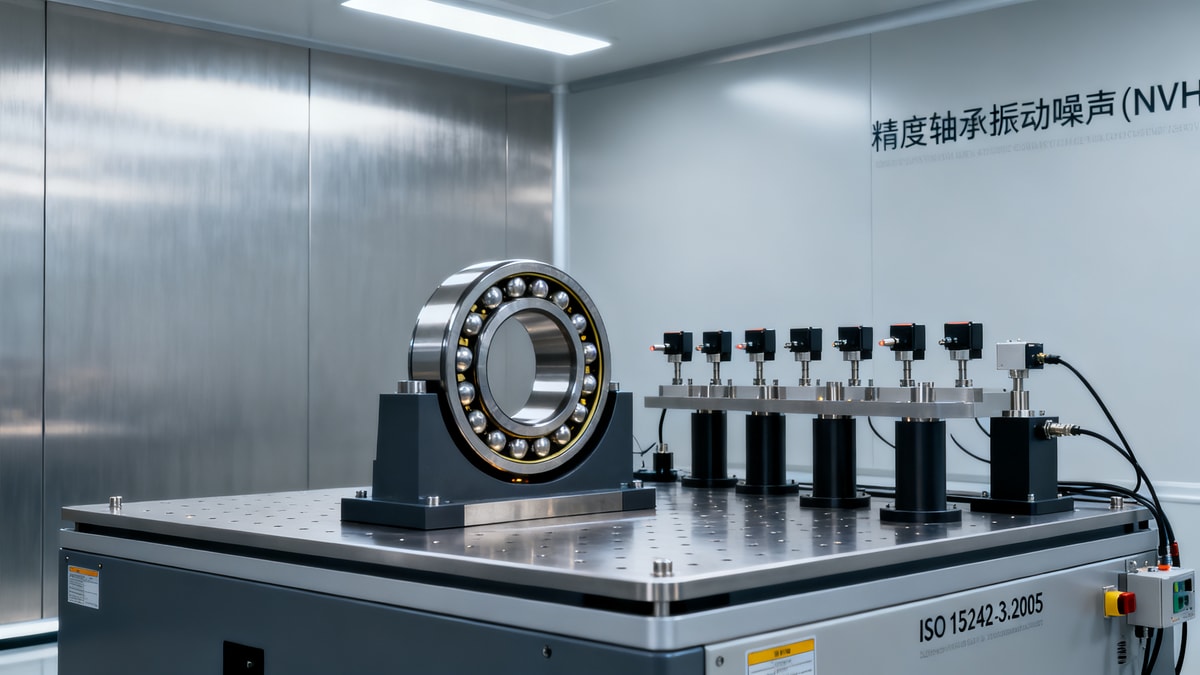
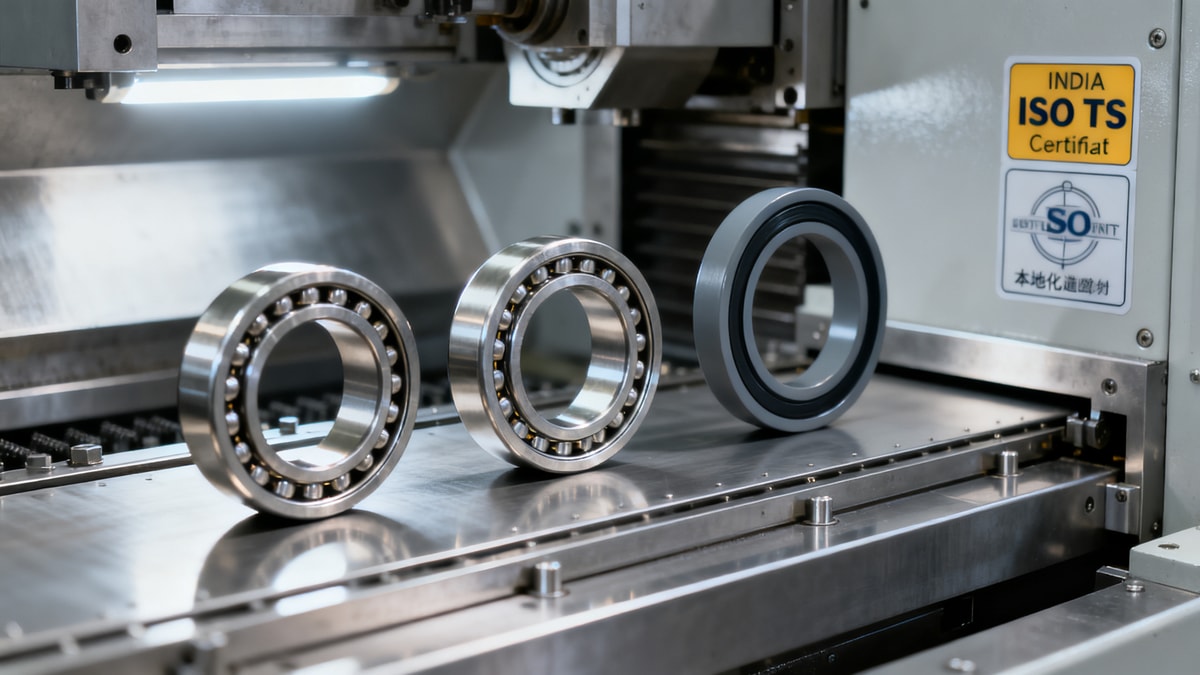
On May 1, 2026, TÜV Rheinland launched a dedicated pre-certification channel in Shanghai for industrial bearing vibration and noise (NVH) testing — accepting CNAS-accredited lab reports per ISO 15242-3:2025 as valid initial evidence, eliminating redundant sample submission. This development is especially relevant for manufacturers and exporters of deep-groove ball, tapered roller, and spherical roller bearings supplying to German OEMs and Tier-1 automotive suppliers.
Event Overview
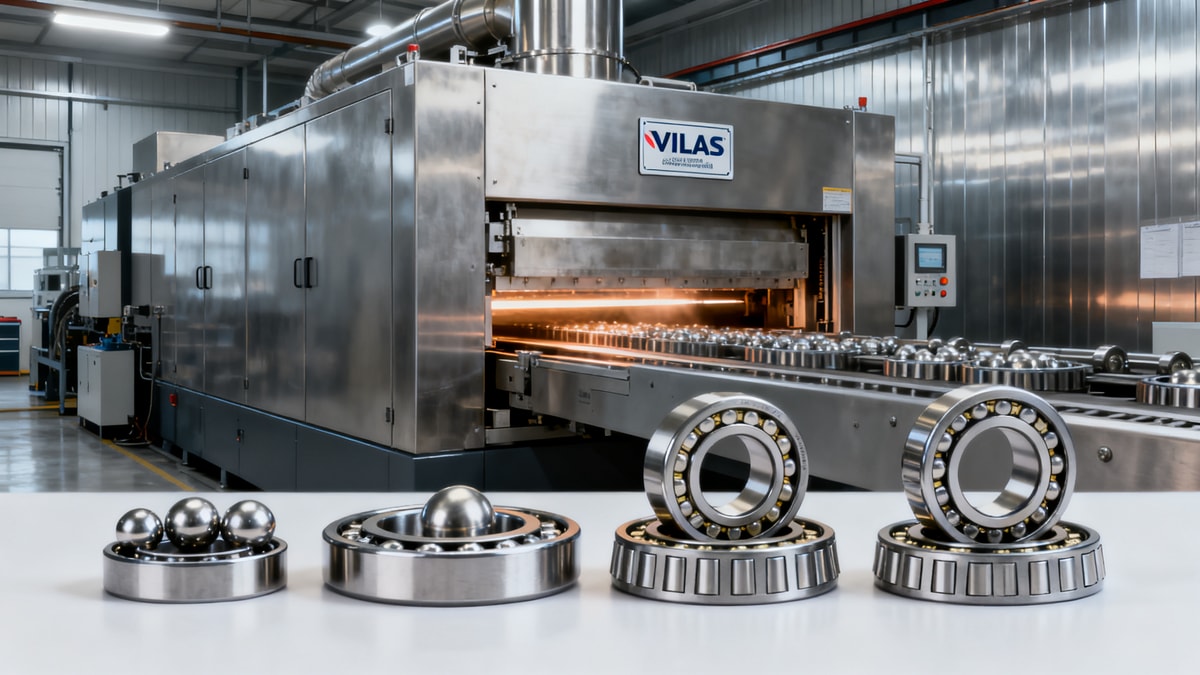
On May 1, 2026, TÜV Rheinland announced the opening of an industrial bearing vibration and noise (NVH) pre-certification channel in Shanghai. The channel accepts vibration test reports issued by laboratories accredited by the China National Accreditation Service for Conformity Assessment (CNAS) under ISO 15242-3:2025 as primary technical input for initial review. No re-testing or duplicate sample submission is required. The service covers deep-groove ball, tapered roller, and spherical roller bearings. Certification turnaround time is reduced to 7 working days, down from an average of 28 days previously.
Industries Affected
Direct Exporters of Industrial Bearings
Exporters targeting German and EU-based automotive and industrial equipment buyers face tighter delivery expectations tied to just-in-time (JIT) procurement. With certification now compressible to one week, lead-time pressure on documentation and conformity evidence is significantly lowered — but only if test reports are already available from CNAS-accredited labs meeting ISO 15242-3:2025 requirements.
Domestic Bearing Manufacturers Supplying Tier-1 Automotive Suppliers
Manufacturers supplying Chinese or global Tier-1 automotive suppliers may be asked to provide TÜV Rheinland-recognized NVH evidence during audit or qualification processes. The new channel enables faster validation of existing CNAS reports, reducing delays in supplier onboarding or program ramp-up — provided their internal or contracted labs have updated capabilities aligned with ISO 15242-3:2025.
Testing Laboratories Accredited by CNAS
CNAS-accredited labs performing bearing vibration testing must verify whether their current scope includes ISO 15242-3:2025 — particularly its 2025 edition requirements for measurement uncertainty, mounting conditions, and spectral analysis. Labs not yet covering this standard may see increased demand for scope expansion or technical alignment support.
What Relevant Enterprises or Practitioners Should Monitor and Do Now
Confirm alignment of existing test reports with ISO 15242-3:2025
Enterprises holding prior NVH test reports should verify whether those reports were issued under the 2025 edition — not earlier versions — and whether the issuing lab’s CNAS accreditation explicitly lists ISO 15242-3:2025. Reports referencing older editions (e.g., ISO 15242-3:2017) are not accepted under this channel.
Identify which bearing types and applications fall within the channel’s coverage
The channel currently applies only to deep-groove ball, tapered roller, and spherical roller bearings. Other types — such as angular contact ball, thrust roller, or custom designs — remain outside this fast-track scope. Exporters should map product portfolios against these three categories before planning submissions.
Prepare documentation for seamless submission
Applicants must submit full test reports (not summaries), including instrument calibration records, mounting configuration details, and raw spectral data where required by ISO 15242-3:2025. Internal QA teams should audit report completeness ahead of submission to avoid administrative rejection.
Editorial Observation / Industry Perspective
Observably, this initiative reflects growing institutional recognition of CNAS-accredited testing capacity in China — not as a substitute for international certification, but as a validated input for downstream conformity assessment. Analysis shows it functions less as a standalone certification and more as a procedural bridge: shortening time-to-evidence rather than time-to-compliance. From an industry perspective, it signals increasing interoperability between national accreditation frameworks and international Notified Body workflows — though only for narrowly defined product categories and standards. Current relevance lies in operational agility, not regulatory equivalence.
Conclusion
This channel does not alter technical requirements or certification criteria — it streamlines evidence acceptance. Its practical value is highest for exporters already producing ISO 15242-3:2025–compliant test reports through CNAS labs. It is better understood as a logistics enabler than a regulatory shift — offering measurable time savings only when upstream testing infrastructure is already aligned.
Source Attribution
Main source: Official announcement by TÜV Rheinland, effective May 1, 2026.
Points requiring ongoing observation: Expansion beyond the three listed bearing types; inclusion of additional standards (e.g., ISO 15242-1 or -2); potential integration with other Notified Bodies’ workflows.
Technical Specifications
- India BIS Draft IS 17832:2026 Sets Noise & Dust Limits for Waste CrushersAuthor :Environmental Engineering Director
- Korea MFDS Mandates Korean UI & KOSHA OEL Database for Industrial Water AnalyzersAuthor :Precision Metrology Expert
- Indonesia BPOM Mandates PM0.1 Efficiency & CADR Decay Labeling for Industrial Air PurifiersAuthor :Environmental Engineering Director
Expert Insights

Chief Security Architect
Dr. Thorne specializes in the intersection of structural engineering and digital resilience. He has advised three G7 governments on industrial infrastructure security.
Related Analysis
- May 03, 2026India BIS Draft IS 17832:2026 Sets Noise & Dust Limits for Waste CrushersAuthor :Environmental Engineering Director
- May 03, 2026Korea MFDS Mandates Korean UI & KOSHA OEL Database for Industrial Water AnalyzersAuthor :Precision Metrology Expert
- May 03, 2026Indonesia BPOM Mandates PM0.1 Efficiency & CADR Decay Labeling for Industrial Air PurifiersAuthor :Environmental Engineering Director
Core Sector // 01
Security & Safety
- TÜV Rheinland Launches China Bearing NVH Pre-Certification ChannelAuthor :Heavy Industry Strategist

- Viton FKM O Rings Bulk: When Premium Material Is Actually NecessaryAuthor :Heavy Industry Strategist

- Pump Shaft Seals: The Small Material Choice With Big Downtime ImpactAuthor :Heavy Industry Strategist

- Oil Seals TC TB: Which Structure Fits Dusty Equipment Better?Author :Heavy Industry Strategist

- Why Polyurethane O Rings Wear Faster in Dynamic SealingAuthor :Heavy Industry Strategist

- Where Non Asbestos Gaskets Fail Earlier Than ExpectedAuthor :Heavy Industry Strategist

- Indonesia Opens Bearing & Seal Manufacturing to 100% FDIAuthor :Heavy Industry Strategist

- Vietnam’s MOIT Mandates VILAS-Certified Heat Treatment Reports for Bearing ImportsAuthor :Heavy Industry Strategist