Why plastic injection molded parts price changes with volume
Author
Date Published
Reading Time
For distributors, agents, and sourcing teams, understanding why plastic injection molded parts price changes with volume is essential to protecting margin and improving quote accuracy. Unit cost does not simply fall as orders grow; tooling allocation, material utilization, cycle efficiency, quality control, and logistics all shape the final price. This article explains the key cost drivers behind volume-based pricing and how to evaluate suppliers more strategically.
Why does plastic injection molded parts price change so much with order volume?
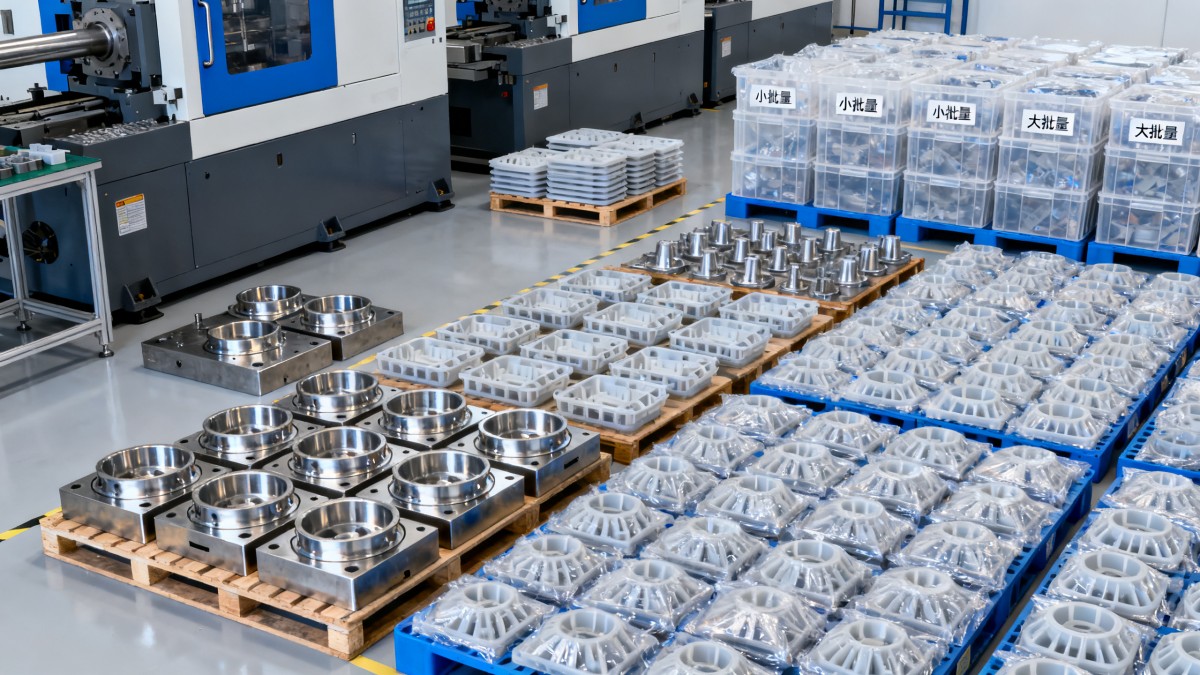
For industrial distributors, the biggest mistake is assuming that plastic injection molded parts price follows a simple linear discount model. In practice, suppliers build quotes from a mix of fixed costs, variable costs, process risk, machine utilization, scrap assumptions, packaging needs, and delivery commitments. That is why a jump from 5,000 to 20,000 pieces may reduce unit cost sharply, while a jump from 200,000 to 400,000 pieces may only deliver a modest additional saving.
This is especially important in broad industrial markets where parts may end up in electrical enclosures, instrument housings, safety accessories, cable management systems, fluid control assemblies, or mechanical subcomponents. In these sectors, the buyer is not only purchasing shape. The buyer is also purchasing dimensional stability, repeatability, resin traceability, compliance support, and production continuity.
Global Industrial Core (GIC) approaches sourcing analysis from an infrastructure-grade perspective. That means looking beyond nominal piece price and examining what drives total procurement value: process consistency, standards alignment, supplier quoting discipline, and the ability to support institutional buyers with documentation, engineering clarity, and scalable supply.
- Low-volume orders usually carry a heavier share of tooling amortization, setup time, sampling effort, and engineering review.
- Mid-volume orders often benefit most from process stabilization, lower waste, and better machine scheduling.
- High-volume orders can reduce unit cost further, but gains may flatten if secondary operations, inspection requirements, or logistics complexity increase.
The core cost structure behind a quote
When a distributor reviews a molded parts quotation, it helps to separate cost into fixed and variable layers. Fixed layers include tooling design, mold build, first-article validation, machine setup, and process tuning. Variable layers include resin consumption, machine time per cycle, labor for secondary work, inspection, packaging, and shipping. Plastic injection molded parts price changes with volume because fixed layers are spread across more parts while variable layers may improve or worsen depending on how efficiently the process runs.
The table below shows how major cost elements typically behave as order volume increases. This framework is useful when comparing supplier quotations that appear similar at first glance but are based on different assumptions.
For sourcing teams, the key insight is that price breaks are usually tied to process economics, not just sales strategy. If a supplier cannot explain where the cost drops come from, the quote may be underdeveloped or may hide future adjustment risk.
Which cost drivers matter most when quoting industrial molded parts?
In industrial applications, not every molded part behaves the same. A simple protective cap in commodity polypropylene has a very different cost profile from a glass-filled nylon insulator, a flame-rated housing, or a precision POM component used in a measuring assembly. The plastic injection molded parts price depends heavily on geometry, resin type, tolerance window, cosmetic requirements, and post-molding handling.
1. Tooling complexity and cavity count
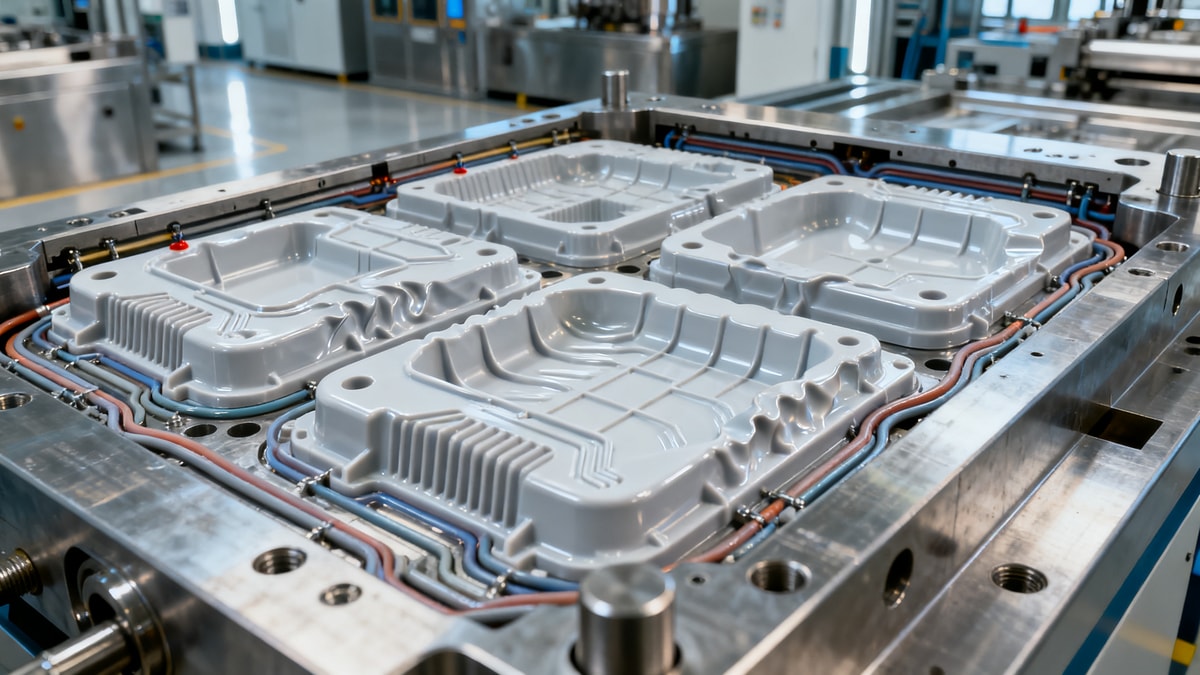
A single-cavity mold generally costs less to build initially, but it may not support aggressive unit-cost reduction at higher volumes. Multi-cavity tools can increase output per cycle, reduce labor per piece, and improve cost efficiency at scale. However, they also require more capital and more rigorous balancing to maintain quality across cavities.
2. Resin selection and compliance needs
Material cost is rarely just the resin price per kilogram. Industrial buyers often need flame performance, UV resistance, chemical resistance, dielectric properties, or dimensional stability under load. In some cases, documentation for RoHS, REACH, UL-related material recognition, or sector-specific compliance becomes part of the quote burden. These requirements can raise the plastic injection molded parts price even when the part geometry appears simple.
3. Tolerance and inspection intensity
Tight tolerances affect cycle time, mold maintenance, process controls, and inspection method. A distributor serving EPC contractors or instrumentation channels should confirm whether the quoted price assumes routine visual inspection, dimensional sampling, full lot checks, or measurement reporting. The tighter the tolerance strategy, the more volume may be required to absorb the added quality burden economically.
4. Secondary operations
Parts that need insert installation, pad printing, ultrasonic welding, trimming, tapping, or assembly do not always become proportionally cheaper at high volume. Sometimes the molding cost falls, but secondary labor becomes the limiting factor. This is one reason distributors should request cost separation between molding and downstream operations.
- Ask whether the quote includes mold cost, part price, sampling, and any engineering change allowance separately.
- Confirm if the resin is virgin, regrind blended, or customer-designated by exact grade.
- Check whether packaging is bulk, compartmentalized, labeled by lot, or export-ready.
How do different order ranges affect plastic injection molded parts price?
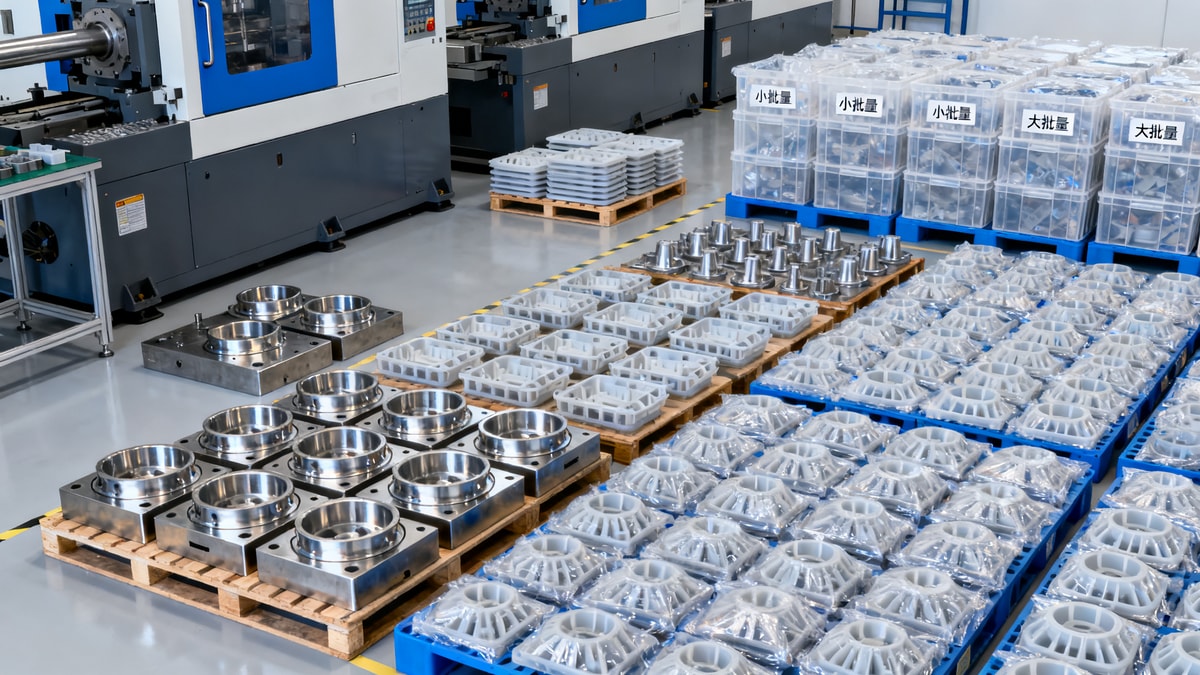
Distributors often need a practical pricing model when preparing bids for customers. The challenge is that different volume bands trigger different production logic. Small runs favor flexibility. Mid-range runs reward process balance. Large runs demand mold strategy, logistics planning, and stronger quality discipline. Understanding these shifts helps avoid margin leakage when your customer revises annual demand later in the sales cycle.
The comparison below translates common volume ranges into likely pricing behavior. These are general industrial sourcing patterns rather than fixed market rules, but they provide a useful framework for quote evaluation.
This pattern matters in contract distribution. If a customer asks for a quote on 10,000 units but expects to scale to 80,000 later, the distributor should ask for a stepped quotation. That protects pricing credibility and avoids a mismatch between early assumptions and later production reality.
What should distributors compare beyond the unit price?
A low quoted plastic injection molded parts price can become expensive if it creates delays, rejects, engineering confusion, or compliance gaps. In industrial channels, margin is often lost not at the first PO but at the point of rework, missed project dates, or field complaints. The strongest sourcing decision compares cost and execution readiness together.
Practical supplier evaluation checklist
- Request a volume ladder quotation with clear breakpoints, such as 1,000, 5,000, 10,000, 50,000, and annual usage assumptions.
- Ask whether tooling ownership, maintenance responsibility, and repair conditions are defined in writing.
- Verify the intended inspection plan, especially for parts used in electrical, safety, metrology, or sealing-related assemblies.
- Review packaging and labeling details if the part will be redistributed through multiple channels or exported to regulated markets.
- Confirm lead time under both standard production and surge-demand scenarios.
The table below is designed for sourcing teams comparing several molders for industrial distribution programs. It helps translate a price quote into a procurement decision.
A disciplined comparison often reveals that the best commercial choice is not the lowest headline price. It is the supplier whose assumptions match your customer’s technical and delivery reality.
How do standards, documentation, and industrial risk influence price?
In industrial distribution, sourcing risk can outweigh nominal savings. Plastic injection molded parts used near electrical systems, measurement devices, environmental equipment, safety accessories, or mechanical interfaces may require more than dimensional approval. Buyers may request traceable material records, inspection documents, or evidence that design intent aligns with broader equipment compliance expectations.
That is where a specialist intelligence-driven approach adds value. GIC helps procurement teams look at molded parts in the context of the end-use system, not only as commodity items. For example, a lower-cost resin substitution may affect flame behavior, long-term stability, or chemical resistance. A lower-cost packaging method may increase deformation risk for thin-wall parts during international shipment. These details affect true procurement cost.
- If the part supports electrical or safety-related assemblies, confirm whether the material grade and processing assumptions are suitable for that application.
- If the part enters export channels, ask early about documentation needed for customs, customer approval, or downstream technical files.
- If the customer expects annual call-offs, review how long-term tool maintenance and resin continuity are managed.
Common pricing misconceptions that hurt distributor margins
Many channel partners lose margin because they treat molded part pricing as static. In reality, the plastic injection molded parts price should be reviewed whenever annual demand, resin grade, cavity strategy, packaging method, or quality plan changes. Several recurring misconceptions create avoidable quoting errors.
Misconception 1: Higher volume always means the lowest total cost
Not necessarily. Large orders can increase carrying cost, warehouse risk, obsolescence exposure, and cash pressure. If a part is revision-sensitive or used in project-based procurement, buying too much can erase the benefit of a lower unit price.
Misconception 2: Two suppliers quoting the same resin are quoting the same product
Resin family alone does not define the full offer. Moisture control, regrind policy, mold condition, process window, cavity balance, and inspection routine can all alter consistency. Similar material names do not guarantee similar field performance.
Misconception 3: Tooling is a one-time issue that can be ignored after launch
Tool wear, maintenance intervals, spare inserts, and change management affect long-term price stability. A low initial part quote may not remain competitive if tool upkeep is weak or if repairs later disrupt production.
FAQ: what buyers ask most about plastic injection molded parts price
How should I request pricing if customer demand is still uncertain?
Ask for a stepped quotation based on several annual volume scenarios, and request clear assumptions for tooling, sampling, packaging, and lead time. This allows you to adjust your resale offer as the project matures instead of renegotiating from scratch. It also helps identify where plastic injection molded parts price is most sensitive to demand changes.
When does it make sense to invest in a multi-cavity mold?
A multi-cavity approach usually becomes attractive when forecast volumes are stable enough to justify higher upfront tooling cost and when part geometry can support balanced filling. It is most effective when the customer values long-run efficiency and consistent replenishment. However, it should be reviewed against maintenance complexity and quality control needs.
What documents should distributors ask for before finalizing a source?
At minimum, ask for the drawing revision basis, material grade identification, quote assumptions, sample approval logic, packaging details, and lead-time commitments. If the application is more controlled, you may also need dimensional reports, material declarations, and a clear statement about how changes to resin, tool, or process will be communicated.
Can a very low quote signal future risk?
Yes. A very low price may reflect optimistic scrap assumptions, incomplete inspection scope, unclear tooling treatment, or insufficient allowance for documentation and packaging. It does not always mean poor quality, but it does require deeper review. Industrial procurement decisions are safer when the supplier can explain the cost model in operational terms.
Why choose us when evaluating molded part sourcing strategy?
Global Industrial Core supports distributors, agents, and industrial sourcing teams that need more than a simple price comparison. We help interpret how plastic injection molded parts price changes with volume in the context of compliance expectations, technical fit, supplier transparency, and downstream delivery risk. Our strength is connecting sourcing decisions to the realities of industrial infrastructure, where performance, documentation, and continuity matter as much as nominal unit cost.
If you are preparing a quote, qualifying a new supplier, or reassessing a current molded part program, you can consult us on practical decision points such as:
- parameter confirmation for resin, tolerance, cavity strategy, and secondary operations;
- product selection guidance based on application risk, environmental exposure, and documentation needs;
- delivery cycle review for prototype, pilot, and mass-production stages;
- custom sourcing strategy for annual volume changes, regional distribution, and project-based demand;
- certification and compliance discussion where customer requirements affect material or process choice;
- sample support and quotation communication to reduce ambiguity before commercial commitment.
For industrial channel partners, better pricing decisions begin with better cost visibility. If you need support comparing suppliers, validating quote logic, or building a sourcing plan around realistic volume assumptions, GIC can help you turn molded part pricing into a more controlled and profitable procurement outcome.
Technical Specifications
Expert Insights

Chief Security Architect
Dr. Thorne specializes in the intersection of structural engineering and digital resilience. He has advised three G7 governments on industrial infrastructure security.
Related Analysis
- May 04, 2026When Components & Metals bulk order pricing stops being cheaperAuthor :Heavy Industry Strategist
- May 04, 2026What makes an Instruments & Measurement supplier dependableAuthor :Precision Metrology Expert
- May 04, 2026How to assess an Environment & Ecology exporter by documentationAuthor :Environmental Engineering Director
Core Sector // 01
Security & Safety
- Why plastic injection molded parts price changes with volumeAuthor :Heavy Industry Strategist

- Plastic injection molded parts defects linked to mold designAuthor :Heavy Industry Strategist

- TÜV Rheinland Launches China Bearing NVH Pre-Certification ChannelAuthor :Heavy Industry Strategist

- Viton FKM O Rings Bulk: When Premium Material Is Actually NecessaryAuthor :Heavy Industry Strategist

- Pump Shaft Seals: The Small Material Choice With Big Downtime ImpactAuthor :Heavy Industry Strategist

- Oil Seals TC TB: Which Structure Fits Dusty Equipment Better?Author :Heavy Industry Strategist

- Why Polyurethane O Rings Wear Faster in Dynamic SealingAuthor :Heavy Industry Strategist

- Where Non Asbestos Gaskets Fail Earlier Than ExpectedAuthor :Heavy Industry Strategist