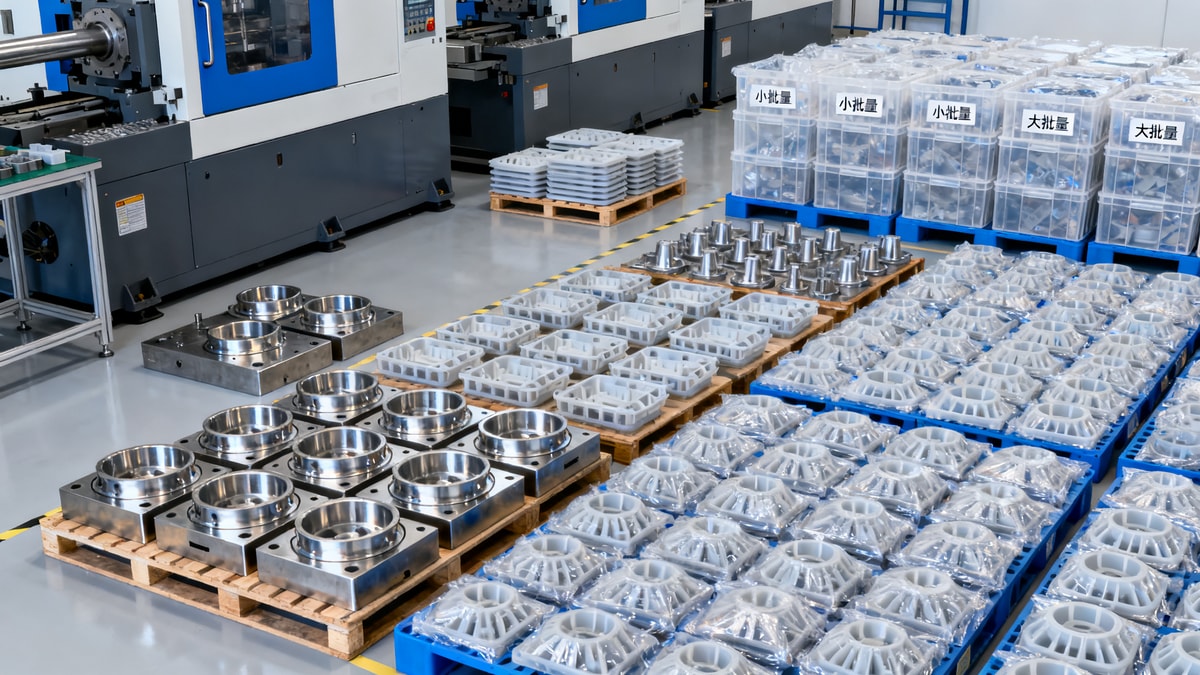
Plastic injection molded parts defects linked to mold design
Author
Date Published
Reading Time
Defects in plastic injection molded parts often trace back to mold design decisions long before production issues appear on the shop floor. For quality control and safety managers, understanding how gate location, venting, cooling balance, and part geometry influence defects is essential to reducing risk, improving consistency, and preventing costly compliance failures in industrial applications.
Why mold-design-linked defects are receiving more scrutiny now
A clear shift is taking place across industrial manufacturing: quality teams are no longer treating defects in plastic injection molded parts as isolated production events. Instead, more organizations are tracing repeat failures back to earlier design-stage decisions, especially in molds used for safety housings, electrical enclosures, instrument covers, fluid handling components, and mechanical support parts. This change matters because the cost of defect discovery rises sharply once parts move from validation to volume production, field installation, or regulated use.
Several signals are driving this attention. First, industrial buyers now demand tighter dimensional consistency, stronger documentation, and more stable batch-to-batch performance. Second, products are increasingly expected to meet CE, UL, ISO, and customer-specific validation criteria without excessive sorting or rework. Third, resin portfolios are changing, with more filled, recycled, flame-retardant, or specialty compounds entering production. These materials can react very differently to gate size, wall transitions, vent depth, and cooling layout. As a result, mold design is becoming a more visible root cause in defect investigations involving plastic injection molded parts.
For quality control and safety managers, the practical implication is simple: defect prevention now starts earlier. The question is no longer just whether the process was stable at the press, but whether the mold was engineered for the real processing window, the chosen resin behavior, and the compliance risk of the final application.
What has changed in defect expectations for plastic injection molded parts
In the past, some cosmetic variation or moderate warpage could be tolerated if parts still assembled. Today, that threshold is narrowing. In industrial settings, even minor sink marks can suggest local weakness, a small weld line can become a crack initiation point, and slight flash can interfere with sealing, electrical safety, or moving interfaces. This is especially true where plastic injection molded parts serve as functional rather than decorative components.
The trend is not merely toward “better-looking parts,” but toward parts that perform predictably under vibration, heat, moisture, UV exposure, chemical contact, or mechanical load. Mold design decisions are central to this shift because they define how the melt fills, packs, cools, and releases. If those conditions are structurally unbalanced, no amount of late-stage inspection can fully protect the business from recurring defects.
The main defect patterns increasingly linked to mold design
A growing number of defect investigations show that recurring quality issues in plastic injection molded parts are not random process drift, but predictable outcomes of mold architecture. Four areas stand out.
Gate location and flow path imbalance
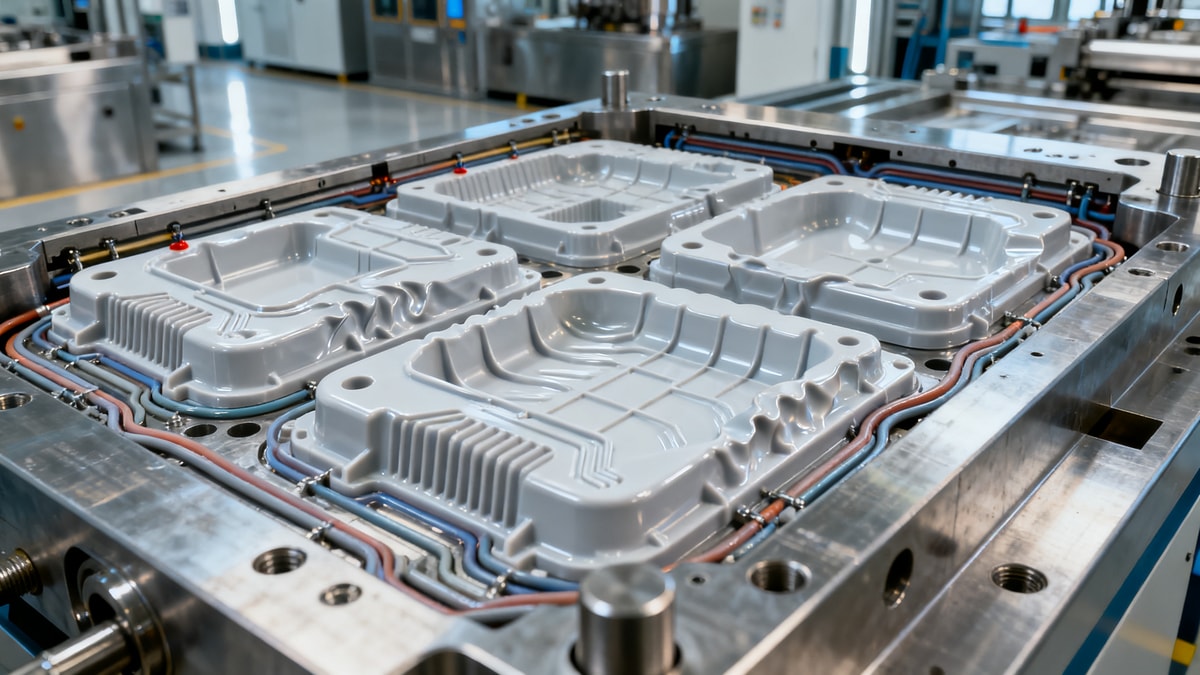
Poor gate placement can create hesitation, overpacking, jetting, weld lines in high-stress zones, or differential shrinkage across the part. In multi-cavity tools, imbalance can also cause cavity-to-cavity variation that appears as inconsistent dimensions or surface quality. For quality teams, this means sampling must go beyond average output and examine cavity-specific patterns.
Inadequate venting
As fill rates increase and resins become more demanding, trapped air has become a larger concern. Poor venting can produce burn marks, short shots, gas traps, weak knit lines, and degraded surface appearance. In safety-critical housings or covers, these issues may not remain cosmetic; they can reduce strength or compromise dielectric performance.
Cooling imbalance
Uneven cooling continues to be one of the biggest hidden drivers of warpage, sink, residual stress, and dimensional drift in plastic injection molded parts. When cooling channels are too far from thick zones, poorly distributed, or limited by tool design shortcuts, the part may pass initial inspection yet fail after conditioning, assembly, or field use.
Ejection and geometry interaction
Thin ribs, deep cores, insufficient draft, and poorly positioned ejectors can lead to drag marks, stress whitening, cracking, or deformation during part release. This is increasingly important where plastic injection molded parts include snap fits, sealing edges, or precise interfaces. The mold may technically run, yet still introduce release-related damage that becomes visible only after downstream handling.
Why these defects are becoming more expensive for quality and safety teams
The cost profile of defects has changed. A short shot or flash issue once addressed through sorting may now trigger broader concerns: traceability questions, customer corrective action requests, validation repeats, line stoppages, or product liability review. For industrial sectors, the risk is amplified when plastic injection molded parts are integrated into electrical, environmental, or mechanical systems where failure can affect operator safety or system uptime.
Another important change is that defects now travel faster through supply chains. Global sourcing, multisite production, and compressed launch schedules leave less room to “learn by production.” If a mold design flaw is built into the tool, the same problem can propagate across thousands of parts before the root cause is fully understood. This is why many procurement and quality leaders are moving defect review upstream, asking more detailed questions before tooling approval and first article acceptance.
Who is most affected by the shift toward design-stage defect control
The impact is broad, but it is especially visible in organizations where quality, safety, and sourcing decisions intersect. Plastic injection molded parts used in industrial infrastructure are often low-cost relative to the systems they protect, yet high-risk when they fail. That mismatch changes how teams should evaluate tooling decisions.
The drivers behind the shift: materials, regulation, and application severity
Three forces are shaping the new reality for plastic injection molded parts. The first is material complexity. Filled polymers, flame-retardant grades, and sustainability-driven compounds can behave less forgivingly than standard commodity resins. They may require optimized venting, different gate dimensions, or more disciplined cooling to avoid brittle zones or dimensional instability.
The second force is compliance exposure. Where components contribute to enclosure safety, insulation, contamination control, or operator contact protection, visual defects may carry functional implications. A seemingly minor sink mark can indicate nonuniform packing. A burn mark can suggest trapped gas and local degradation. A weld line across a mounting boss can reduce structural margin. Quality teams are therefore judging mold-related defects not only by appearance, but by potential safety consequence.
The third force is harsher application demand. Many industrial systems now operate with higher thermal loads, greater vibration, and longer maintenance cycles. Under these conditions, marginal plastic injection molded parts are more likely to fail over time. This pushes defect analysis toward root causes in geometry, tool steel execution, thermal management, and release design.
What quality and safety managers should now watch more closely
The strongest signal to monitor is repeatability across time, cavity, and operating condition. A part that looks acceptable in a short trial may still contain a mold-related weakness that appears during long runs or environmental testing. That is why quality control for plastic injection molded parts should increasingly include a design-informed review rather than relying only on dimensional checks and visual standards.
- Check whether gates place weld lines in stress-bearing or sealing areas.
- Review venting adequacy near end-of-fill zones and deep ribs.
- Compare cooling symmetry against wall-thickness transitions and critical tolerances.
- Assess whether ejector locations create cosmetic or structural stress points.
- Confirm whether mold flow analysis assumptions matched the actual resin grade and process window.
Another useful trend indicator is the pattern of corrective actions. If process adjustments repeatedly compensate for the same defect, the organization may be treating a mold design limitation as an operating issue. That is rarely sustainable in high-volume or regulated environments.
A practical response model for reducing defect risk upstream
The market direction suggests a stronger front-loaded control model. Instead of waiting for plastic injection molded parts to reveal weaknesses during PPAP, FAT, or production launch, companies should build a structured review path before tool release and again before full-scale approval.
How to judge future supplier capability in plastic injection molded parts
Supplier evaluation is also changing. A credible supplier of plastic injection molded parts should not only promise low scrap and fast output, but also explain how mold design choices support long-term consistency. For quality and safety managers, a better capability signal is whether the supplier can connect defect modes to tooling fundamentals and propose preventive actions backed by trial evidence.
Useful questions include: How are vent locations validated? How is cavity balance checked in family or multi-cavity tools? What features are intentionally left steel-safe? How are cooling risks addressed for thick-to-thin transitions? How is ejection reviewed for parts with snap fits or cosmetic requirements? These are stronger predictors of future defect stability than general claims about experience alone.
Conclusion: the next quality advantage will come from earlier decisions
The most important industry shift is that defects in plastic injection molded parts are being judged less as isolated shop-floor problems and more as indicators of upstream design quality. That change affects compliance, sourcing, validation, and operational risk. For companies operating in demanding industrial environments, the strongest response is to move defect prevention closer to mold concept review, material selection, and tooling approval.
If your team wants to judge how this trend affects current or future programs, focus on a few core questions: Are recurring defects linked to process variation or built-in mold limitations? Are critical features exposed to weak weld lines, uneven cooling, or release stress? Do supplier reviews include real discussion of venting, gating, and thermal balance? And are plastic injection molded parts being evaluated by appearance alone, or by their performance under actual industrial conditions?
Organizations that answer those questions early will be better positioned to reduce scrap, limit field risk, and secure more reliable plastic injection molded parts in a market where consistency and trust now matter more than ever.
Technical Specifications
Expert Insights

Chief Security Architect
Dr. Thorne specializes in the intersection of structural engineering and digital resilience. He has advised three G7 governments on industrial infrastructure security.
Related Analysis
- May 04, 2026When Components & Metals bulk order pricing stops being cheaperAuthor :Heavy Industry Strategist
- May 04, 2026What makes an Instruments & Measurement supplier dependableAuthor :Precision Metrology Expert
- May 04, 2026How to assess an Environment & Ecology exporter by documentationAuthor :Environmental Engineering Director
Core Sector // 01
Security & Safety
- Why plastic injection molded parts price changes with volumeAuthor :Heavy Industry Strategist

- Plastic injection molded parts defects linked to mold designAuthor :Heavy Industry Strategist

- TÜV Rheinland Launches China Bearing NVH Pre-Certification ChannelAuthor :Heavy Industry Strategist

- Viton FKM O Rings Bulk: When Premium Material Is Actually NecessaryAuthor :Heavy Industry Strategist

- Pump Shaft Seals: The Small Material Choice With Big Downtime ImpactAuthor :Heavy Industry Strategist

- Oil Seals TC TB: Which Structure Fits Dusty Equipment Better?Author :Heavy Industry Strategist

- Why Polyurethane O Rings Wear Faster in Dynamic SealingAuthor :Heavy Industry Strategist

- Where Non Asbestos Gaskets Fail Earlier Than ExpectedAuthor :Heavy Industry Strategist