Why Security & Safety prices vary more than expected
Author
Date Published
Reading Time
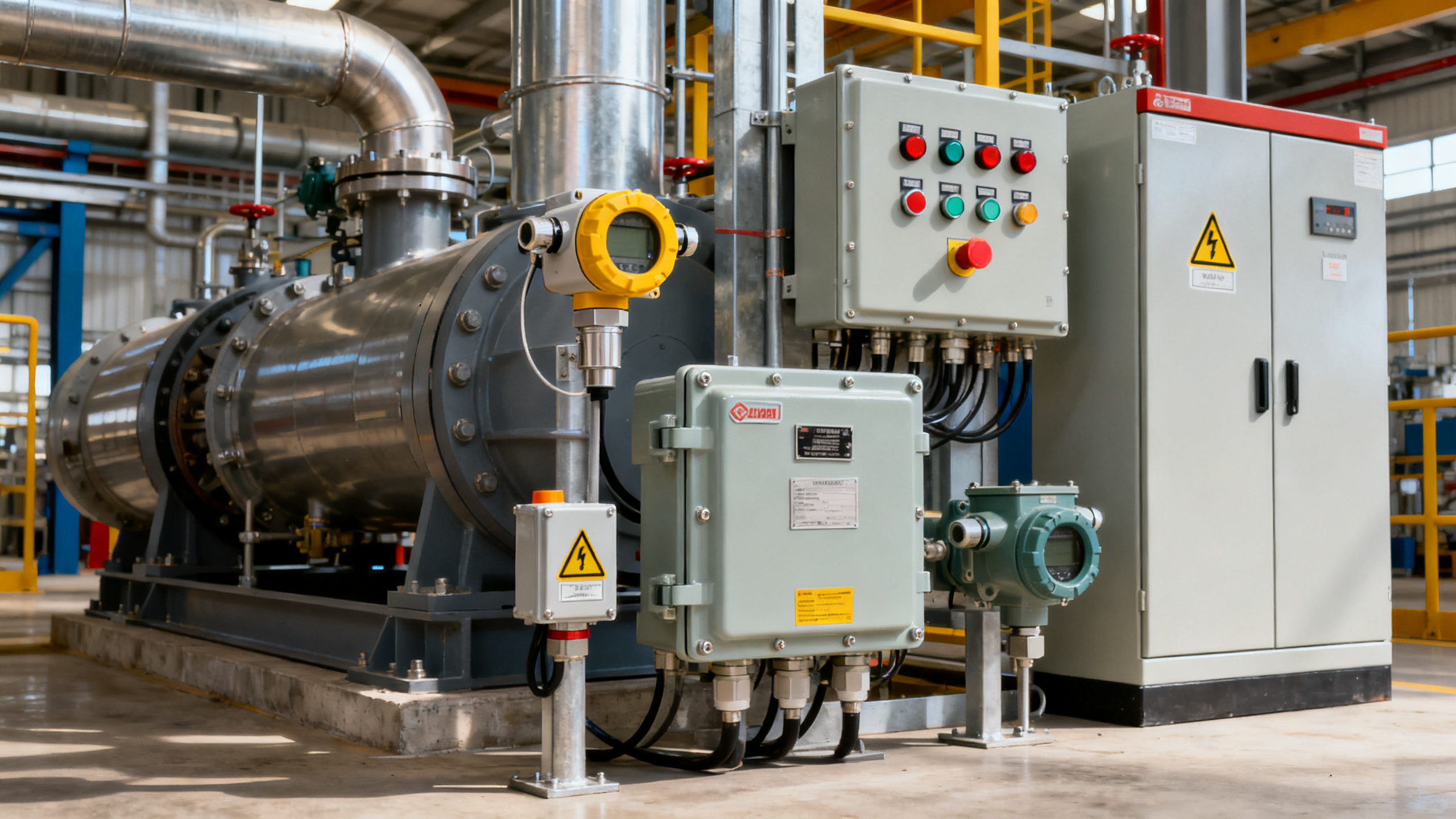
Why does Security & Safety price often shift far more than buyers anticipate? For industrial sourcing, the answer rarely sits in a simple unit quote.
The real difference comes from certification depth, material durability, response performance, installation complexity, and long-term risk exposure.
In heavy industry, a lower Security & Safety price may reduce upfront spend, yet raise compliance risk, downtime probability, and replacement frequency later.
That is why understanding price variation is not only a budgeting issue. It is a reliability, audit, and operational continuity decision.
What does Security & Safety price really include?
A quoted Security & Safety price usually includes more than the visible product. It may reflect design assurance, testing records, packaging, documentation, and after-sales support.
In industrial environments, cost is tied to how well a solution performs under heat, dust, vibration, moisture, pressure, or corrosive exposure.
Two products may appear similar on paper. Their Security & Safety price can still differ greatly because one is built for basic conditions and the other for critical facilities.
Typical price components include:
- Raw material grade and protective coating
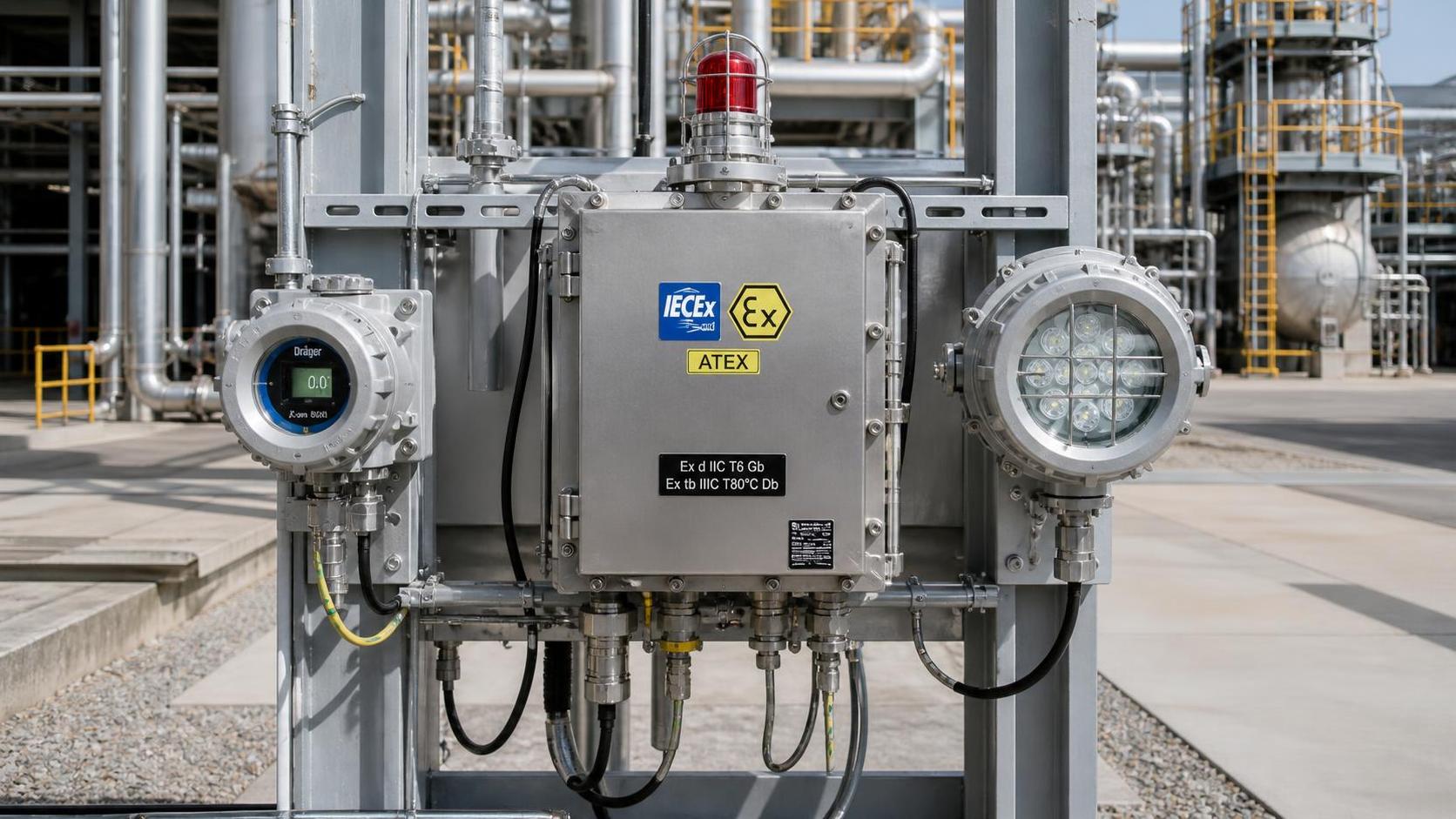
- Certification scope such as CE, UL, ISO, or ATEX
- Sensor accuracy, alarm sensitivity, or fail-safe design
- Batch traceability and quality inspection depth
- Spare parts availability and service response
- Integration with plant systems or control architecture
This is why direct line-by-line comparison often misleads. A low Security & Safety price may exclude several elements later billed as extras.
Why can similar-looking products have very different Security & Safety price levels?
Visual similarity is one of the biggest traps in industrial purchasing. Housings, dimensions, or labels may look nearly identical, yet internal performance can differ sharply.
The first driver is engineering tolerance. Tighter tolerances increase manufacturing complexity, inspection time, and rejection rates, which pushes Security & Safety price upward.
The second driver is tested lifespan. Products validated for repeated emergency cycles cost more than products tested only under light laboratory conditions.
The third driver is environmental protection. UV resistance, fire-retardant compounds, explosion-proof enclosures, and anti-corrosion materials all add cost.
Another factor is production consistency. A stable factory process reduces variation between batches, but it requires stronger quality systems and more detailed process control.
Brand reputation also affects Security & Safety price. Established suppliers often charge more because their products carry stronger documentation, warranty confidence, and audit acceptance.
A practical comparison mindset
Instead of asking whether one item is cheaper, ask whether the quoted scope is technically equivalent, legally acceptable, and operationally durable.
That approach reveals whether the Security & Safety price reflects real value or hidden future exposure.
How do certifications and compliance rules change Security & Safety price?
Compliance is one of the strongest reasons why Security & Safety price varies more than expected. Certification is not a logo. It is a process, a test history, and a legal safeguard.
A product tested for one market may need additional validation for another. Regional code differences can require modified components, labels, manuals, or wiring standards.
For example, a solution carrying CE may still need UL-related alignment, third-party reports, or site-specific approval in another jurisdiction.
Higher Security & Safety price often reflects:
- Third-party laboratory testing
- Factory audits and ongoing surveillance
- Documented traceability of materials and parts
- More robust instruction sets and safety labeling
- Special approvals for hazardous or mission-critical areas
Skipping these details may reduce the invoice amount, but can delay commissioning, fail audits, or trigger replacement before operations even stabilize.
When does a lower Security & Safety price become more expensive overall?
A low initial Security & Safety price becomes costly when maintenance cycles shorten, false alarms increase, or replacement requires shutdown access.
In industrial settings, the true cost is often lifecycle cost, not purchase cost. That includes installation labor, calibration, inspections, spare inventory, and unplanned downtime.
Consider a detector, guard, interlock, or emergency device. If it fails early, the consequence may include production interruption and safety investigation.
The cheaper Security & Safety price may therefore hide a higher total cost in five common ways:
- Shorter service life and more frequent replacement
- Higher calibration drift or lower sensing reliability
- Limited spare parts support
- Longer restart time after failure
- Greater audit, insurance, or liability exposure
A realistic comparison should calculate expected operating years, service intervals, and consequence severity, not just quoted unit numbers.
A useful rule
If failure can stop operations or endanger personnel, the lowest Security & Safety price deserves the highest level of scrutiny.
How should Security & Safety price be evaluated across different applications?
Not every site needs the same performance level. Security & Safety price should match the application, hazard profile, and regulatory burden.
A warehouse, data center, processing unit, tunnel, utility room, and chemical handling zone each create different technical demands.
Price evaluation improves when applications are grouped by risk and operating stress.
This table shows why one benchmark rarely fits all. Security & Safety price only becomes meaningful when tied to real operating conditions.
What mistakes distort Security & Safety price comparisons?
Several common mistakes make price gaps look irrational when they are actually explainable.
The first mistake is comparing nominally similar items without checking standards, ratings, and test methods.
The second mistake is ignoring installation accessories. Mounting kits, control modules, communication interfaces, and protective housings can materially change Security & Safety price.
The third mistake is excluding logistics realities. Export packaging, regional stock, lead-time certainty, and customs documentation all affect commercial cost.
Another error is treating warranty length as the same as warranty strength. Some warranties are broad and practical. Others contain narrow conditions.
The last mistake is overlooking support quality. Technical response time matters when commissioning or troubleshooting under schedule pressure.
These checks prevent false savings and improve decision defensibility during audits or technical reviews.
How can buyers judge whether a Security & Safety price is fair?
A fair Security & Safety price is one that aligns with risk level, compliance obligations, operating environment, and maintenance expectations.
A practical evaluation process can stay simple:
- Define the actual hazard and operating conditions
- List mandatory standards and approval needs
- Separate product cost from installation and support cost
- Estimate replacement cycle and downtime consequence
- Verify technical documents and service capability
When these steps are followed, Security & Safety price becomes easier to interpret. Price variation no longer feels random. It reflects measurable technical and commercial differences.
In modern industry, the best decision is rarely the cheapest line item. It is the option that delivers compliance confidence, operational resilience, and credible total-cost performance.
For organizations evaluating industrial infrastructure components, a structured quote review can reduce hidden exposure and improve sourcing clarity from the start.
Technical Specifications
- Air Handling Unit Supplier Checklist: Performance Data, Lead Times, and SupportAuthor :Environmental Engineering Director
- Buying Fiberglass Water Tanks Wholesale: Compare Quotes and Delivery CostsAuthor :Environmental Engineering Director
- Choosing an XLPE Power Cable Supplier: Test Reports, Traceability, and Lead TimesAuthor :Grid Infrastructure Analyst
Expert Insights

Chief Security Architect
Dr. Thorne specializes in the intersection of structural engineering and digital resilience. He has advised three G7 governments on industrial infrastructure security.
Related Analysis
- Oct 19, 2026Air Handling Unit Supplier Checklist: Performance Data, Lead Times, and SupportAuthor :Environmental Engineering Director
- Oct 18, 2026Buying Fiberglass Water Tanks Wholesale: Compare Quotes and Delivery CostsAuthor :Environmental Engineering Director
- Oct 17, 2026Choosing an XLPE Power Cable Supplier: Test Reports, Traceability, and Lead TimesAuthor :Grid Infrastructure Analyst
Core Sector // 01
Security & Safety
- Can One Supplier Provide Both IEC- and ATEX-Certified Safety Equipment?Author :Safety Compliance Lead

- Are Dual IEC and NEC Safety Certifications Worth the Cost?Author :Safety Compliance Lead

- What Is the Difference Between Class I and Class II PPE?Author :Safety Compliance Lead

- Which Oil and Gas Safety Standards Should Contractors Meet Before Site Mobilization?Author :Safety Compliance Lead

- EU REACH Adds PFAS Cap for PPE WorkwearAuthor :Safety Compliance Lead

- How to Evaluate a Chemical Resistant Suit Supplier for Industrial Safety ProcurementAuthor :Safety Compliance Lead

- EU REACH Sets 50 ppb PFAS Cap for PPE WorkwearAuthor :Safety Compliance Lead

- EU Tightens PFOA Limit for PPE and Industrial Filter MediaAuthor :Safety Compliance Lead