Why safety compliance training matters in industrial procurement
Author
Date Published
Reading Time
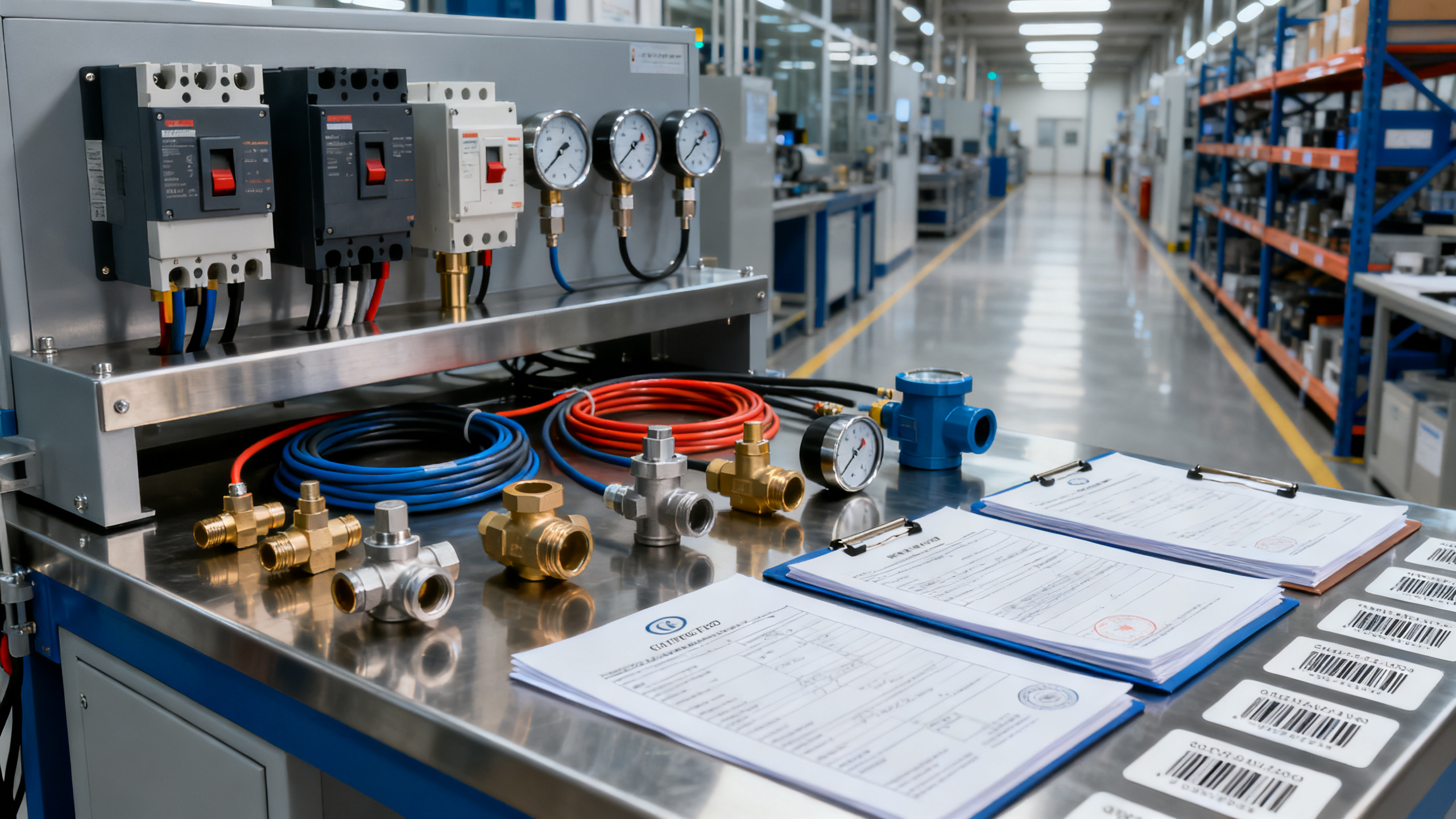
In industrial sourcing, a low price means little if a product fails safety standards or exposes operations to risk. That is why safety compliance training for industrial procurement matters: it helps buyers evaluate certifications, reduce liability, and make informed decisions in high-stakes environments. In sectors tied to power systems, mechanical components, environmental controls, instrumentation, and site safety, compliance knowledge is not an administrative extra. It is a practical decision tool that protects uptime, project quality, contractual performance, and long-term operational resilience.
What is safety compliance training for industrial procurement, and why is it more than a legal checklist?
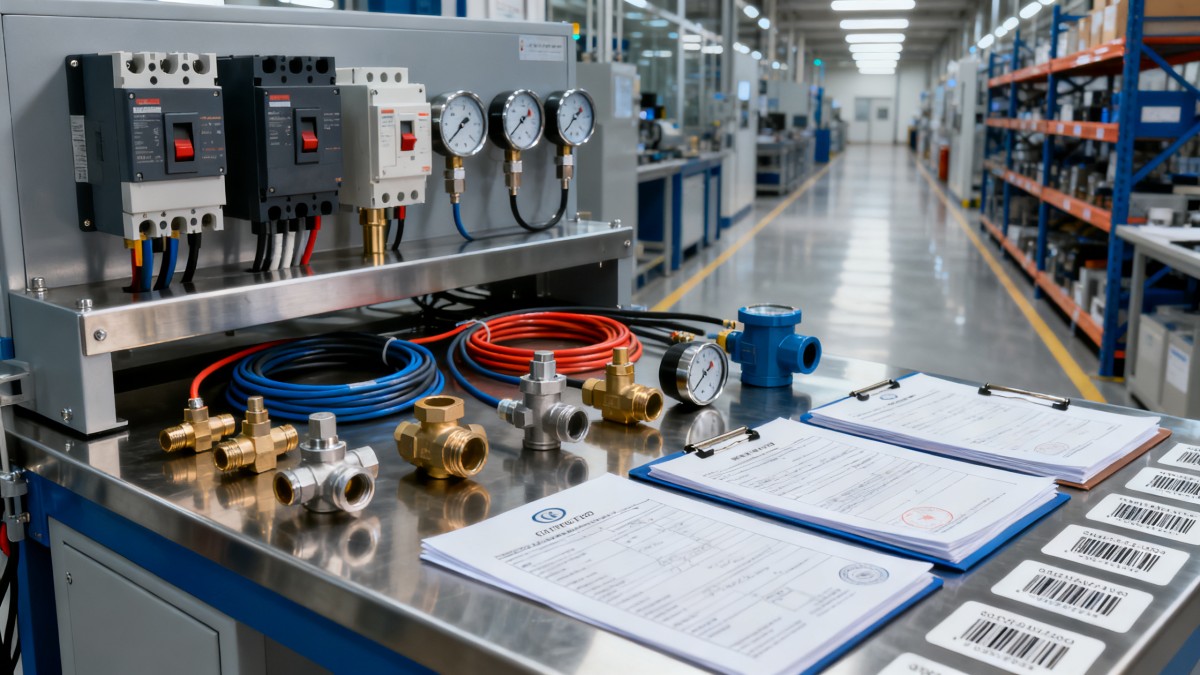
At its core, safety compliance training for industrial procurement equips sourcing teams with the ability to verify whether industrial goods meet required safety, performance, and documentation standards before they enter a project or facility. This includes understanding CE, UL, ISO, RoHS, REACH, local electrical codes, material traceability requirements, hazard labeling, testing protocols, and supplier quality records.
The value goes far beyond avoiding fines. In industrial environments, a non-compliant cable assembly, pressure instrument, valve component, sensor housing, or fire protection device can trigger costly shutdowns, failed inspections, warranty disputes, or even injury events. Training creates a structured way to ask the right questions early: Is the certificate valid? Does the approval apply to the exact model? Was testing done by an accredited lab? Do material grades match the specification? Is documentation current for the destination market?
Without that foundation, procurement decisions may rely too heavily on price sheets and lead times. With it, sourcing becomes more strategic. Teams can compare bids with a clearer understanding of lifecycle risk, supplier credibility, and total cost of ownership. In this sense, safety compliance training for industrial procurement supports both governance and commercial performance.
Which industrial sourcing situations make compliance training especially important?
Not every purchase carries the same exposure, but several categories consistently demand stronger compliance awareness. High-risk sourcing scenarios usually involve equipment that affects human safety, process stability, regulated emissions, or critical infrastructure continuity. Examples include electrical switchgear, gas detection systems, calibrated measurement devices, lifting hardware, pressure-rated parts, emergency shutdown components, and environmental monitoring systems.
Projects with cross-border sourcing also increase complexity. A product accepted in one market may not meet requirements in another due to differences in voltage standards, labeling rules, documentation language, flame resistance classifications, or local approval schemes. In those cases, safety compliance training for industrial procurement helps prevent a common failure: buying technically suitable products that cannot legally or safely be deployed at the project site.
Another high-importance area is supplier substitution. When lead times tighten, alternate brands or revised part numbers are often proposed. Training helps teams assess whether a substitution is truly equivalent or only superficially similar. This is crucial in EPC execution, maintenance shutdown planning, and retrofit projects where compatibility, inspection acceptance, and safety ratings must all align.
- Safety-critical equipment with direct operational impact
- Imported products requiring destination-market compliance
- Products with calibration, traceability, or testing obligations
- Supplier substitutions during shortages or schedule pressure
- Retrofit and brownfield projects with legacy system constraints
How does safety compliance training for industrial procurement reduce commercial and operational risk?
The most immediate benefit is better verification. Teams trained in compliance can detect mismatches between data sheets, certificates, inspection reports, and actual product scope. That helps stop non-conforming materials before shipment, installation, or commissioning. Early detection is far less expensive than field replacement or post-incident investigation.
Training also improves supplier conversations. Instead of asking only for “certification,” teams can request the specific items that matter: declaration of conformity, test report references, factory audit status, lot traceability, ingress protection evidence, hazardous area approvals, or serial-number-linked inspection records. This level of clarity reduces ambiguity in contracts and lowers the chance of receiving incomplete or misleading documentation.
From a financial perspective, safety compliance training for industrial procurement supports more accurate cost evaluation. A lower upfront quotation may hide requalification expenses, customs delays, rejected inspections, additional engineering review, or uninsured liability exposure. By contrast, a compliant product from a well-documented supplier often delivers better value across installation, maintenance, and audit cycles.
There is also a reputation dimension. Industrial buyers increasingly operate under strict environmental, safety, and governance scrutiny. Poor compliance decisions can damage client trust, disrupt approved vendor status, and weaken competitive standing in future tenders. Training strengthens internal control and provides documented evidence that sourcing decisions were made with due diligence.
What should a strong compliance training program include?
A useful program must connect regulations to real sourcing decisions. Generic safety presentations are rarely enough. Effective safety compliance training for industrial procurement should combine technical literacy, document review skills, and category-specific risk awareness.
Key content areas often include standard interpretation, product certification basics, supplier qualification methods, inspection and test plan awareness, record retention, import compliance, change control, and escalation workflows. Training should also explain the difference between product compliance, factory certification, and management system certification, since these are frequently confused.
It is equally important to use practical case scenarios. For example, a session may compare two similar electrical enclosures where only one carries valid approvals for the required environment. Another scenario may examine an instrumentation supplier whose ISO certification is current but whose actual product test evidence is incomplete. Such exercises build judgment, not just vocabulary.
How can organizations tell whether their current approach is sufficient?
A simple test is to review recent purchasing decisions that involved regulated or safety-relevant products. Were approvals checked against exact model numbers? Was there a documented review path for substitutions? Did someone confirm the difference between self-declaration and third-party certification? Were compliance documents archived in a searchable way? If the answer is inconsistent, the process likely depends too much on individual experience rather than a repeatable system.
Another sign is the frequency of late-stage surprises. Rejected factory acceptance tests, customs holds, installation delays due to missing labels, and disputes over material certificates often point to gaps in safety compliance training for industrial procurement. These issues rarely begin in the field; they usually start during specification review or supplier onboarding.
Maturity also depends on coordination. Compliance knowledge should not sit in one department alone. Stronger outcomes occur when sourcing, engineering, quality, HSE, and project controls share a common review framework. That cross-functional alignment reduces handoff errors and improves response speed when supplier risks emerge.
What are the most common misconceptions about compliance in industrial buying?
One common misconception is that a recognized brand automatically guarantees full compliance for every product variant. In reality, approval scope can differ by region, model, accessory, or configuration. Another is that ISO certification alone proves product safety. It may indicate a quality management framework, but it does not replace product-level testing or application-specific validation.
A third mistake is treating compliance as a final documentation step after commercial negotiation. By then, corrective action is slower and more expensive. Safety compliance training for industrial procurement is most effective when used upstream, during vendor selection, specification clarification, and bid evaluation.
Finally, some assume training is only relevant for highly regulated sectors. In fact, any operation relying on electrical integrity, pressure containment, worker protection, environmental control, or measurement accuracy can benefit. The broader the industrial footprint, the more valuable consistent compliance literacy becomes.
How should the next step be structured for lasting improvement?
A practical starting point is a gap review of high-risk categories and recent non-conformance events. From there, prioritize a targeted curriculum rather than a broad generic program. Focus first on categories with the highest exposure: electrical products, instrumentation, safety devices, mechanical load-bearing items, and environmentally sensitive systems.
Then build a standard review toolkit: approved certificate checklist, supplier compliance questionnaire, substitution approval form, and documentation retention matrix. These tools turn safety compliance training for industrial procurement into daily practice instead of a one-time workshop. Refresher sessions should be tied to regulation changes, new supplier regions, and major project phases.
For organizations operating across complex industrial supply chains, trusted technical intelligence also matters. Data-driven editorial resources, verified standards interpretation, and expert-led sourcing insights can help maintain consistency as regulations evolve. The goal is not just to avoid mistakes, but to create a procurement environment where compliant, resilient, and technically sound decisions become the norm.
In the end, safety compliance training for industrial procurement is a strategic capability. It strengthens supplier selection, protects project delivery, reduces hidden cost, and supports safer operations over the full asset lifecycle. The most effective next move is to assess current gaps, formalize review criteria, and embed compliance knowledge into every critical sourcing decision.
Technical Specifications
- How to Select an Emissions Monitoring System Analyzer for Compliance ReportingAuthor :Precision Metrology Expert
- How to Select an Access Control Management System for Multi-Site FacilitiesAuthor :Safety Compliance Lead
- Portable Gas Monitor Calibration: How Often Is It Needed for Safe Confined-Space Work?Author :Precision Metrology Expert
Expert Insights

Chief Security Architect
Dr. Thorne specializes in the intersection of structural engineering and digital resilience. He has advised three G7 governments on industrial infrastructure security.
Related Analysis
- Sep 21, 2026How to Select an Emissions Monitoring System Analyzer for Compliance ReportingAuthor :Precision Metrology Expert
- Sep 20, 2026How to Select an Access Control Management System for Multi-Site FacilitiesAuthor :Safety Compliance Lead
- Sep 19, 2026Portable Gas Monitor Calibration: How Often Is It Needed for Safe Confined-Space Work?Author :Precision Metrology Expert
Core Sector // 01
Security & Safety
- Can One Supplier Provide Both IEC- and ATEX-Certified Safety Equipment?Author :Safety Compliance Lead

- Are Dual IEC and NEC Safety Certifications Worth the Cost?Author :Safety Compliance Lead

- What Is the Difference Between Class I and Class II PPE?Author :Safety Compliance Lead

- Which Oil and Gas Safety Standards Should Contractors Meet Before Site Mobilization?Author :Safety Compliance Lead

- EU REACH Adds PFAS Cap for PPE WorkwearAuthor :Safety Compliance Lead

- How to Evaluate a Chemical Resistant Suit Supplier for Industrial Safety ProcurementAuthor :Safety Compliance Lead

- EU REACH Sets 50 ppb PFAS Cap for PPE WorkwearAuthor :Safety Compliance Lead

- EU Tightens PFOA Limit for PPE and Industrial Filter MediaAuthor :Safety Compliance Lead