How to assess a Security & Safety manufacturer beyond catalog claims
Author
Date Published
Reading Time
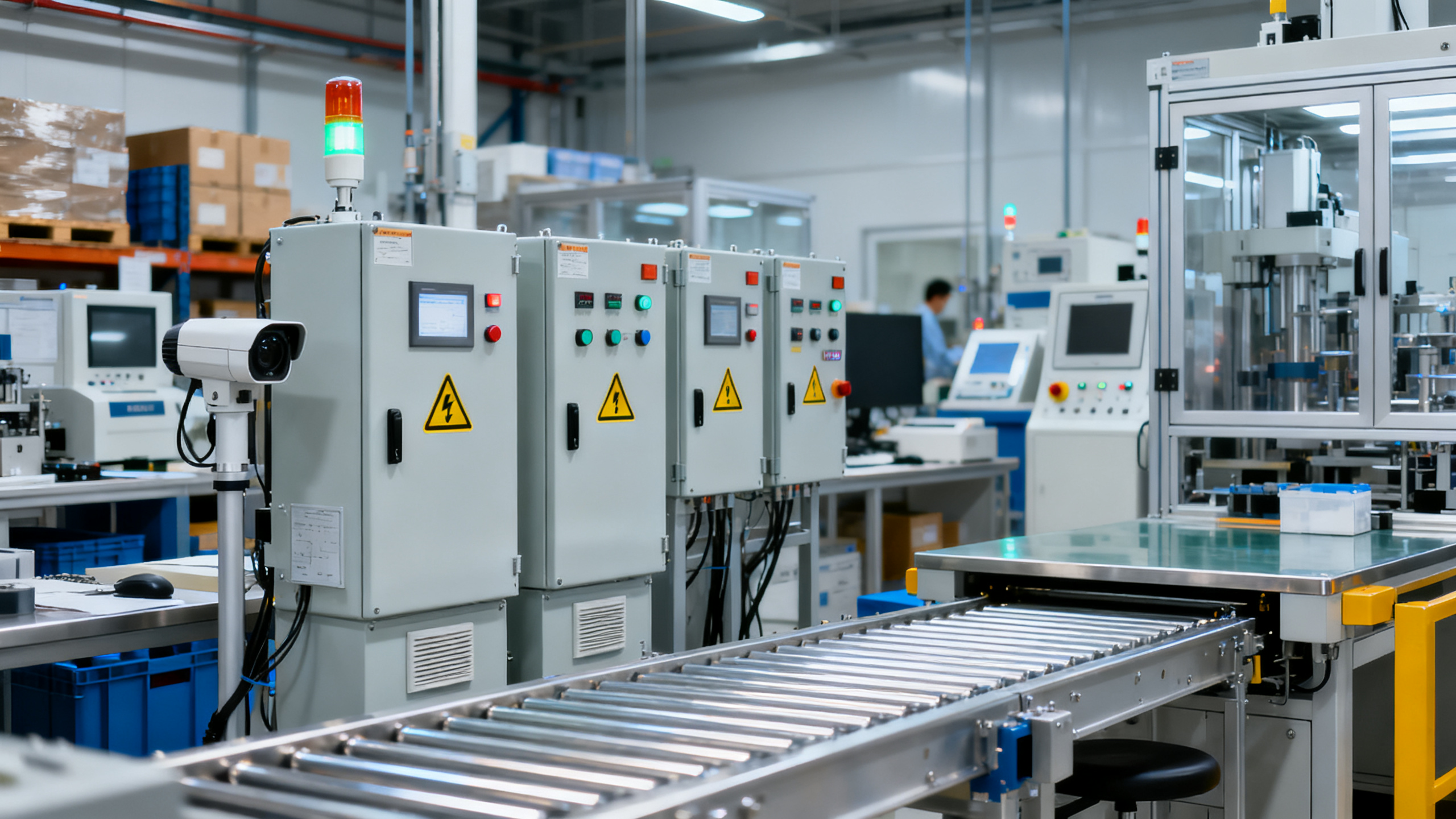
Choosing a Security & Safety manufacturer for industrial projects now demands a broader view than catalog comparison. In many sectors, the gap between claimed compliance and field performance is widening as supply chains fragment, standards tighten, and operating environments become harsher. A data sheet may confirm dimensions, ratings, and approvals, but it rarely reveals process discipline, engineering responsiveness, or the resilience of upstream sourcing. To assess a Security & Safety manufacturer with confidence, evaluation has to move from product claims to evidence of repeatable execution, technical accountability, and long-term operational fit.
Why catalog-based selection is losing reliability in today’s industrial environment
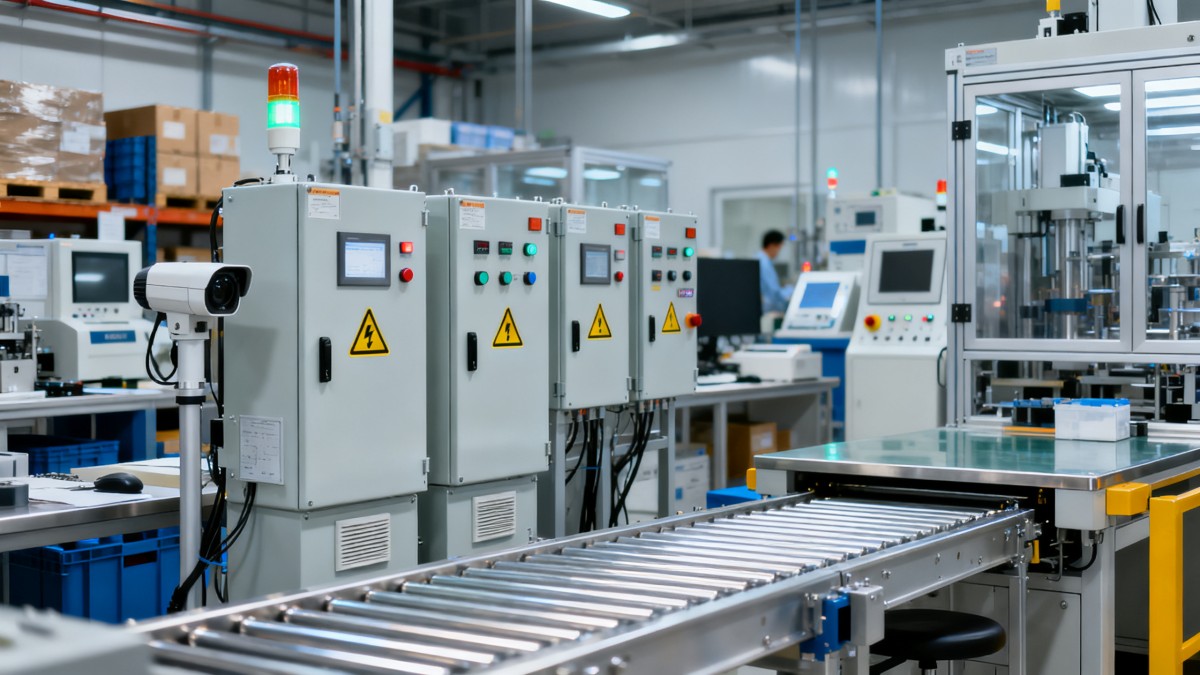
The industrial market has changed in ways that directly affect how a Security & Safety manufacturer should be evaluated. Global buyers increasingly face component substitutions, outsourced subassembly, fluctuating raw material quality, and region-specific regulatory differences. At the same time, safety systems are expected to integrate with digital monitoring, facility automation, and more demanding audit frameworks. As a result, the old method—shortlisting by brochure, certification logo, and unit price—creates blind spots that can lead to costly installation delays, non-conformance findings, or lifecycle failure.
This shift is especially important across comprehensive industrial applications, where security and safety products often sit inside larger systems involving electrical infrastructure, process control, environmental protection, and mechanical safeguards. The best Security & Safety manufacturer is not simply the one with the broadest catalog, but the one that can prove traceability, interpret application risks correctly, and support stable delivery over time.
The strongest market signals now point to verification over branding
Several trend signals explain why industrial evaluation standards are becoming stricter. End users and engineering teams are no longer satisfied with generic declarations; they expect application-specific proof. Insurance pressure, ESG reporting, worker protection mandates, and digital audit trails are all pushing supplier assessment toward measurable evidence. In parallel, shorter project timelines mean that hidden quality issues surface faster and create wider downstream disruption.
For that reason, a capable Security & Safety manufacturer must now demonstrate not only certification possession, but certification relevance, manufacturing consistency, and the ability to respond to change requests without compromising safety performance. The evaluation lens is shifting from “What does the manufacturer claim?” to “What can the manufacturer prove under operational scrutiny?”
Key forces driving stricter assessment standards
What a deeper assessment reveals about a Security & Safety manufacturer
A meaningful review of a Security & Safety manufacturer should test whether the supplier can sustain quality and compliance under real production pressure. This means looking past front-end sales materials and studying the operating backbone of the business. The most revealing questions often concern how the manufacturer handles exceptions, not routine orders.
Areas that deserve close verification
- Certification depth: Check whether CE, UL, ISO, or other approvals apply to the exact model, configuration, and use condition—not just a related family line.
- Manufacturing consistency: Ask for batch control methods, in-process inspection records, final test protocols, and non-conformance handling procedures.
- Material and component traceability: Confirm whether critical parts are linked to lot records, supplier audits, and documented substitutions.
- Application engineering capability: Review whether the supplier can advise on environmental conditions, load profiles, installation constraints, and interface risks.
- Field performance evidence: Request case histories, failure-rate data, return trends, and examples from comparable industrial settings.
- After-sales responsiveness: Assess service lead times, spare parts planning, root-cause reporting, and escalation channels for urgent issues.
This kind of analysis helps distinguish a marketing-led supplier from a truly dependable Security & Safety manufacturer. In industrial infrastructure, repeatability matters more than isolated performance claims. A single strong sample or a polished presentation does not guarantee production stability across months or project phases.
The impact of poor assessment extends far beyond product replacement
When a Security & Safety manufacturer is selected on incomplete evidence, the consequences usually appear across multiple business layers. A mismatch may begin as a technical issue—incorrect enclosure performance, insufficient fail-safe design, poor sensor reliability, or weak mechanical durability—but it rarely stays isolated. Delays in commissioning, additional validation work, and documentation disputes can slow broader project execution.
The operational impact is even more serious in facilities where security and safety devices interact with electrical distribution, instrumentation, emissions controls, or rotating equipment. In such environments, one weak supplier can amplify system risk. That is why evaluating a Security & Safety manufacturer should be treated as a resilience decision, not only a procurement exercise.
Typical risk pathways from weak manufacturer evaluation
- Unexpected product deviations trigger redesign or requalification.
- Incomplete compliance files complicate inspections and handover.
- Inconsistent batches increase maintenance burden and downtime exposure.
- Weak technical support causes installation errors in complex sites.
- Unstable lead times disrupt sequencing for multi-discipline projects.
What deserves the most attention during supplier comparison now
As industrial expectations evolve, some evaluation criteria are gaining more weight than others. The following points can help prioritize due diligence when comparing any Security & Safety manufacturer in a high-stakes environment:
- Evidence of controlled change management: Product design or component updates should trigger formal review, revised documentation, and communication discipline.
- Clarity on testing boundaries: Understand exactly which environmental, electrical, mechanical, or fire-related tests were passed, under what conditions, and with what limitations.
- Production scalability without quality drift: A strong Security & Safety manufacturer should maintain output growth without increasing defect risk.
- Documentation maturity: Installation manuals, declarations, inspection reports, and maintenance instructions should be coherent, version-controlled, and easy to audit.
- Supply continuity planning: Review safety stock policy, second-source strategy, and commitments for long-life industrial programs.
A practical framework to judge a Security & Safety manufacturer with less uncertainty
A structured review process reduces reliance on assumptions and helps compare suppliers fairly. Rather than scoring only visible features, use a framework that balances technical, operational, and lifecycle factors.
The most useful next step is to test proof, not promises
The market direction is clear: industrial selection of a Security & Safety manufacturer is moving toward evidence-based qualification. Brochures still matter, but only as entry points. Real confidence comes from audited documents, production visibility, technical dialogue, and confirmation that the supplier performs well when conditions are less than ideal.
A practical next step is to build a short assessment checklist around five questions: Are the certifications specific and current? Is manufacturing control visible? Can the engineering team handle application complexity? Is supply continuity credible? Is there field evidence from similar duty conditions? Using those filters will quickly reveal whether a Security & Safety manufacturer can support long-term industrial reliability or only short-term quotation convenience.
For organizations operating in complex infrastructure environments, deeper supplier validation is no longer optional. It is one of the most effective ways to reduce operational risk, strengthen compliance readiness, and secure better lifecycle outcomes from every Security & Safety manufacturer under consideration.
Technical Specifications
- How to Select an Emissions Monitoring System Analyzer for Compliance ReportingAuthor :Precision Metrology Expert
- How to Select an Access Control Management System for Multi-Site FacilitiesAuthor :Safety Compliance Lead
- Portable Gas Monitor Calibration: How Often Is It Needed for Safe Confined-Space Work?Author :Precision Metrology Expert
Expert Insights

Chief Security Architect
Dr. Thorne specializes in the intersection of structural engineering and digital resilience. He has advised three G7 governments on industrial infrastructure security.
Related Analysis
- Sep 21, 2026How to Select an Emissions Monitoring System Analyzer for Compliance ReportingAuthor :Precision Metrology Expert
- Sep 20, 2026How to Select an Access Control Management System for Multi-Site FacilitiesAuthor :Safety Compliance Lead
- Sep 19, 2026Portable Gas Monitor Calibration: How Often Is It Needed for Safe Confined-Space Work?Author :Precision Metrology Expert
Core Sector // 01
Security & Safety
- Can One Supplier Provide Both IEC- and ATEX-Certified Safety Equipment?Author :Safety Compliance Lead

- Are Dual IEC and NEC Safety Certifications Worth the Cost?Author :Safety Compliance Lead

- What Is the Difference Between Class I and Class II PPE?Author :Safety Compliance Lead

- Which Oil and Gas Safety Standards Should Contractors Meet Before Site Mobilization?Author :Safety Compliance Lead

- EU REACH Adds PFAS Cap for PPE WorkwearAuthor :Safety Compliance Lead

- How to Evaluate a Chemical Resistant Suit Supplier for Industrial Safety ProcurementAuthor :Safety Compliance Lead

- EU REACH Sets 50 ppb PFAS Cap for PPE WorkwearAuthor :Safety Compliance Lead

- EU Tightens PFOA Limit for PPE and Industrial Filter MediaAuthor :Safety Compliance Lead