Safety compliance standards that complicate industrial sourcing
Author
Date Published
Reading Time

Navigating safety compliance standards for industrial procurement is no longer a back-office task—it is a frontline risk-control priority. For quality control teams and safety managers, every sourcing decision must balance regulatory compliance, operational reliability, and supplier credibility across global markets. Understanding how standards shape vendor selection, product approval, and long-term plant safety is essential to reducing exposure and securing resilient industrial supply chains.
Understanding the Role of Safety Compliance in Industrial Procurement
At a basic level, safety compliance standards for industrial procurement are the technical, legal, and operational requirements that purchased equipment, components, and systems must satisfy before they can be used in industrial settings. These standards may come from international frameworks such as ISO and IEC, regional schemes such as CE marking in Europe, nationally recognized testing systems such as UL in North America, or industry-specific rules tied to electrical safety, hazardous environments, pressure containment, emissions, or worker protection.
For quality control personnel and safety managers, compliance is not simply about checking whether a supplier has a certificate on file. It involves confirming that the specific product configuration, production batch, intended installation environment, and operating conditions all align with the applicable standard. A compliant industrial sensor for one market may fail acceptance in another. A motor approved for general indoor use may not qualify for explosive atmospheres. A material grade accepted in a temperate process line may underperform in corrosive or high-heat applications.
This is why safety compliance standards for industrial procurement often complicate sourcing decisions. They turn purchasing into a multidisciplinary evaluation that touches engineering, legal review, supplier auditing, testing validation, documentation control, and lifecycle risk management. In heavy industry and infrastructure projects, that complexity is not optional; it is the cost of maintaining safe and resilient operations.
Why Compliance Standards Have Become More Difficult to Manage
Industrial sourcing has changed dramatically over the last decade. Procurement teams now operate across broader supplier networks, more fragmented manufacturing regions, and tighter regulatory expectations. As a result, safety compliance is harder to interpret and verify than in the past.
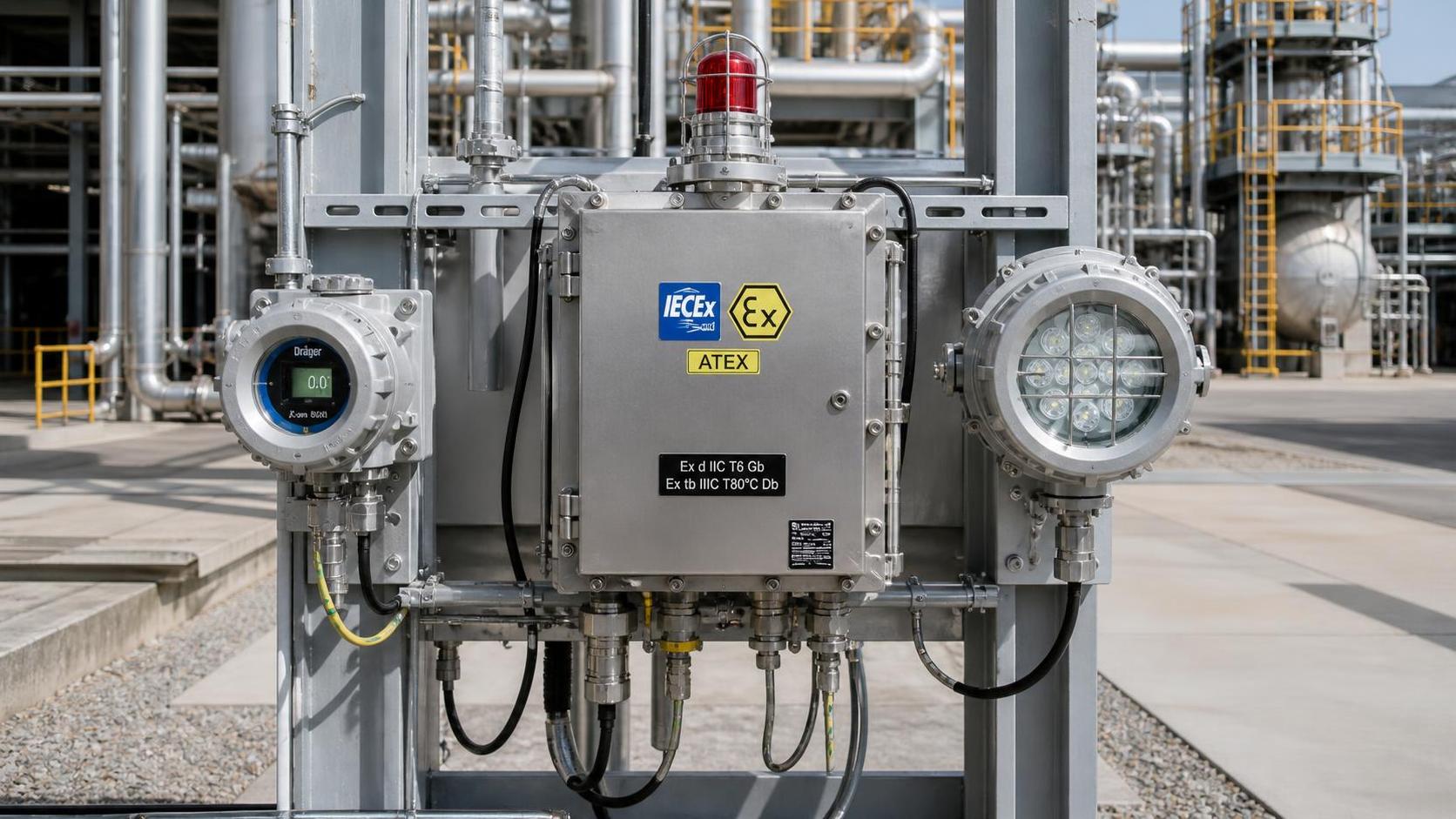
One major reason is global market divergence. While many standards appear universal, implementation is often local. CE, UL, CSA, ATEX, IECEx, RoHS, REACH, NFPA, and ISO-based management systems can overlap, but they do not always substitute for one another. A supplier may claim international compliance, yet the provided documentation may only cover a related standard rather than the one required for the final destination market.
Another complication is product integration. Modern facilities rarely purchase stand-alone items. They procure assemblies, control systems, smart monitoring devices, connectors, enclosures, cables, valves, and structural parts that must function together. A single non-compliant component can invalidate the safety assumptions of the larger system. This is especially relevant in the domains highlighted by Global Industrial Core: security and safety, instruments and measurement, electrical infrastructure, environmental systems, and mechanical components.
Documentation quality is also a growing concern. Many supplier packages include declarations, test summaries, and labels, but not all are equally reliable. Quality teams increasingly face outdated certificates, incomplete technical files, mismatched product numbers, untranslated reports, or unclear test scope. These gaps slow approvals and raise the risk of installing products that appear compliant but are not fully verified.
Core Standard Families That Influence Industrial Sourcing
To manage safety compliance standards for industrial procurement effectively, it helps to group requirements into practical families. The table below provides a concise industry overview.
The key lesson is that no single certificate proves universal fitness. Safety compliance standards for industrial procurement must be mapped against product function, installation location, buyer jurisdiction, and operational hazards.
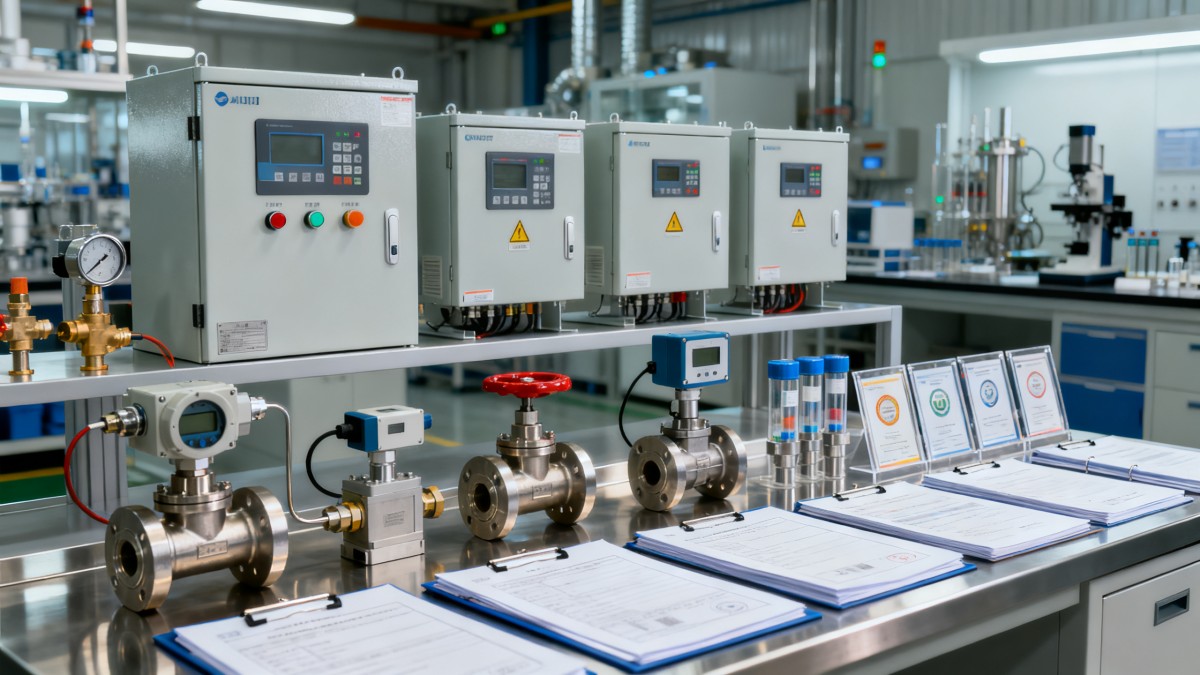
Where Quality and Safety Teams Feel the Pressure Most
The burden of compliance is most visible in high-consequence sourcing categories. Electrical panels, circuit protection devices, gas detection equipment, emergency shutdown systems, calibrated instruments, pressure-rated valves, lifting components, and corrosion-resistant metallurgy products all carry elevated review requirements. In these categories, a paperwork error can become an operational failure.
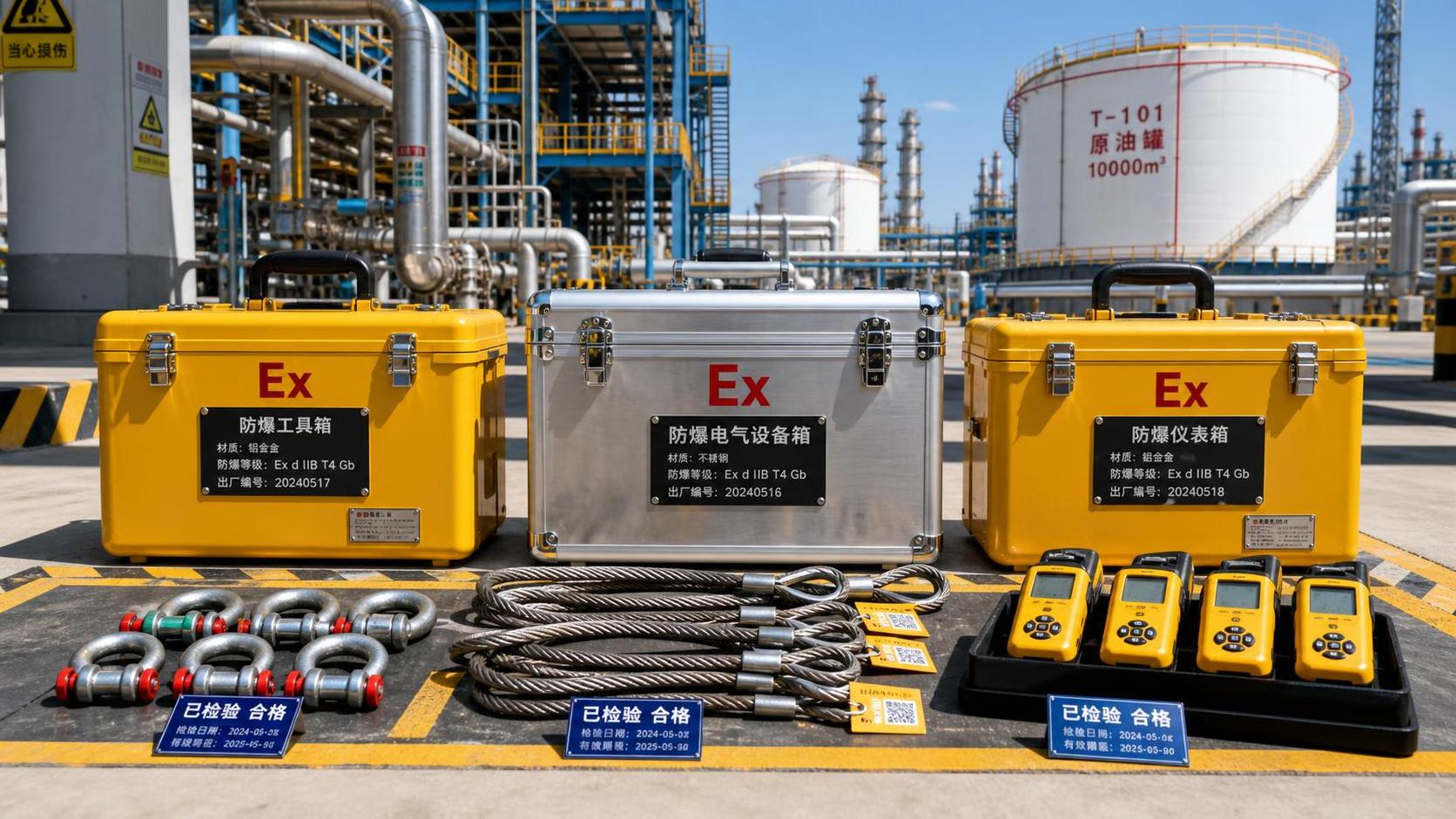
For quality control teams, the challenge is often verification depth. Should the team accept a declaration of conformity, or request the full test report? Does the marking on the product match the certification file? Is the approval valid for the exact enclosure rating, cable entry, temperature range, or hazardous area classification? These are not administrative details. They affect inspection readiness, maintenance planning, and incident prevention.
Safety managers face a related problem: operational context. A supplier may provide a compliant product, but if the item is selected without regard to plant conditions, the real risk remains. A certified instrument exposed to vibration beyond its design basis can fail. A fire-rated component installed with incompatible adjacent materials may not deliver the intended protection. Compliance therefore has to be interpreted within the final use case, not just at the catalog level.
How Standards Create Business Value Beyond Regulatory Acceptance
Although standards can complicate sourcing, they also create strategic value when managed properly. First, they reduce uncertainty. Clear compliance expectations narrow the field of acceptable vendors and improve consistency across projects. This is especially important for EPC contractors and industrial operators working across multiple geographies.
Second, they improve lifecycle reliability. Products sourced under robust compliance review tend to have stronger manufacturing discipline, better traceability, and more dependable support documentation. That translates into smoother installation, faster commissioning, fewer non-conformance reports, and reduced shutdown risk.
Third, compliance strengthens buyer trust and internal governance. When procurement, engineering, and EHS teams use a common standard framework, approval decisions become easier to explain to auditors, insurers, end clients, and regulators. This is one reason trusted intelligence platforms matter. Global Industrial Core, for example, positions compliance not as a narrow legal filter but as part of a broader foundation for industrial resilience, especially across safety, measurement, power systems, environmental controls, and metallurgy-dependent applications.
Typical Industrial Objects That Need Different Compliance Approaches
Not all sourced items should be evaluated the same way. A practical classification model helps teams prioritize their effort.
This classification helps quality and safety leaders allocate resources intelligently. High-risk categories deserve deeper technical review, supplier audits, and incoming inspection controls, while lower-risk categories may be managed through standardized documentation checks and approved-vendor rules.
Practical Guidance for Evaluating Safety Compliance Standards for Industrial Procurement
A strong compliance program starts by defining the intended use of every product, not just its name or part number. Teams should document operating temperature, exposure risks, area classification, voltage conditions, load requirements, and relevant maintenance expectations. These factors determine which standards actually apply.
Next, build a verification ladder. Start with supplier declarations, but do not stop there. Check certificate numbers, issuing bodies, revision dates, and product model alignment. Where risk is high, request supporting test evidence, factory audit information, quality management credentials, and traceability records. For custom or modified items, confirm whether the original approval still remains valid after the change.
It is also wise to separate supplier quality maturity from product conformity. An ISO 9001-certified supplier may still deliver a non-compliant product if the requested specification was misunderstood or if local marking requirements were overlooked. Conversely, a technically capable supplier may struggle with documentation formatting needed for a regulated export market. Both dimensions matter.
Another best practice is cross-functional review. Procurement should never own compliance decisions alone. Quality, engineering, maintenance, and EHS teams should share responsibility for defining acceptable evidence and escalation paths. This reduces approval bottlenecks and prevents late-stage surprises during site inspection or commissioning.
Common Red Flags That Should Trigger Deeper Review
Several warning signs repeatedly appear in industrial sourcing. These include certificates that reference discontinued product codes, test reports issued for similar but not identical models, missing operating limitations, generic declarations with no accredited body named, and inconsistent branding across labels, manuals, and conformity documents.
Other red flags include unusual resistance to sharing traceability documents, vague responses about hazardous-area approvals, incomplete metallurgy data for critical mechanical parts, and a lack of revision control on technical drawings. For safety managers, any gap between what is installed and what was certified should be treated as a priority issue. The cost of delay is almost always lower than the cost of a failure investigation, rejected inspection, or plant incident.
A More Resilient Way to Source Under Compliance Pressure
The most effective organizations do not treat safety compliance standards for industrial procurement as a final checkpoint. They embed them early in supplier prequalification, specification writing, bid evaluation, and contract terms. They maintain approved-document lists, standard evidence requirements, and market-specific compliance maps. They also rely on specialized intelligence to track changes in standards, testing expectations, and cross-border acceptance issues.
For quality control professionals and safety managers, the objective is clear: reduce ambiguity before purchase, not after installation. In a global industrial environment where infrastructure reliability depends on verified performance, compliance is part of engineering quality itself. Organizations that build disciplined sourcing controls around standards are better positioned to protect people, maintain uptime, and avoid costly procurement errors.
If your team is refining supplier approval criteria, reviewing technical documentation, or aligning sourcing practices across regions, use safety compliance standards for industrial procurement as a structured decision framework rather than a paperwork burden. With the right technical insight and cross-functional discipline, compliance becomes a source of confidence, not confusion.
Technical Specifications
- How to Select an Emissions Monitoring System Analyzer for Compliance ReportingAuthor :Precision Metrology Expert
- How to Select an Access Control Management System for Multi-Site FacilitiesAuthor :Safety Compliance Lead
- Portable Gas Monitor Calibration: How Often Is It Needed for Safe Confined-Space Work?Author :Precision Metrology Expert
Expert Insights

Chief Security Architect
Dr. Thorne specializes in the intersection of structural engineering and digital resilience. He has advised three G7 governments on industrial infrastructure security.
Related Analysis
- Sep 21, 2026How to Select an Emissions Monitoring System Analyzer for Compliance ReportingAuthor :Precision Metrology Expert
- Sep 20, 2026How to Select an Access Control Management System for Multi-Site FacilitiesAuthor :Safety Compliance Lead
- Sep 19, 2026Portable Gas Monitor Calibration: How Often Is It Needed for Safe Confined-Space Work?Author :Precision Metrology Expert
Core Sector // 01
Security & Safety
- Can One Supplier Provide Both IEC- and ATEX-Certified Safety Equipment?Author :Safety Compliance Lead

- Are Dual IEC and NEC Safety Certifications Worth the Cost?Author :Safety Compliance Lead

- What Is the Difference Between Class I and Class II PPE?Author :Safety Compliance Lead

- Which Oil and Gas Safety Standards Should Contractors Meet Before Site Mobilization?Author :Safety Compliance Lead

- EU REACH Adds PFAS Cap for PPE WorkwearAuthor :Safety Compliance Lead

- How to Evaluate a Chemical Resistant Suit Supplier for Industrial Safety ProcurementAuthor :Safety Compliance Lead

- EU REACH Sets 50 ppb PFAS Cap for PPE WorkwearAuthor :Safety Compliance Lead

- EU Tightens PFOA Limit for PPE and Industrial Filter MediaAuthor :Safety Compliance Lead