When is a Security & Safety price too low to trust?
Author
Date Published
Reading Time
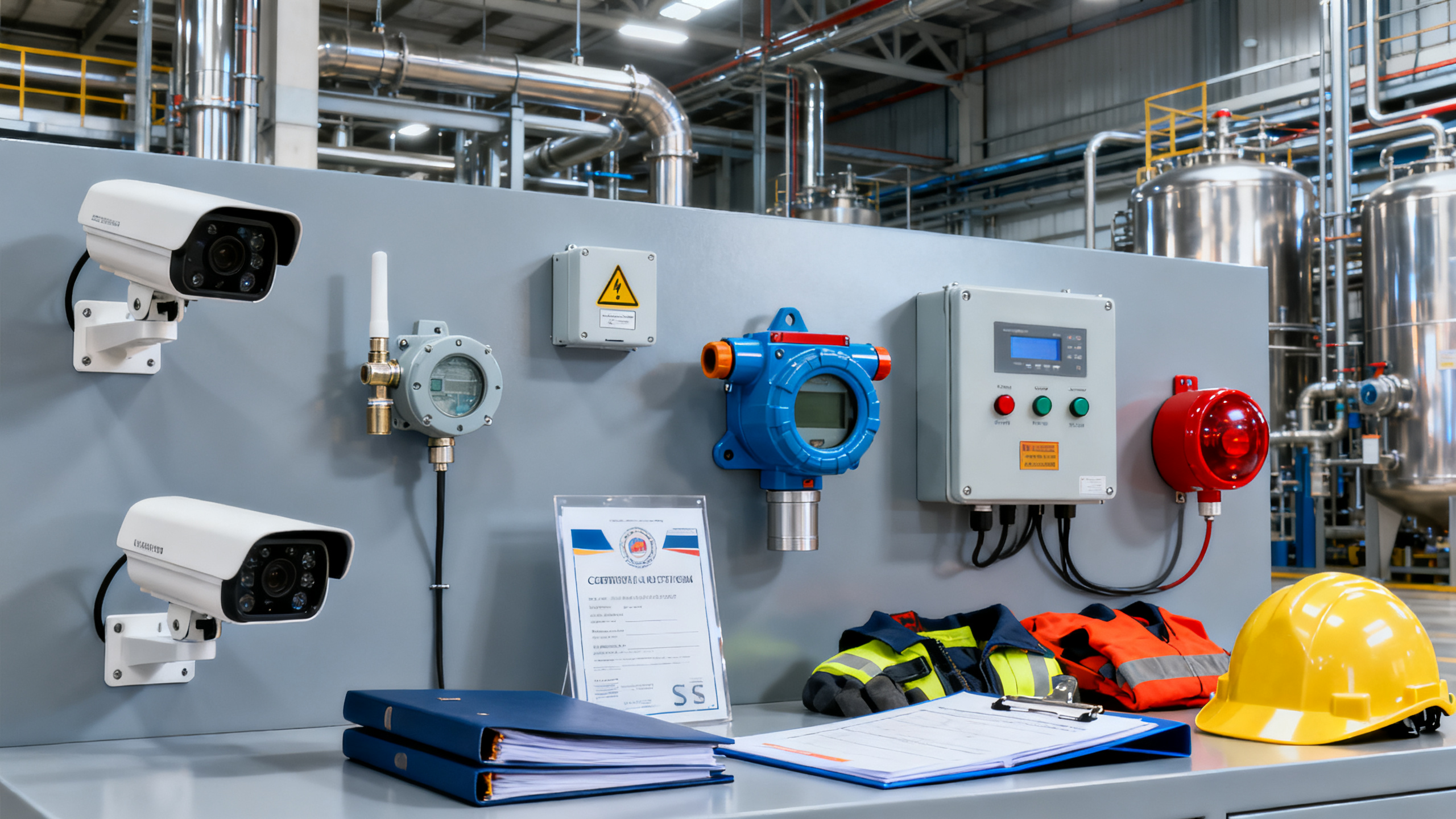
A Security & Safety price that looks far below market level may seem efficient at first glance.
In industrial environments, however, a low quote can hide certification gaps, unstable supply, weak traceability, or reduced field performance.
The real issue is not paying less.
The issue is whether the Security & Safety price still supports compliance, durability, and operational continuity across demanding applications.
For critical infrastructure, a failed alarm device, low-grade PPE component, or uncertified control part can multiply total cost through downtime, liability, and emergency replacement.
That is when a cheap Security & Safety price stops being a saving and becomes a procurement warning.
When the buying scenario changes, the meaning of a low Security & Safety price changes too
Not every low Security & Safety price is dangerous.
Some quotes are lower because of volume efficiency, direct manufacturing, standardized designs, or favorable logistics.
The warning appears when the application demands extreme reliability, regulatory proof, or continuous support after commissioning.
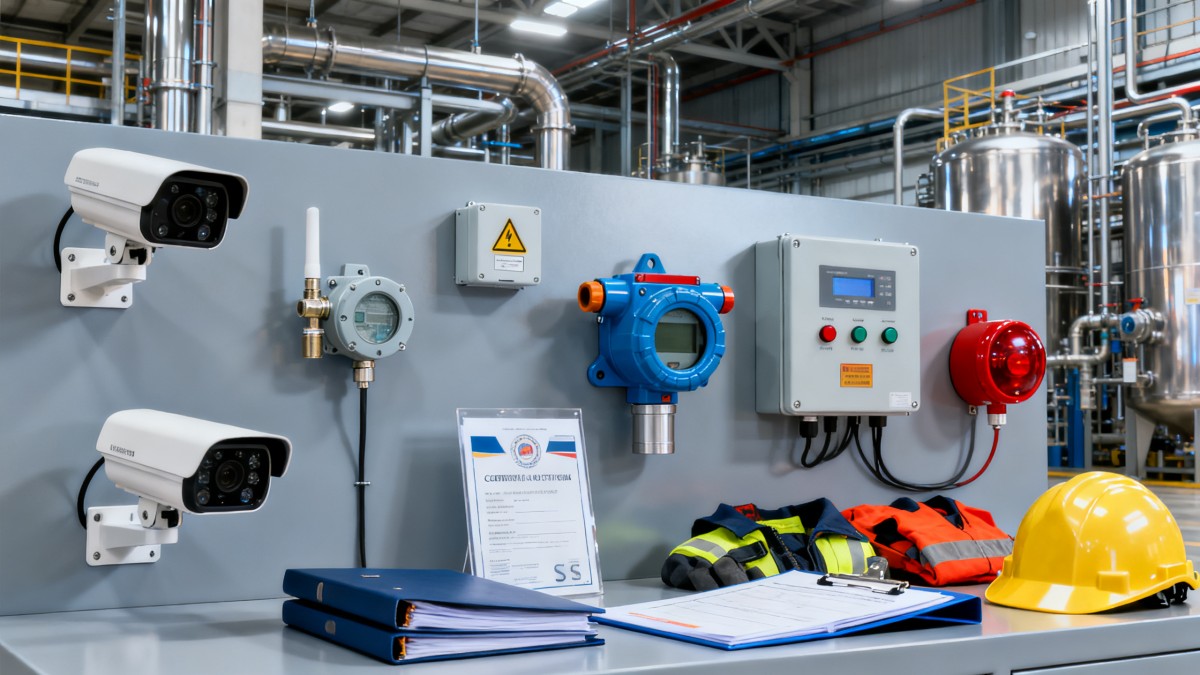
A warehouse camera, gas detector, emergency light, flame-resistant garment, or lockout device may all share the same category.
Yet their acceptable Security & Safety price floor differs by environment, exposure, and consequence of failure.
In low-risk indoor spaces, price pressure may be manageable.
In petrochemical sites, power rooms, tunnels, food processing plants, and public-facing facilities, underpricing deserves deeper scrutiny.
Scenario 1: Industrial plants where failure can stop production immediately
In heavy industry, the Security & Safety price must reflect uptime requirements.
A suspiciously cheap component often signals shorter service life, weaker ingress protection, or inconsistent assembly quality.
This matters for safety relays, emergency shutdown devices, sensors, helmets, gloves, barriers, and warning systems near heat, dust, vibration, or chemicals.
If the quote is low, check operating temperature range, enclosure rating, cycle life, calibration records, and spare parts availability.
A Security & Safety price becomes too low to trust when those details are missing, vague, or copied from generic catalogs.
Core warning signs in production environments
- No verifiable CE, UL, ISO, or relevant local compliance documents.
- No batch traceability for safety-critical items.
- No documented testing under real industrial conditions.
- Short warranty despite continuous-duty claims.
- Large performance promises with little engineering detail.
Scenario 2: Construction and EPC projects where compliance must survive inspection
Project-based procurement often creates pressure to cut visible upfront cost.
That pressure can make a low Security & Safety price look attractive during tender comparison.
But in EPC and construction contexts, every low quote should be tested against submittal quality, approval timelines, and code acceptance.
Fire stopping materials, emergency signage, evacuation systems, access control devices, and protective equipment must align with project specifications exactly.
If the Security & Safety price is far lower than competing offers, the vendor may be excluding testing reports, certification renewals, installation accessories, or commissioning support.
These omissions usually surface late, when redesign or replacement becomes expensive.
What to verify before accepting a low quote
- Compare line-by-line scope, not just headline price.
- Confirm standards listed on the drawing match the certificate.
- Check whether accessories and installation kits are included.
- Ask for sample labels, manuals, and test reports.
- Review lead time realism against factory capacity.
Scenario 3: Public, commercial, and mixed-use facilities where reputation risk is high
In schools, hospitals, offices, malls, transport hubs, and hospitality sites, the Security & Safety price affects more than asset protection.
It affects public confidence.
Low-cost CCTV systems, alarms, panic hardware, protective barriers, or emergency lighting may pass basic installation.
Yet they may fail in software updates, low-light accuracy, battery endurance, or response integration.
A Security & Safety price is too low to trust when lifecycle support is unclear.
Without firmware maintenance, replacement stock, and local technical service, the apparent saving becomes visible service degradation.
In these settings, reputational damage can outweigh equipment cost within a single incident.
How low is too low? A practical comparison by application scenario
The threshold depends on consequence, compliance burden, and environment severity.
What a trustworthy Security & Safety price should include in different scenarios
A reliable quote usually contains more than the item itself.
It reflects testing, documentation, packaging, lead time stability, technical clarification, and post-sale support.
- For hazardous areas, expect evidence of specialized compliance and operating limitations.
- For buildings, expect code-ready documentation and clear installation requirements.
- For ongoing operations, expect spare parts planning and service response commitments.
- For wearable protection, expect material data, sizing consistency, and replacement guidance.
If a Security & Safety price undercuts the market but excludes these elements, comparison is incomplete.
The hidden cost may simply be shifted downstream.
Common misjudgments that make an unrealistically low quote look acceptable
One common error is benchmarking only against unit price.
In Security & Safety purchasing, total value depends on fit-for-purpose performance.
Another error is assuming all certifications are equal.
Expired, irrelevant, or unverified documents do not support the quoted Security & Safety price.
A third mistake is ignoring vendor maturity.
A low Security & Safety price from a supplier without proven quality control, complaint handling, or engineering communication raises execution risk.
Finally, many buyers underestimate replacement urgency.
If a failure demands immediate shutdown or public closure, cheap sourcing can become the most expensive option.
A practical action path before accepting a very low Security & Safety price
Use a structured review before approving any quote that sits well below the normal range.
- Define the exact failure consequence in the real application.
- Identify mandatory standards, approvals, and environmental requirements.
- Request test evidence tied to the offered model number.
- Audit what is excluded from the quoted Security & Safety price.
- Compare warranty, support, and replenishment speed.
- Run a small pilot or sample inspection when risk is high.
If the supplier cannot support these steps clearly, the price is likely low for the wrong reasons.
Final judgment: trust the total risk picture, not just the low number
A low Security & Safety price is trustworthy only when documentation, performance, durability, and support remain intact.
If the offer relies on vague claims, incomplete compliance, or unsupported substitutions, the low price is a warning sign.
Across industrial, project, and public-use scenarios, the best decision comes from matching risk level to proof level.
Review the quote through lifecycle cost, inspection readiness, and failure consequence.
That is the clearest way to decide when a Security & Safety price is competitive, and when it is simply too low to trust.
Technical Specifications
- How to Select Electronic Hotel Key Card Locks for Guest Rooms and Staff AreasAuthor :Safety Compliance Lead
- How to Select Lab Instruments for Reliable Chemical Analysis WorkflowsAuthor :Precision Metrology Expert
- How to Size a UPS for Server Rooms: Load, Runtime, and Redundancy FactorsAuthor :Grid Infrastructure Analyst
Expert Insights

Chief Security Architect
Dr. Thorne specializes in the intersection of structural engineering and digital resilience. He has advised three G7 governments on industrial infrastructure security.
Related Analysis
- Sep 17, 2026How to Select Electronic Hotel Key Card Locks for Guest Rooms and Staff AreasAuthor :Safety Compliance Lead
- Sep 16, 2026How to Select Lab Instruments for Reliable Chemical Analysis WorkflowsAuthor :Precision Metrology Expert
- Sep 15, 2026How to Size a UPS for Server Rooms: Load, Runtime, and Redundancy FactorsAuthor :Grid Infrastructure Analyst
Core Sector // 01
Security & Safety
- Can One Supplier Provide Both IEC- and ATEX-Certified Safety Equipment?Author :Safety Compliance Lead

- Are Dual IEC and NEC Safety Certifications Worth the Cost?Author :Safety Compliance Lead

- What Is the Difference Between Class I and Class II PPE?Author :Safety Compliance Lead

- Which Oil and Gas Safety Standards Should Contractors Meet Before Site Mobilization?Author :Safety Compliance Lead

- EU REACH Adds PFAS Cap for PPE WorkwearAuthor :Safety Compliance Lead

- How to Evaluate a Chemical Resistant Suit Supplier for Industrial Safety ProcurementAuthor :Safety Compliance Lead

- EU REACH Sets 50 ppb PFAS Cap for PPE WorkwearAuthor :Safety Compliance Lead

- EU Tightens PFOA Limit for PPE and Industrial Filter MediaAuthor :Safety Compliance Lead